1 May 2013 Bluefields to Bluefields, Jamaica
I can't believe that it's May already. We were planning to go to either Black River or Great Pedro Bay which are directly upwind, so we left before eight o'clock to take advantage of the light winds early in the morning. It would appear that the winds always pick up towards midday.
By ten o'clock, sure enough the wind had picked up to 15 knots and the waves increased in size quickly. We were just outside Black River, so we decided to have a look rather than bashing our brains out going to windward.
The wind continued to pick up as we approached the anchorage just off town. We anchored about 200 metres off shore, but it was pretty gnarly with two foot waves rolling into the anchorage. We debated staying and putting out a stern anchor to hold our bow into the swell, but soon made the decision to run away.
We motored out past the reef and, turned south-east to head for Great Pedro Bay. It was midday by this time and the wind had picked up to 25 knots with horrible steep waves - all coming from the direction that we wanted to go. After five minutes of bashing into it, only managing 3 knots with the engine straining at 2,500 revs, we gave up, turned around and headed back to Bluefields. I was gutted - this is the first time that we've had to turn around, but the prospect of 5 hours bashing into those waves was too much.
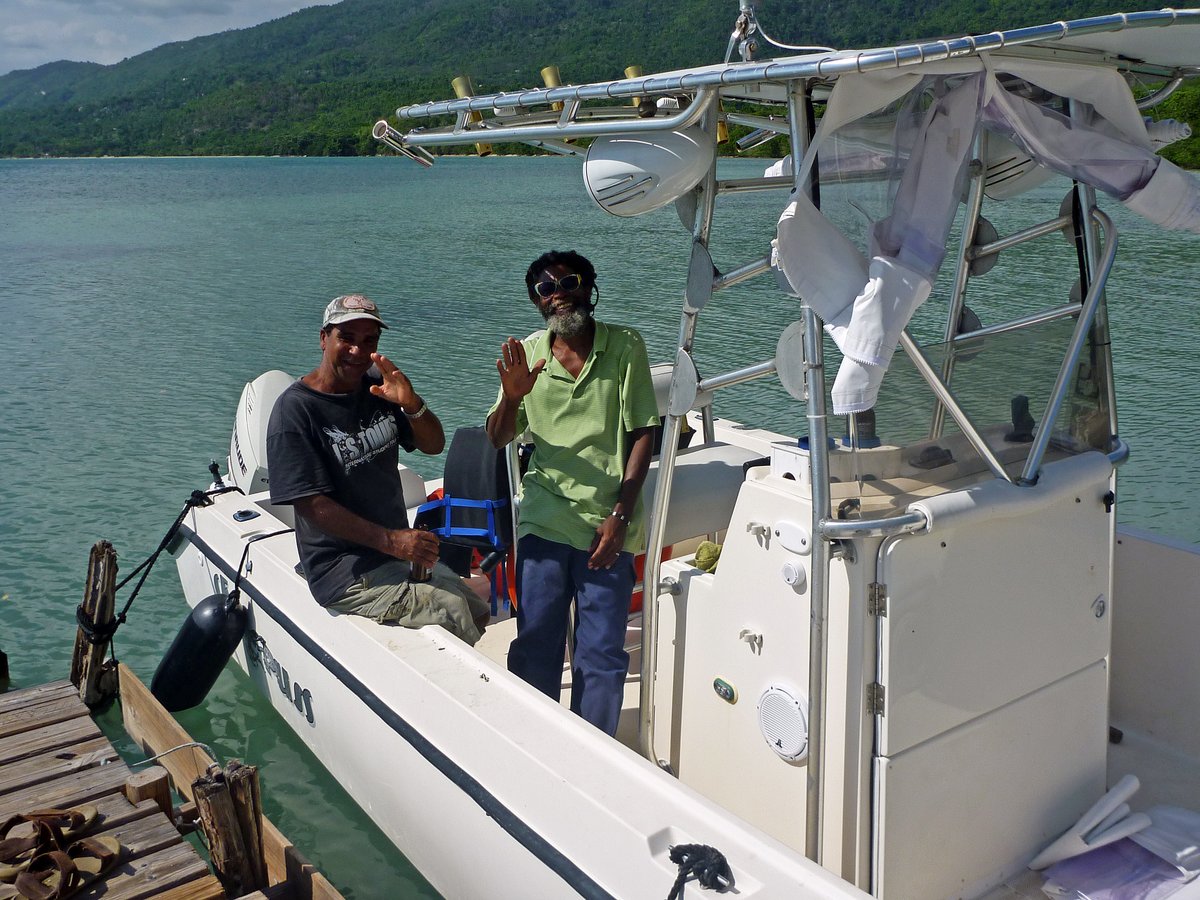
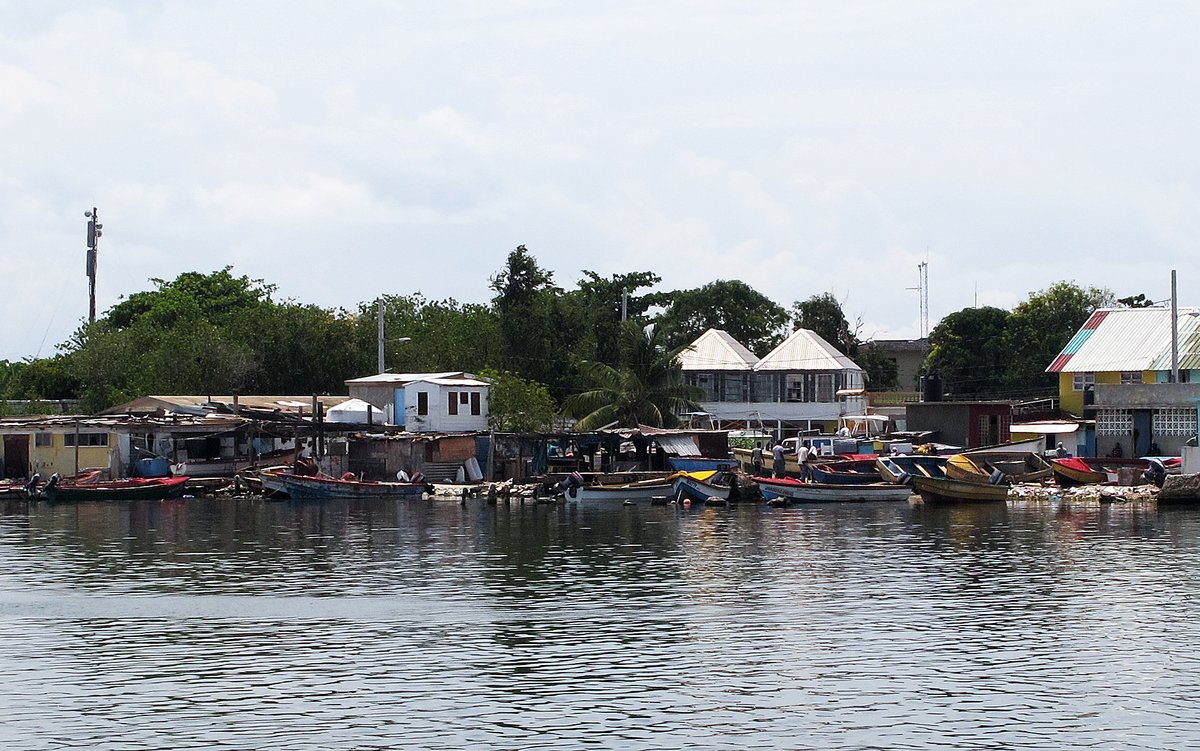
It only took us a couple of hours to get back to the anchorage at Bluefields and what a welcome sight it was. We jumped in the dinghy and went ashore to explore. As soon as we beached our dinghy, a guy with dreadlocks came up and said hello. My first thought was “Here we go”, but I was polite and chatted to him. It turns out that Bluefields is a Marine Park and this guy was the park ranger! We had a nice chat with him and a fisherman friend of his - our first genuine Jamaicans who didn’t want anything, just being friendly.
We had a stroll around, but there’s not much to see, it’s just a small village along a main road. Glenys bought some bread, eggs and an Ackee Loaf with Saltfish from a small store. We immediately ate the Ackee Loaf, which is like a pastie but the outer shell is made from bread – very tasty. We then called in at a beach side bar for a cold Red Stripe and chatted to the owner who was amazed to hear that we actually lived on our boat – they don’t get many cruising yachts here. I like this place, everyone is friendly and not wanting to rip us off.
We're trying to get to Portland Bight which looks very interesting with a number of isolated cays for us to explore. Unfortunately, it's 70 miles upwind and it's obvious that the wind picks up a lot during the day, so we're now planning to leave at dawn tomorrow to travel 25 miles to Great Pedro Bay. We'll stay overnight, get up before dawn and try to get as far east as we can before the wind picks up.
2 May 2013 Bluefields to Great Pedro Bay, Jamaica
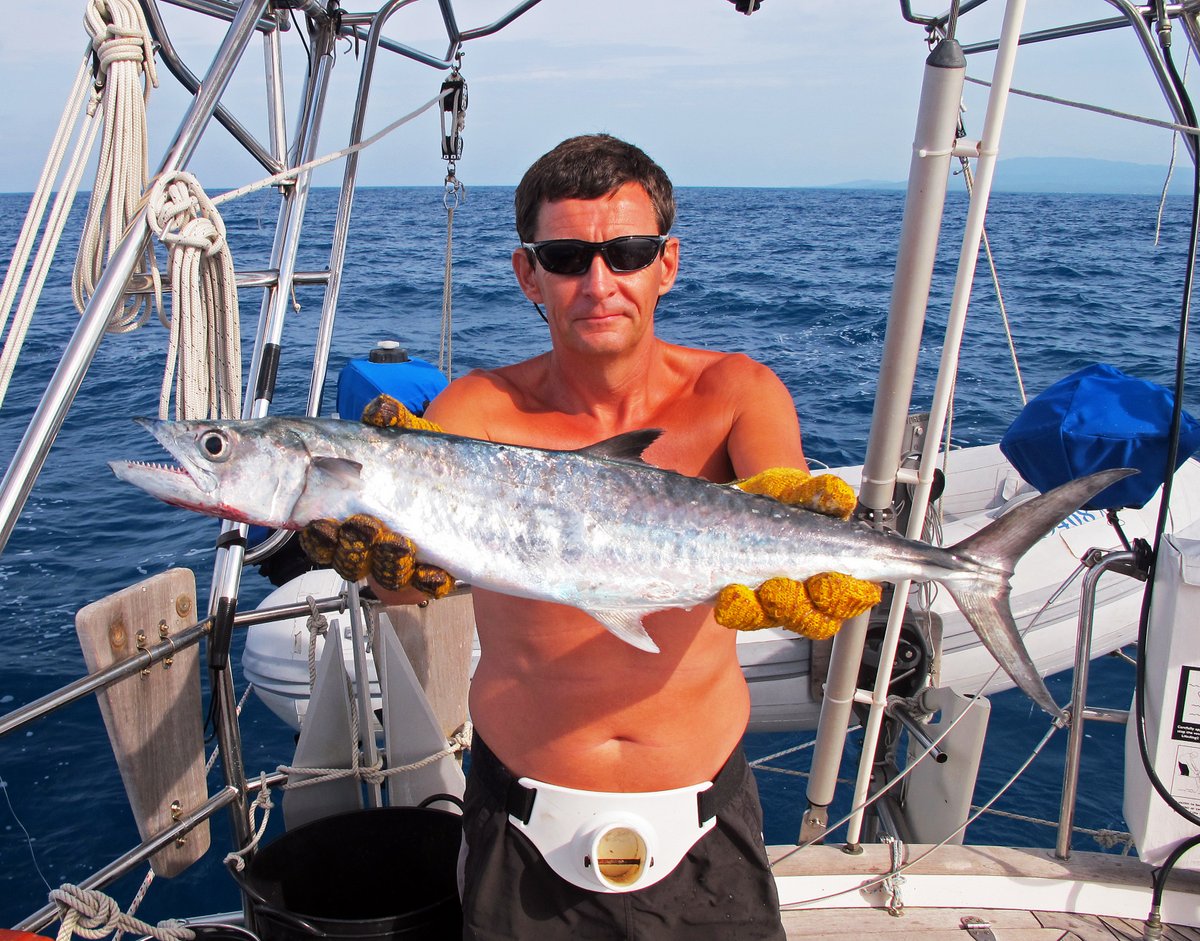
We were under way before six o'clock and motored up the coast. It was an uneventful trip, apart from catching a nice Spanish Mackerel, and we arrived in the anchorage at Great Pedro Bay five hours later.
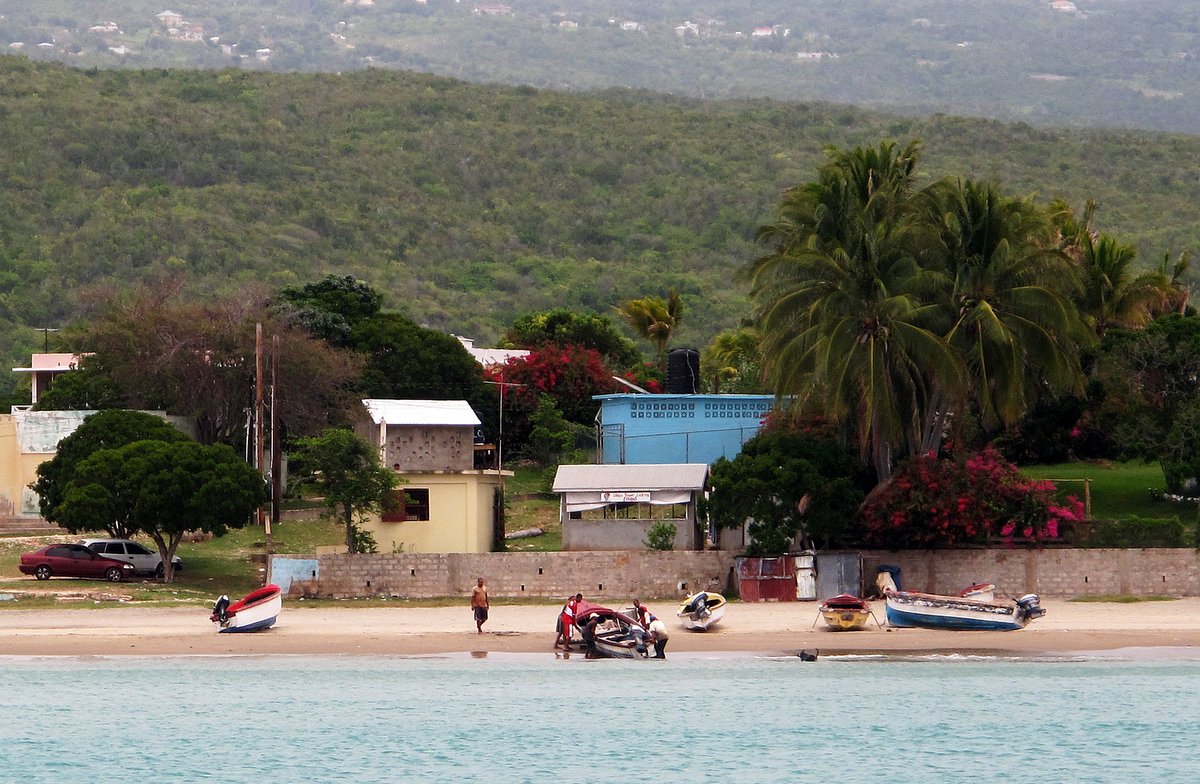
It's a pleasant little bay tucked around a headland, with a nice beach and rocky cliffs to the east. We had a bit of a struggle to get the anchor to hold and I had to snorkel down to help the tip of the anchor into the fine, hard-packed sand. Although we were tucked right into the corner of the bay, the swell was hooking around the corner and causing us to roll, but it didn't seem bad enough to put out a stern anchor.
We chilled out for the afternoon. Playing my guitar was a challenge because the rolling of the boat was threatening to throw me off my seat all of the time. We had an early night, with the alarm clock set to five o'clock.
3 May 2013 Great Pedro Bay to Pigeon Island, Jamaica
What a bloody awful night. It was very hot, airless and the rolling was bad - really BAD. I ended up lying in the “Recovery Position” (well-loved by First Aiders) and hanging on to the mattress when the bigger rolls came. Fortunately, we had to get up early.
The sky looked ominously grey as we lifted the anchor before dawn. We followed several unlit fishing boats out of the anchorage and around the headland. This section of the coast has some very impressive looking cliffs with steep slopes where the mountains drop down to the sea. We could see dark rain clouds stretching off into the distance with intermittent rain showers, especially near the coastal cliffs. There's a lighthouse on the hill above Cutlass Point at a height of 1750 feet, which looked very eerie as it flashed in and out of the low clouds hiding the tops of the hills.
We dodged squalls for a couple of hours, but it soon brightened up. The strength and direction of the wind was constantly changing, so we were forced to motor sail for five hours before the wind settled down to a pleasant 12 knots and we were able to sail the rest of the way.
There wasn't much to look at because we were crossing a large bay far from land, so we read our books and chilled out. Glenys made us bacon sandwiches for our second breakfast at ten o'clock and, just before lunch, I hooked a big fish that made the line scream out of the reel and took ten minutes to reel in. Unfortunately, it was a large 3 foot Barracuda, which we didn’t want to eat, so I managed to land, de-hook and release it without the damn thing biting me.
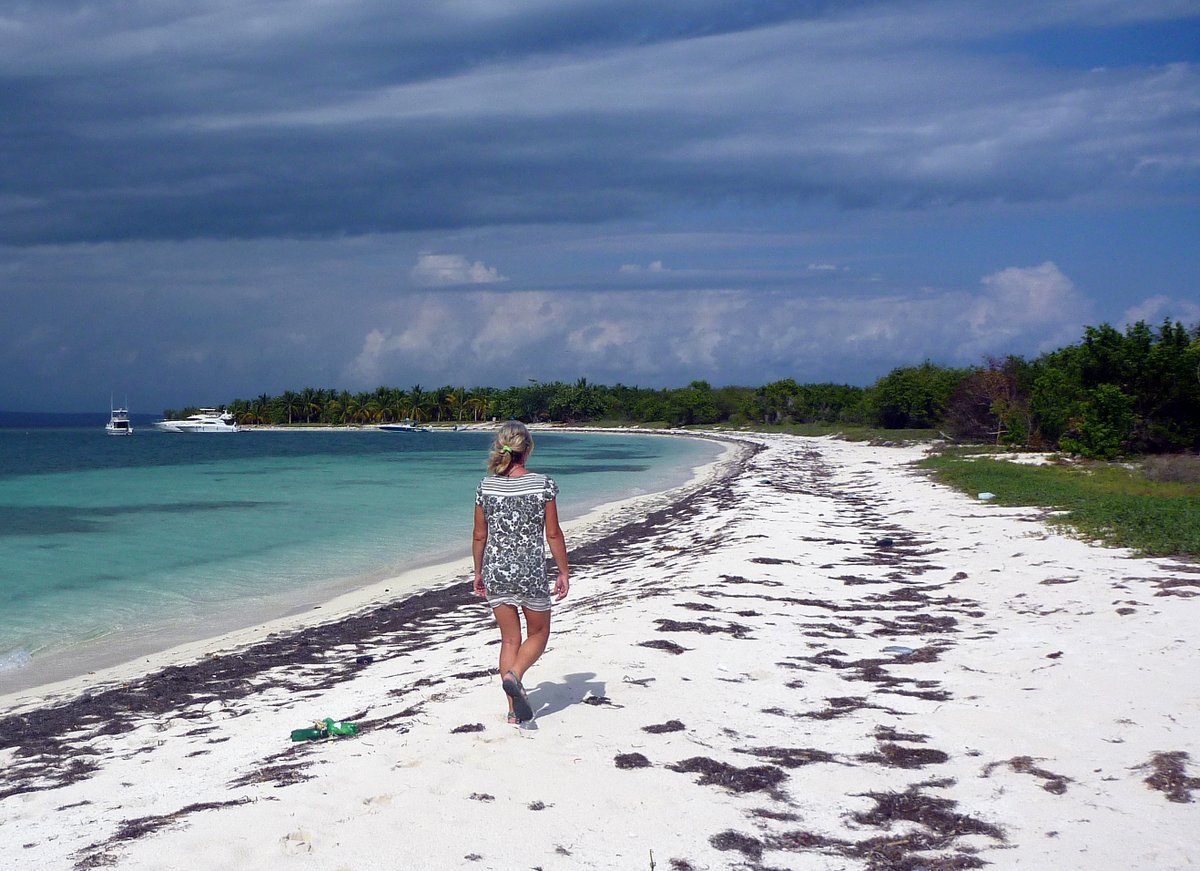
By three o'clock, we were anchoring at Pigeon Island, which is very well sheltered from the prevailing winds and has a nice sandy beach with coconut palm trees. As in all of the other anchorages that we've visited in Jamaica, there was nobody around - we hadn't seen another boat for days. I went to bed to catch up on lost sleep and got up just in time to crack open a cold beer at five o'clock By this time, a big power boat had come into the anchorage and tied up to the beach, so perhaps we’ll have more company over the weekend.
There were a few showers around, so we decided to watch a film. We’d just settled down with our TV dinner (Sweet & Sour Spanish Mackerel), when a squall hit us, reversing the wind direction and increasing to 20 knots with 30 knot gusts. By this time we were on a lee shore and the waves were starting to build up. We abandoned our film and sat up in the wet cockpit keeping a watch on our position by having a bearing on the nearby navigation light … It soon went over and we carried on watching a film. Sometimes I wish that I lived in a little house on dry land…
4 May 2013 Pigeon Island, Jamaica
We had a peaceful night’s sleep and it was very calm in the morning, so we chilled out aboard. It’s Saturday today and a few more power boats arrived during the morning – this is a popular anchorage for people from Kingston which is only 20 miles away.
Around noon, a couple of ladies came over from one of the power boats and invited us over to the beach, where they were gathering for a few drinks and snacks. We threw a few cold beers and some nibbles into our cold bag and went to join them. There was quite a little gathering of white Jamaicans on the beach, sitting comfortably in beach chairs around a table covered with drinks.
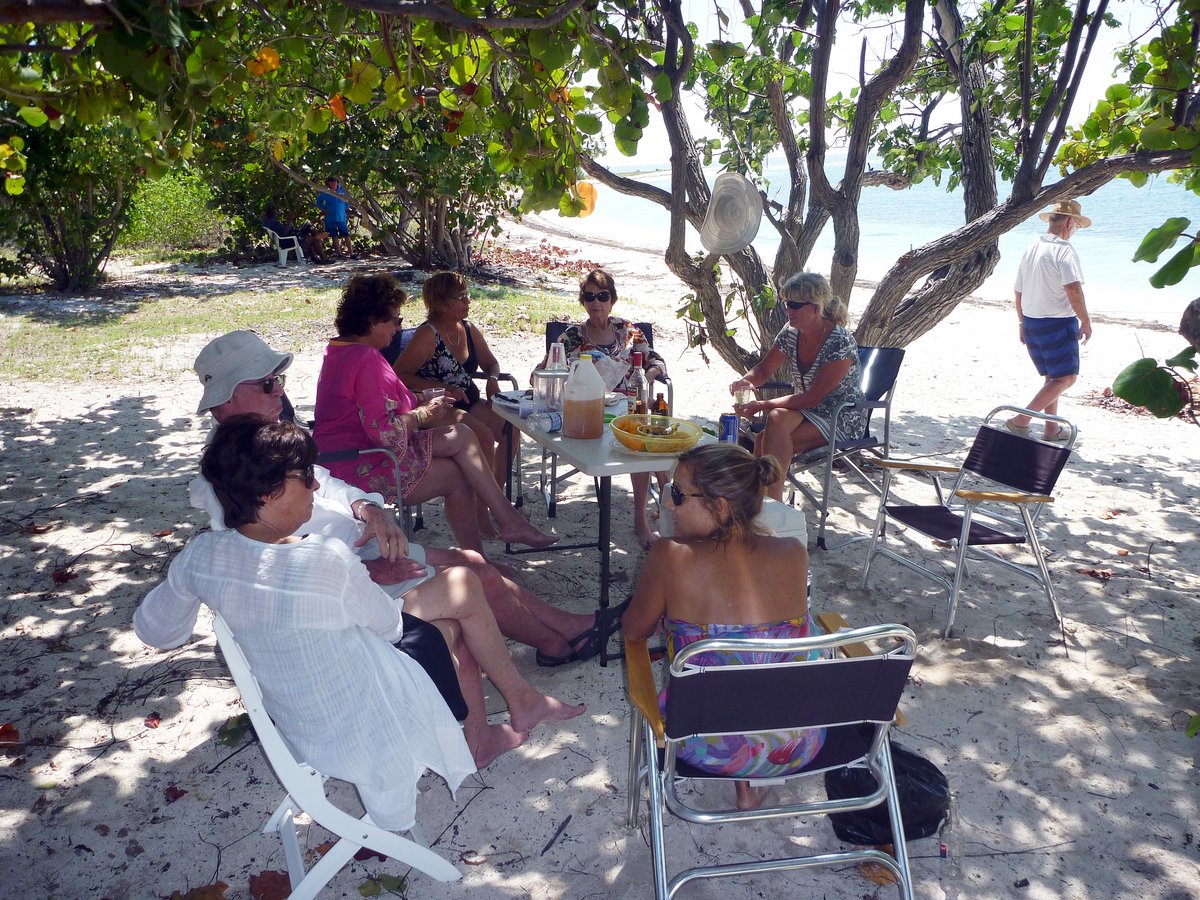
We met John & Jenny from “Shalako”, Roy & Mary from “Unreal” and Ian & Sonya from “Jamaica Joe”. They all work and live in Kingston running large businesses and regularly come to Pigeon Island. John & Jenny have been planting the coconut and sea grape trees along the beach and generally keeping the place tidy for over twenty years, even though the island belongs to the government. We had a very pleasant afternoon with them and ended up on “Shalako” having a dinner of Curried Conch made by their skipper, Trevor, which was delicious.
It was interesting to talk to this group of white Jamaicans about the situation in the country. In 1962, Jamaica gained independence from Britain and, in the early 1970s, a guy called Manley, started a series of political reforms that moved the country towards socialism, building strong ties with Castro in Cuba. There were sweeping economic reforms and a large number of wealthy (mostly white) Jamaicans left the country causing widespread financial problems and nearly plunging the country into civil war.
Some of the group had moved to the USA, only returning recently, but most had stuck it out and built large businesses. The social environment has changed dramatically. In the 1960s, the majority of government and upper class people were white, but now the country is run predominantly by black Jamaicans. It sounds like things are getting better, but there are still widespread power cuts, water shortages and huge areas of poverty - especially in Kingston where there are ghettos, which have gangs called Yardis, who are so violent that even the locals don’t move across gang borders.
5 May 2013 Pigeon Island, Jamaica
It was a lovely morning, which was a relief after the unsettled weather of the past couple of days. I went over to “Shalako” to get some local knowledge from John & Jenny. John has suggested that we anchor off Port Henderson when we get to Kingston and he will help us to sort out our oil leak on the generator and run us around to buy things, which is a kind offer.
We went snorkelling - circumnavigating the small island and checking out several places. Unfortunately, the reef is in very poor condition and there are few fish around. It looks like hurricane damage with all of the stag-horn coral flattened. There are signs of recovery with the encrusting corals looking healthy, but it will be many years before the reef is in good condition.
We chilled out in the afternoon and, by four o'clock, we were once again alone in the anchorage.
6 May 2013 Pigeon Island to Kingston, Jamaica
It was a one of those days today. I was up at six o'clock worried about where we were going to anchor in Kingston – the fact that the city has an extremely high rate of crime (and murders) is worrying me. Added to this is the complete lack of other cruisers around, which makes us stand out like a sore thumb if we anchor anywhere. I read our travel and cruising guides and decided that Port Royal looked to be the best bet because it’s well away from the main city.
After breakfast, I had another look at the damn fridge, which is still not coming down to temperature. It looks like we've still got a leak on the system and the freezer box is only freezing in one corner, so I suspect that we've still got air in the system. I dumped all of the Freon out of the system and recharged it to 15 psi – I’ll wait until tomorrow and check it again.
We pulled up our anchor just before nine o'clock and motored towards Kingston. Glenys commented on a knocking noise coming from the engine and, on investigating, I could see that we were getting the most engine vibration and the worst knocking at around 2200 rpm. We turned back and re-anchored while I jumped in the water to snorkel down to check the stern gear. It all seems to be OK because there’s nothing loose on the propeller. All I can guess is that the engine is out of alignment (we fitted new engine mounts nine months ago), so I’ll need to sort that out pretty soon.
We carried on to Kingston, motoring along the coast in the calm seas until Wreck Reef, where the wind picked up and allowed us to sail to Port Royal, which is at the entrance to Kingston Harbour. In the late 1600s, Port Royal was a major town and a famous haven for pirates, such as Henry Morgan, who brought great wealth (and debauchery) to the area. We were hoping that it would be a quaint place with some good museums, but it looked to be very run-down and probably still inhabited by pirates. So we turned tail and headed for the Royal Jamaica Yacht Club a few miles further into the harbour.
Kingston is the seventh largest port in the world and home to over a million people, so it’s a sprawling place. It’s quite exciting sailing into such a large port with all the ships anchored about. The anchorage outside the yacht club looked to be pleasant enough and, more importantly, far away from dodgy areas. We anchored just to the west of the entrance into the marina and dinghied into see them. Pat in the office had seen us arrive and had already called the customs to come to clear us in. They charge $12 per person per day to anchor and use their facilities or $1.50 per foot in the marina. The place looks pleasant enough, but it’s hot and airless and no other cruisers in sight, so we've decided to go into the marina tomorrow for one night, have a shopping day and leave for Providencia on the 8th.
We're miles from anywhere, so Pat arranged for us to have a local guy drive us around tomorrow to go to a supermarket and get some parts for the boat. The customs lady arrived and gave a very cursory look at our coast-wise permit – no other paperwork or questions about where we've been for over a week.
Back out at the anchorage, we moved in front of the yacht club to get better internet access, but struggled to pull up the anchor because we’d snagged a large power cable. That took ten minutes to clear, then we dragged in front of the club house, then when we were settled, we found that we had a rubbish, intermittent internet connection… Then I tried to move some money to a different account and our bank has blocked our debit card. As I said, it’s been one of THOSE days. We gave up and turned to beer.
7 May 2013 Kingston, Jamaica
I was up early again to check the engine mounts and found that one of the adjustment nuts was loose, which may account for the excessive vibration that we got on the way here. I tightened it up and will keep my fingers crossed.
We motored into the marina onto the visitors dock - we were tied up by half past eight to make the most of our $60 per day. We had to go to the bar to get a good enough Internet connection to Skype the bank to get the debit card unblocked and I was then able to go a bit of admin and move some money around.
Our driver, Eric, picked us up at ten o'clock. He's a skipper for one of the flash power boats docked at the yacht club and is doing this to earn a little beer money. We dropped Glenys off at the supermarket and went to the only chandlers in Kingston.
Mr Durae started his business years ago and it's very well stocked even though he had a major fire a year ago that razed the place to the ground. The store in his old house in a residential district and is a sprawling place. After being in Cuba, Mexico and Belize for the past four months, I had quite a few things that I needed for the boat and I managed to find most of them there. Mr Durae is a real character and he spent ages showing me where to find things.
While one of his girls was preparing the handwritten bill, we sat and chatted about life the universe and everything. Mr Durae insisted on giving Eric and me one of his special drinks, which turned out to be a healthy rum and 7-Up which we sipped while the conversation turn to politics and the poor state of the country. It's interesting that this black Jamaican guy had very similar views to the white Jamaicans that I met in Pigeon Island - basically, the Government need more cojones.
Eric drove me around to a few more stores to get fan belts, engine oil, rubber bands for my speargun, etc. We travelled through some dodgy areas - not quite the Tenements of Trench Town that Bob Marley sang of, but rough enough to keep the car doors locked. Eric told me that in one of areas, the people on opposite sides of the road belong to different political parties and, when there's an election going on, they fight and shoot at each other across the road that we were driving along.
I'm glad that we went with a local driver rather than trying to travel around by ourselves. The districts seem to change from nice residential to ghettos very quickly. Eric tells us that the political parties are responsible for a lot of the polarisation and actively incite the lower classes to obtain more votes in an area.
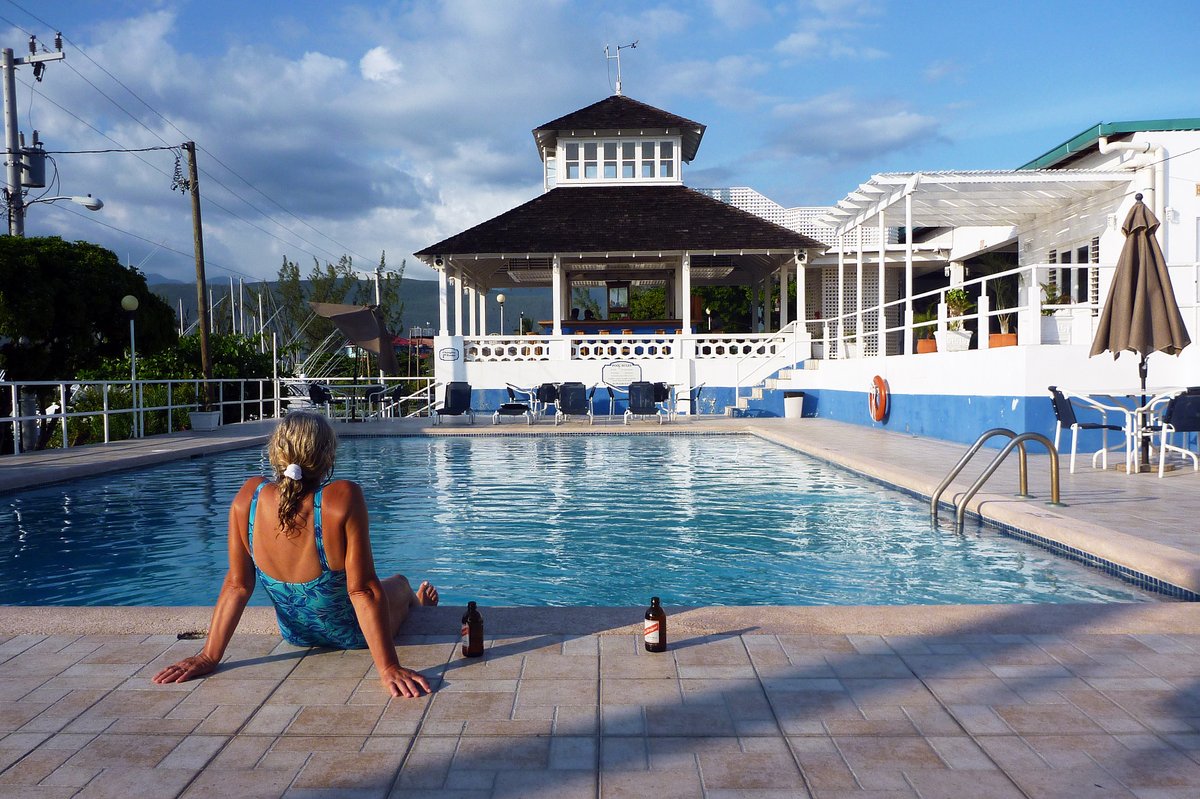
We collected Glenys from the up-market supermarket and retreated back to the safety of the Royal Jamaican Yacht Club. It took us a couple of hours to store all of our purchases, during which time the customs and immigration officers came to clear us out of Jamaica. We then retired to the swimming pool for some nice cold Red Stripes.
8 May 2013 Kingston to Pigeon Island, Jamaica
I downloaded some weather forecasts, which showed that there's a trough passing through the area bringing rain and thunderstorms, so we decided to go to Pigeon Island to wait for a couple of days.
We filled up with diesel, paid our bill and left by ten o'clock. As we motored across the harbour, I checked the vibration on the engine and the horrible clacking noise seems to have gone away. I‘ll keep an eye on it because I may have to re-align the engine anyway. There was no wind at all in Kingston harbour, but as soon as we got a few miles outside, the wind picked up to 20-25 knots - the effect of the land on this coast is very pronounced. We had a cracking down-wind sail through the coastal reefs and we soon arrived in the anchorage in Pigeon Island.
A Marine Police boat with three guys and guns pulled up alongside as we were anchoring and wanted to know how long we were going to stay. I told them that we'd just come from the yacht club in Kingston and were probably just staying one night - I didn't bother telling them that we'd checked out already. This seemed to satisfy them and they zoomed off. I hope that we don't get any hassle from them tomorrow.
The clouds built up during the afternoon and the strong winds continued, only dropping down to 15 knots in the evening. It looks like there may be thunderstorms around as forecast, so I'm glad that we hung around.
9 May 2013 Pigeon Island, Jamaica
We had a chill-out morning. I spent most of the time figuring out how to play a couple of songs that I’ve been looking at for a few weeks. I’ve been getting information on each song from a variety of sources – sheet music, guitar tabs, lesson videos, artist videos, etc., and it’s frustrating how the quality differs, so I’ve finally come up with a way of documenting each song on a single sheet of paper that seems to work. It’s not just a matter of documenting the lyrics and chords, but I also want to keep track of the strumming pattern or finger picking pattern without pages and pages of sheet music. The idea is that I learn the song and this will act as a “Cheat Sheet” – I’ve saved the songs in a pdf file which displays nicely on our iPad
After lunch, we lifted the dinghy onto the front deck and prepared for four days at sea. It’s funny how relaxed we are now about a longish passage, we both know what to do and it’s almost automatic. Glenys prepares a one pot meal in the pressure cooker that will last for a couple of days – this time its Paprika Beef. I pad around the deck checking everything after the dinghy is lashed down, then check the engine and make sure that everything is stowed away and that’s it.
I had another look at the food fridge and it seems to be behaving itself – I topped it up a little bit. The beer fridge is not doing too well; it was very low on its pressure and has been gurgling again. I topped it up again.
We had a fairly strong 20 knot wind as the sun went down, but at least the clouds seem to be clearing as forecast. Glenys cooked Ackee Rice with Saltfish as our last meal in Jamaica.
10 May 2013 Pigeon Island to Providencia (Day 1)
We had a rude awakening at six o’clock with a Marine Police boat circling us and shouting “Mr Howarth”. I dragged on some shorts and went on deck rubbing my bleary eyes. They’d come to check up on us and seemed to be satisfied when I said that everything was okay and we’d be leaving in an hour or so. Now that we were up, I checked the weather forecast which predicted consistent 15-20 knots winds from the east for the next five days, so we had breakfast and did our last bit of tidying up.
We left at quarter past seven and motored out of the main ship's channel into some very confused seas, with a big under-lying swell from the east. Due to the effect of the land, we didn't get any wind until we were fifteen miles offshore, three hours later. Perhaps we should have waited in the anchorage until ten o'clock, but then the seas might have been rougher...
Just as we started sailing, I hooked and landed a lovely 6lb Dorado - we always seem to catch fish when our fridge is full of food. Glenys had already prepared dinner for today, so she bagged up the fillets of fish into meal sized portions - one for tomorrow and two have been frozen for later.

By midday, the wind had picked up to 20 knots from the east and, as we are sailing more or less south west, we had a cracking broad reach all day. The waves were fairly big with some at 10 footers occasionally, so we were rocking and rolling, but the skies were blue and the sun was shining - perfect trade wind sailing for a change.
We had Paprika Beef for dinner as the sun went down and settled into our three hour watches. There was no moon at all, so the stars were spectacular - the Southern Cross was clearly visible in front of us as we bowled along at 6 knots.
11 May 2013 Pigeon Island to Providencia, Colombia (Day 2)
The wind gods were kind to us last night because we had a consistent 20 knot wind, only having to tweak our Hydrovane steering a couple of times. We had blue skies and continued to gently roll downwind on a broad reach, so the morning passed quickly and pleasantly. I had a two hour kip to catch up on lost sleep - we never sleep well on the first night of a passage. Glenys made Dorado sandwiches for lunch, which have to be the best thing on sliced bread.
The wind was forecast to back more to the north east over the next 24 hours, so I started to rig up our spinnaker pole, so that we could run directly downwind with the genoa poled out to port. I wandered up to the front deck, placing the down-haul rope and a snatch block on top of the upturned dinghy. Five seconds later, while I was untying the up-haul rope from the mast, we had a large roll and everything on top of the dinghy slid gracefully into the Caribbean Sea.
I shouted an expletive starting with F, which scared Glenys to death. She was down below in the galley, thought that I'd gone overboard and came rushing up into the cockpit. We both sat in the cockpit for 5 minutes to calm down - Glenys from the adrenaline rush and me from the loss of £150 worth of gear because of a momentary loss of concentration.
Glenys had an afternoon kip and then made Sweet & Sour Fish for dinner - meals are always the highlight of the day when we're at sea.
12 May 2013 Pigeon Island to Providencia, Colombia (Day 3)
It was a pleasant night with the wind at 15-20 knots. On my 10-1 watch, we were passing to the east of Serrana Bank, so I altered course 20 degrees to starboard heading for the north end of Providencia. As we were now running downwind, I gybed the genoa and poled it out to port to run goose-winged. At quarter past seven, we had sailed 280 miles out of 380 miles in 48 hours, so the end was in sight.
We had another nice day of sailing downwind, only marred by a small shower that soon went away. There wasn’t much to be done apart from sleeping, eating and reading. By the time that we had dinner at six o’clock, we only had twenty miles to go. As we were going to arrive fairly early, we decided to sail to the entrance to the harbour and check out the channel which is supposed to be well buoyed and possible for a night entrance. If we didn’t like the look of it, we’d heave to in the shelter of the island and wait for day break.
We rounded Low Cay in the pitch black of night – there was a small sliver of a new moon, but that didn’t give off much light. There's a navigation light on the small cay that is supposed to be flashing once every 10 seconds, but the only light that we could see was flashing twice every 8 seconds which was worrying. To make matters worse, we've read quite a few articles on the internet that say that the position of the island is a ¼ mile different to that shown on the charts, so we gave the reef a really wide berth.
By nine o'clock we’d rounded Low Cay and were sailing towards the harbour in the lee of the island – it was a relief to be sheltered from the three metre waves. An hour later, we dropped our sails at the seaward buoy and motored slowly and cautiously down the channel that is marked by three red buoys and two green buoys - all flashing at the same time-period of three seconds, which is a little confusing. The Navionics chart on our little chart plotter showed that we were heading straight over a very shallow reef, but the chart on our iPad showed something different, so it was a tense fifteen minutes until we rounded the final green buoy and entered the Providencia anchorage.
There were five other yachts bobbing gently in the dark and we soon found a spot to drop our anchor, which thankfully, bit straight away. We popped open a couple of nice cold beers, tidied up and had a snack of cheese and biscuits while gazing at the lights ashore and wondering what the place is actually like.
13 May 2013 Providencia, Colombia
We managed to drag ourselves out of bed before nine o’clock, which was a miracle. It was exciting to see Providencia in daylight, which is surprisingly hilly. The harbour is very quiet. There are five other yachts at anchor, a naval frigate on the town dock and various pirogues dotted along the shore line. Ashore there are no large hotels or any buildings higher than two stories and it looks very laid back. It reminds me of Bequia – or rather how Bequia would have been 100 years ago without all the buildings that now sprawl around Port Elizabeth.
After breakfast, we dropped the dinghy in the water and, as I was connecting the fuel pipe, a dinghy whizzed past. I attracted their attention and Tony and Gail from “Cetacea” came over to say hello. We asked them the normal questions that need answering when we arrive in an anchorage: Where do we clear in? Where can we dock our dinghy? Where’s the Bank? Is there someone who does laundry? Where can we get Internet access?
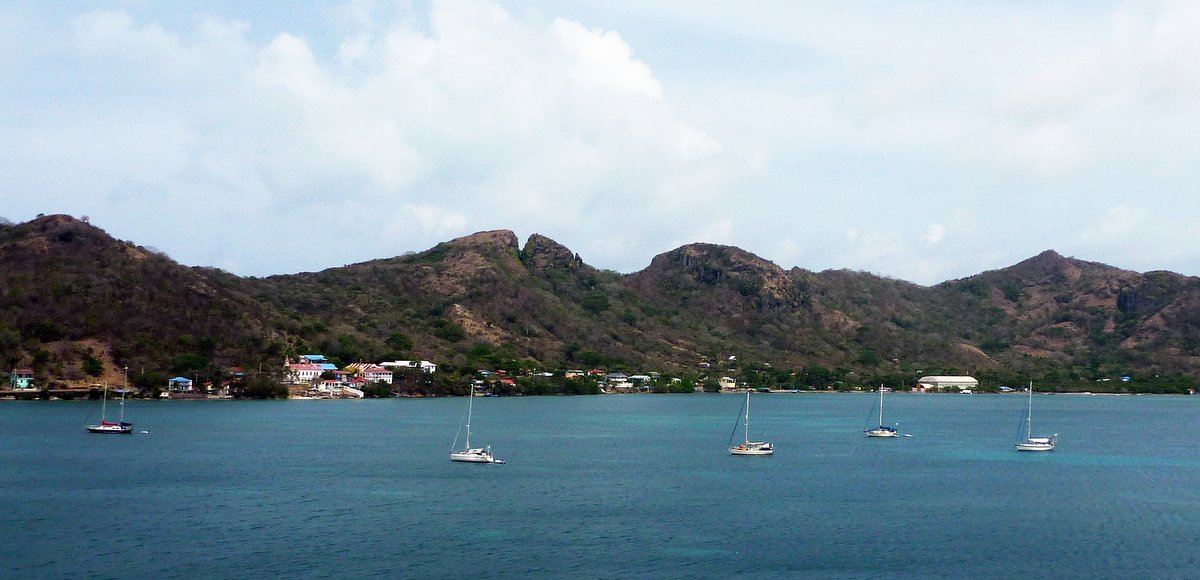
I assembled our clearance paperwork and printed out a few more copies of our crew list, before jumping into the dinghy and heading ashore. On the way we called in at “Lonely Planet” and introduced ourselves to Wim & Matilade who are from Holland. They supplied us with some more local information.
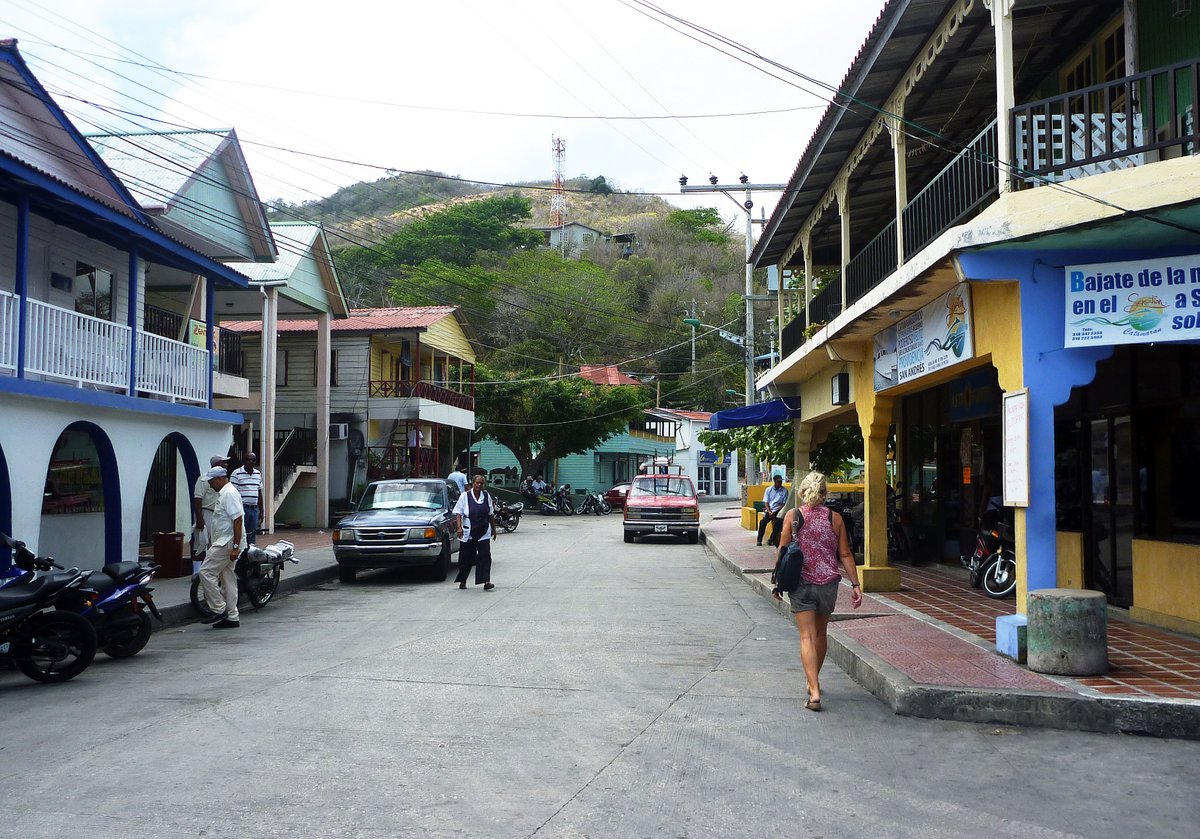
There’s a good dinghy dock next to the town dock and we’ve been told that there’s zero crime in Providencia, so we didn’t bother to lock it up as we normally would. We wandered through the sleepy little place heading for the office of Mr Bush, who is the only clearance agent on the island. As we turned the corner (at the only junction in town) a guy approached us, with a plastic carrier bag full of hot food. After the constant hassle in Jamaica, my immediate reaction was “Here we go”, but the guy turned out to be Mr Bush – we obviously stand-out and look like yachties.
Mr Bush took us to his office, which is in the living room in his house and we soon had the paperwork sorted out. He took our passports and asked me to sign a few blank forms, then told us to come back tomorrow to collect our passports. It’s going to cost us $140US to clear in, so it’ll be an expensive two week stay.
After a couple of attempts, we managed to get some cash out of an ATM – the exchange rate is roughly 2,000 pesos to $1US, so there’s going to be some serious mental arithmetic going on when we buy things. We had a quick wander around the small town and ended up in a restaurant on Santa Catalina, which is a small island connected to the "main land" by a floating pedestrian-only footbridge.
The restaurant had six tables covered with grubby, plastic table cloths and a white board showing the available five dishes. No prices in sight, but there were some locals eating in there which is always a good sign. The meal was ordinary, but filling – chicken soup to start, then meat, rice and plantains. The soup was very tasty, but had some dubious hard bits in the bottom – possibly pieces of the chicken necks and feet? It cost us 38,000 pesos for two meals including four beers, which was good value.
We had a little trouble ordering the beer in our broken Spanish. Most of the locals speak English, but not the lady who served us. She told us the names of the three beers that she had “Meeya, Omiwahkey, Enacan”. We asked her to repeat, but still didn’t get it. Glenys then spotted someone drinking a bottle of Miller MGD, so we pointed and had a couple of those. This was the “Meeya” – the Spanish pronounce the double “L” as a “Y”.
After we’d supped the Miller, I wanted to try one of the other local Colombian beers, so we asked the names of the beers again.
“Meeya, Omiwahkey, Eenacan”, she rattles off.
“Hmmm, what’s the second one again?”
“Omiwahkey”. Blank looks from us – say again?
“O – mi – wah – key”, she says slowly.
The penny drops. Glenys says, “It’s Old Milwaukee”. It’s another American beer, not some local Colombian brew.
One mystery solved, I ask for the name of the third beer.
“Ee – na - can”, she spells out.
Nope. Don’t understand. A lady on the next table come to our rescue and tells us that it’s Heineken. Disappointed, we ordered two more Meeyas.
We wandered back to the dinghy (which was still there) and pottered out to the boat. The remainder of the afternoon was spent chilling out, dozing and playing the guitar before Tony and Gail from “Cetacea” came for a couple of beers. They’re also heading down to Panama and then through the canal in October/November, so we’ll probably see them along the way.
14 May 2013 Providencia, Colombia
We tried to get someone to do our laundry. There's a lady called Barbara on Santa Catalina who does washing, but it turns out that she's gone to hospital on San Andreas and no-one else seems to want to do it because there's a water shortage the island.
We went to see Mr Bush and collected our passports. He printed out another form, asked me to sign it and told me that our tourist visas would be ready within a week. I asked him if we would get some paperwork to show that we've cleared in and after a bit of searching he gave me a scratty bit of paper that seems to be a duplicate of a form from the port captain. It’ll have to do I suppose.
We met a few more cruisers while we walked around town. The species is very obvious to spot - well suntanned, wearing scruffy, well-worn clothes. We called in at the tourist office and the very enthusiastic staff gave us all sorts of goodies including a 200 page cruising guide to Colombia which is very detailed and has charts for all of the Colombian coast.
This is an interesting little island - from the tourist office we learned that:
The English colonised Providencia (and San Andreas, its larger sister island) around 1630 and brought in black slaves from Jamaica to cultivate tobacco and cotton. Because of their strategic location, the islands provided convenient shelter for pirates waiting to sack Spanish galleons bound for home laden with gold and riches. In 1670, the legendary pirate Henry Morgan established his base on Providencia and from here he raided both Panama and Santa Marta. It is said that his treasures are still hidden on the island (most Caribbean islands claim this…)
Shortly after Colombia achieved independence in 1810, it laid claim to the islands, although Nicaragua (only 150 miles away) fiercely disputed its right to do so. The issue was eventually settled by a treaty in 1928, which confirmed Colombia’s sovereignty over the islands. Nicaragua continues to press the issue of its sovereignty at the International Court of Justice in the Hague. The court reaffirmed Colombia’s sovereignty over the main islands in 2007, but has recently given some of the off lying atolls to Nicaragua. Tensions remain high and there is a military presence on the island and a naval frigate patrolling the surrounding seas.
In the early 1990s, the local government introduced restrictions on migration to the islands in order to slow the rampant influx of people and preserve the local culture and identity. The majority of the 5000 people live close to the main town of Isabella, with all the Island’s supplies come from the sister island of San Andres, 72km to the south.
All around the island there are signs that read, “Old Providence, Not Oil Providence” and “They Didn’t Ask What We Want.” They refers to the dispute between Colombia and Nicaragua and the locals want to stop any drilling for oil which has been found on one of the local cays.
After lunch, we went for a snorkel by Morgan’s head, which is a prominent round rocky outcrop on a headland. The snorkelling was pretty good, but there aren’t as many fish as I would have expected. Wim & Matilade from “Lonely Planet” came for sun-downers. They’ve been here for six weeks waiting for parts because one of their shrouds had started to unravel. They're desperate to get out of here and head north to the Rio Dulce.
15 May 2013 Providencia, Colombia
We did a few jobs in morning – Glenys got on with washing clothes and I did some admin. We fly back to the UK in six weeks’ time, so I’ve got to start to get things ordered and delivered to Glenys’s brother ready for us to pick up. The most important bits are a replacement seal to fix the generator oil leak and some new bearings to fix the annoying clunking rudder. I prepared various emails and then dinghied over to an internet café to send them all.
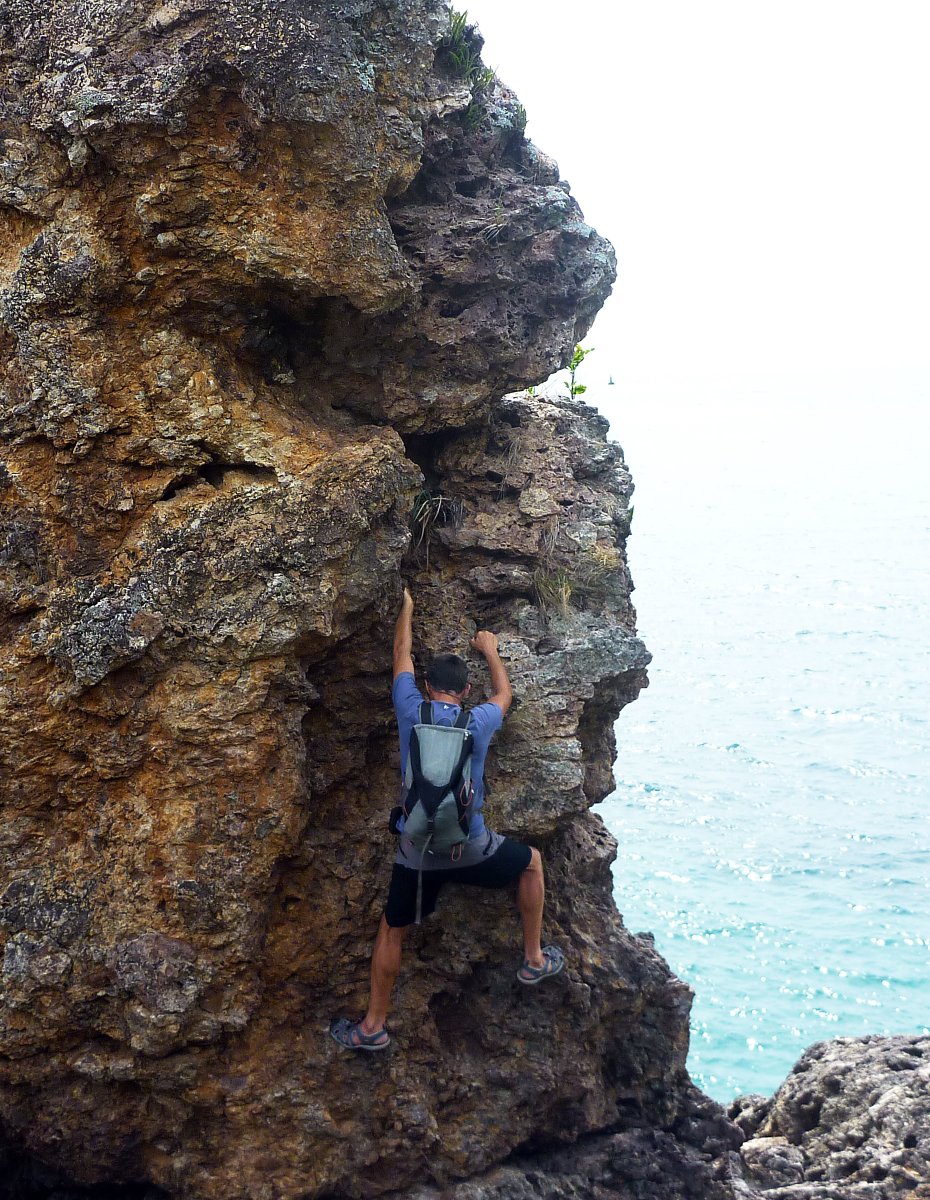
In the afternoon, we went for a walk on Santa Catalina to Morgan’s Head - it was only a short one mile walk, but goes along a pleasant path, which has painted tile pictures dotted along the way. When I spotted the rock outcrop, I just HAD to check out if it was climbable. It took me ten minute or so to get to the top – I’d rate it as V.Diff (when done in sandals). The climb down was the worst bit as usual.
16 May 2013 Providencia, Colombia
We hired a scooter today – a bargain at $20US for the day. It’s been over a year since I was last on a bike, so we were a little wobbly for the first hour. We circumnavigated the island to orientate ourselves – it didn’t take long because it’s only 10 miles around the island. Back in the main town, we bought some drinks and a pastry to fortify us on a hike.
We whizzed around to Freshwater Bay (in the opposite direction for a bit of variety), where we parked up and went for a walk following a signpost that pointed up a track. The trail led to the island’s reservoir, which is has a very low water level – they’ve obviously not had much rain recently. We followed a path that led down the right hand side of the dam and a mile later, we’d got half way up one of the hills, but were stopped dead by a barbed wire fence, so no nice panoramic view today.
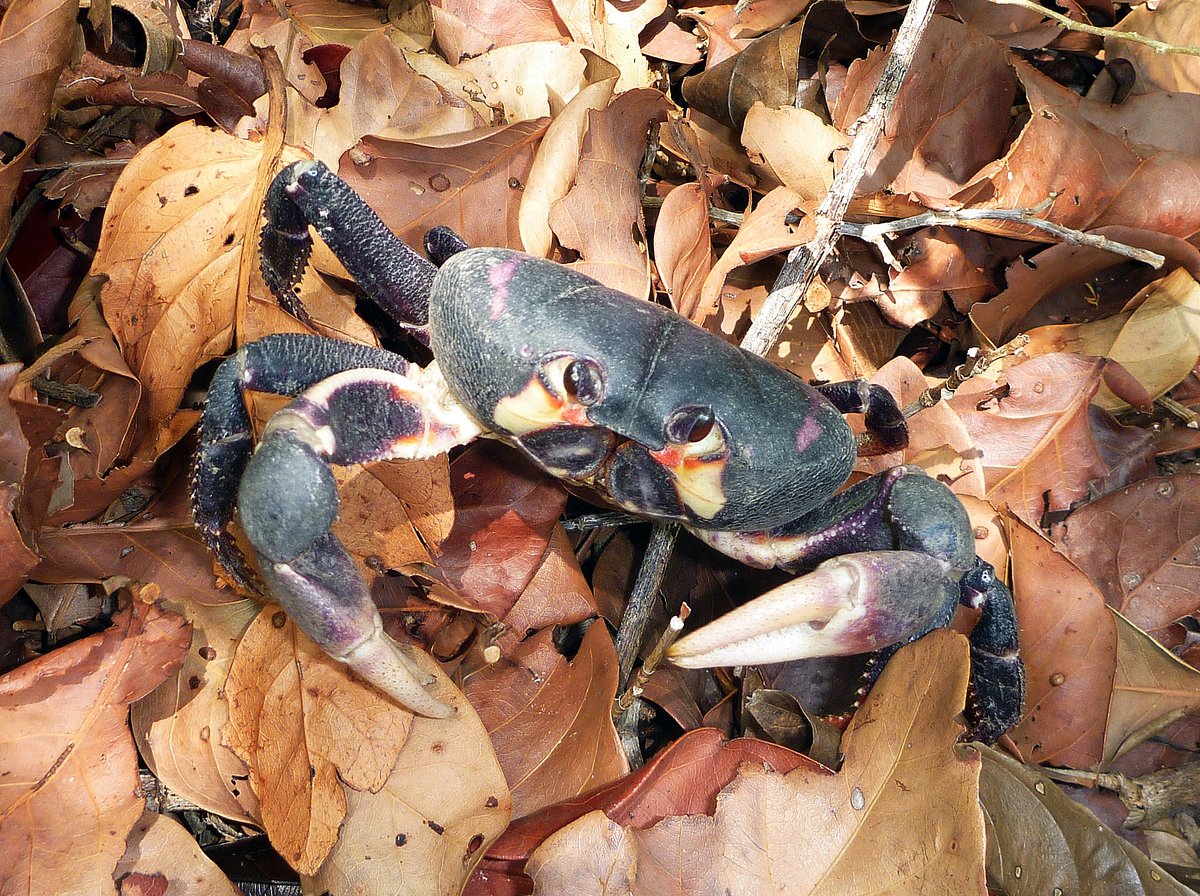
However, it was good to be hiking again and we saw some brilliantly coloured blue lizards plus some of the black land crabs that are a favourite delicacy on the island. Glenys had the misfortune to brush against one of the evil thorn bushes, which nasty biting ants live on. She was bitten by two of the tiny little buggers and she said it was like a wasp sting.
Back at the scooter, we wandered to Freshwater Bay but everywhere seems to be closed up, so it was onto Manchineel Bay where we had lunch at Roland’s Roots Bar, which was a huge seafood platter that we shared for $20US. While we were sitting on the driftwood table staring at the incredibly coloured sea, Glenys complained of being bitten by no-see-ums, but strangely I didn’t seem to be affected, so we ignored it.
In evening, we went to “Lonely Planet” for sun-downers, where we noticed that we both have lots of small bites on our legs, but there aren't any lumps and no itching, which is fortunate.
17 May 2013 Providencia, Colombia
We had a chill out day after yesterday’s exertions. I spent most of the morning listening to music and working out some tunes on the guitar. During the morning, the thirty or so bites on my legs started to itch, so I put some antihistamine cream on them. Glenys doesn't seem to have been affected as much. I reckon that we've been bitten by sand flies on Manchineel Beach.
We went snorkelling in afternoon and saw quite a few Lionfish – they’re all over the Caribbean now. I went to the Internet café and ordered the spare parts for the generator and rudder bearings.

18 May 2013 Providencia, Colombia
Both of us had a restless night with the sand fly bites itching like mad – Glenys now has over 100 lumps on her legs, arms and back and she’s not happy.
I did a few jobs this morning – mopped out some sea water from the engine compartment – there was about a litre of water sloshing around. It’s definitely sea water, but god knows where it’s coming from. It’s weird because we can motor for 24 hours and the bilge is dry then other times there’s loads of water.
I cleaned up the oil that has been sprayed around the generator. The oil absorbent pads that I arranged around the crankshaft pulley have caught most of the oil, but there’s still a fine spray over everything. In particular, the alternator belt was very sticky because the oil is obviously rotting the rubber, so I changed it for a new one. I don’t have another spare belt so I cleaned the old one up as best as I could and kept it in case the new one breaks – hopefully it will last until July.
We ran the water maker for an hour and then I stupidly left the back wash valve open and was flushing our newly made water overboard for an hour. Fortunately, I remembered before we dumped the lot overboard. What a plonker –this is the third time in two years that I’ve done this.
I did some admin work in the afternoon and backed up my laptop and moved some data onto a portable hard drive, so that I can take it back to the UK and store it at our son’s house. I back up my data on the laptop fairly regularly, but that will be no good if we sink because our backup disk is (eerrrr…) on the boat…
19 May 2013 Providencia, Colombia
It’s Sunday today, so we had a chill-out day and went ashore for lunch. Most of the small town was closed up, but we found a nice little eating place on the water’s edge called “Miss Lucys”. To start with, they served us with the ubiquitous chicken soup, which is made in a huge two-foot diameter pot. It’s obviously been on the go for years and they keep adding stuff to it - it’s delicious. This was followed by Conch Curry and Pork with Rice and washed down with a couple of nice cold Meeyas.
After two beers at lunchtime, I’m completely useless, so we read books and napped for the afternoon, then watched a movie with a bottle of wine in the evening – a perfect Sunday.
20 May 2013 Providencia, Colombia
I bit the bullet and changed the engine oil – I’ve been putting it off for a month, but it all went smoothly. After the disaster with the generator alternator belt, I thought that I’d change the belts on the engine, but the spares that I have don’t seem to be quite right or are old used ones. I’ll have to buy three of each when we get to Panama City.
We went into town and saw Mr Bush. He gave us our immigration visas and we paid him a whacking $140US for his services - apparently it’s $80 for him and $60 for the visas. We read somewhere that around 200 boats go through here every year, which earns him a tidy $16,000 per year, plus he also clears in any tourists who visit the island by the ferry.
Glenys did some shopping while I caught up on email at the internet café. We were planning to leave on 23rd or 24th, but it looks like there’s some squally, wet weather heading our way, so we might have to hang around for another week.
We chilled out in the afternoon, then Jim and Laura from “Nilaya” came for a beer. They’ve spent the past five years travelling between Colombia and the Rio Dulce, so they know Panama very well. They gave us a lot of useful information on the Bocas del Toro in Panama, which is where we’re planning to spend two or three weeks on our way to Shelter Bay marina where we’ll leave the boat when we fly back to the UK.
21 May 2013 Providencia, Colombia
We had arranged to go walking up the highest peak on the island this morning, but it threw it down last night, so I cancelled the hike because we think that the paths will be really muddy.
I woke up with a blocked left ear. I guess that I’ve had some sea water trapped after going snorkelling which has done something to the wax in my ears - it doesn’t hurt, but it’s bloody irritating being deaf in one ear.
I pottered around for most of the day checking my spares inventory and doing a few jobs. We now have a long list of filters, alternator belts, impellors, hose clamps, etc, etc. that I need to buy in Panama before we head off down to Ecuador in November. Once we leave Panama, we’ll be in places where it will be very, very hard to buy parts for the boat, especially in the Pacific islands. We’ll probably not be able to buy much until we get to New Zealand next November.
Glenys has also be looking at our medical supplies and making a list of things to buy. We’re going to have to buy much better antibiotics and painkillers. All the drugs that we have are over-the-counter items and we’re hoping that we’ll be able to buy much stronger stuff in Panama.
22 May 2013 Providencia, Colombia
My damn ear is still blocked, so I put some ear wax removal drops in. Unfortunately, this stuff softens the wax making it expand and blocks the ear even more. I’ll just have to suffer for a few days.
We’ve been getting some water in a bilge in the back cabin and not been able to figure out where the hell it’s coming from. Glenys mopped it out yesterday and today there was a more water in there and it’s definitely sea water. After a bit of investigation we eliminated all of the hoses in the area including the engine exhaust, but we could see water slowly collecting on the bottom of the bilge. Glenys jokingly said that it might be coming up through the hull, so I inspected a rough looking area and lo and behold the water is coming in through a hairline crack in the bottom of the bilge – we’re sinking!
It looks like the previous owner, Sergio has bodged a repair and plastered some kind of epoxy putty along the crack, so I’ve sent him an email and asked him about the history of this problem. I also dived down under the boat and inspected the hull – the leak is roughly above a moulding that holds the propeller shaft tube, but I can’t see any serious cracks. There may be some hairline cracking on the port side, but it’s difficult to tell with multiple coats of antifoul. I’ve sent an email to Hallberg Rassy to ask their advice – another job for when we haul out in Panama.
I spent the afternoon on pumps. We’ve got five old pumps that have been hanging around in a locker for two years and have been swapped out sometime in the past. If these were all working, we’d have spare pumps for our fresh water system, the shower pumps, the bilge pump and the deck wash pump, which would be very handy. I built a little test rig and checked them. They all appear to run, but don’t pump correctly and have a few other faults. I managed to repair the spare fresh water pump, but most of the others need parts that I don’t have – some more things to buy in the UK.
23 May 2013 Providencia, Colombia
We went into town. I went to the Internet café and checked our email while Glenys went shopping. It’s a bit frustrating not being able to get internet on the boat. It makes emailing twice as slow – I compose the email on board and then send it a couple of days later when I go into the internet café. I’ll pick up any replies from emails I sent a few days ago, etc, etc. The place is not very conducive to any leisurely browsing of web sites because there’s a constant stream of people popping in and out. I can’t wait to get somewhere where we can get an internet connection on-board because we’ve got lots of things to order to be delivered to the UK.
The weather looks like it will be unsettled over the next few days and then clear up early next week. We wandered over to Mr Bush to tell him that we want to leave early on the 27th. He’s going to process our zarpe today and then I’ve got to go in on Sunday morning to pick it up. We’re planning to go to San Andreas for a week and then go down to the Boca del Torro in Panama. We’ve heard that it’s expensive to clear in there, but it looks like a good place to spend a few weeks. It’s a small bay about 15 miles across with lots of small islands and places to anchor – looks interesting.
We did some more jobs in the afternoon and then went out for a meal with Tony and Angela from “Tana Vika” and Jim and Laura from “Nilaya”. The meal was okay, but with a huge fat content. I had a Patacone , which is a thin base made from plantains covered with a topping – like a kind of pizza. It was okay but could have been much better. At least I finally got to drink a real Colombian beer, which was also just okay.
24 May 2013 Providencia, Colombia
It was another job day. Glenys did some work on the bimini. It’s been leaking when it rains and we’re expecting a lot of rain when we get down to Panama. She put some tent sealant on all of the various seams a few days ago, but it was still leaking where the stitching is pulling across the middle where there’s a zip. We took the bimini off and Glenys sewed a long strip of Sunbrella on the top to cover the stitching. She then painted waterproofing on the whole bimini and spray-hood. Hopefully that will keep water out of our cockpit.
I finished off servicing the engine, changing the diesel filters and water pump impellor. I also cleaned the engine, checked all of the hose clips and generally gave it a good staring at. The timing belt seems a bit loose, but I can’t tension it by myself because I don’t have the correct gear. I dug out the old service logs that Sergio, the previous owner had kept and found out that the timing belt was last replaced in 2005. Volvo recommends that it should be replaced every 2000 hours or three years, so it’s well over due to be done. It’s another job to get done in Shelter Bay – we’re getting quite a list now.
In the late afternoon, I had a marathon, three hour session on the guitar. My technique is getting better, but I can’t get through a single song without making several mistakes – it’s so frustrating. All I can do is practise, practise, practise…
25 May 2013 Providencia, Colombia
We went into town to do some shopping and get access to the Internet - the weather forecast shows unsettled rainy weather for the next week, but there's nothing nasty around, so we'll definitely go down to San Andres the day after tomorrow. In the afternoon, we pottered around tidying up after two weeks at anchor.
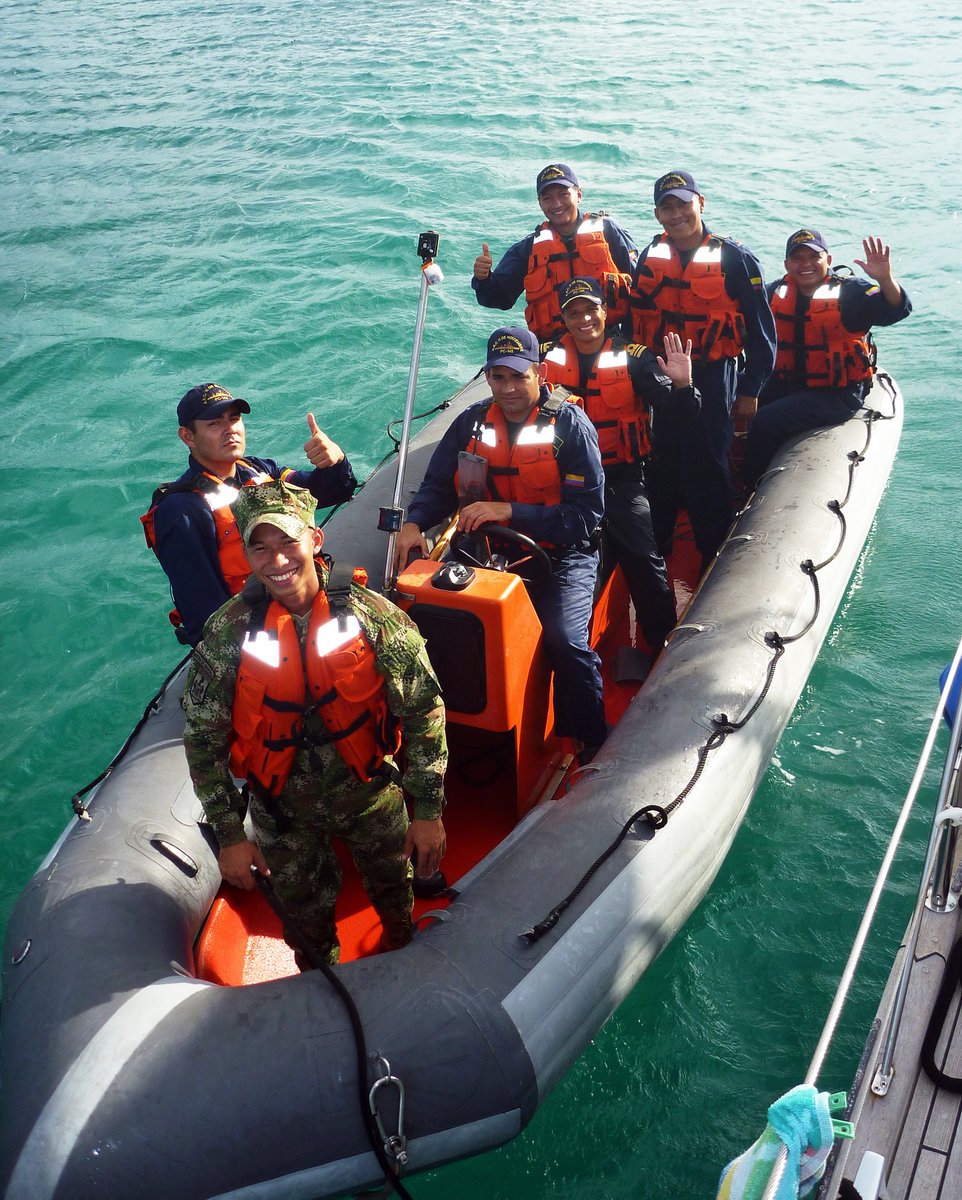
We had a visit by the Colombian Coast Guard who showed up in a big RIB. They‘d come from the Coast Guard cutter that we’ve seen patrolling the area. Four of them came aboard in their big black boots and while the officer inspected our papers, two of them wandered around the deck inspecting our deck equipment – well, more curious than inspecting. They were all very friendly and the officer said that if we had any engine or other problems that we should call him and he could send someone over to help. They left us with some Colombian navy promotional gifts – a couple of small notepads, some cardboard sun visors and two fridge magnets!
26 May 2013 Providencia, Colombia
Another Sunday in Providencia – it’s time to move on. I went into town to pick up our zarpe from Mr Bush - he rang Mr Rene, the clearance agent in San Andres to tell him that we'd be arriving tomorrow afternoon – obviously an old boy’s network.
We went for a walk to Almond Bay - it was only a mile or so, but we were very hot and sweaty by the time we arrived. It's getting more humid now that we're approaching the rainy season. We had lunch at Delmar's Sunset Bar, which was surprisingly good considering the ram shackled hut that it was prepared in. I had barbecued fish and Glenys had shrimp - both served with the ubiquitous patacones and deep fried plantains, turning a healthy meal into one loaded with a week's worth of saturated fats.
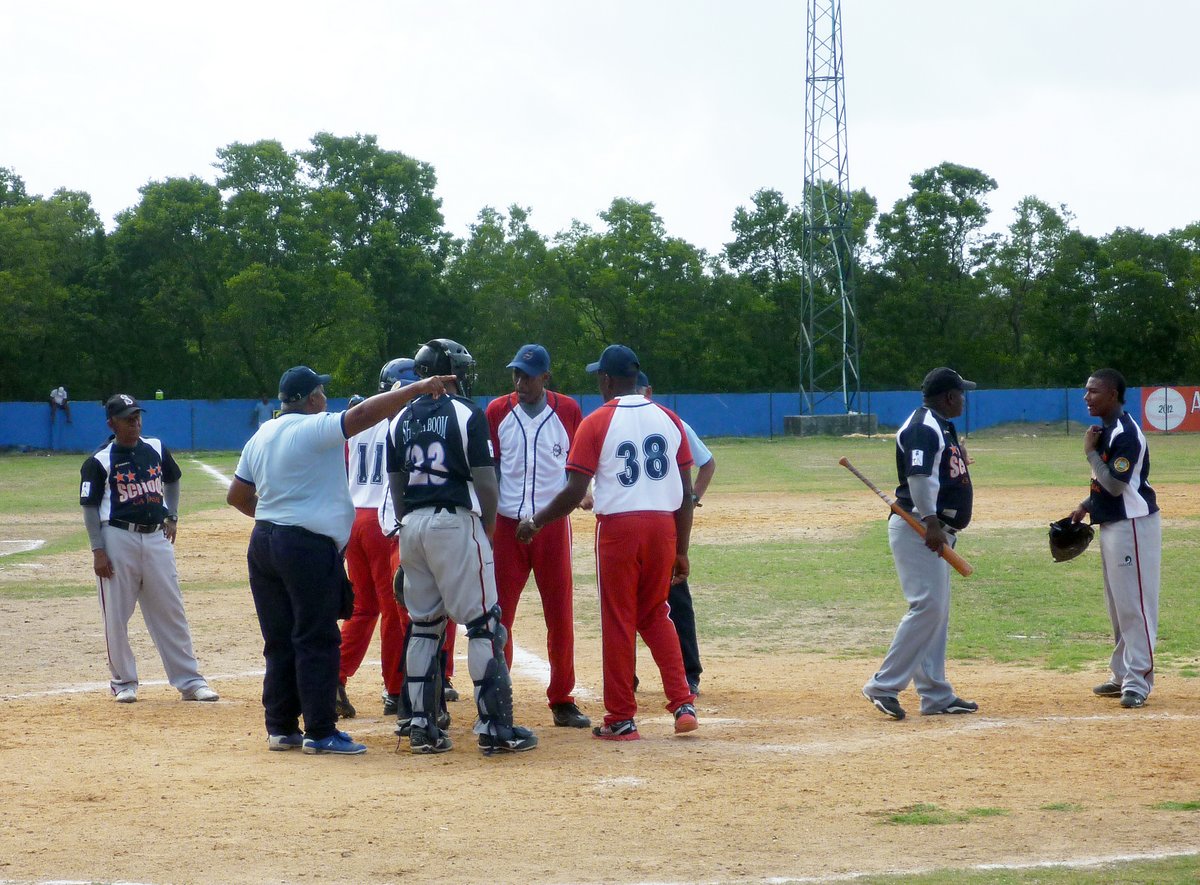
We walked back towards town and called in at the baseball stadium where a game was in progress. There were quite a few locals there, cheering on their home team. I really enjoyed myself. We were sat twenty metres behind the base plate and the crowd was constantly shouting abuse and encouragement at the referees and the players. There were a few arguments on the base plate when a referee made a borderline decision. Great fun – much better than the New York Yankees match that we saw last year.
27 May 2013 Providencia to San Andres, Colombia
The alarm went off a half past three, not that it mattered too much because I’m convinced that I didn’t sleep at all during the night. We jumped out of bed and left before four o’clock. There was a lovely full moon, so we had enough light to pull up the anchor and navigate out of the anchorage. We motored until we got to the outer sea buoy and then sailed off towards San Andres on a reach. The winds were flaky for the first hour because we were in the shadow of the island, but it soon settled down to a pleasant 15 knot wind.
Unfortunately, the seas were large and confused and, after being at anchor for a couple of weeks, we started to feel a little queasy, but a couple of hours staring at the horizon soon sorted us out.
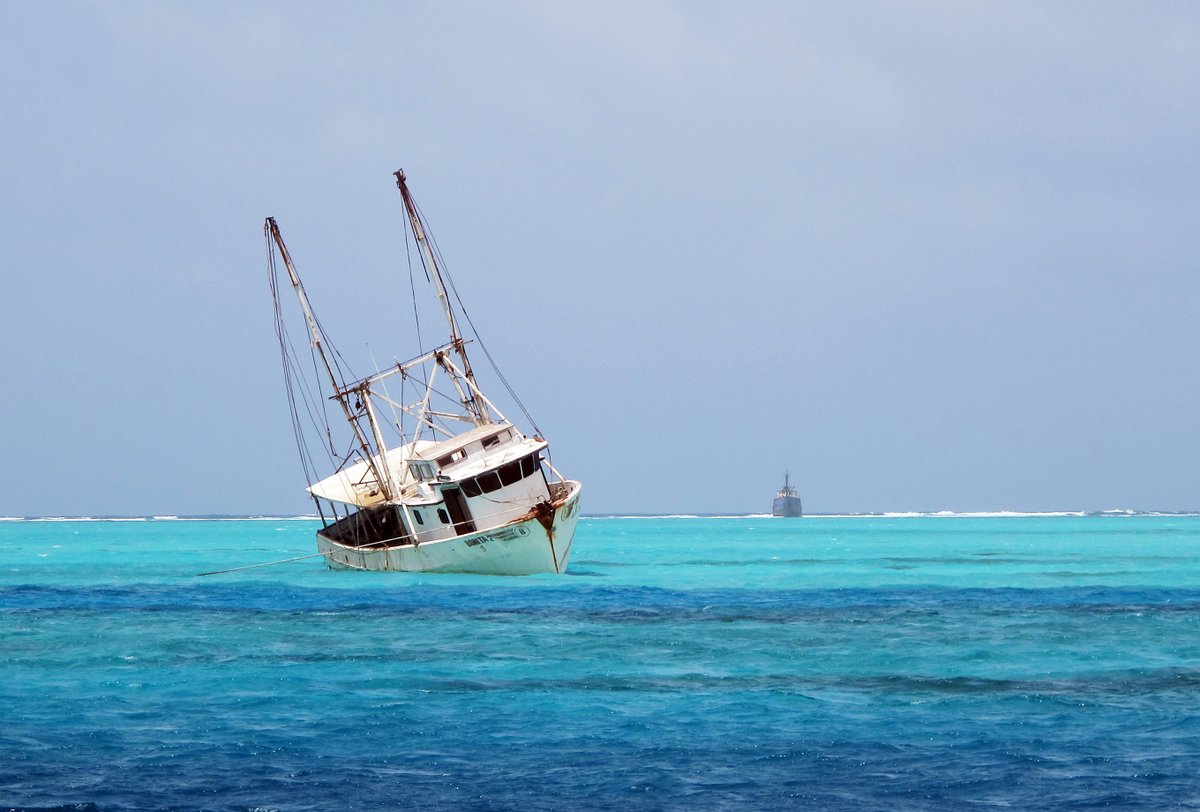
We had to sail south along the fringing reef of San Andres for five miles, going past the anchorage and then turned around a breaking reef into the ship channel. It’s quite worrying going along the edge of the reef because there are quite a few wrecked ships perched high and dry on the reef. We gybed around the outer sea buoy and sailed into the harbour at around three o’clock past some small islands covered with tourists. The water colours were stunning reflecting the intermittent sun off the white sand sea bed.
The chart shows the San Andres town anchorage as being to the west of a small island called Cotton Cay. We weaved our way through a fleet of fishing boats, all anchored on bits of rope, encountering depths ranging from 10 metres down to 2.6 metres. The charts seemed to be very inaccurate. We then spotted a group of cruising boats to the north-east of the island, so we cautiously started to head towards them. As we passed a French flagged boat called “Le Croix de Sud”, they attracted our attention and told us that we wouldn't be able to get directly to the anchorage because is less than 1 metre. They explained that we had to go back to the shipping channel and follow an unmarked channel on the south east side of the cay.
Not trusting the charts and having poor sunlight, we had a couple of emergency stops when the depth plummeted, but eventually felt our way into the anchorage. There were four yachts in the anchorage and several big tourist boats – one’s a floating nightclub and another’s a pirate ship. There were also lots of mooring balls.
We motored around the place and found that the anchorage is quite tight with shallow water surrounding it. We anchored in a nice big gap in six metres of water and were then told off by a guy on the big night club boat because we were anchored in the main channel – what channel? We decided to move anyway and ended up dropping our anchor between “Arwen”, a Hallberg Rassy 40 and “Five Islands”, an Australian Catamaran. By the time that we’d settled, we were fairly well positioned behind them, but have a one metre shallow sand bank about two boat lengths behind us – I hope that we don’t drag.
Some idiot had left their VHF radio on transmit, so we were unable to hail Rene, the clearance agent on channel 16, so we went to say hello to our close neighbours to get local knowledge. At their suggestion we went to Nene’s Marina, but the clearance agent was not around and we were told by Nene to call Rene on channel 16. We gave up and went back to Alba for a nice cold beer.
28 May 2013 San Andres, Colombia
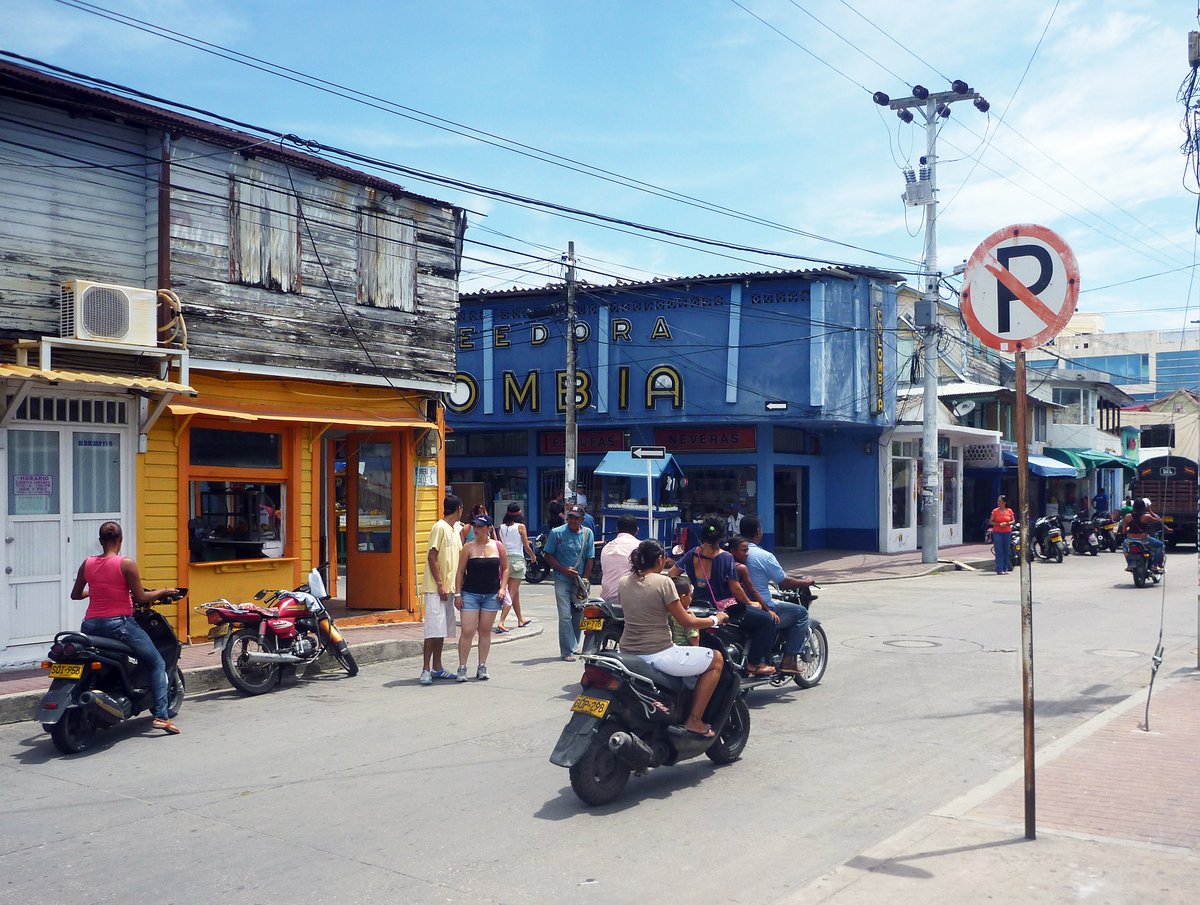
We managed to contact Rene on the VHF radio and arranged to meet him at ten o’clock. We waited until half past ten and he hadn’t turned up so we gave up and went for a walk telling Nene that we’d be back at eleven. We wandered around getting a feel for the place. It’s a very busy, chaotic place with thousands of motor bikes whizzing around. You need eyes in the back of your head when crossing a street as they seem to come from all directions.
Rene didn’t turn up at eleven o’clock, so we so we told Nene that we’d try to get hold of Rene later in the day. We went to Yacht Club which is just across from where we were anchored. They charge $12.50 per person per week to use their dinghy dock - we tried to get a reduced rate because we’ll only be here for five days but no chance. We caved in; it’s not a lot of money to get the security for docking our dinghy. While we were there, we got the lady to ring Rene and arranged to meet him at four o’clock at the Yacht Club.
We wandered around the town a little more. It’s a very confusing place. Streets seem to go all over the place and gently curve, so you start walking east and end up walking north – very disorienting. The place is a mixture of small local shops and larger glitzy tourist shops. San Andres is a very popular holiday destination for mainland Colombian tourists and they are everywhere.
Eventually, we retired to a small restaurant called “Miss Celia’s“, which is almost directly opposite the yacht club entrance. It was a pleasant place and very busy. The food was acceptable and the portions were huge.
After another short walk around the area to work off some of our enormous lunch, we retired back to the boat. Five minutes after we’d settled down, Roland from “Le Croix de Sud” came over and told me that Rene was waiting for me at Nene’s Marina. I jumped in the dinghy and zipped over to be told that Rene had gone to see the port captain and would be back in ten minutes. I was not a happy bunny and went for a walk. Twenty minutes later the guy turned up, apologising. It only took five minutes for him to fill in a form, and then he disappeared. It’ll cost us $50 for his services to clear in and out – what a rip off.
We chilled out on the boat for the remainder of the afternoon and then went to “Cetacea” for sun-downers with Tony & Gail (USA). All of the other cruisers from the anchorage were there - Roland & his wife from “Le Croix de Sud” (Swiss), John & Sue from “Five Islands” (Australia), Jentz & Danielle from “Arwen” (German). It was a very pleasant international evening. Most of them know each other from cruising down in Panama, so we gathered a lot of information about getting work done in Shelter Bay Marina. “Le Croix De Sud” told us a horror story about having their engine rebuilt in Panama – they were stuck there for a whole year!
29 May 2013 San Andres, Colombia
We had a walk around the town and got totally lost – the streets are a maze. We eventually found a large supermarket not too far from the yacht club and re-stocked our provisions.
We can only get a very intermittent internet signal on board, so I spent the afternoon in the yacht club bar using their wireless internet while Glenys went for a walk around town by herself. I had a very productive afternoon, ordering lots of things to be delivered to Glenys’s brother Gareth in the UK. I’ve still got a very long list of things to buy before we go through the Panama Canal in October, so I’ll need to have another session soon.
30 May 2013 San Andres, Colombia
We had a really good internet connection on board today, so we stayed in and ordered lots more things. I’m starting to feel guilty about the large number of deliveries that Gareth is going to receive. We’re ordering lots of small items like camera batteries, guitar strings, printer cartridges, pump seals, etc. Unfortunately, it looks like there’s going to be about twenty separate small deliveries over the next week.
31 May 2013 San Andres, Colombia
We hired a scooter, which was a laid back affair. After we agreed the price of 50,000 pesos ($25US) for the day, we were bundled into a golf cart and taken down a back street to a kind of garage, where we were shown a nice, newish scooter standing amongst wrecked cars. In our broken Spanish, we confirmed that we’ d have it back by five o’clock and after handing over a 50,000 peso note, we were handed the keys. No inspection of driving license, no filling in forms, no disclaimers to sign – just pay and go. I love it.
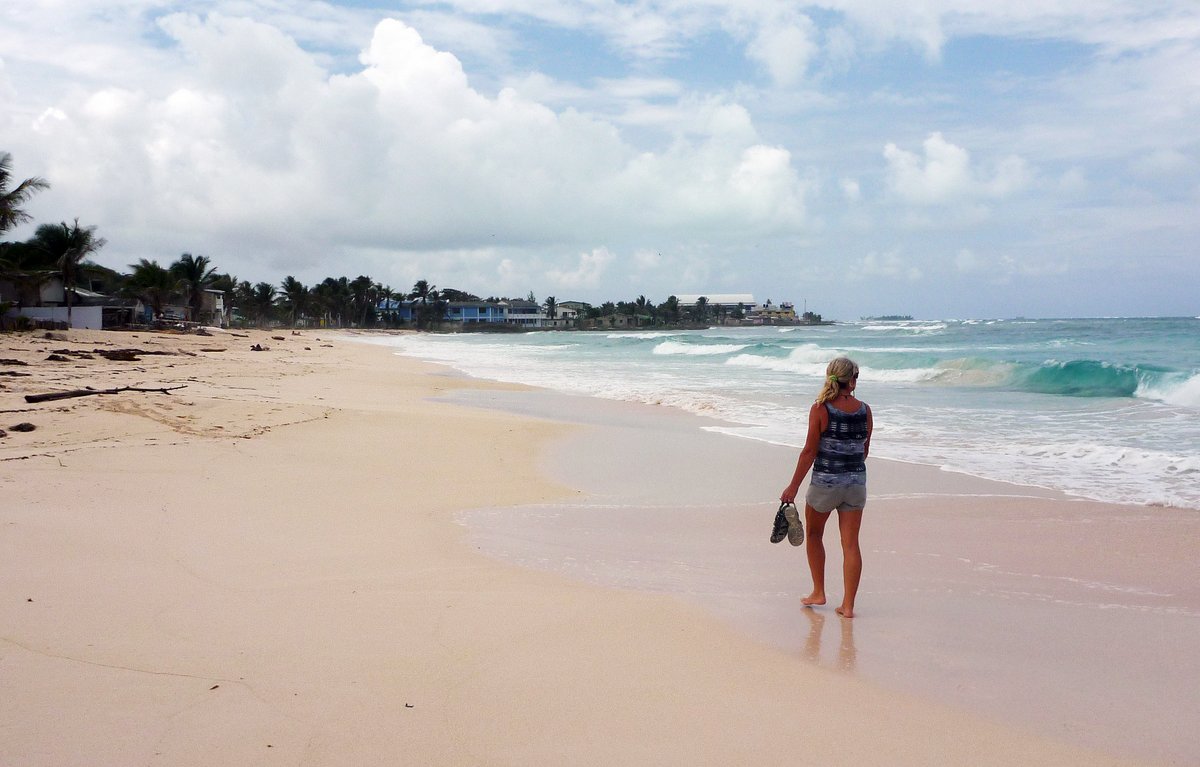
We drove around the island – it’s only seven miles long so it didn’t take us too long. It’s very built up in the north of the island and there are motorbikes everywhere. The south end of the island is much quieter and heavily geared towards the thousands of tourists who head there for the sandy beaches and tourist attractions.
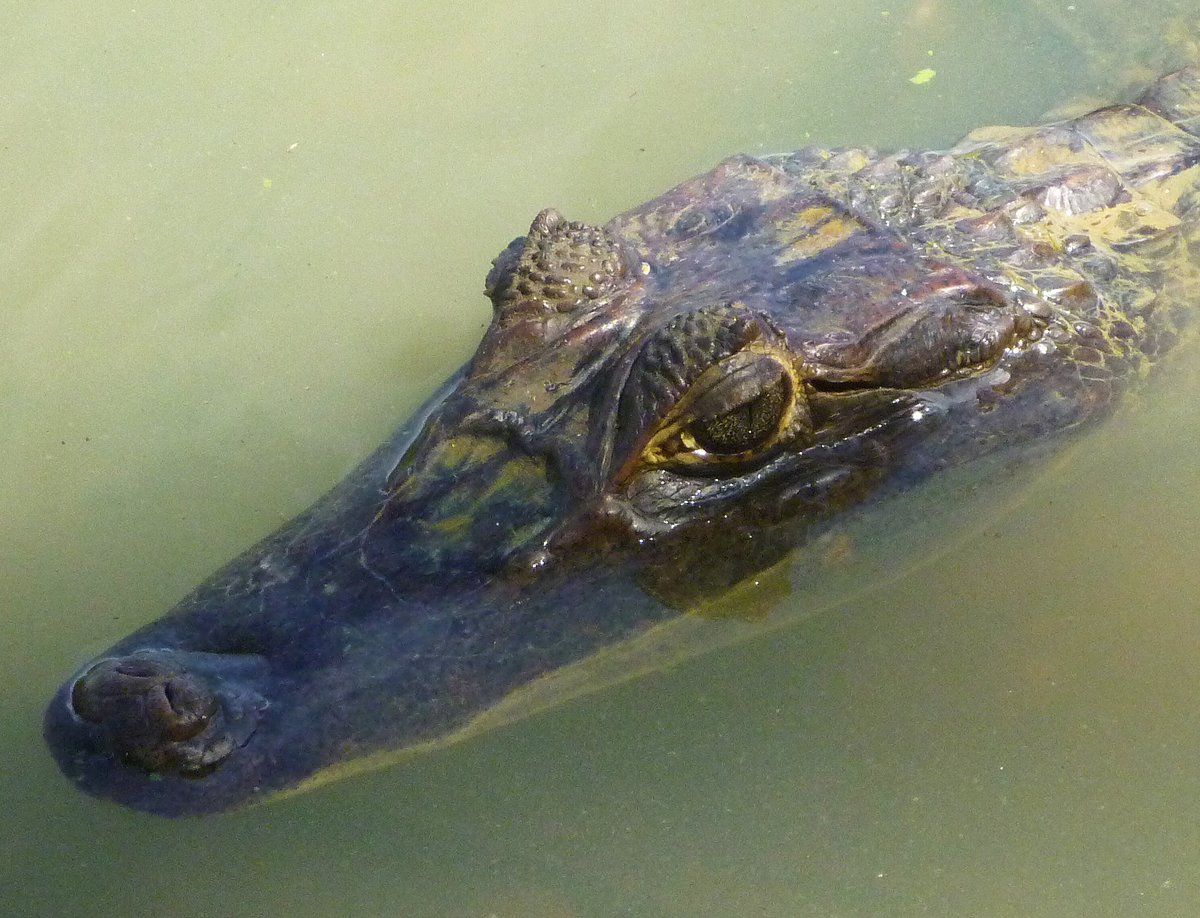
One major attraction is called “Big Pond Lagoon”, which is (eerrrr..) a big pond up in hills that run down the centre of the island. We were adopted by a “guide” who walked with us down from the main road to the pond and showed us some small Crocodiles that live in this 400 metre long lagoon. He then insisted on showing us a big tree which was (errr…) an old tree. He’d refused to agree an up-front price for his services, saying that he’d let our conscience decide the price. So I was a little apprehensive when I gave him a 5,000 peso note ($2.50 US), but he accepted it graciously.
We stopped off at various beaches and bays, then stopped at the “Blow Hole”, which IMHO was the best “attraction” on the island. It’s a small tunnel in the shore-line rocks that ends in a 1 foot diameter vertical hole. When big waves hit the seaward end of the tunnel, air is violently pushed out of the hole. People stand next to the hole and it’s really funny to see their hair stand vertically on end when the air rushes out.
We stopped for lunch at a very nice restaurant called “Donde Francesca” at Sound Bay. The food was a little more expensive than normal but was very, very good. Their fish soup is delicious. By three o’clock, we’d exhausted the possibilities of the island and returned the scooter.
I’d arrange to meet Rene at the yacht club at half past four, but as expected, he didn't turn up until called by someone at the yacht club. When he finally arrived, he handed over our zarpe and then said that I had to wait for the immigration officer, who turned up fifteen minutes later. The immigration guy filled in a form, which Rene and I signed. Rene took his $50US and then told me that I’d have to wait while the Immigration officer went back to his office and stamped our passports. God, give me strength! Fortunately the immigration officer was good to his word and came back twenty minutes later – it took 1½ hours to clear out. Why did I pay Rene?