1 September 2011 Rio Manamo, Venezuela
No one else wanted to attempt to go down the small cano to the Pedernales River, so we upped anchor at eight o’clock and motored off by ourselves. We passed two large villages, but didn’t stop to trade with anyone when they came out to us - we were on a mission.
The first half of the cano has depths between 6 and 15 metres and is initially over 50 metres wide. After an hour of motoring at 5 knots, the cano started to narrow and trees began to encroach on the water. After two hours, we came to a junction where there is a Warao Indian village. They had very traditional dwellings with palm leaf roofs and most of the kids were naked. There were many happy, smiling children waving at this strange apparition passing very close to their homes.
We took the right hand fork and the river narrowed to 30 metres with lots of the trees hanging over the water. From this point onwards, Glenys was stood on the back deck, watching the trees and making sure that we didn’t hit branches with our 50 foot mast and rigging. I focussed on slowly steering us through this maze and watching out for water hyacinth and sodden floating logs. We hit two big logs with a thump, but both times I had the engine in neutral gear and no damage was done. The depth hardly ever dropped below 5 metres, which was a great relief, as we had enough to worry about with the trees. The narrowest point in the river was 20 metres wide and there were no places where we touched the trees.
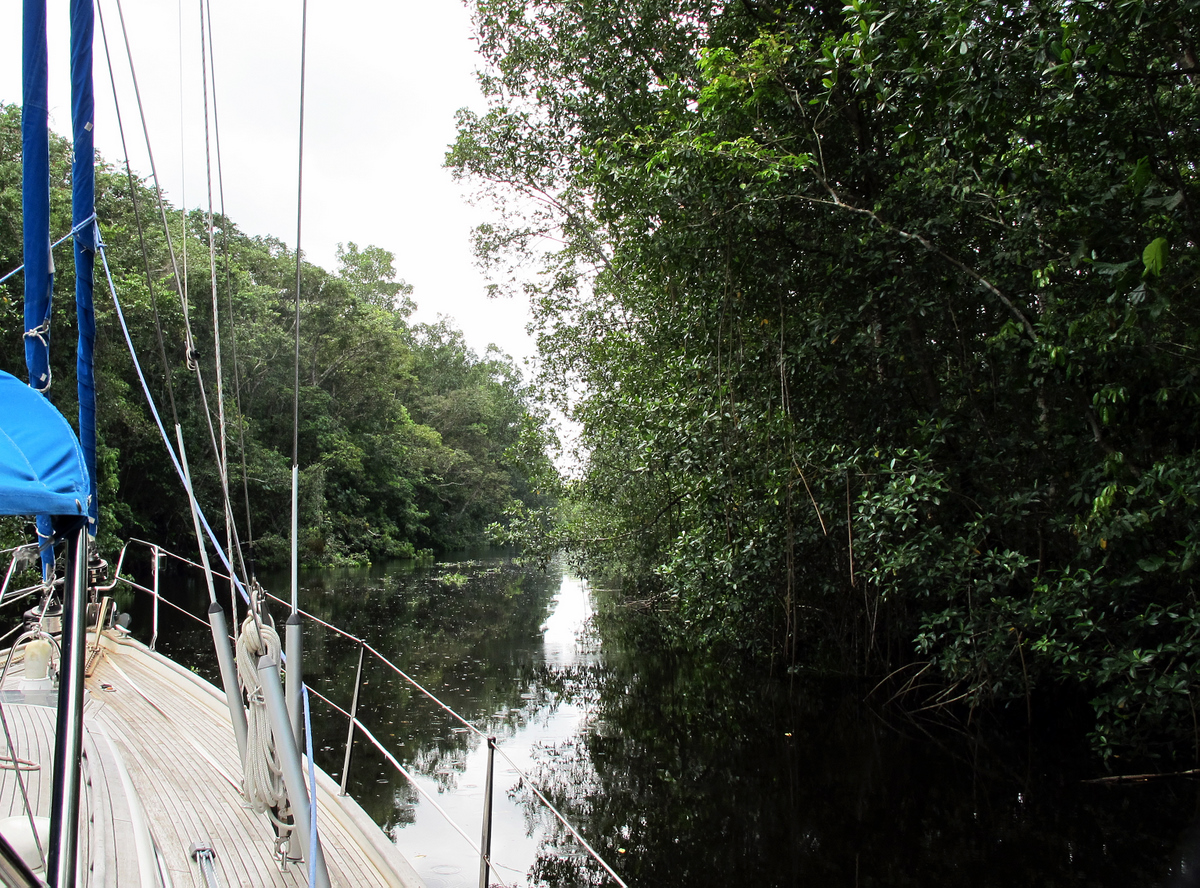
It took us an hour of intense concentration to weave our way through to the Pedernales River and what a welcome sight it was. In retrospect, the route is not difficult at all, but it is stressful because we didn’t know whether there was a way through. At some parts, when the trees are thickest, there is little room to turn a 42 foot yacht around, so we were pretty committed to keeping on going. Once we got through, both of us thought that it was good fun.
We slowly motored north down the wide river. It’s quite shallow compared to the Manamo River being between 5 to 10 metres deep. The vegetation on the shore is more regular with less palm trees as we go towards the sea. We passed a couple of big Warao villages – these had more “modern” buildings with corrugated iron roofs. No one bothered to come out to see us, but the children waved and smiled from the shore. I don’t think that they see many yachts down this way.
There’s a lot of boat traffic up and down the river. Most of them slowed down to stare when they saw us. At two o’clock, we anchored off an island at 09 45.21N 62 10.29W in 7 metres of water. There’s a very shallow bar extending south from the island and our depth gauge dropped below 2 metres while we were looking around for a place to anchor. We probably went aground in the soft mud, but I soon reversed us off into deeper water.
The horse flies are a damn nuisance here, so we put up the mosquito netting to keep them at bay. Glenys relaxed in the cockpit in the afternoon and I updated my map with the route of the small cano that we have just done. I made sure that I collected a good number of GPS waypoints on the trip through the cano, so the map should be pretty accurate.
The anchorage is a lovely peaceful place with two smaller canos that go off to the west. The cruising notes say that one of them goes back to the Manamo River, but I don’t think we’ll bother to try. Our plan is to go to Pedernales tomorrow and meet up with the others, who are staying at Ibis Island tonight, before heading back to Trinidad on Saturday.
In the evening, the horse flies were going mad trying to get through the mosquito net – I’m really pleased with the way that it’s worked on this trip. We had an early night – a stressful, but enjoyable day.
2 September 2011 Rio Manamo, Venezuela
I slept like a log until three o’clock, when I woke suddenly with the feeling that I’d heard voices outside. Glenys was awake, so I asked her if she had heard anything, but she hadn’t. I had to get up and have a look around outside, but all was very peaceful. The only noise was the occasional splash of water against the hull caused by the strong current.
Back in bed, I found it difficult to sleep because I was constantly listening for the sound of someone on deck. I had time to ponder the balance between anchoring in an isolated place and the need for security. Most of the time, we are anchoring in crowded places with other cruisers, but it is nicer to be anchored alone. On the other hand, we are more likely to be a victim of armed robbery if anchored by ourselves. I finally fell into a fitful sleep without reaching a conclusion.

I was up at quarter past six, when the first boats came whizzing by us. One of the problems that we will face when going back to Trinidad is that we won’t have any documentation to show that we have been in Venezuela for two weeks. Some cruisers have had a very hard time from the Trinidad Customs officers when they arrive with no papers. To make matters worse, we’ve heard that a “State of Emergency” has been declared in Trinidad because of some civil unrest a week ago. I’m not sure whether this will make it harder to get cleared in without exit documentation. I prepared a home-made departure document, which I filled in, hoping that the Guardia Nacional will date stamp it for me in Pedernales.
The trip down river turned out to be fairly boring. The river Pedernales is very wide and only 5-10 metres deep. We passed a small settlement of Warao Indians and two dugout canoes came across to see us. They didn’t come to trade, just to stare. We called them over and Glenys gave them a few small things and some pancakes that she had made. One of the dugouts had a couple of young boys who had a woven basket containing crabs, which I guess they have collected in the mangroves – we later saw many boats and people going into the mangroves on the shore line.
We stuck our nose into a large river which heads east a mile before Pedernales, but it was only 4 metres deep and didn’t seem to be going anywhere. We turned around and carried onto Pedernales where we anchored beside “Blackthorn Lady” and “Pogeyan”.
There was a wicked two knot current in the anchorage, so we waited until it had slackened and then went in to see the Guardia Nacional with the others. I had written down what I was going to say in Spanish, “Es possible para usted meter una marca en mi zarpe?” He seemed to understand and immediately stamped my homemade exit papers and wrote down our passport details in his ledger. When the officer had done the same with the others’ papers, we all went for a walk around the town.

It was a little busier than when we arrived two weeks ago and we bought some bread and beer. There was a traditional ice machine on the street. This is a hand cranked press, which grinds a big block of ice into small pieces. The vendor puts the ice into a cup and adds syrup to make a “slush puppy.” Glenys bought one to try it and it was nice.
There were quite a few Warao Indians hanging about outside the shop where we bought beer. They were sitting about with loads of kids and it appeared sad that they were in this town with nothing to do but beg. We were pestered by a few children asking for money and Glenys’ slush puppy. We walked back to the boat a little despondent at the obvious poverty in the town.
We had dinner on Pogeyan which was a barbeque using up any fresh meat that we had left. Glenys and I have decided that we’ll not bother stopping in Trinidad, but will carry on to Grenada overnight. We swapped photographs with the others and exchanged contact details. It has been a fun two weeks and we have become good friends.
3 September 2011 Rio Manamo to Prickly Bay, Grenada (Day 1)
The alarm went off at five o’clock in the morning and we left at half past five just behind the others. Once again we had big problems getting the anchor up because the chain was wrapped around something – there must be big rocks or other obstructions down there. It took us five minutes of motoring backwards and forwards to get the chain free.
We motored down the river entrance and the horse flies made a last desperate attempt to get us. It was a very unpleasant hour swatting the little buggers as they zoomed about the cockpit. I’ve decided that horse flies are a major navigation hazard because when trying to swat them, we were definitely not looking where we were going and veering about wildly.
The trip out of the shallows was uneventful and we settled down to motor sailing in the fluky 5-10 knot wind. We had practically no wind and had to use the engine all the way past Scotland Bay and until we were five miles past Trinidad heading towards Grenada. The wind then picked up to 12 knots and we had a lovely sail until midnight when the wind dropped again. Before it went dark, we had ten minutes of watching bottlenose dolphins play in our bow wave and I caught a tuna which was particularly satisfying because I’d lost a big fish in the afternoon when it bit through the line. We had a sighting of the elusive green flash as the sun went down to end a very nice day.
4 September 2011 Rio Manamo to Prickly Bay, Grenada (Day 2)
We arrived in Prickly Bay at six o’clock in the morning. We had to motor-sail all night and I’d slowed us down to 4½ knots to time our arrival at dawn. We anchored and went to bed for a couple of hours.
After breakfast, we chilled out tidying up and getting internet access again. I checked the weather forecasts properly for the first time in two weeks – I’ve been getting second hand information from Ian on Blackthorn Lady for the past two weeks. There are a couple of Tropical Storms north of us, a low to the east of us and 10 knot winds in our area. We’re hoping for 20 knot east winds, so that we can head west down to the ABC islands – maybe next weekend.
I went over to customs to clear in and there was no problem with my homemade departure document. Back on the boat, I updated my diary and the map of the Manamo River and published it to our web site, then mooched about the rest of the afternoon.
Steve and Lynn from “Celebration” came for dinner to help eat the tuna that we caught yesterday.
5 September 2011 Prickly Bay, Grenada
Today was a running about day. We took three bags of dirty clothes to the laundry and went to Spice Island Marine to pick up our mail, which Gareth had sent from the UK two months ago. Unfortunately the Grenadian Customs had classified it as a parcel so, with some trepidation, we had to go into St Georges to pick it up. It turned out to be pretty straight forward; I just had to open the two “Jiffy” bags and show the customs officer that it was mail that had been sent to us and that was it.
By this time, it was nearly midday, so we strolled around the Carenage and into the Nutmeg restaurant for a relaxed lunch, while we opened the mail. There wasn’t anything that we weren’t aware of - 75% of it was junk mail. John and Sunny from “Notre Vie” walked in just as we were about to leave, so we had a quick chat. Sunny’s brother is visiting them and they’ve hired a sports fishing boat to go out looking for Marlin. They may have a spare place, so I might be going out with them on Wednesday.
We wandered into St Georges and picked up a few things before catching a bus back to Spiceland Mall where we did a “big shop” and caught a taxi back. Back on the boat, we had a couple of stowaways.
We’ve been pretty meticulous about making sure that we don’t take cardboard boxes down below because of the danger of cockroaches. I’ve been opening boxes on deck, placing the contents in the cockpit and then soaking the cardboard in sea water to kill any cockroach eggs. On our last boat, we picked up cockroaches in Tunisia and it took five months to get rid of them.
Today, we bought two cases of beer, which I started to open in the cockpit. After removing six cans, I spotted a huge 30mm long cockroach in the bottom of the cardboard case. Don’t Panic Mr Mannering! It took me 60 seconds to corner the little devil and crush it with a beer can. Phew! I started to remove the rest of the beer cans and spotted another one in the case – it only took 20 seconds to kill that one. We’re going to have to be more careful…
When we put the new arch on, I moved the Wireless Internet Aerial and the cables that I have aren’t long enough to connect to the laptop on the chart table. For the past three weeks, we’ve been using the laptop balanced on our knees in the back cabin. It’s driving me mad. Despite this, we managed to have a Skype conference call with Brett and Craig – it was great to catch up with what they’re doing. We’re looking forward to seeing them at Christmas.
I read some recent emails in the evening and one was from some good friends (Steve & Jacqui) who are coming out to Barbados for a holiday later this week. Since we have light winds at the moment, I think that it might be feasible to head east and go to see them. Yesterday we were planning to go west to the ABC islands - it’s funny how plans can change.
6 September 2011 Prickly Bay to St Georges, Grenada
I listened to the “Grenada Cruiser’s Net” on the VHF radio at half past seven and they went on and on for over an hour. It’s dominated by retired Americans who have camped down here for the hurricane season. It’s like being on a holiday camp. They've organised social events on every day of the week – yoga, backgammon, ladies dominos, Spanish classes, volleyball, film nights, film afternoons, potluck dinners, shopping trips, etc, etc. By the end of the Net, I wanted to scream - I’ve got to get out of here.
I went to Spiceland Mall and managed to buy a longer USB cable for the Wireless Internet Aerial. Back on the boat, I rang John from “Notre Vie” and found out that there is a spare slot for me on the fishing trip. I have to be there at half past seven in the morning, so we decided to go around to the marina in St Georges for a couple of days.
We motored around to Point Saline and then had a nice sail for an hour, before motoring into the marina. Once tied up, I set to installing the USB cable for the Internet Aerial. It took me three hours and I just finished in time to go to meet John and Sunny for happy hour in the bar. Glenys and I stayed for a meal in the bar. We had pizza with a Greek salad. The bar is very trendy with a jazz act playing in the background, so it was very surreal - just like being in a hotel.
7 September 2011 St Georges, Grenada
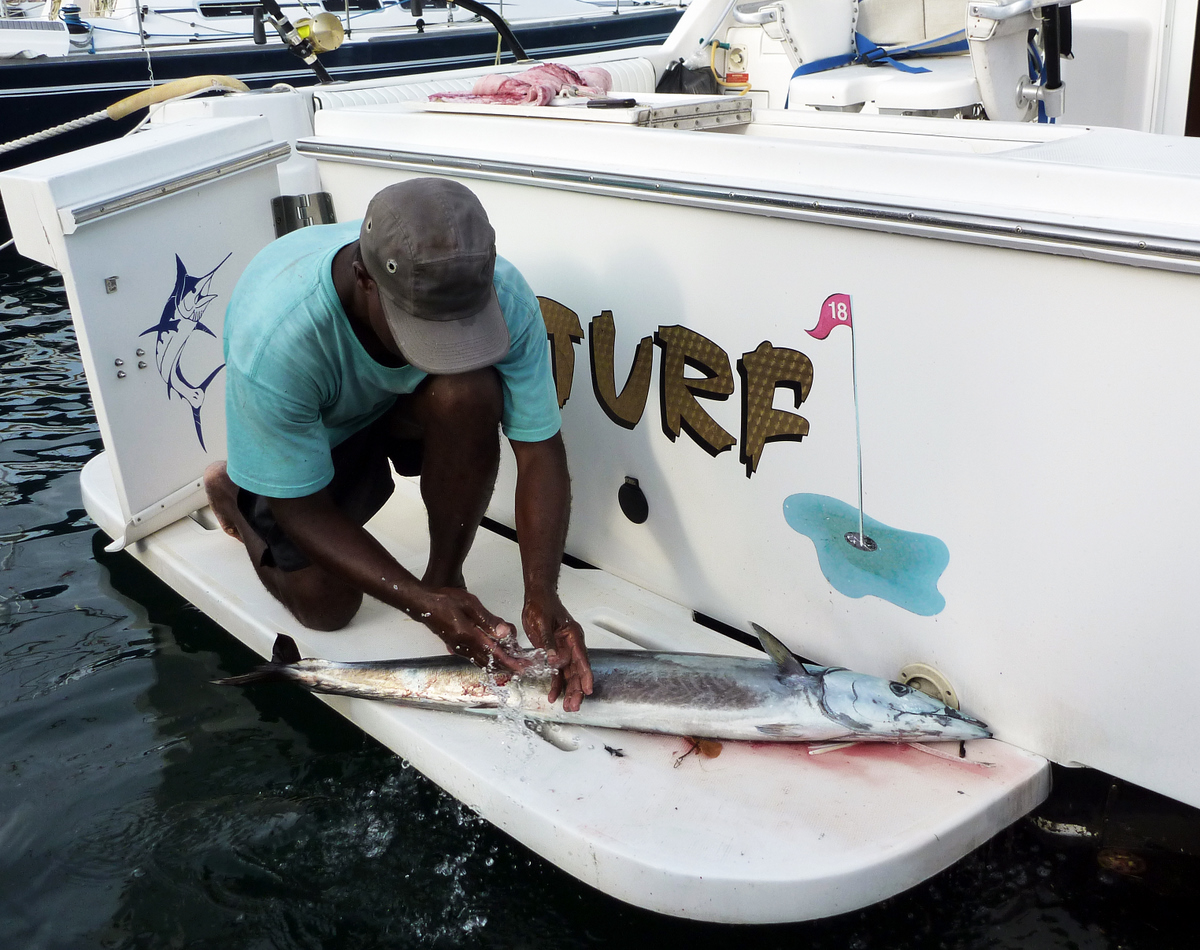
I went to “Notre Vie” for breakfast and then we met the others on the fishing boat – there were six of us in all. The skipper was a Brit called Badger – he is a cockney and sounds like a right wide boy, but he knows his stuff. We went 24 miles to the west of Grenada where the water is 4000 to 8000 feet deep. We spent seven hours motoring around at 7 knots with five lines in the water at all times. We set up a rota system, so that we each took it in turns to take the rod whenever there was a strike.
We only had three strikes – two Dorado and a wahoo. I was number four, so I didn’t get my hands on a rod. However, it was a good day out and I learned a lot more about trolling. I spent $120US on the trip and will probably be spending more than that on new fishing lures and gear.
In the evening, we went to a “pot luck” Mexican at the marina – arranged by American cruisers of course. It was OK, but they have such a bunker mentality and don’t even consider moving out of the marina for a day sail.
8 September 2011 St Georges to Prickly Bay, Grenada
Tropical Storm Maria is heading our way. It should pass through the Leeward Islands to the north of us, but it will affect the winds in our area. This means we can’t go to Barbados because the winds will be coming from the south and the anchorage in Bridgetown will be horrible. The winds are also too light to go to Bonaire. I was feeling depressed about hanging about in the Grenadian Holiday Camp, then I realised that we could head up to Carriacou for the weekend - that cheered me up.
I nipped over to the chandlers to buy some more fishing lures, then we motored over to Molinere Point, picked up a mooring and did a nice scuba dive – the first one for seven weeks. We were caught by the Marine Park boat and had to pay a $10US mooring fee. It’s a good job that they didn’t show up while we were out diving because we didn’t realise that you’re not allowed to scuba dive in the marine park unless you’re with a local dive centre. That’s another nice dive site blocked off.
I re-filled our two dive tanks ready to do a dive tomorrow and we then went for a quick snorkel in the bay. There are some sculptures placed on the sea bed to give interest for the tourists that get brought out here. It’s a good job they are there because the coral is rubbish. I managed to find a school of reef squid which entertained me for a while.
Having paid for a mooring, we decided to stay for the night and leave for Carriacou early in the morning.
9 September 2011 St Georges to Mount Hartman Bay, Grenada
Today was about “The Best Laid Plans of Mice and Men”. We had swung around during the night and found that we had a real tangle with the mooring buoy. There was a length of 5 mm cord tied underneath the mooring buoy, which had wrapped itself around our mooring rope. It took me twenty minutes to clear it and only after I dived in with a bread knife.
Once free, we motored around the small headland to go north and found ourselves bashing directly into five foot waves and ten knots of wind. We decided that the swell was being generated by Tropical Storm Maria which is 200 miles north of us. After ten minutes, it was obvious that we would be doing this for five hours and that we wouldn’t be able to dive at Ile de Ronde, so we turned tail and headed for Prickly Bay.
I nipped into the chandlers and bought a new shower hose for the aft deck – our old one fell apart yesterday. While I was in there I bought a set of small “birds”, which are designed to be towed along after the boat as a “teaser” to attract fish. They skip along the surface like flying fish and cause a lot of commotion. The idea is that the fish get excited by the teaser and will hit the lure that I’m trailing. With the two new lures that I bought yesterday, that’s about £500 on fishing tackle to date – I think that I’ve caught six fish, so I’d better start catching more.
We motored around to Mount Hartman, filled up with fuel and anchored behind “Foggy Mountain”, who we last saw in Tyrell Bay in June. We had a quick chat with Pam and Jeff and had a quiet night in, finishing off the remainder of the Wahoo that was caught on the fishing trip.
10 September 2011 Mount Hartman Bay, Grenada
I checked the weather first thing this morning and Tropical Storm Maria is now to the north of us and well out of the way. I downloaded a GRIB file which shows a forecast of the wind direction for the next 72 hours and the winds should be south-east, 15 knots tomorrow and then dropping on Tuesday. We’ve decided that we’ll leave early tomorrow for the small island of La Blanquilla in Venezuela, which should take us 30 hours.
I spent the morning doing administration, sorting out bank statements and composing a reply to the Inland Revenue who are making enquiries on my 2009/10 tax return. As they say, there’s no escape from death and taxes.
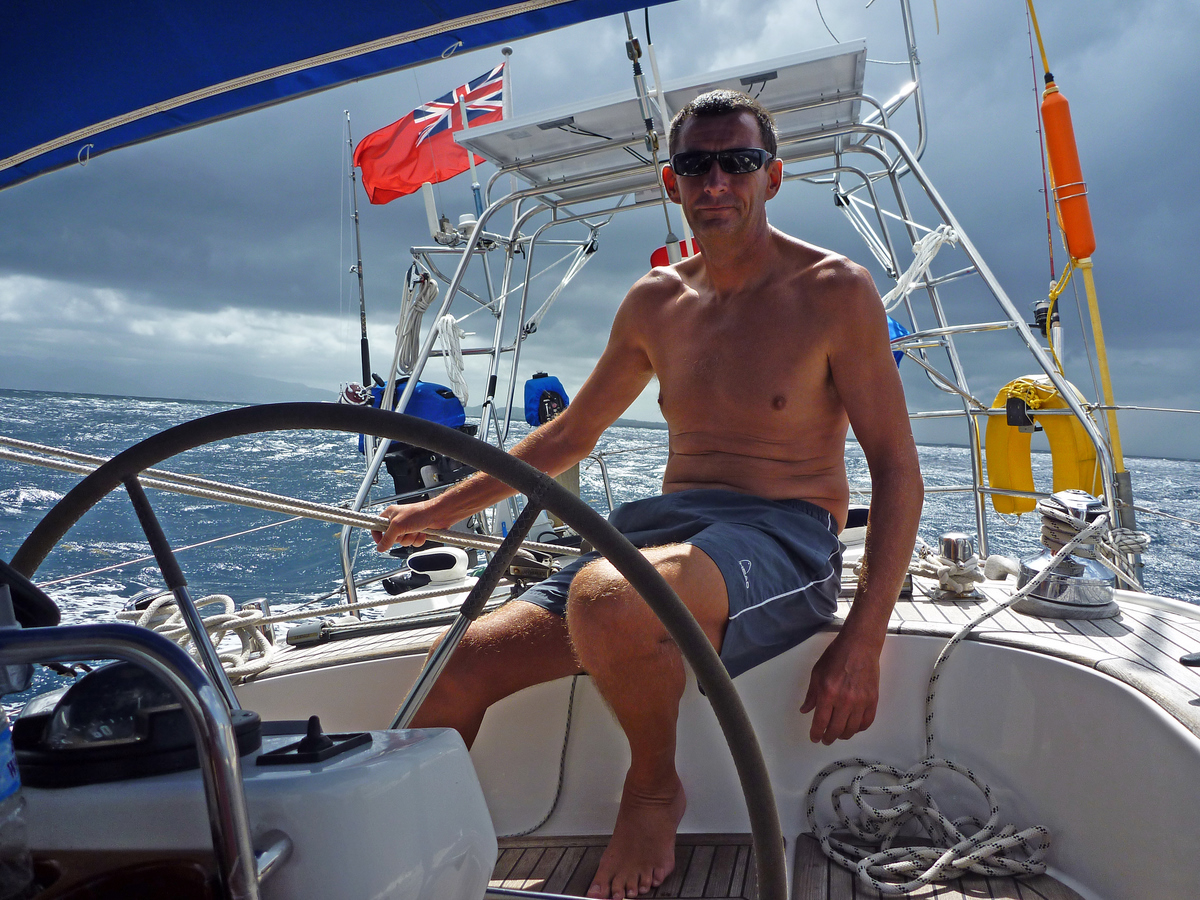
We walked over to Prickly Bay and checked out. Glenys bought a few last minute groceries and we spent the rest of the afternoon tidying up, getting ready for sea and waiting. We’ve finished the last of our fish, so we had roast pork, mashed potatoes, vegetables and gravy for dinner.
11 September 2011 Mount Hartman Bay to Los Roches, Venezuela (Day 1)
The wind really picked up overnight. At one point, I had to shut our hatch because the gusts of wind kept waking me up. We climbed out of bed at five o’clock to find 20-25 knot winds from the south. The forecast still said 15 knots from the south-east. As the sun came up, we could see that it looked pretty rough outside the anchorage with big breakers on the reefs and there were low clouds scudding across the sky. We decided to go back to bed and wait a couple of hours to see what happens.
At half past eight, the wind seemed to have settled down to SSE 18-22 knots, so we decided to go for it. It was pretty bouncy as we sailed on a broad reach past Glover Island and there was an ominous looking thunder storm to windward of us. We kept heading west. Fortunately, the thunderstorm passed just behind us, but as it went past, the wind increased to 30 knots from the south west forcing us hard onto the wind into the growing seas. We had a grim couple of hours until the wind started to back to the south.
Throughout the afternoon, the wind continued to back and the sailing became more pleasant. We had a fantastic night’s sail with a full moon and 20 knot south east winds, which put us on a screaming broad reach, surfing down the waves. The highest recorded speed was 8.2 knots, which is our record to date.
12 September 2011 Mount Hartman Bay to Los Roches, Venezuela (Day 2)
When we changed watches at four o’clock in the morning, Glenys said that she’d been a bit worried by lightning flashes in clouds ahead of us. By six o’clock, we seemed to be catching up a huge thunderstorm emitting spectacular bolts of lightning every couple of minutes. There was another one upwind and to the south of us. Half an hour later, the wind had veered to the south west and a big line of black clouds was heading towards us from the south. I decided to try to slip between the two systems, so I heavily reefed the main, rolled away the jib and motored north-west into the rising seas.
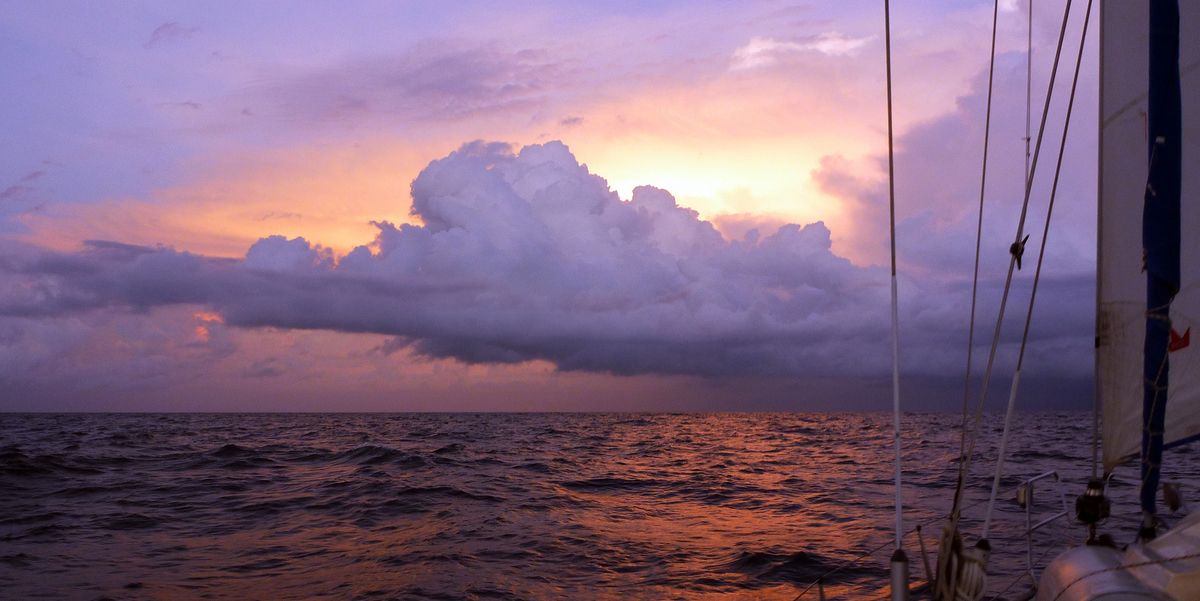
At half past seven, we were clobbered by 40 knot winds from the west and driving heavy rain. We kept heading north west, hoping that it would go past us, but an hour later, we still had 25 to 35 knot westerly winds and the seas were getting worse with 12 foot waves. It was very confusing – why were we getting west winds? We decided that it was a small low pressure system/ridge caused by Tropical Storm Maria, which is 200 miles north of us. Treating it like a mini-tropical storm, we tacked and headed south west as hard on starboard tack as we could. An hour later, the wind had abated to 20 knots, still from the west, but there were brighter skies ahead. The seas were still pretty horrible, but we managed to keep a south west course.
We debated what to do. Our options were pretty limited. We were originally headed for La Blanquilla, but the anchorages all face south or west and would be untenable. Other options included heading for mainland Venezuela to the south of us; going back to Grenada or continuing to bash westwards for another 24 hours and go to Los Roches. We decided that the wind would go back to the south east eventually, so we carried on motor sailing south west around the high, rocky Los Hermanos islands. After lunch, the wind backed and we were able to start sailing west again.
We surveyed how the boat had coped in the heavy winds and seas. A block on the main sail outhaul had been ripped apart, so I had to replace it with a spare. That took me 40 minutes, hanging onto the boom on the pitching deck. Glenys found that the front berth was soaking wet and everything inside a small cupboard under the windlass was wet as well. We hadn’t closed off a Dorado vent and, because we had two feet of solid water washing across our front decks, the sea had forced its way past the baffles and down into the cabin. I also suspect that we have a leak in the windlass or the hause pipe which has wet the inside of the cupboard - another job for the list.
We sailed past La Blanquilla and the wind continued to back. By sunset, we had 12 knots from the south and were on a nice reach doing 6 knots directly towards Los Roches.
This is our second night at sea and we’ve fallen into a regular three hour watch pattern. We had dinner at six o’clock, then Glenys does seven to ten, followed by me at ten to one, then one to four and four to seven. Breakfast at eight o’clock and the day continues.
13 September 2011 Mount Hartman Bay to Los Roches, Venezuela (Day 3)
It was another wonderful moonlit night with the wind continuing to back to 20 knots from the south east.
Just before dawn, I had a nail-biting hour while we passed a mile to the north of the low-lying island of Orchilla. I could see a light house, but the light was flashing every nine seconds and there was nothing on my chart that matched that signature. I assumed that it was a lighthouse on the west side of the island, but was it? The GPS chart plotter was telling me that we were on course, but should I trust it? Sometimes the chart plotter doesn’t tie up to the GPS position and shows that we are on land when we plainly aren’t. As the sun rose, I could see the island a good mile away, so I could relax again.
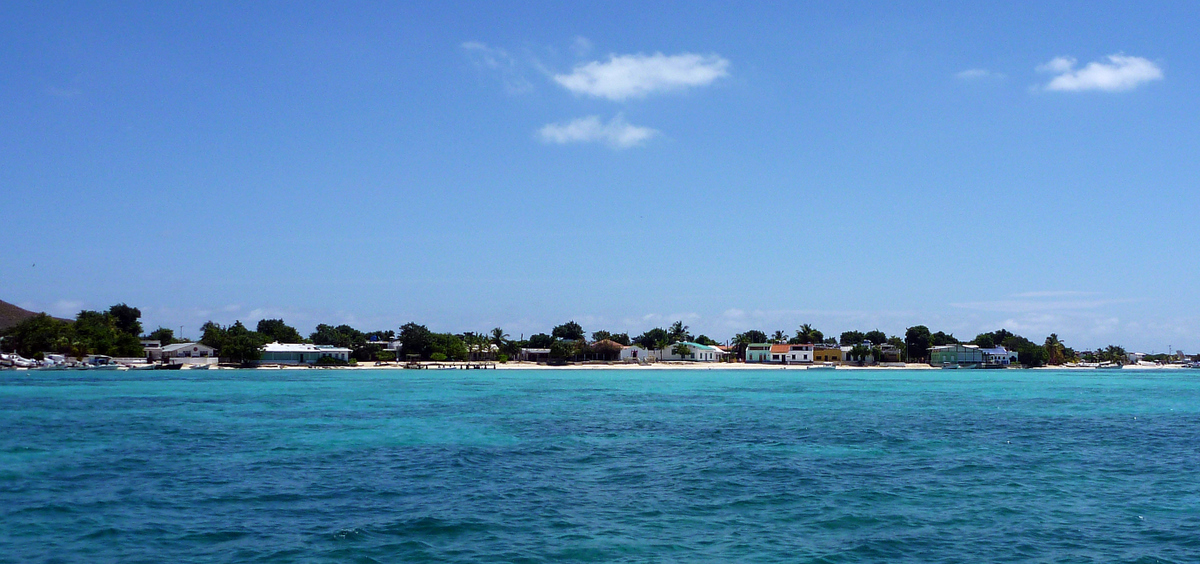
We arrived in Los Roches at eleven o’clock in the morning and anchored off the small town on El Grand Roche. I put the dinghy into the water and we went ashore to clear in. It took us four hours to sort everything out –mostly our fault because we couldn’t speak Spanish and no one spoke English. We made a mistake and went to the Guardia Nacional first, thinking that it was the coast guard. The officer booked us into his ledger and stamped the back of our exit papers from Grenada. We went to the Parks Authority (Inparques) and booked in there. They said that we didn’t need to see the coast guard, which confused us because we thought that we already had. In contradiction, they also seemed to say that the coast guard would tell us how long we could stay.
We went back to the Guardia Nacional (who we still thought were the coast guard) and they said that we should go to the “Armada”. One of them escorted us past the Parks Authority to the Coast Guard building– duhhhh. We were duly entered into their ledger, given a document and told that we had to go to get stamped by the Parks Authority, the Guardia Nacional and the Los Roches Authority (Authoridad Unica). The coast guard officer would only let us stay 24 hours and we should come back with the stamped form.
We went back to the Parks Authority, but that was now closed for lunch. The Guardia Nacional guy was surprised to see us again, but duly stamped the form. We eventually found the Los Roches Authority building, but that was also closed for lunch. The sign on the door said it would reopen at two o’clock, so we went to a restaurant and had lunch.
It took over an hour to get served and we baked in the heat even though we were shaded by trees. It’s a good job that we had a long lunch because the Los Roches Authority didn’t open until three o’clock. They quickly entered us into their ledger and stamped our form. We walked back to the Parks Authority and then onto the Coast Guard. The officer still wouldn’t officially give us any more than 24 hours, but using a chart, he indicated that unofficially, as long as we keep going west, he wouldn’t mind if we stopped a couple of places as we leave. He took the form from us and placed into a drawer in his desk, so we walked out without any documentation – very strange. They were all very friendly and it was incredibly frustrating to be unable to talk to them properly.
When we got back to the dinghy, we found that there were loads of kids playing on it and the wind had changed causing it to bash against a very sharp piece of metal on the rusty dock. The surface of the tube has been badly scratched, but fortunately no punctures. We upped anchor, motored a mile to a small island called Francisqui and collapsed – we were both very tired and dehydrated.
The small island has a beautiful white beach, and is obviously a place where the tourists are brought for the day. Fast pirogues rush between here and El Grand Roche, blaring out loud music - not quite the idyllic, deserted island paradise that we're looking for. Fortunately, they all disappeared before sunset.
A guy called Josh came by in a kayak for a chat. He’s skippering a catamaran for a rich Venezuelan and has been based here for a year. We invited him on board for a beer and he was glad to talk English for the first time in a couple of months. He says that there are very few foreign boats come here, the majority are Venezuelan. He has an unlimited internet connection via satellite ad gave us the pass code for his wireless network. When he left us I was able to get a weather forecast – it still shows SE 20 knots.
14 September 2011 Los Roches, Venezuela
I woke up at half past six wondering where I was – it took a few seconds to realise that we were in Los Roches.
I jumped out of bed, feeling much refreshed after an undisturbed night’s sleep. We pottered about and tidied up the boat, drying the front cabin and the £200 of engine spares that were in the front cupboard. It was blowing a consistent 20 knots from the southeast, so it stayed cool in the boat all day. There’s a kite surfing centre on one of the other small islands in this atoll and Josh came screaming by waving at us – so that’s what he’s been doing out here for a year.
We went snorkelling. The water wasn’t as clear as I expected and most of the coral is dead, but there are lots of fish around. We saw Ocean Triggerfish which are not common in the West Indies and loads of Barracuda. Hopefully the snorkelling will be better in other places in the Roches.
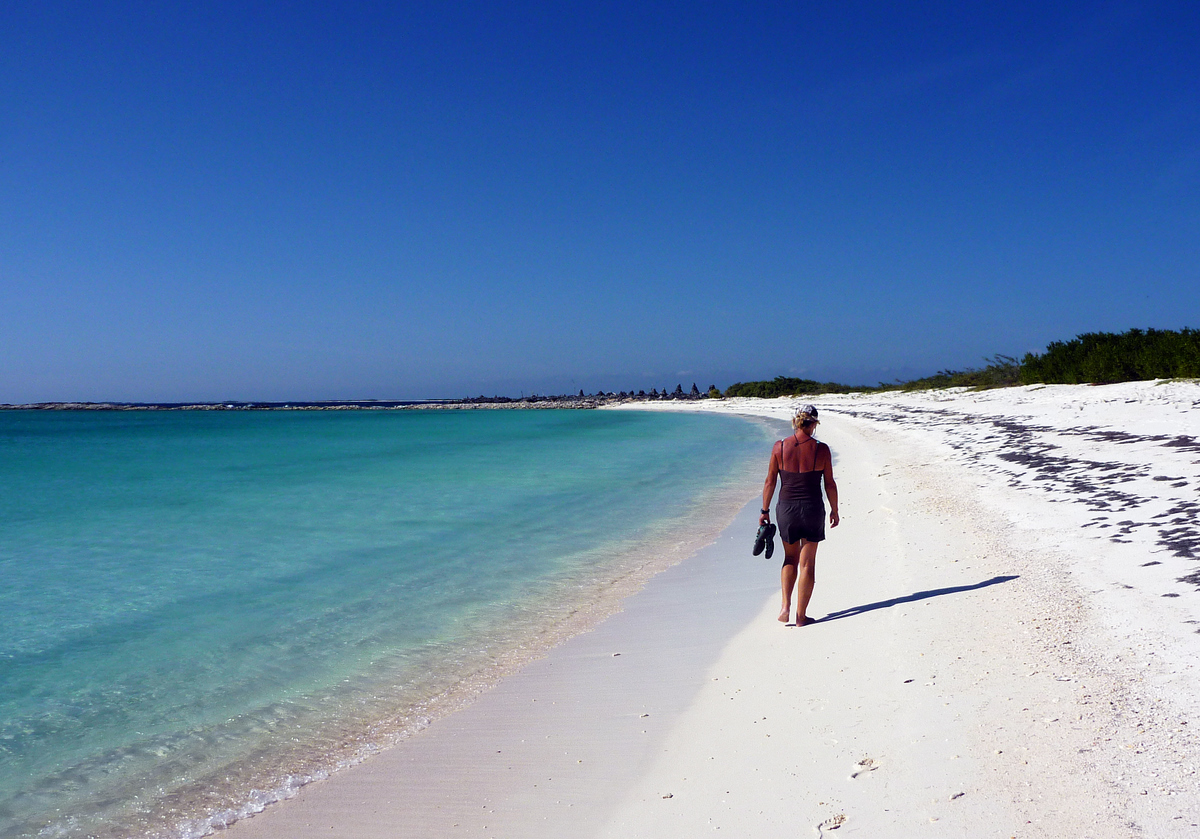
After lunch, we headed west. It was tempting to stay for another day and play with some of Josh’s toys, but we thought that we should honour our gentleman’s agreement with the Coast Guard. We sailed five miles with just the jib out. I reckon that the electronic charts on our chart plotter are about ¼ mile out – the GPS position shows us to be ¼ mile further south east than the chart. So without accurate charts, it’s a little scary sailing around the reefs, but the water colours are so bright that it’s easy to see how deep the water is.
We anchored off Crasqui Island about 400m from the beach in 3.8 metres of water. I guess that we could have gone further in, but our bottle went. The beach is stunning white sand, so we walked the full length of it – about a mile. There is a small beach bar at the south end where we found a small group of tourists who had been dropped off for the day. No loud music though which was nice.
It was a fabulous sunset, but no green flash. There are only four boats here and the closest is ¼ mile away - I like it here.
15 September 2011 Los Roches, Venezuela
We pottered about until ten o’clock waiting for the sun to get higher, so that the light is better for navigating around the reefs. It was only a short 5 mile hop to Sarqui so we motored there. We skirted around the south side of Espenqui following the reefs which are easy to spot in the brilliant light. However, we did have to make a ninety degree turn as we approached Espenqui because I’d misread the chart and there was a very shallow bar in our path.
The anchorage at Sarqui is on a fairly small, shallow strip of sand. There were already four boats anchored there, so we anchored in deeper water among the coral heads. I don’t think that we touched any with our chain, but I felt nervous in case any Park Authority boats came along, especially because officially we should have already left. We went for a snorkel, had lunch and then sailed to Carenero.
The anchorage of Cayo Remanso is lovely. There are mangroves to the east where pelicans dive down to gulp up small fish and to the west is a large lagoon stretching into the distance. We went snorkelling on the outside of the reef, but again I wasn’t impressed – most of the coral is dead and the fish are very wary of us.
Just after the sun went down, the black mosquitos arrived, so we hid down below and then put up the cockpit mosquito netting while we had dinner. I felt incredibly tired in the evening and suddenly had to rush to the toilet with spectacular results. I took some Immodium and went to bed before nine o’clock.
16 September 2011 Los Roches, Venezuela
I only just managed to drag myself out of bed before eight o’clock. I felt much better after sleeping for eleven hours.
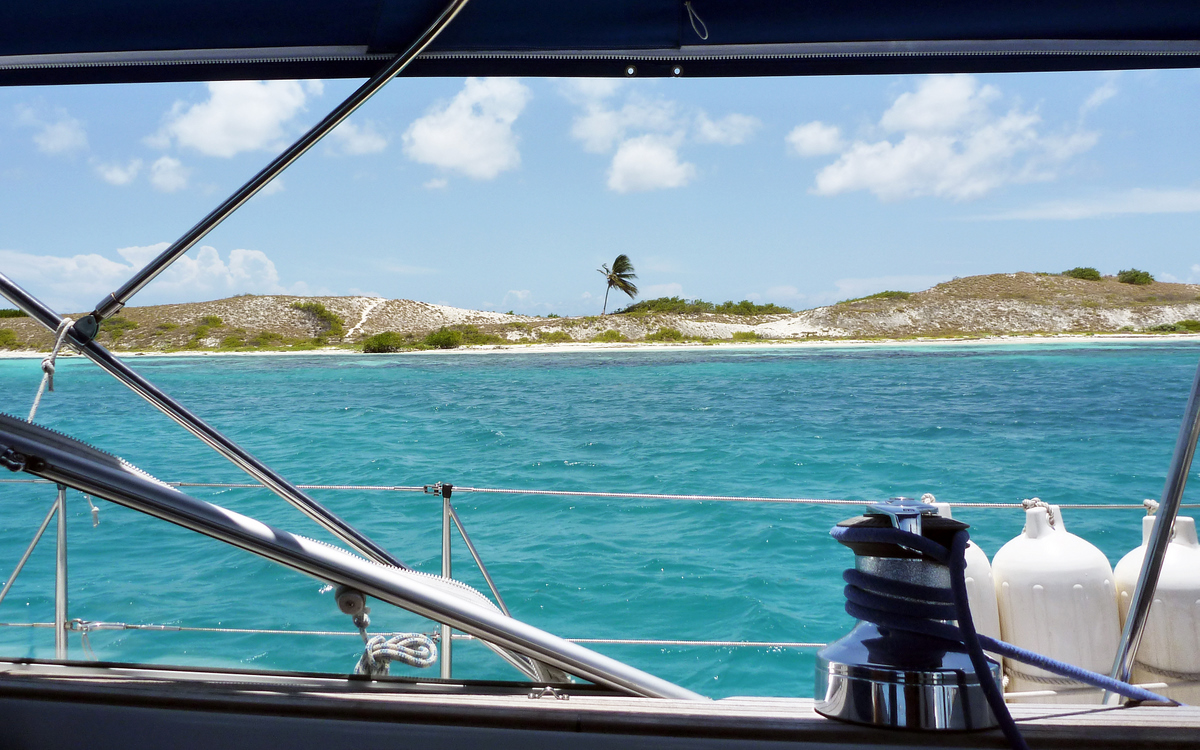
We sailed down to Cayo de Agua, which has an approach through shallow water with coral heads sticking up. It wasn’t too difficult to get into the anchorage which is beautiful and well protected. We anchored off the beach and after lunch went for a walk. The island gets its name from the water that can apparently be found a few feet below the surface. It is a very dry desert island apart from a couple of groves of palm trees that look like an oasis. We walked over to the palm trees, but didn’t spot any of the water holes mentioned in our pilot book.
There is a small anchorage on the south side of the island that looks stunning. It's exposed to the south and would only be good in very settled weather.
I felt really tired in the afternoon again and had a nap for ½ hour. We had a couple of rain showers come through later in the afternoon, but it settled down in the evening. I couldn’t motivate myself to put the dinghy on the front deck and get ready for sea, so we decided to stay another day and go to Les Aves on Sunday.
17 September 2011 Los Roches, Venezuela
I woke up aching all over and feeling very tired - I’m still suffering from a stomach bug. The symptoms aren’t too bad, so I decided to let it run its course and didn’t take any more Immodium. It was probably the salad with the meal that we had in El Gran Roches when we arrived. We’ve been very lucky that we’ve not had any problems with food or water until now.
We had a very lazy morning, reading and we went snorkelling for an hour. After lunch, I felt so tired that I went to bed for 1½ hours in afternoon. It took a major effort to drag myself out of bed. I put dinghy on front deck ready to go tomorrow, which exhausted me again.
I managed to stay awake through dinner and sloped off to bed at quarter to eight.
18 September 2011 Los Roches to Aves de Barlovento, Venezuela
I was up at seven o’clock feeling much better. I still had a couple of runs to the toilet, but it seemed to be manageable. We picked up the anchor just after eight o’clock and picked our way out of the anchorage between the coral heads.
There was only 10-12 knots of wind and we were going directly downwind, so it was a nice slow, gentle passage. I rigged up the spinnaker pole to hold out the jib and we ran down wind at 3-4 knots. I had a couple of fish pick up my fishing lure, but neither were hooked – I guess that we were going too slow. Glenys spotted a big shape in the water and, to our amazement, a five foot sail fish swam past our starboard side – I was praying for it to take my lure, but no chance. I wonder if it was attracted by my new “bird” teaser.
We arrived at Aves de Barlovento in the middle of the afternoon and then motored through the reefs to a stunning anchorage. The colours are even more vivid than Los Roches. There are about ten yachts anchored here, which was a surprise. When we were here fifteen years ago, we were the only yacht anchored in this area.
We said hello to Kim on “Gabrielle” (USA) who has been out here for four months. We then went snorkelling and I managed to spear two reasonable sized grouper with my pole spear. The snorkelling was very good with live coral and lots of fish.
19 September 2011 Aves de Barlovento, Venezuela
We woke to dark thunder clouds all around us and it started raining at seven o’clock. By nine o’clock, we had strong west winds which slowly veered to north then east as the day went on. It rained on and off all day, so we had a quiet day on the boat.
I’m still unable to shake this stomach bug. After breakfast, I decided that I might be better off if I didn’t eat anything for 24 hours – thinking that it would give my body chance to fight off the bacteria. I decided to only drink water. Glenys made some rehydration drink up from 1 teaspoon of salt and 8 teaspoons of sugar. It was foul but I managed to drink ½ litre during the day.
I spent most of the day playing with our short wave radio, programming in the various frequencies for the weather stations and cruising nets. I tried to pick up the weather at various times during the day but was unsuccessful. We haven’t had any weather for five days now and I’m starting to get nervous that we don’t know about any potential hurricanes.
In between checking the radio, I worked on producing an eBook version of the Alba Chronicles and the Glencora Diaries. It was a tedious copy and paste process, but I managed to finish both off ready to put onto our web site.
20 September 2011 Aves de Barlovento to Aves de Sotavento, Venezuela
I tried to get the weather forecast on the radio again and failed miserably, so I went across to a couple of nearby boats and asked them. They said that there is nothing imminent, but there is a low pressure area at 12N 37W which has a chance of developing into a tropical storm later this week. One boat uses a satellite phone email system to get weather maps sent to them. Perhaps I’ll have to rethink the use of a satellite phone – getting weather by SSB radio is hard work.
Despite starving myself, I still have the stomach bug, so I cracked up and took a couple of Immodium. After a big breakfast of Rosti with fried eggs, we decided to head west to get to a pharmacy in Bonaire in a couple of days. We had a pleasant downwind sail to Aves de Sotavento, where we anchored off Round Island.
After not catching any fish since we left Grenada, I hooked three fish. The first one must have been a big barracuda because the line screamed from the reel and then the fish bit through the nylon leader and took the hook. Fortunately, the lure was left behind, so I replaced the hook and fitted a stainless steel leader. The next fish took the lure, but spat it out before I could get to the rod. Finally, the third fish was a nice 3lb barracuda, which I managed to land.
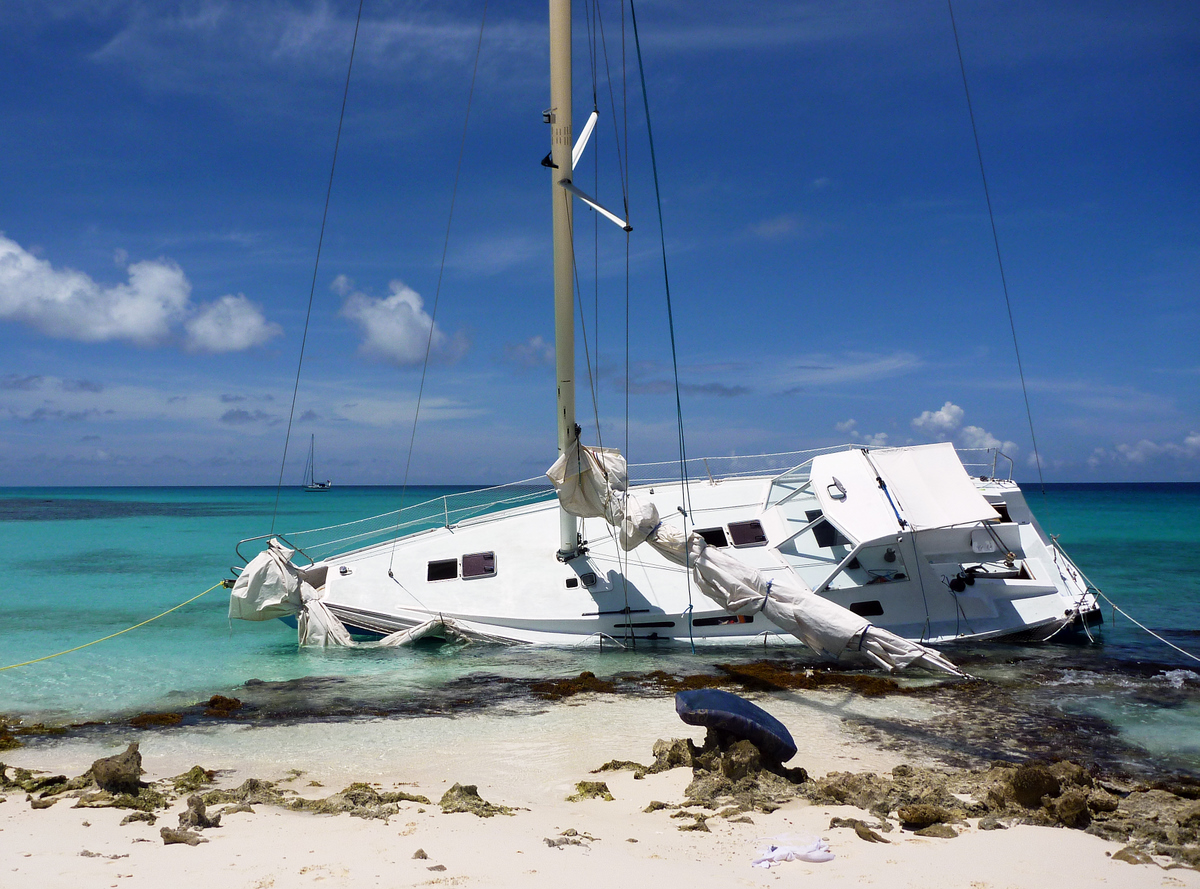
The anchorage at Round Island is protected from north-east to south-east winds, but is exposed to anything else. There is a recently wrecked yacht on the island as a reminder of this, which doesn’t make me feel comfortable at all.
We went snorkelling around the boat. The water is incredibly clear here and the coral is beautiful. There are loads of grouper and other nice eating fish, so I’ll be out spear fishing tomorrow. A group of local fishermen were out with spear guns catching spotlight parrot fish, which I didn’t think were very tasty – maybe I’ll try one tomorrow.
As the sun was setting, Ed and Natalie on “Safari” appeared out of the west and anchored next to us. Ed called us on the VHF radio and asked us to relay messages to the Coastguard because they couldn’t transmit long range on their radio. It turned out that the seven people who were on the wrecked yacht (“Blue Marlin”) are being looked after by the Coast Guard. Ed knows Timo (the skipper of “Blue Marlin”) and wanted to tell him that “Safari” is here, so that he could send an email to the Timo’s wife saying all was well.
21 September 2011 Aves de Sotavento, Venezuela
This morning, I finally managed to pick up some weather from the SSB radio. There is a low pressure wave 200 miles east of the Windward Islands and Tropical Storm Ophelia is 1000miles east of Grenada travelling WNW at 15 knots. Ophelia will probably pass through the Leeward Islands in three days’ time and affect the weather here in 4-5 days’ time.
Ed came over and told us about “Blue Marlin”. The yacht went onto to the beach two days ago, when the wind reversed to the west. Apparently, this also happened to a catamaran a couple of years ago. When the wind reverses, the seas quickly pick up because the anchorage is on a narrow shelf with deep water beyond. In “Blue Marlin’s case, the seas were so steep, that the yacht was pitching violently; the propeller was lifted out of the water causing cavitation and making it ineffective. The 25 knot west winds blew the yacht onto the lee shore as they were trying to escape. Scary stuff.
Timo and his crew were brought to “Safari” by the Coast Guard at midday. “Safari” is going to take them all back to Curacao tomorrow. As soon as they leave, we assume that the local fishermen will then strip everything from the boat. We went over to have a look and it was a sad sight.
The coast guard came across to our boat and filled in a safety inspection form. They were very friendly and said that we could stay for a week if we wanted to. Glenys and I went snorkelling in the afternoon and then put the dinghy on deck ready to go to Bonaire tomorrow. The sight of “Blue Marlin” on the shore and thoughts of wind reversals was worrying me as we went to bed, but the sky looked clear.
22 September 2011 Aves de Sotavento to Bonaire
At three o’clock in the morning, the wind picked up and the sky was lit by lightning. I was out of bed like a shot. Was there going to be a wind reversal? Will we have to pull up our anchor and escape? Will we be able to escape? We both sat in the cockpit for twenty minutes as the thunderstorm went slightly to the north of us. There was a little rain and wind but nothing much. We went to bed but didn’t sleep much.
We dragged ourselves out of bed at half past six and left just before seven. The wind was directly behind us, so I rigged up a pole to starboard, clipped in the jib and we rolled westwards in the 15-20 knot winds. It was a lovely sail apart from the occasional violent roll when a large wave caught us. It brought back memories of our passage across the Atlantic twenty years ago – I’d forgotten what it was like to roll every two seconds.
Once we had rounded the southern tip of Bonaire, we turned north and had a fantastic reach in the flat water in the lee of the island. The land is very low and doesn’t affect the wind at all – perfect sailing conditions.

We picked up a mooring just to the north of the main docks. The whole of Bonaire is a Marine Park and there is no anchoring anywhere. The moorings are really good and only cost $10US per night. We went to clear in which is very easy, since the customs and immigration people sit side by side - the whole thing just took twenty minutes. The customs guy spotted that I’d declared a spear gun on the Grenada clearance papers, so I’ve got to take it in tomorrow and they will lock it away until I leave. I won't bother declaring it again.
We wandered around the town trying to get our bearings. Bonaire used to be part of the Netherland Antilles, but that has recently ceased to exist. In October 2010, Bonaire became a special municipality of Holland. Bizarrely, the currency is US dollars at the moment, as they try to work out who and what they are. The town is not very yacht friendly, with the supermarkets and hardware stores being spread out and a long way away. There doesn’t appear to be any public transport and taxis are expensive. Ah well, we’re only here for the diving.
I managed to get an internet connection – 30 minutes for 3 Euros and downloaded the weather. Tropical Storm Ophelia is predicted to track well north and fizzle out.
23 September 2011 Bonaire
I woke up this morning to the harsh sound of a motorbike screaming along the road, which is only 100 metres away. Then the other sounds of the town, the odd car horn and a dull roar of traffic drifted across – this will take some getting used to after the peaceful anchorages that we’ve been in for the past couple of weeks.
We had a day of running around and spending money. We first went to the marina to pay for the mooring and then went to a dive centre to buy the diving permit, which cost $25US per person. We then went walking to find the chandlers, hardware store and the major supermarket.
It was nearly noon when we found the hardware store about ¾ mile out of town. We didn’t get much of a look around because most of the shops shut down at noon for 1½ hours – how quaint and irritating. I did manage to buy some “Northern European” mains plugs to fit the sockets on our Swedish boat. All of our electrical equipment has UK plugs and we’ve had to use adapters to date. I bought six to start with.
We had lunch in a small deli and then marched, in the afternoon heat, to the large supermarket – again about ¾ mile outside town, but ¾ mile from the hardware store. It was OK, but nothing special and too far to carry a case of beer. There’s another supermarket in town that isn’t as good, but will do for the essentials.
A set of squalls were passing through as we left the supermarket, so we got wet through walking back to the boat. We chilled out for an hour and then I dinghied into the marina and paid $35US for seven days unlimited internet access. That’s enough running about, we’ll go diving tomorrow.
24 September 2011 Bonaire
We chilled out first thing in the morning. The insect zapper had stopped working, so I took it to bits and found that the switch was faulty. I removed it from the circuit board and attached a toggle switch with a couple of wires and Araldite. It’s a bit industrial looking, but at least this essential piece of equipment is working again.
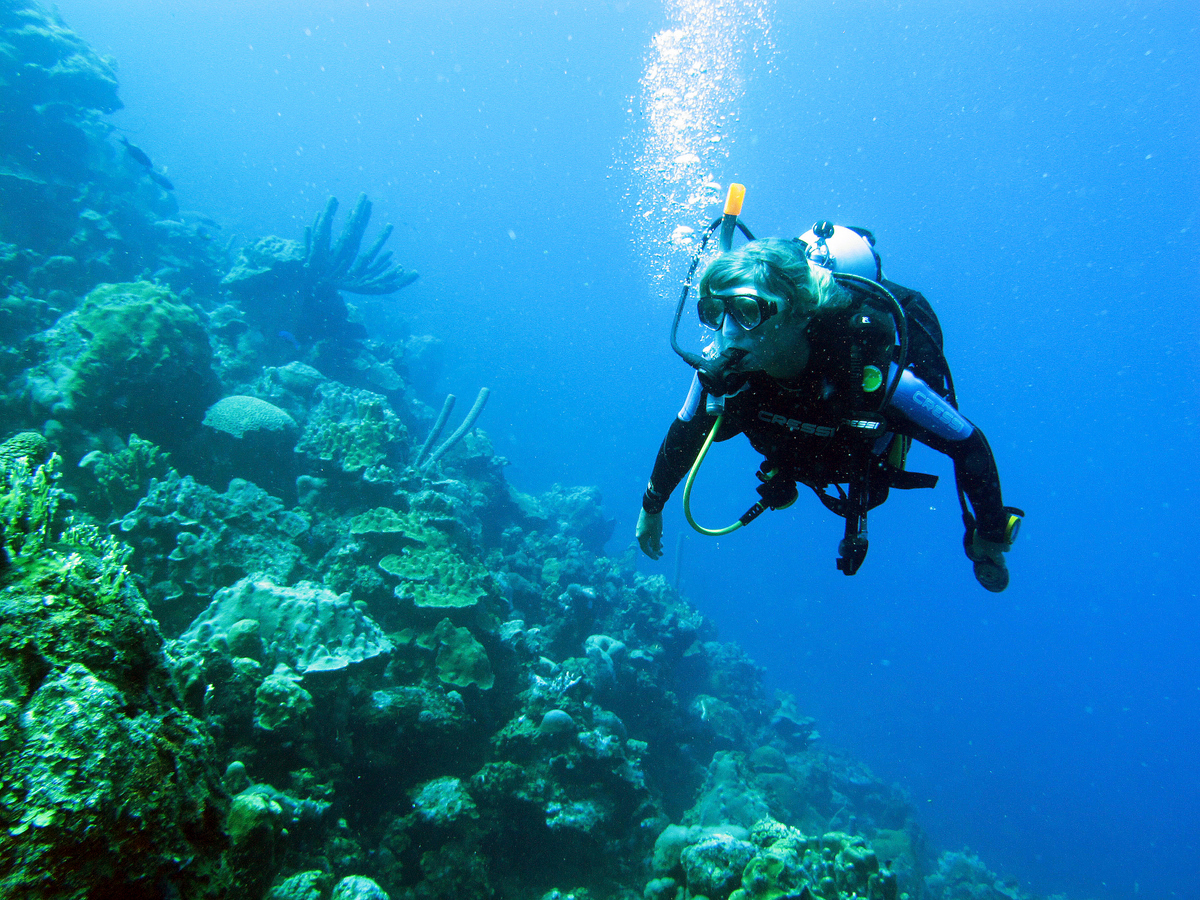
We went for a dive on Klein Bonaire. The water clarity is astounding, the reef is in lovely condition and the fish are relatively unconcerned by divers - all in all, a fantastic dive.
After lunch, I filled the dive tanks and ran the water maker and then we went to the supermarket to get another case of beer and a few other essentials. By the time we got back to the boat, the day was over and a cold beer was cracked open.
25 September 2011 Bonaire
It was very cloudy in the morning, so we didn’t bother going for a dive. Today was Maritime Day, so we joined the crowds on the sea front. There were two naval ships on the Town Pier which were open for tours. There were helicopter displays and boats whizzing about and the army was demonstrating various pieces of their equipment and cooking free food. It was a fun hour or so.
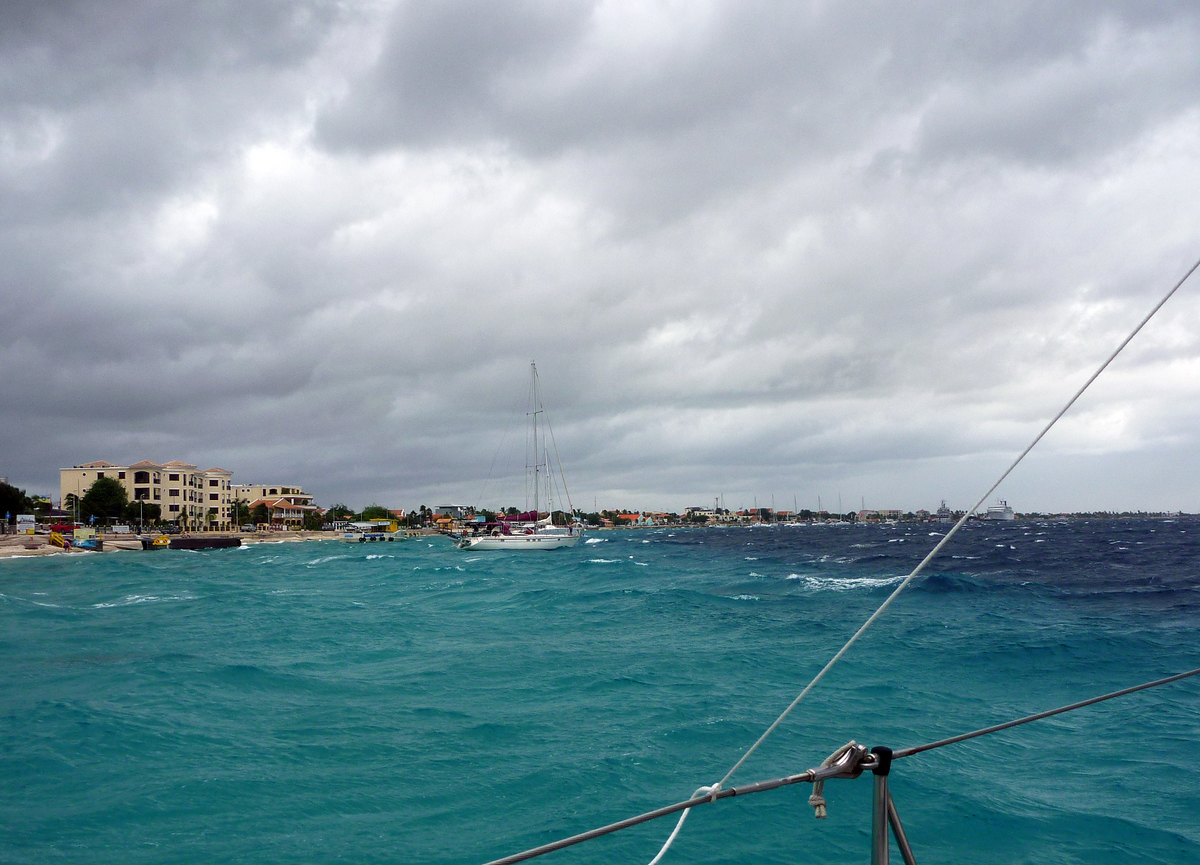
We went back to the boat after lunch and decided to move closer to the marina, so that we can pick up a better internet signal. Soon after we were settled, an ominous black cloud started to head in from the south and within fifteen minutes the winds had picked up to 25 knots from the south west - an infamous wind reversal. It was not very pleasant. We were only 50 metres from the shore in 4 metres of water. The waves grew to 2 metres and we bashed into them with the mooring lines groaning and squeaking. The wind dropped down to 15 knots after 30 minutes and then we rocked and rolled for four hours until the swell died down. It wasn’t too bad by the time that Glenys had prepared dinner.
26 September 2011 Bonaire
We had a dreadful night. The wind dropped off completely, there was still some rolling from the swell and the mosquitos attacked us. I woke at three o’clock, sweating and itching like mad. I turned on the light and found that I had ten bites in a line down my side and numerous others scattered around my body. After rubbing in some antihistamine cream, I used the insect zapper to sweep the bedroom, before falling into a fitful sleep, sweating beneath the sheet, which I pulled over me as protection against the beasts.
We went for a dive on the north side of Klein Bonaire, which was good. When we returned to the boat, I checked the mooring and found that both lines were badly frayed - one being cut more than a third through. I went to the marina and they gave me some new lines which I fitted by snorkelling down.
After lunch, we walked into town to check out hiring scooters, we’re going to be tourists tomorrow.
27 September 2011 Bonaire
We were tourists today, hiring a scooter and touring the island. It was good fun driving a motorbike for the first time for ten years.
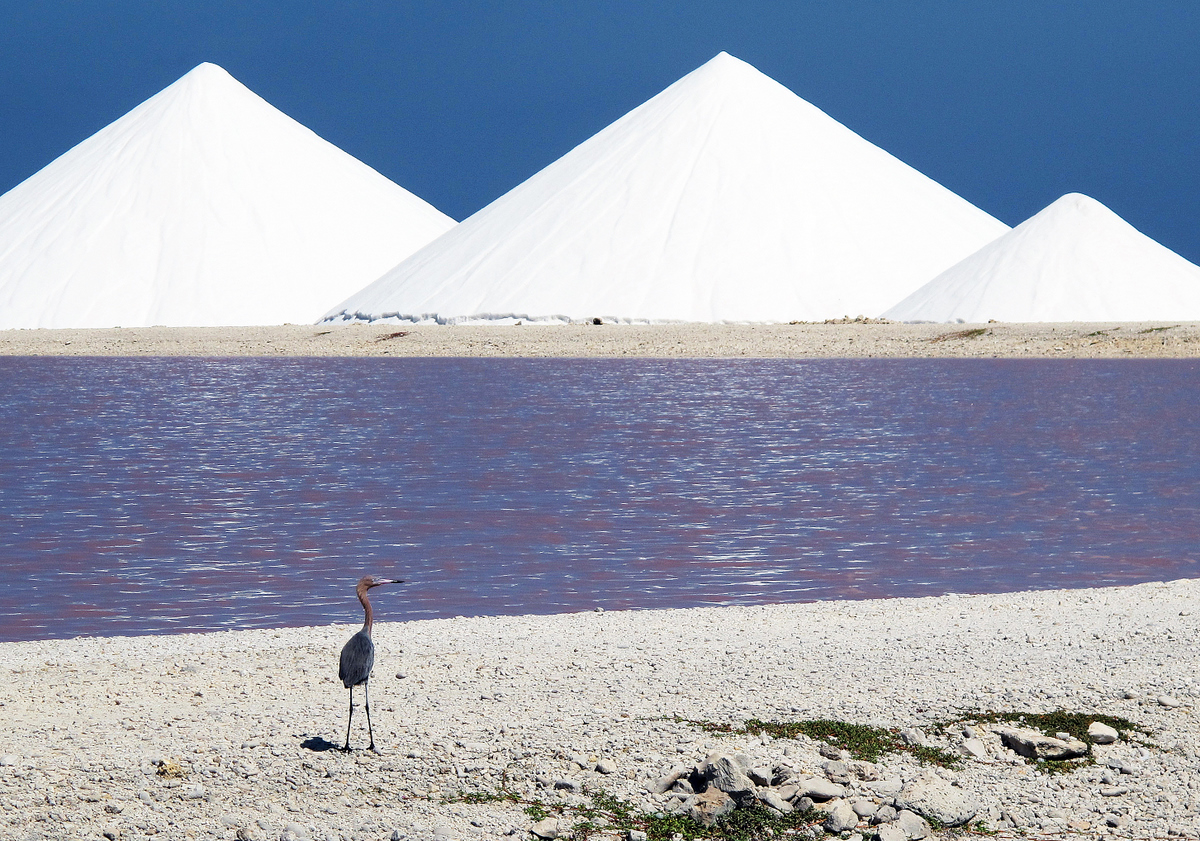
We went north went to the Washington Slagbaai National Park. Unfortunately, one is only allowed in with a car, so we could only walk to the top of a small hill nearby – absolutely boiling because the place is like a desert. We ended up in Lac Bay for lunch, which is a beautiful shallow lagoon, where there are some wind surfing centres. Then we circumnavigated the south of the island to look at the salt flats and slave huts.
The tourist map has a list of 41 points of interest for the island, but they are really scraping the barrel to have this many. It was interesting to see flamingos and the salt flats are fascinating with vividly coloured water. The colours range from pale green to purple caused by micro-organisms which change their colour as the salinity of the pond increases. In low- to mid-salinity ponds, green algae are predominant and as the salinity increases the colour shifts to red.
We handed the scooter back in at four o’clock and returned back to the boat exhausted.
28 September 2011 Bonaire
We didn’t have any mosquitos last night. Unfortunately, I’ve become so paranoid that I spent most of the night wrapped up in a sheet sweating away.
We decided to go to Curacao tomorrow because we’ve been here a week and apart from the diving there isn’t that much to do. We went for a dive which was not the best that we’ve done.
After lunch, I went to clear out and had to go back two hours later to wait for the immigration guy to arrive from the office at the airport. I ran the dive compressor and filled our air tanks, bought some petrol, put the dinghy on deck and prepared for sea.
29 September 2011 Bonaire to Spanish Water, Curacao
I was up at one o’clock with another mosquito attack. God knows how they’re getting in. We sprayed the bedroom with Insect killer before we went to bed, so I know that there weren’t any in the cabin. The bedroom door was closed, so they must be getting in somewhere. I zapped a few and they’re quite small insects, so they might be squeezing through the mosquito netting in the hatch. In any event, we had another restless night.
We dropped the mooring at half past seven and sailed close to Klein Bonaire, where we caught a nice three pound barracuda. Glenys had found a flying fish on the deck this morning, so I rigged it up as bait for our fishing line, but unfortunately, we didn’t catch anything else.
The sail was a superb broad reach in calm seas and sunny skies. The south side of Curacao is very steep-to, so we were able to sail very close to the shore, which was lovely. We spotted couple of dive moorings just outside Fuik Bay which is only a few miles from Spanish Water, so hopefully we’ll be able to do a couple of dives there.
The entrance into Spanish Water is only 20 metres wide over a 6 metres deep bar with coral on one side and sand on the other. However, it is easy to see in good light and calm conditions. There’s a huge hotel with a beach on the south east side of the channel – it’s very odd to be motoring past scantily clad ladies under beach umbrellas only 30 metres away.
Spanish water is lovely, with small yacht clubs, marinas and posh looking houses. There are many branches to the lagoon, but there are only four designated anchoring areas for yachts, which are vigorously enforced by the Coast Guard. There are a hundred or so yachts anchored here, but we managed to find a reasonable spot in six metres of water in zone B.
I went over to see Dick on “Isis”, paid for an Internet connection and obtained some local knowledge, before collapsing with a beer.
30 September 2011 Spanish Water, Curacao
We had a wonderful night’s sleep, there’s a constant breeze here and no mosquitos – hurrah!
We had to go into the main city, Willemstad, to clear in. We caught a bus from the roundabout next to the fishing dock. The buses only run every 90 minutes, so we made sure that we arrived at the bus stop in plenty of time. The bus was late (of course) and we ended up waiting for about an hour. We met Jim and Frank from “Pipe Dream” at the bus stop, which passed the time.
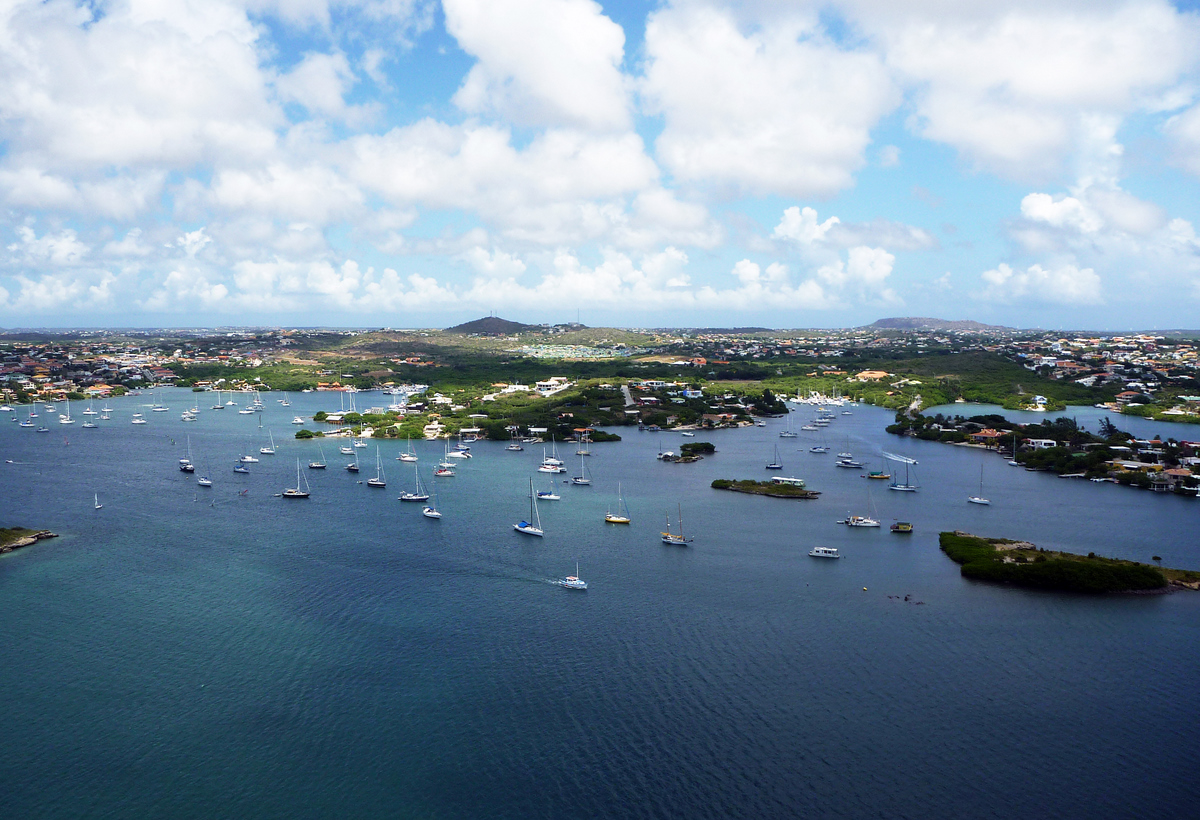
It’s a laborious process clearing in and out because customs and immigration are in different parts of town, ¾ of a mile apart. The customs were very friendly and the immigration people were nice, but the lady in the Harbour Masters office was miserable. All anchoring around Curacao is controlled by the Harbour Master. We’d heard that we have to get permission to anchor anywhere other than Spanish Water, but getting information from the surly woman was like getting blood out of a stone. Eventually, we found out that we’ll have to go back to ask permission for each anchorage that we want to visit and pay $10US fee for the permission. She had no knowledge about the dive moorings that we’d seen yesterday. I’m starting to understand why no one anchors anywhere other than Spanish Water.
We had a sandwich in a “Deli France” in a nice shaded street, then walked towards the bus station where we found the old market building which had stalls selling food. There were loads of locals sitting at tables with piles of food. One stall was cooking fish dinners that looked and smelled fantastic, so we’ll be eating there next time we come into town.
We arrived at the bus stop twenty minutes before it was due to leave. It left thirty minutes late, so again, we were waiting in the beating sun for nearly an hour. It’s a rubbish service, so I don’t think that we’ll be going into town very often. It makes me appreciate the brilliant public transport system provided by the mini buses in Grenada and Trinidad. We hardly had to wait any more than a couple of minutes there.
Back in Spanish Water, we called into “Flawless D” and said hello to Jim and Kath who come from Blackburn. They’ve been here a couple of weeks, so we gleaned a bit more local knowledge. There’s no cruising guide for Curacao, so it’s difficult to find out where everything is. We need to fill our cooking gas bottle, get laundry done, go to a supermarket, maybe hire a car, etc. We went to happy hour at Norman’s bar and met a few more cruisers .