
25 August 2011 Rio Manamo, Venezuela
I felt a bit dull this morning- too much duty free red wine last night. The current was against us first thing in the morning, so we did some small jobs until eleven o’clock.
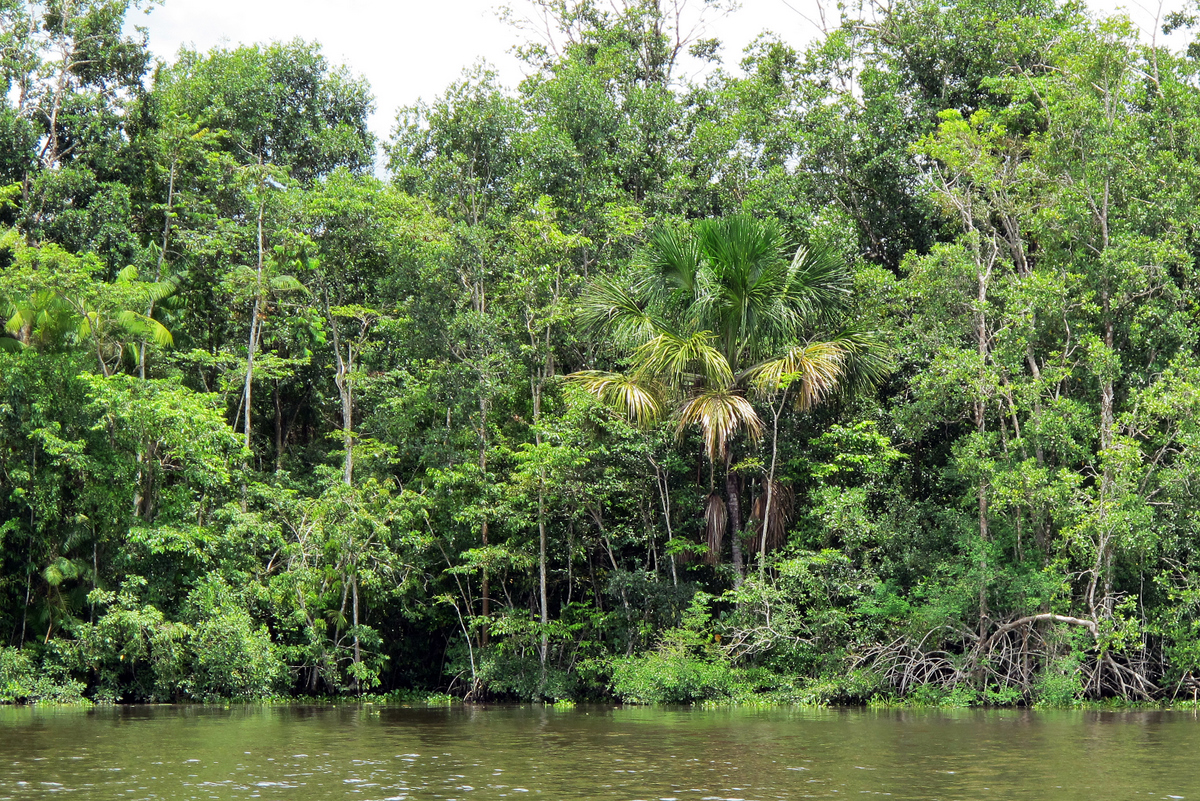
The river is 30 metres deep here. We decided to hug the outside of each bend in the river and were able to motor along about 25 metres from the shore and look at the jungle – we managed to get a reasonable photo of a wild curassow, which are like wild chickens that roost in the riverside bushes.
There were a few small dwellings at first and we were met by the inevitable children in their canoes. Some came to trade and others for hand-outs. We then hit a stretch where there were several villages and we were inundated by happy smiling faces – it gets a bit wearing having to slow down all the time. Glenys did quite a bit of trading and handed out some cookies that she made yesterday.

One of the tips that we picked up from the cruising notes was to put all traded items into a plastic bag and BOP them with insect killer. This is definitely a good idea - Glenys had a weevil thing squirm out of one basket onto her hand as it was passed to her. She flicked it over the side.
The Orinoco Delta Lodge is ½ mile up a small cano which branches right off the main river. The entrance is very shallow in the northern part of the river, so we favoured the southern side. We were too far south and nearly went aground just off the small settlement on the shore. We eventually made it to the Orinoco Delta Lodge at four o’clock. As soon as we had anchored, we had a small pod of River Dolphins swimming around the boat – I still didn’t manage to get a decent photograph of them.
We had a quiet night alone. It’s great cruising in company, but the constant partying is getting too much for my liver. We put up the cockpit mosquito netting and watched hundreds of big black mosquitos trying to get in as darkness fell. At the height of it, there were 20 mosquitos per square foot on the netting. Hundreds of tiny flies were still getting through the mesh of the netting, but they didn’t seem to bite and were just attracted by the cockpit light. I rigged up a holder for the insect zapper next to the light, stuck the button to “on” and watched one insect per second get zapped for the next three hours.
26 August 2011 Rio Manamo, Venezuela
It was a hot night and I woke up at three o’clock having been bitten. I switched on the light and used the zapper to clear the room.
The first job in the morning was to remove the mosquito netting and hang it up on the front deck to shake out the insect bodies. Then I swept up the hundreds of small fly bodies from the cockpit.
I’m very pleased that we put davits on the Arch as the system works well both at anchor and when under way in calm waters. I hoist the dinghy with two ropes and then use another two ropes to pull the dinghy in tight against the Hydrovane to stop it swinging from side to side. There are a couple of little niggles - the ropes that I bought are too thin and too short, so I’ll have to buy thicker rope when we get back to Trinidad. The more serious problem is that the dinghy being worn by rubbing against protruding parts of the Hydrovane. So I spent most of the day making a shaped teak pad, which I’ve screwed to the Hydrovane. Hopefully, this will give a bigger and smoother surface to hold the dinghy in place without chafing.
Rikzene, Jackie and Glenys went for a dinghy ride back to the main river to visit a small settlement, where some small boys had given some of us necklaces as gifts. Rikzene wanted to go and give them some more things in return. As they went alongside a dugout canoe by the shore, the children came down and gifts were exchanged. One little girl had a Toucan on her hand and one of the ladies was holding a small monkey.
Glenys and I went for dinghy ride for a mile up the river and down a small cano. I tried fishing for Piranha using my spinning rod and some dried salted fish for bait. I had a few nibbles but caught nothing. We saw little else apart from a Toucan high up in a tree.
Back at the boat, there was a little bit of excitement when a blue and gold macaw flew onto Pogeyan and then onto our boat. It was obviously a parrot from the Lodge (saying “Ola” all of the time), but was a fun photo opportunity.
We all went for dinner at the Lodge. They only have a few guests staying and we had to give them advanced notice that we wanted to eat there. There was only a set menu with no choice, but for $20US per person, the food was good. We gleaned some more information from the staff about the electric cable strung across the river at Boca de Uracoa and the fact that we can buy diesel there. A guide from a small group of Germans was able to exchange some US dollars for bolivars at an exchange rate of 7 bolivars to a dollar. We all had $20 worth which will be enough to buy a few things in Boca de Uracoa tomorrow.
27 August 2011 Rio Manamo, Venezuela
It was a hot still evening, so Glenys slept in cockpit last night. She said that it was very pleasant listening to the jungle noises rather than the whirr of a fan in the cabin, but the cockpit seats are a bit narrow to sleep comfortably. I had a mosquito free night, if a little hot. It’s Saturday, so we took our weekly malaria pill today.
It was a beautiful, misty morning. We all left at seven o’clock because we wanted to get over the shallow entrance at high water. The lowest depth of water that we recorded was 2.8 metres about 50 metres from the north shore right next to the village. Again, I think that we should have been further off the shore.
There were lots of Water Hyacinth boras to negotiate in the main river and the mist soon lifted to give us another nice sunny day. The scenery has now changed quite dramatically. The thick jungle is giving way to farmed land and plantations, while the housing is much sturdier, with walls, roofs, doors and windows. These seem to be villages that have been set up by the government, as the houses are very similar in construction. I even spotted a basketball court and children on bicycles. The locals still have dugout canoes, but not many came out to see us. Those that did, just came to stare and not to trade.
We had the current with us for most of the trip and, after a couple of hours, we took the right hand branch in the river towards Boca de Uracoa. It took us 4½ hours to reach the electrical cable strung across the river, where we anchored on the west side in seven metres of water. The holding was once again surprisingly good - I expected more soft mud in the river, but our 60lb CQR seems to dig in well. Perhaps the bottom is hard sand due to the fast flowing current.
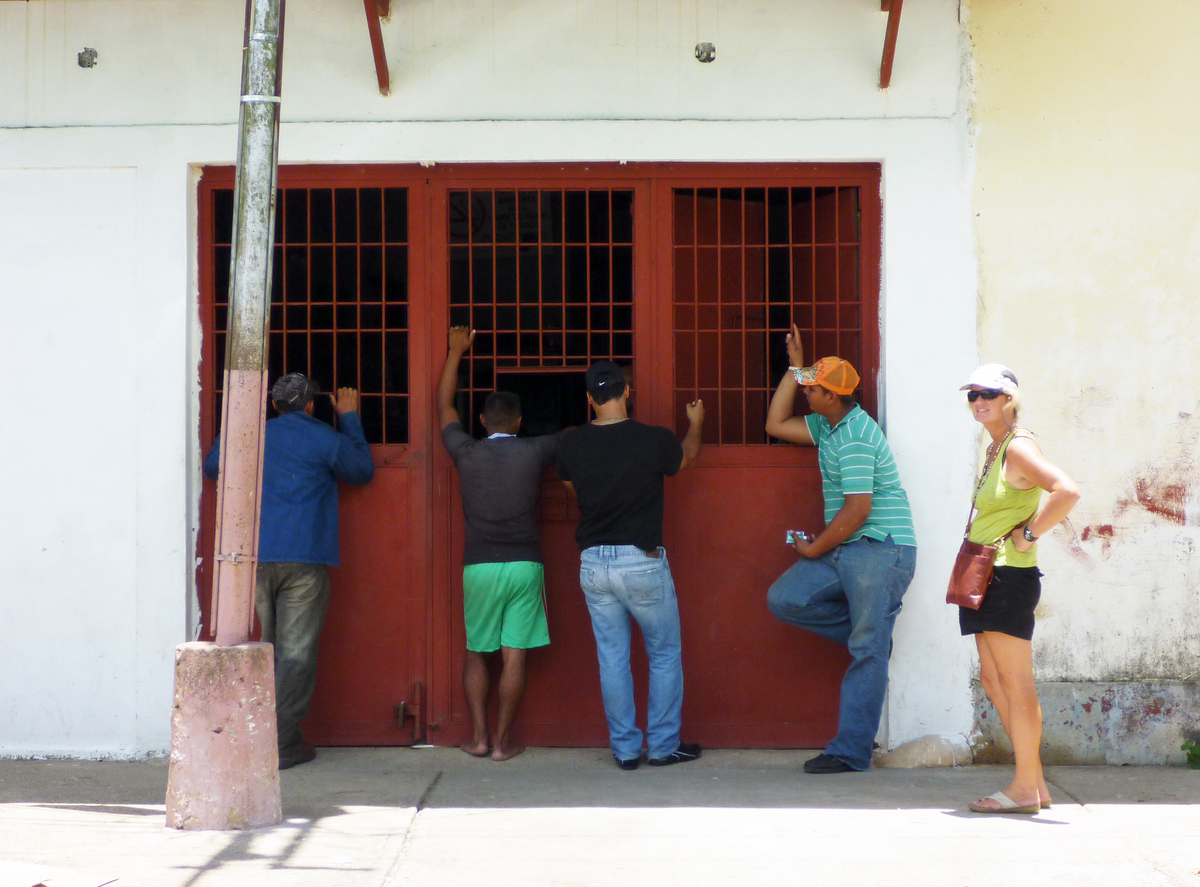
Glenys and I went into town to have a look around and hopefully buy lunch. Boca de Uracoa is a real one horse town. There are very impressive, gaily painted concrete water taxi stands on the river front, but beyond that there is one main street with only a couple of shops and food stalls. The main grocery shop doesn’t have any sign, but can be found by the crowd of people hanging about outside the small frontage. There are red iron gratings stopping anyone going into the shop and you have to ask the shop keeper for the items that you require - shop lifting is obviously a problem around here. Glenys bought a bag of twenty four bread rolls for 18 bolivars which she shared with the other boats.
We bought a couple of pasties from one of the food stalls, which contained a shredded beef concoction - tasty if a little greasy. Having exhausted the possibilities of the town, we climbed back into the dinghy and motored around the corner into a small cano where we found “Pogeyan” and “Blackthorn Lady” at the fuel station filling up jerry cans with diesel. They bought 150 litres of diesel for 7.5 bolivars which is approximately $1 US – that makes diesel only three US cents per gallon.
There is a small bar next to the fuel dock, where we managed to get US dollars changed at a rate of 8 bolivars to one US dollar. We bought a case of beer for $15 US which makes beer $2.15 US per litre which is 71 times more expensive than diesel.
I’d estimated that we’d used over 100 litres of fuel with all the motoring that we have done in the past week, so we borrowed some of Pogeyan’s jerry cans to fill up our tanks as well. I had a bit of a minor disaster when our tank overflowed after putting in only 75 litres of fuel. We had nasty, smelly diesel running down our beautiful teak decks. However, a bit of washing up liquid soon sorted that out. I just hope that the diesel tank vent pipe is higher than the filler pipe, otherwise we’ll have smelly diesel in the bilges.
We invited the others over for dinner and the mosquitos weren’t as overwhelming as previous nights – perhaps it is a little bit windier here? A few of the devils managed to get past our defences though and the zapper was deployed at various times. The Polar Lite beer that we bought today is tasteless. What’s with Lite Beer anyway – surely that’s an oxymoron?

28 August 2011 Rio Manamo, Venezuela
We had a chilled out morning waiting for the current to turn, to start taking us back downstream. Glenys worked on the big sun shade to cover the main boom while I mooched about, editing photographs and writing this diary.
We ran the water maker and the output is amazing. It normally produces 45 gallons per hour but because we’re in fresh water, I reckon that it’s outputting at least twice as much – about 100 gallons per hour. We only had to run it for 15 minutes, so we filled two big jerry cans with water for “Blackthorn Lady”.
We decided to go back to the Orinoco Lodge and try to arrange a fast pirogue to take us on a day trip to Tucupita tomorrow. We had a little bit of wind as we left Boca de Uracoa and put up our sails, but soon ground to a halt in the fluky winds. The trip back to the Lodge was uneventful, but we had to pick our way through areas of quite dense water hyacinth once we were back on the main river.
It was around low water when we entered the cano for the Orinoco Lodge and we recorded a depth of 2.3 metres at a few points. Our nervousness was made worse by the approach of a huge thunderstorm which was giving us gusts of 20 knots as we edged our way over the shallows. We had lashing rain and 30 knot gusts as we approached the anchorage, so I just dumped the anchor using the windlass control in the cockpit and we sat and waited for the storm to pass.
We tried to get a trip down to Tucupita, but they wanted $180US and we would have to get leave at five o’clock in the morning because they are taking some other guests to Boca de Uracoa first. We decided that they were trying to overcharge us so we declined. We had dinner on “Pogeyan” – no problems with the mosquitos behind the patio doors in their air-conditioned saloon.