
29 August 2011 Rio Manamo, Venezuela
I was woken by the sound of parrots squawking as they flew overhead. We had another morning of waiting for the tide to turn. Glenys finished off the white sun shade for the main boom. It’s massive and will probably be a major hazard when it gets windy, but it will keep the boat considerably cooler while we are sitting in a calm anchorage.
I decided that I’d draw a map of the Manamo River with notes about the various things that we have discovered. It can then be added to the cruising notes that are being shared by cruisers. I had to use screen shots from MaxSea program that came with the boat, but the CMaps that it uses aren’t as detailed as the Navionics charts that we have on our little chart plotter. The Navionics charts are on an encrypted Compact Flash card and needs a proprietary Navionics reader to load them on a PC. Very frustrating – I think that I’ll have to buy the special reader for the PC.
We set off at eleven o’clock and negotiated the shallows at the entrance to the cano. The trip down the river was quiet with only two lots of Warao Indians coming out to see us. The first group were in two boats – a small dugout with three small boys and a larger boat being rowed by eight children. We started to slow down, but we were still going at two knots when a small boy at the front of the dugout grabbed a fender. Glenys told him to let go, but before he could, he tipped the whole canoe over. The dugout turned upside down and immediately filled with water. The children in the other boat thought that this was hilarious and, as we drifted off, they were helping the boys on board their boat and bailing out the canoe.
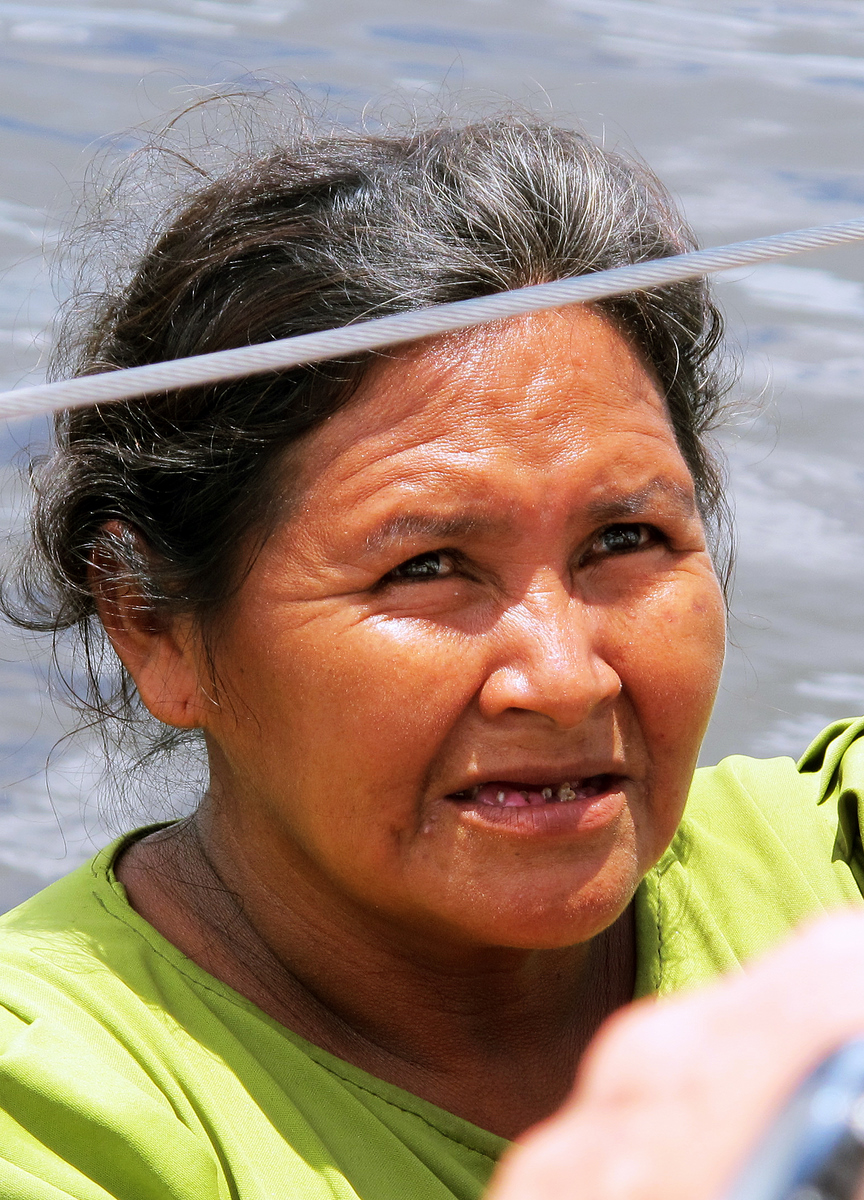
We stopped to trade with another boat from a village and Glenys finally managed to get four plate mats. Hopefully that is all that we need now. The elderly lady who was in charge of the boat was good at negotiating and fleeced us for a lady’s blouse, a belt, a baseball cap AND a bar of soap. Her serious face was a joy to watch as Glenys communicated in sign language and poor Spanish.
Just after noon, the clouds started to build as a big thunderstorm approached. We were hammered by very heavy rain and 20 knot winds. I had to change into swimming shorts to continue to steer down river. Glenys retreated below and cooked a roti for lunch.
We anchored next to the Boca Tigre Lodge. Ian and I went into see if we could get a trip to Maturin which is a big town further to the west. The only guy that we could find wasn’t very helpful - this lodge always seems to be shut down. Looking at a map, we would have to go to another small town and get a bus, so we decided that it wasn’t worth the effort.
We had a boat come over to us when we had anchored. It was driven by a teenage Warao Indian, but had a load of small children in it. They simply said hello and then hung onto the fenders waiting for a hand out. I have mixed feelings about this. On the one hand it’s great to give the kids a treat in their otherwise hard lives, but should we encourage this begging. It is much better when they come to trade and we give the children a present at the end of the bartering.
Glenys and I had a quiet night by ourselves in an attempt to rejuvenate our livers. After dinner, I spotted a movement outside the mosquito netting and said “We’ve got a rat”. Glenys leapt up but couldn’t see anything. After a few minutes exploring the deck, I spotted it on top of the mosquito net. It was a small marsupial-looking creature and was fascinated by the light. We assumed that it arrived on a bora of hyacinth, so I took a photograph of it and tossed it overboard from whence it came.

30 August 2011 Rio Manamo, Venezuela
I woke up this morning with a burning desire to go exploring up the river to the west of the anchorage. The charts all stop about half a mile west, so I thought that it would be interesting to map it out and see if it leads to San Hose de Buja which has a road going to Maturin. I jumped in the dinghy and went to talk to “Pogeyan and “Blackthorn Lady”, but they weren’t interested in doing battle with the large number of water hyacinth bora that have passed us going up this river.
Glenys and I set off at eight o’clock by ourselves. We had to do a considerable amount of manoeuvring to avoid the water hyacinths, but it slackened off after a mile. We passed a fairly large Warao Indian village and continued up the wide, deep river. We had a few stops to look and listen to the wildlife – howler monkeys, parrot, toucans, etc.
After an hour, we came across a junction in the river, where there is a floating barrier across the branch which heads south west. This consists of 56 gallon oil drums, strung together with chain and logs. The purpose appears to be stopping the Water Hyacinth going up this part of the river – and it looks to be effective. We watched a local pirogue slide across by pulling up the outboard, but there didn’t seem to be any way that we would be able to cross it with our 2 metre deep keel.
We continued up the other branch, continually doing battle with the ever thickening bora of hyacinths. When we were eight miles from the anchorage, we can across another junction in the river. By this time, the sky was darkening with ominous thunder clouds and both river branches seemed to be getting thicker with hyacinths, so we decided to call it a day. As we turned around, a group of ten scarlet macaws took off from a nearby tree and flew away squawking their protests at being disturbed.
We managed to get into the clearer water before the first heavy rain hit us. Once the rain had stopped, we anchored for lunch and chilled out until Glenys spotted a huge raft of hyacinth heading straight for us. We leapt into action and just got the anchor clear of the water and out of the way before the raft arrived.
Back at the anchorage, we chilled out for the rest of the afternoon – I finished off my map of the Manamo River including the new bits that we had explored. We had a lamb curry on “Pogeyan” cooked by Jackie.
31 August 2011 Rio Manamo, Venezuela
Another late start today, waiting for the tide. Glenys is making dinner for everyone tonight, so she went and scrounged some onions and potatoes from the other boats. We’re starting to run out of things now.

We left before the others and motored down the river. Meanwhile “Pogeyan” were having a few problems. They had a huge raft of water hyacinths lodged in the front and between the two hulls of their catamaran. Using one of their engines, they tried to motor forwards and then back off, which has been working pretty well up to now. Unfortunately they weren’t able to move the hyacinths and, in the process, their starboard engine overheated and they had to shut it down. “Blackthorn Lady” and some of the local pirogues came to their assistance and the locals used grappling hook type anchors to pull chunks of the raft away. Fortunately, “Pogeyan” have two engines and were able to start the port one and motor down the river. Glenys and I heard the saga on the VHF radio and anchored a few miles away to have lunch and wait for them to catch up.
We carried on down the river until we came to a smaller cano which heads east. The Cruising Notes say that this cano links the Manamo River to the Pedernales River, but that the river becomes very narrow and the trees overhang the river. Some cruisers have made it through and I would like to try it. Glenys and I went down the cano to have a look, while the others carried on and anchored a mile further down river.
We motored for 40 minutes and the river didn’t narrow at all. The depth varies between 6 to 15 metres and it seems pleasant enough. We turned around and headed back to anchor next to the others. We had dinner on Alba – salt fish stew.
- << Prev
- Next