
21 July 2011 Chagaramus, Trinidad
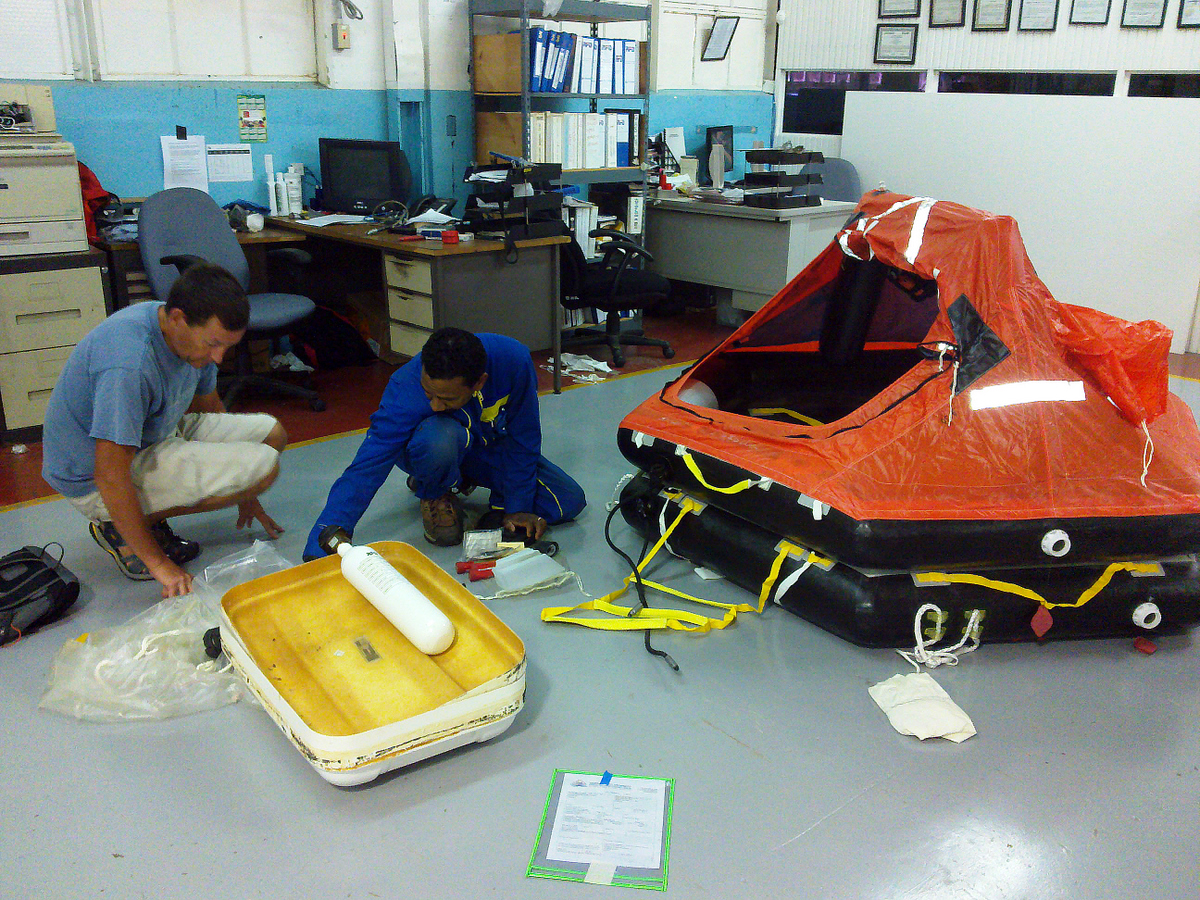
The life raft people came over and gave us a lift to look at our inflated life raft. It looks to be in good condition and inflated correctly. The technician showed us the various features, how to right it when it turns over, etc. A few things need to be replaced like flares and the torch. I asked if it would be ready by tomorrow as promised, but unfortunately the air cylinder needs to be pressure tested and filled - this apparently will take at least three days. I was not happy at all. So it will be ready on Tuesday next week? Err, No; the only technician qualified to repack it is on a course all next week and the following Monday is a bank holiday – the earliest that they could have it done will be in ten days. Unbelievable! After a lot of discussion, they finally agreed to lend us a life raft so that we can go sailing and we’ll pick up ours when we get back. What a shower.
Glenys went into Port of Spain to buy material and foam while I sorted out the final details for the Arch. Mitch and I signed the contract and he will start the work next week. It will be ready for the “first fitting” on the 10th August and be completed by the 12th August. This will give us time to get up to Tobago and back - if we get the injector for the generator sorted out…
It poured it down in the afternoon, so I just lurked about and ran a few errands. Glenys arrived back at five o’clock with two huge rolls of foam wrapped up in black plastic. She took a taxi back from Port of Spain, but she had to carry the huge rolls along a busy shopping street in Port of Spain to get to the taxi rank – she must have looked a sight.
We had a pitcher of beer at the bar and Glenys made a pizza for dinner. We’re really tired because of the heat during the day. I now remember why the Mediterranean and Arab countries shut down from midday to four o’clock.
22 July 2011 Chagaramus, Trinidad
We spent the day hanging around the boat. Mitch came and measured up for the arch, the rigger came with his invoice, the outboard was returned and the loan life raft was delivered. Glenys cut the foam for the cockpit and did a little bit of sewing.
I spent the morning deciding how I am going to mount the solar panels on the arch and how I will wire everything up. My biggest problem is where to put the regulator for the solar panels. It’s quite a big metal box, with heat sinks and the installation instructions say not to put it in an enclosed space. It can’t be outside because it’s not waterproof, so it has to go in the back cabin somewhere. I could bolt it on the outside of our beautiful mahogany cupboards, but it would spoil the “ambiance” of the master cabin (especially because it has a red display which will glow balefully all night.) I’m thinking of putting it into a cupboard and installing cooling fans like they put into computers.
The afternoon was slow - it was blisteringly hot – 37 degrees Celsius in our saloon at one point. We managed to talk to Brett and Tash by Skype which was great. They have already booked their holidays at work for coming over at Christmas, so we need to book the flights for them.
We were looking forward to going up to Tobago early next week, but our plans were shattered by the news that the injectors need replacement tips and there are none on the island. The injector company can import them, but it will cost £200 for the two tips and it will take 5 days to get here. We told them to get on with it and be as quick as they can.
All we can do now is to wait. The engine is finished, but the generator is out of action, so we decided to get out of Chagaramus on Monday for a few days. We decided that we’ll go around to Scotland Bay or Chacachacare - hopefully we’ll be able to swim and get a breeze.
The mosquitos were murder this evening.
23 July 2011 Chagaramus, Trinidad
We had a day off today and went hiking with a group of eight other yachties to Guanapo Gorge. We were picked up at six o’clock by a taxi driver called Jessie James, who organises a lot of trips for yachts. The first stop was at a roadside stall to get breakfast. The choice was a Double, Aloo Pie (potato wrapped in a chapatti) or a deep fried ball of crushed chick pea. It didn’t matter what you had, it was all covered with chick pea curry – a bit of a shock to the stomach at seven in the morning.
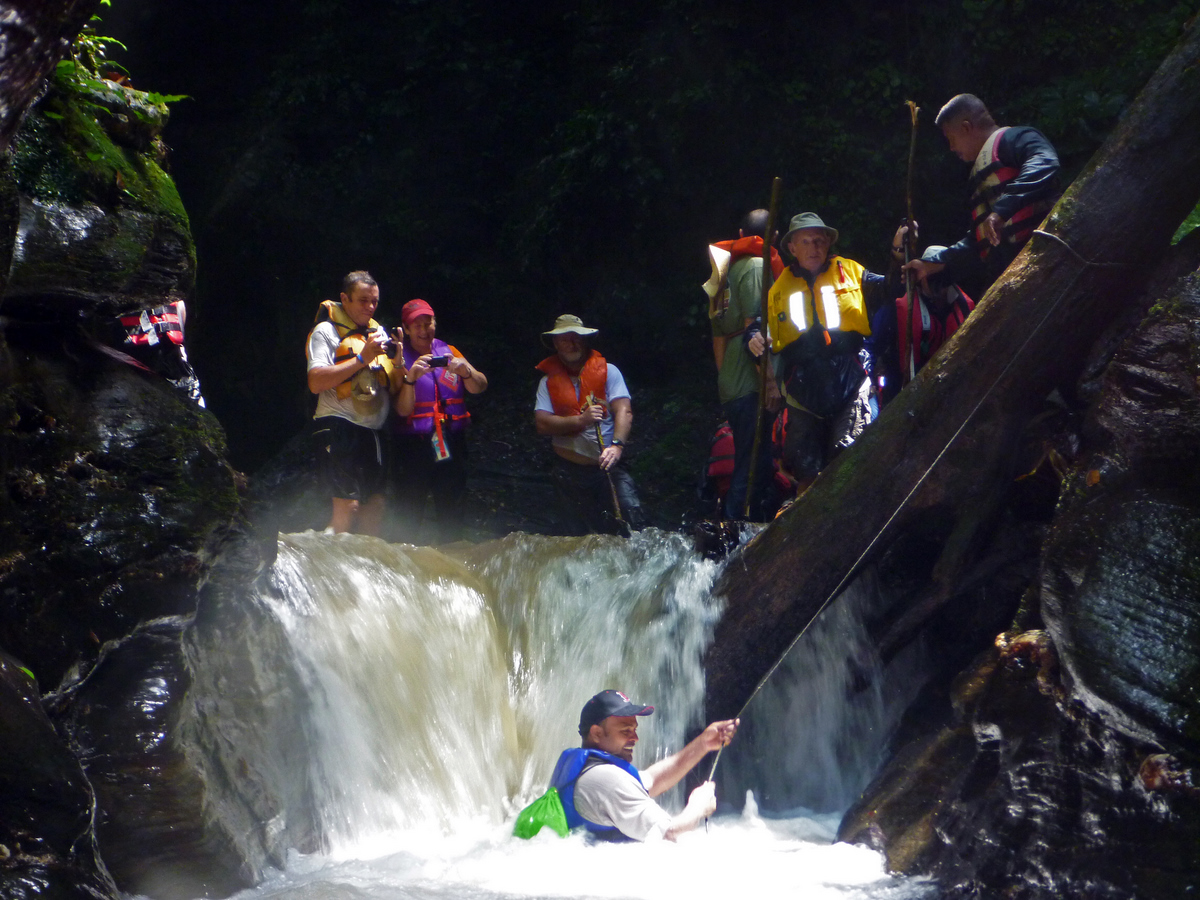
We drove up into the mountains and were introduced to our guide, “Snake”. The plan was to walk down to a gorge and then go along the river, so we were issued with a motley collection of floatation vests, which Mike from “El Lobo” had borrowed. Snake pulled on a set of workman’s overalls and wellington boots and proceeded to tell us that we should all have long trousers and shirts because of the risk of snakes (3 deadly varieties in Trinidad) and various nasty jungle plants like razor grass. It was a bit late for most people who were in shorts and sandals, but I was feeling smug stood in my long trousers, long sleeved shirt and sturdy approach shoes.
We walked down a very steep road and, after a stop to pick mangos and oranges, set off into the rain forest. It took about ten minutes before a torrential downpour drenched us. It didn’t really matter because ten minutes later we were jumping down a five foot water fall into the river. We had a great time wading and swimming down the river for about two hours. In places the current was extremely strong and we had to use a rope to stop us being swept away and slammed into rocks by the water.
After a brief stop for lunch, we headed up a muddy path through the jungle. I have never seen so many mosquitos in my life. Glenys was in front of me and had a swarm of about twenty five of the little buggers constantly circling her head. I used a lot of mosquito repellent and didn’t get bitten once, which I found incredible. Apart from the insects, the jungle is beautiful with a huge variety of plant life and sounds. It was great walking up the path, but the walk back up the steep road was a mission.
Back at the taxi, we changed into dry clothes and had a quick meal of chicken pilau cooked by Jessie. The drive back to the boatyard was interrupted by a welcome stop at a shop to buy cold beers. It was a great day out and only cost us £20 each.
24 July 2011 Chagaramus, Trinidad
I spent most of the day on the computer getting our finances in order. Glenys made use of the hosepipe and cleaned the cockpit and deck. We also filled up with water because our generator is still not working and we can’t use our watermaker. We’re planning to go sailing tomorrow for a few days.
“Hurah” are buying a cruising chute from “Freya”, so I went to look at how they rig it all up. They have a stainless steel bowsprit which fits into a bracket on deck and then over the bow roller. This keeps the tack of the cruising chute away from the pulpit and the roller furling gear. The cruising chute that they are buying has a snuffer sleeve and it looks like the ideal light wind solution when sailing shorthanded. I want one…
We went to a “pot-luck” barbeque at Coral Cove Marina and met a few more cruisers. There are quite a few people that have been in Trinidad for several years, supposedly doing work on their boats, but they've gone "Tropo" and seem to be partying all the time. I don't think they’ll ever leave here.
25 July 2011 Chagaramus to Chacachacare Island, Trinidad
We tidied up the boat, did a few little errands, told customs that we were leaving and motored five miles to Chacachacare Island. We anchored in Sanders Bay and had a problem with the anchor dragging. The sea bed is sand and broken coral and I had to manually push the anchor in to get it to hold. Once settled, we sat and stared at the place. What a difference compared to Chagaramus. There are no other yachts and there’s a breeze – this is what we’re supposed to be doing.
Chacachacare was a leper colony until 1975 when they found a cure for the disease. It was a large community and most of their houses are still standing, although the jungle is remorselessly reclaiming the land – we plan to go exploring tomorrow. It’s incredibly peaceful.

We chilled out in the afternoon reading. There are some Trinidadians camped out in one of the houses ashore. I noticed that one of them caught a catfish using a spear gun from the shore, so I went and had a quick chat – they’re here for a few days fishing. I tried fishing with my spinning rod, but didn’t have any luck, so I dug out our fishing trap and put it down by the anchor. This is the first time that we’ve used it, so it will be interesting to see if we catch anything.
26 July 2011 Chacachacare Island to Scotland Bay, Trinidad
It was pretty bouncy this morning because the wind was coming from the south-east bringing waves into the bay. We were only anchored in 3 metres of water, so we decided that we had to move. I snorkelled down to get the fish trap, but disappointingly, there were only four tiny fish in the trap – I’ll use them as hook bait.
We motored over to the south side of the bay, but the wind and waves were still getting into those bays - we decided to go to Scotland Bay. It took an hour to motor there and it’s a very sheltered bay, only exposed to winds from the south west. There are no roads into Scotland Bay, so it is totally isolated and surrounded by jungle. Corbeau (vultures) circle overhead and parrots fly across the narrow bay screeching loudly. It’s a lovely place to chill out. We spent the afternoon reading and dozing, because there is nothing else to do here – I chatted to some other yachties and they said that there are no paths to go walking on.
Later in the afternoon, I got bored sitting about and snorkelled down to clean out propeller – it was covered in big barnacles after only one week in Chagaramus (which is notorious for accumulating vegetation on the bottom of boats.) We even have a resident 2” diameter crab living just above our rudder.
27 July 2011 Scotland Bay to Chacachacare Island, Trinidad
Glenys had a restless night because she kept worrying about vampire bats. It’s my fault for telling her last night that there are vampire bats are in this area. I gave her a graphic description of the bat tearing its way through mosquito netting, then silently crawling across the bed, using its razor sharp teeth to scrape a layer of skin away from a big toe and then lapping up the blood of its victim - I guess that I did exaggerated a little…
It was so quiet in the morning that we decided that Scotland Bay is too peaceful and motored back to Chacachacare. We anchored in Coco Bay and the holding was much better although the sea bed is still sand and broken coral.
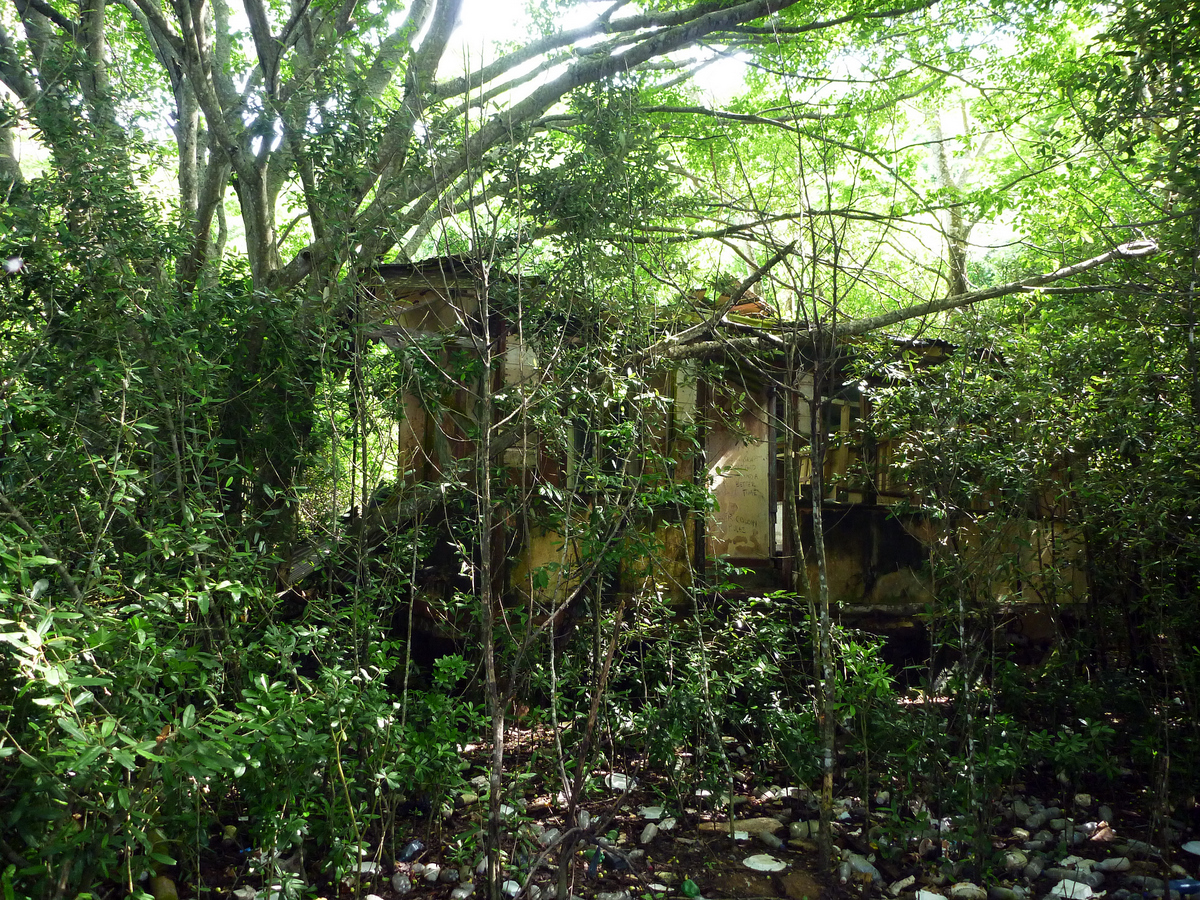
We went for a walk up the only road to the lighthouse on the top of the hill. The island looks idyllic from the water, but there is a phenomenal amount of litter ashore. The island is so close to Trinidad that I guess it is a favourite weekend destination for the speedboats based in Chagaramus. The lighthouse is non-descript but there is a good view of the Peninsula of Paria in Venezuela which is only eight miles away. It is a real shame that the risk of armed robbery is keeping cruising yachts away from Venezuela.
We had our lunch sitting under a mango tree watching a huge thunderstorm building to the east of us. By the time we had walked down the hill the skies were very dark and it was obvious that the storm was going to hit us. We just made it back to the boat and put down the side flaps on the bimini before the torrential rain hit us. The wind picked up to 25 knots, but soon backed off. It thundered and rained for 2½ hours, so we just read our books all afternoon.
The storm disappeared at five o’clock and it was a very peaceful evening.
28 July 2011 Chacachacare to Chagaramus, Trinidad
After breakfast, we went ashore to look at the buildings that the lepers used to live in. Unfortunately, the jungle has really taken over and it’s impenetrable without a cutlass in many places. There’s a chapel in Sanders Bay, but most buildings are complete wrecks. The litter is shocking.
We headed back to Chagaramus to start working again and moored stern-to in the same berth in the marina next to El Lobo.
After lunch, I went to see Gittens and they have ordered whole new injectors rather than replacement tips – which is why they were £200 for the two. I told them to put the new injectors into the generator tomorrow. I’ll get the old injectors back as spares and get them serviced in Curacao.
I managed to get hold of Mitch at West Coast Fabrications, but the money that I transferred to him hadn’t arrived. After a few phone calls it turned out that the money had arrived at the bank, but didn’t get into his account until late afternoon. All is not lost because Mitch says that he’ll be ready to do the first fitting of the Arch next week as planned.
I went Peakes Hardware store near West Mall to try to get some electrical junction boxes, but no joy. I’ll have to re-think the Arch wiring panel. I went to Budget Marine who gave me a quote for two solar panels and a smart regulator – it adds up to £1,600. I went back to the boat and did some more research on the Internet. I can get a better specification of equipment for £1,000 – that’s nearly 60% of the Budget Marine price. I sent off some emails to see if some of the US companies will ship the panels to be here in Trinidad and how much it will cost for freight – it can’t cost any more than £500.
29 July 2011 Chagaramus, Trinidad
We have the first threat of a hurricane in our area. There’s a strong Tropical Wave about 1200 miles to the east of us which has a low pressure area with a 30% chance of developing into a Tropical Storm. The wave will be passing our longitude in three days. The big question is whether it will start moving north and miss us.
I did a little bit of running around in the morning, while Falco put the new injectors into the generator and got it going again which is a relief. I ran the water maker for 30 minutes to make sure that it was still working. We had a roti for lunch, so I’m feeling guilty. Glenys went into Port of Spain for a few things while I worked on the boat.

I removed the aerials, outboard and other equipment from the pushpit. Taking a deep breath, I took down the wind generator and its support pole, which turned out to be easy enough. With all this out of the way, I removed the pushpit away from the port side – the back deck looks very bare now.
The pushpit is held in place by six 7/8” stainless steel rods which are bonded into the toe rail. My plan is to remove four of these, so that the wiring coming down the Arch frame will be able to go straight through the toe rail. I’ve been worrying about this job for a few weeks. My plan is to use a hole saw which has an inside diameter slightly larger 7/8” and hopefully I’ll be able to drill a hole around the rods. It will either go well or turn into a complete nightmare.
It was a hot sticky evening. I bought an insect zapper today which looks like a small, square tennis racquet. It has metal bars instead of strings and has over 1000 volts between the bars. I love the way that the mosquitos are destroyed with a very satisfying “crack” and a flash of light.
30 July 2011 Chagaramus, Trinidad
The low pressure area now has a 60% chance of developing into a Tropical Storm and is directly east of us heading west north west. Hopefully it will keep going in that direction.
I received a few quotes for solar panels and a regulator from companies in the USA. They are about 60-70% of the cost of the local chandlers, but none of them are willing to ship abroad. I would have to organise a shipping agent to get the goods from the US – it would be complicated, so I went to Budget Marine and bought the solar panels and regulator from them. They gave me 10% discount which appeased me a little.
I decided that I need to extend the hole drill to allow me to drill out the stainless steel rods in the toe rail, so I dropped it around to Mitch who is going to cut it in half and weld a 4” extension tube so that I have 6” clearance. He’s started manufacturing our Arch, which was good to see.
In the afternoon, we went to pictures and watched Harry Potter. By the end of the film we were both freezing in the air conditioned theatre - fantastic.
31 July 2011 Chagaramus, Trinidad
The low pressure area now has a 100% chance of developing into a Tropical Storm and is about 650 miles directly east north east of us heading west north west. Our current latitude is 11°N and the centre of the low is at 13°N, which puts it about 120 miles north of us. As long as it keeps going in its current direction, we should be OK.
I spent all day working on the wiring for the Arch. I pulled all the wires out of the pushpit and lazarette ready to wire them into a wiring panel in the aft cabin cupboard - I found a few redundant wires running through to the main switch panel and removed them.
Glenys did a few jobs down below in the morning, but by lunch time she found the heat unbearable (36°C in the main saloon), so she sat outside under a tree and read a book.
We treated ourselves to a meal out – spare ribs and chips with a pitcher of beer.
- << Prev
- Next