
14 October 2013 Rio Cucunati, Panama
Apart from the one torrential downpour in the early hours, it was a very quiet night - this is a very isolated spot. We’re anchored 300 metres from the shore and it looks like we’re in the middle of a lake because the river is so wide. There’s no one around and no habitation in sight. Today, we only saw three pangas - two going further up the river and another anchored a mile away from us fishing.
In the morning, we jumped into the dinghy and went exploring further up the river. There wasn't much to see apart from mangroves at the edge of the river and thick jungle beyond. We saw a couple of herons, but that was about all. After a couple of miles, we gave up and turned back to Alba.

This was a little disappointing. The whole reason for coming to the Darien region was to see how the indigenous Indians live and to look for wildlife. The tourist guide book says:
The Darien is where the primeval meets the present and the scenery appears much as it did a million years ago. Even today, the local Embera and Wounaan people maintain many of their traditional practices and retain generations-old knowledge of the rainforest. The area is one of the world’s richest biomes, home to Panama’s most spectacular rain forest.
Well, we've not seen any sign of indigenous Indians or wildlife so far – this river appears to be deserted. The terrain is similar to the Manamo River in the Orinoco Delta, where we went on a two week trip in 2011, but in the Manamo River we saw Indian dwellings along most of the rivers and traded with the Warao Indians every day. We hope that it will be better in the other rivers.
Not having much else to see, we spent the rest of the day on jobs. Glenys took down the bimini and repaired the zip attaching the starboard side flap and then started to make some things with her molas – the first off the production line is a placemat.

I had a look at our PSS stern gland which is making an annoying metallic “clacking” sound when we’re sailing. This critical bit of gear stops water coming into the boat from around the propeller shaft, which exits the hull through a stern tube. The PSS stern gland has a stainless steel disk fixed onto (and rotates with) the propeller shaft, and a carbon bearing attached to the stern tube with some rubber bellows – the propeller shaft goes through the middle of the bearing and the rubber bellows push the bearing against the steel disk making a water tight seal – pretty clever.
I found that the carbon bearing is almost touching the top of the propeller shaft, whereas it should have a clearance of 2.25mm all around. With a slight amount of vibration on the propeller shaft, the carbon bearing is hitting the propeller shaft making a metallic knocking noise. I suspect that either the whole engine is too high or the PSS bellows have not been centralised on the stern tube and are angled down slightly. I may have to get hauled out to sort it out properly, so as a temporary fix, I have attached a bit of thin bungee cord to the stern gland bellows to pull it up a little. It’s very Heath Robinson, but as they say, “necessity is the mother of all invention”.

15 October 2013 Rio Cucunati to La Palma, Darien, Panama
It was another nice peaceful night. It’s so isolated here that it’s boring, so we left and motored around to La Palma and anchored next to “Grace” and “Wind Song”. After lunch, we went into town, which is the administrative centre of the Darien province and has the highest population in the area. It’s nice enough little town with lots of small tiendas and is inhabited by a mixture of Latino, Afro-Caribbean and Indian people.
The town has one long street running along the edge of the river and we managed to buy the essentials that we always seem to run out of – onions, bread, potatoes, peppers, coca cola and wine. The Guarda Fronteras have a big presence here because the Darien is on the border between Colombia and Panama. We came across a confiscated panga on the side of the road with an interesting poster above it declaring, “Don’t let them fool you. Narcotic traffic is not good for you, your family or your community.”
When we arrived back at the dinghy, it had several inches of water in the bottom. Yesterday, I’d found a crack in the fibreglass hull and had tried to repair it with some Marine Epoxy. Unfortunately, the patch had cracked and we now had a ¼” hole in boat - water was pouring in, but it wasn’t life threatening. We headed back to Alba bailing out as we went along.
We stopped off at the fuelling station, which is a building on the side of the river. There are four metre tides here, so all of the sea front properties are built on stilts. We went alongside near low tide, so the floor of the building was three metres above us. The lady lowered one of her containers down on a rope with a hook and I poured the gasoline into our jerry can using a funnel. She then sent down a small bag into which we placed the money. Very strange, but she was a nice lady and gave us a gift of a big piece of catfish.
Back at Alba, I pulled the dinghy onto deck and put a proper patch on the inside of the hull using epoxy resin and glass fibre matting.
16 October 2013 La Palma to Rio Sabana, Darien, Panama
It was very noisy last night – the town generator is on the shore next to the anchorage and the locals had a party with loud music until the early hours. We decided that this small town is not what we've come to the Darien to see, so we moved on when the tide was rising at ten o’clock.
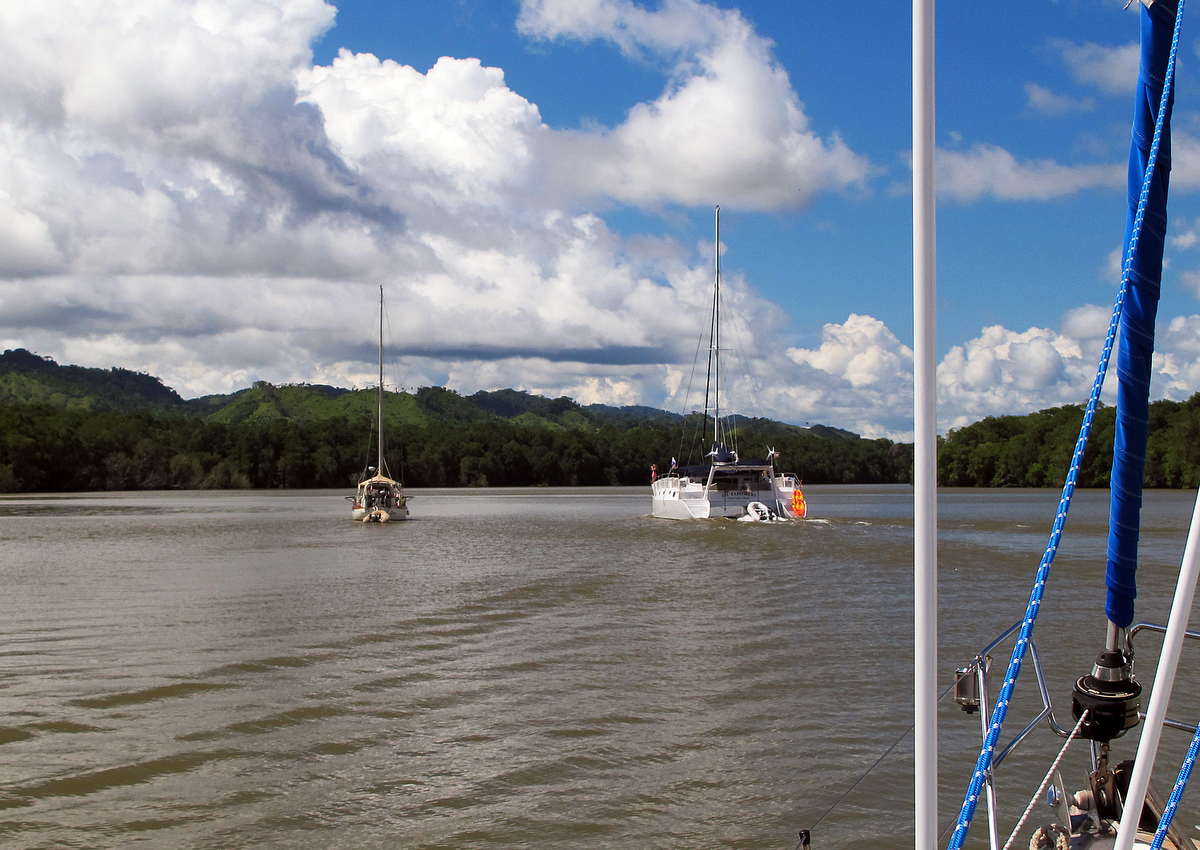
We motored across to the Rio Inglesia and went four miles up the river. A few fast pangas zoomed past us and we saw one small grass-roofed house, but nothing else on the way up the river. Near the end of the river, we came across Puerto Quimba, a large dock with a car park packed with about 100 four-wheel drive cars – not exactly an isolated place. It’s at the end of a side road off the Pan American highway and apparently people drive to this point to catch a water taxi across to La Palma.
We carried on a little further to the recommended anchorage, which is at a place where the river splits into a kind of delta. The water soon shallowed and the river became very narrow. It was a little too tight for our liking and as it was just around the corner from the busy water taxi port, we gave up and left.
At the mouth of the river, we turned north and headed seven miles up the Rio Sabana, anchoring near to a few islands called Isla Bella. We tried to anchor between the islands, but our anchor dragged – I guess that the river bed is scoured by the current ripping through the narrow channel. Eventually, we found a place off the main channel in 3 metres of water at low tide – it seems to be thick mud and good holding, but again we’re in the middle of the river, nearly ½ mile from the river bank.
The cruising guide tells us that there’s a Wounaan Indian village, called Puerto Lara, 6½ miles further upstream, but we believe that the river is only navigable for another few miles, so we’d have to make a long dinghy trip. In addition, the village is very close to the Pan-american Highway, so we think that it will be very touristy - we’re not sure whether we want to go there at all, never mind the risk of travelling very far in our dinghy with no other boats around to help if we have a problem.
So far, we’re very disappointed with this part of the Darien especially when compared to our trip up the Manamo River in Venezuela. In retrospect, we didn’t do enough research before we came here – we should have talked to other cruisers who have already been here and then we’d know what’s possible and what is not.
17 October 2013 Rio Sabana, Darien, Panama
It was a very peaceful night and very calm in the morning. Having seen no-one apart from a single panga in this river yesterday, we decided to stay here for the day, get on with some jobs and see if “Grace” and “Windsong” came up the river - they might have a better idea what the Puerto Lara village is like.

I sorted out the dinghy. The fibreglass patches looked fine and I gave them a light sanding just to make sure that there were no hard fibres sticking out that could puncture the inflation tubes. By the time that I’d got it back in the water, “Windsong” and “Grace” were motoring around the bend towards us.
They were accompanied by a catamaran called “Lil Explorers". Courage and Shannon came over with their six children to say hello – they've also got Courage’s mother, Barbara and his brother, Loyal to make up their massive crew of ten people. I was pleased to find out that they know much more about the Darien region. Courage had talked to people who had been further up the river to Puerto Lara – local knowledge at last!
“Windsong” headed off first, motoring as far as the village and the rest of us followed in a convoy. The river was very wide to start with, but soon narrowed, went around a couple of S-bends and we all anchored in the middle of the 40 metre wide river outside of the Puerto Lara village. Within minutes, the Wounaan Indian kids were in their boats paddling out to meet us.
We all went ashore to find that the village chief was demanding $10 each to look around his village. Courage did some swift negotiation and reduced it to $5 for each adult and the children go free – I guess he was a little more motivated than us, being faced with a $100 bill. As soon as we’d paid the landing fee, the chief rang a bell and the ladies of the village all started to assemble in the central meeting hut, carrying their woven and carved goods to sell to us.
Before braving this small craft market, we wandered around the village which looked very clean and organised. The houses were wooden buildings on stilts, with a mixture of thatched and corrugated iron roofs. It all looked like it had been constructed recently - Glenys thinks that there were some bad floods a few years ago which wiped out a lot of these villages. Anyway, all the houses have electricity and most have the ubiquitous satellite dishes.
We went to the village meeting hut and looked at the fabulous woven plates and pots that the Wounaan Indians make. The bowls are very decorative and most are so tightly woven that they can hold water. Glenys was very restrained and only bought one small bowl for $20. The carvings are made from a very hard wood called “cocobola” and are very intricate and beautiful – I resisted for now…


The village women all wore traditional clothing, which simply consisted of a brightly coloured wrap as a skirt and bare-breasted. I distinctly got the feeling that the village elders insist that the ladies should be topless when selling their craft work - the younger and middle aged women seemed to be inordinately self-conscious about their breasts and were continually covering them up. The older ladies didn't give a damn, I guess that the younger women are more westernised.
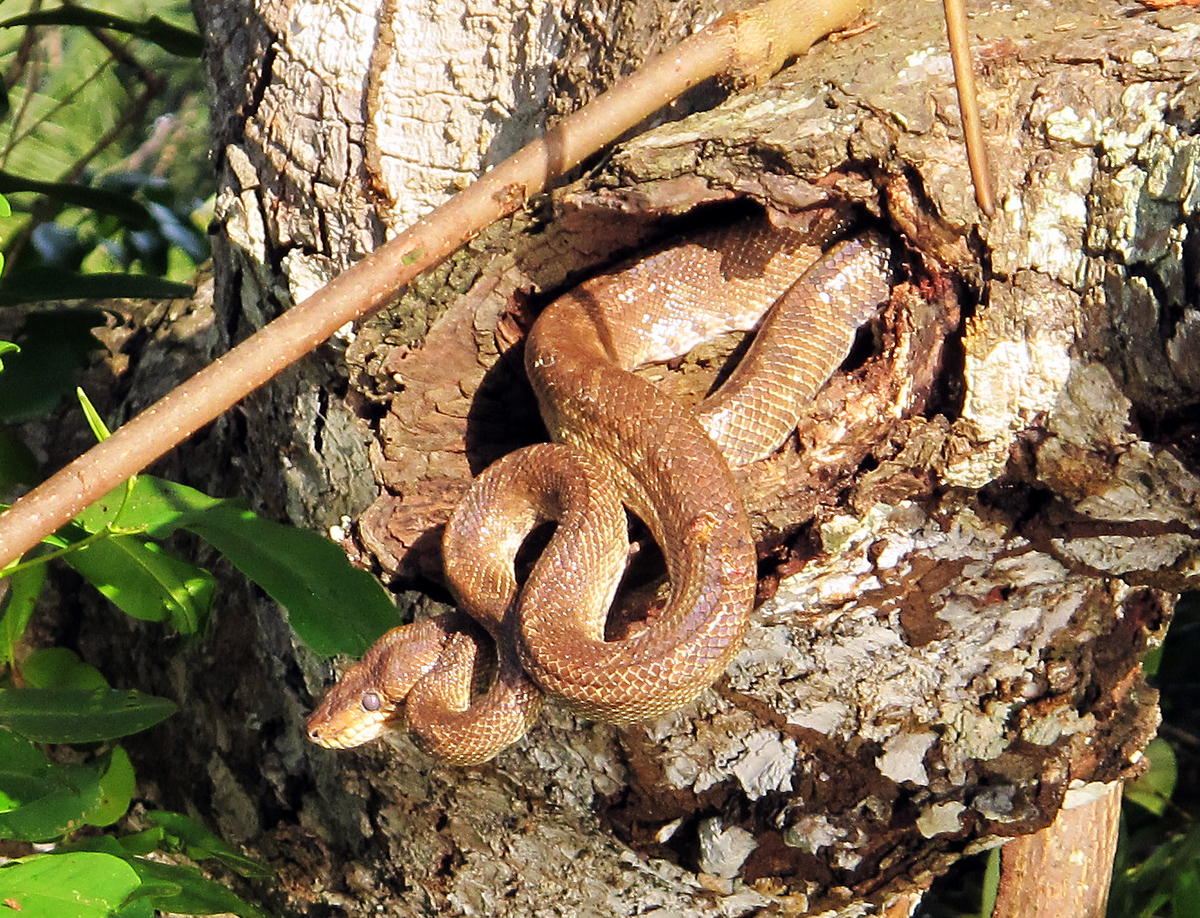
Back on the boat, I spotted a group of boys in their boats, throwing rocks at a tree at the side of the river. I grabbed our binoculars and could see that they were harassing a snake, so I jumped into our dinghy to have a closer look. The Tree Boa was wedged into a hollow in the tree, looked to be over six foot long and was very pissed off with the boys. Every time that they threw a rock which hit the tree (or the snake) it viciously struck out and the boys squealed. Eventually they hit it with a few direct blows and it dropped into the water. This caused pandemonium as they all paddled furiously away from the angry snake.
Around five o’clock, as the tide started to rip out of the river, I heard a faint rumbling from our anchor chain and discovered that we were slowly dragging. We attempted to re-anchor, but we just dragged again. It felt like the anchor was being dragged across a scoured, rocky bottom similar to our problem yesterday. We only had one hour until dark, so we made a snap decision – we’d go back down the river where it was wider. Hopefully the current wouldn't be as strong and the bottom was more likely to be mud.
We went past "Lil Explorers", who were also re-anchoring a little further downstream, and then had a very fraught 45 minutes as we motored further down the river in the fading light. We tried to anchor after a mile, but again dragged in a similar way as back at the village. Eventually, we found a spot two miles further down the Rio Sabana where we held fine.
I called "Windsong" to tell them that we'd anchored okay and found that they were also dragging their anchor and were going to come and join us. Ten minutes later, "Grace" came on the radio to say they were on their way as well. They must have both had a very worrying trip in the dark, but were safely anchored behind us by seven o'clock.
18 October 2013 Rio Sabana to Isla El Encanto, Darien, Panama
We had a good night's sleep and thankfully didn't drag our anchor. Everyone left at around eight o'clock to catch the ebbing tide and we rode the current downstream to La Palma, ten miles away. On the way, a plan was formulated for us all to go down to the Rio Sambu tomorrow. This is a very remote river, which "Lil Explorers" have recently visited and they want to go back there.
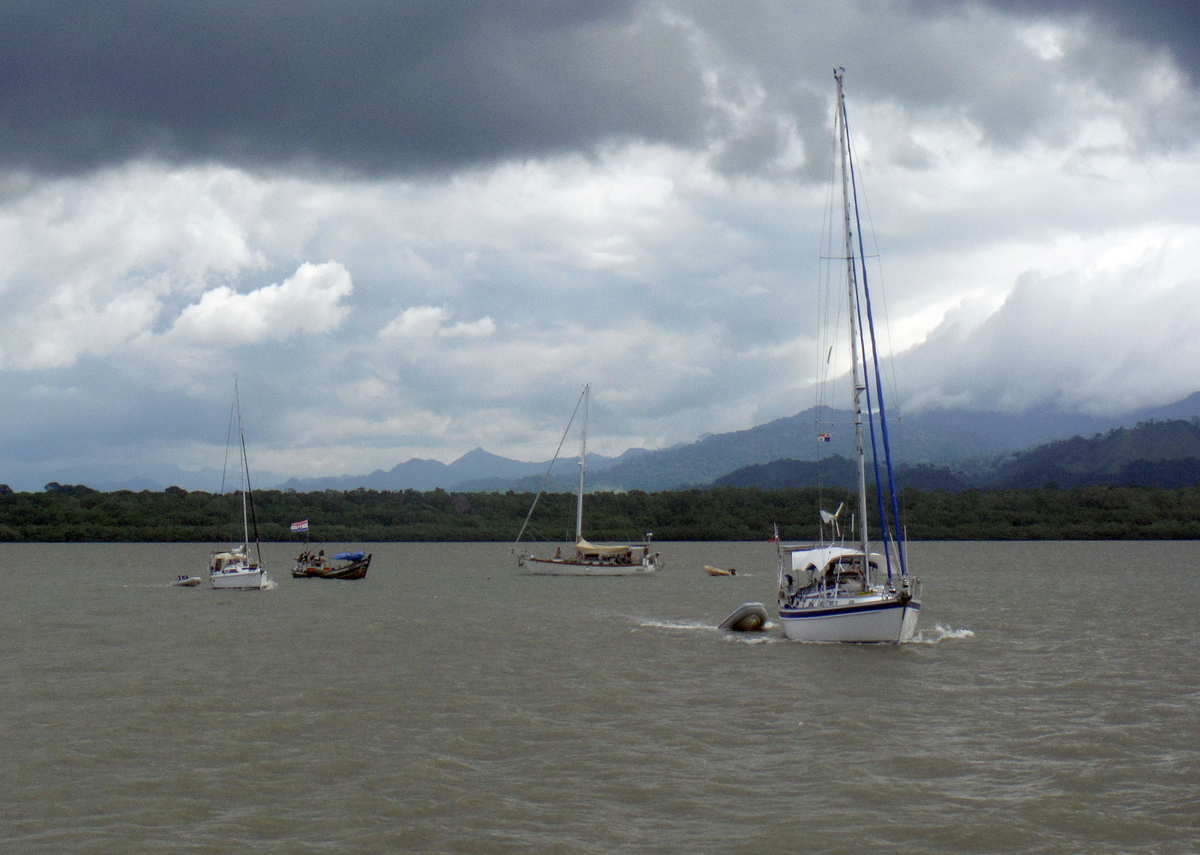
We arrived back at La Palma three hours later and went into town to buy some more bread and fresh vegetables. After lunch, we motored around to Isla El Encanto, which is only a few miles away and is a lovely peaceful anchorage - no more noisy generators for us.
With our sunset beers, Glenys produced some cheese and olives for nibbles, but for some reason, this didn’t stop my craving for salsa with tortilla chips. We’ve discovered these handy little tins of “Salsa Mexicana Casera” made by a Mexican company, La Costena and I’m convinced that they put something addictive into their recipe because I can’t stop eating it.
19 October 2013 Isla El Encanto to La Chunga, Darien, Panama
We were up at the crack of dawn. The tide was against us for half an hour until we arrived at the Boca Chica channel where the tide was ripping through at five knots and causing impressive eddies and whirlpools. Once through the narrow channel, we headed south doing 8-10 knots over the ground with the outgoing tide. Note to self, ALWAYS check the tide - trying to motor or sail against a 4 knot tidal current is a mug's game.
We motor sailed down the coast with our mainsail up. As we were approaching our destination, I noticed that the webbing loop at the tack of our main sail had chafed through and broken – rendering the sail useless. We couldn’t roll it away, so we dropped the whole thing on deck and shoved it down the front hatch into the front cabin – we’ll have to sort it out another day. At least it happened in light winds.
Our small flotilla anchored on the mud flats off the small town of Garachine at ten o'clock. I went for a trip in "Lil Explorer’s" dinghy with Loyal and Chris from "Grace" to check out the channel into the Rio Sambu. Loyal had their previous track on his iPad and I had our portable depth sounder to check the water depth. Being low tide, the depths were alarmingly shallow at less than a metre, but with four metres tidal range we should be okay.
We then had to wait for two hours for the tide to be come in. Alba has the deepest draft of the four boats and I was particularly keen to ensure that we started our approach to the river three hours after low water when the rate of tidal height change would be at its greatest. It was a long two hour wait…
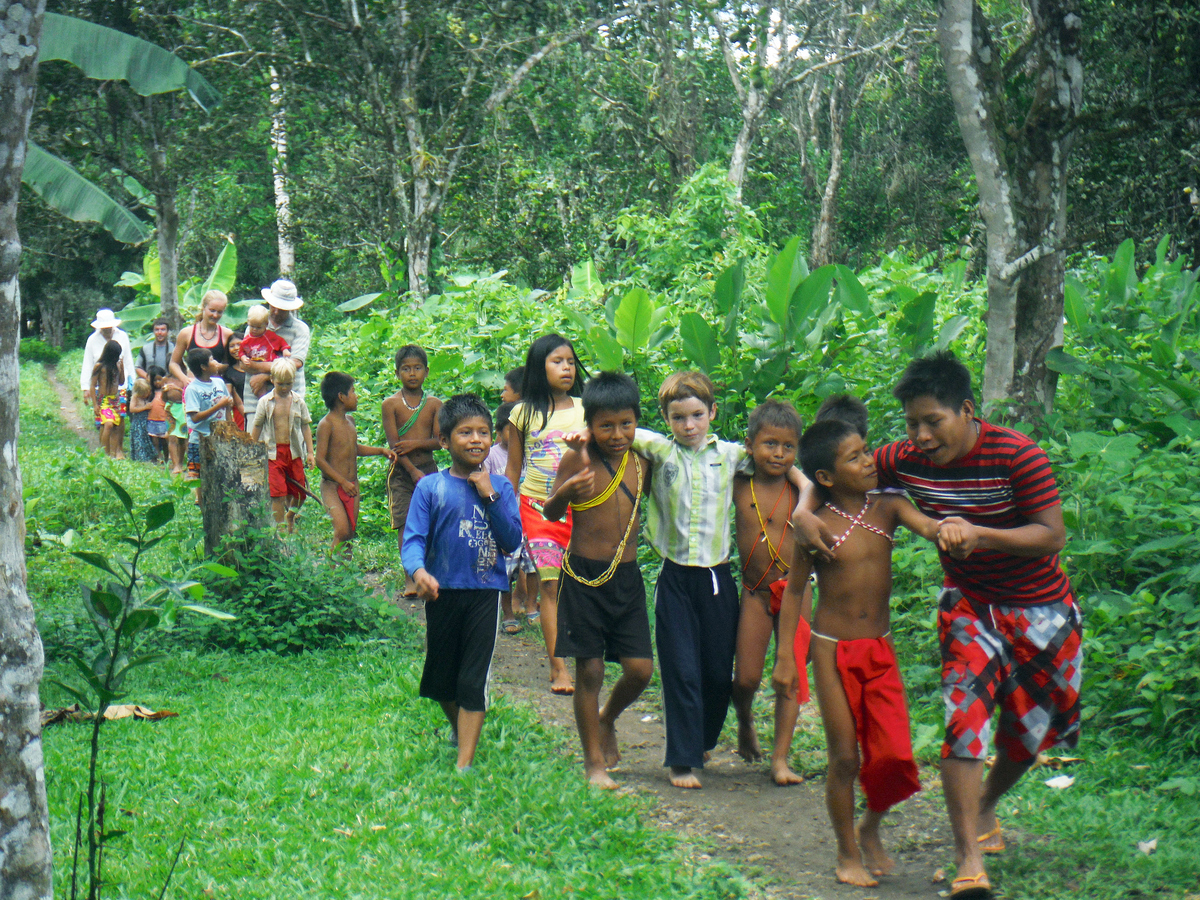
At one o'clock, our small fleet pulled anchor and motored towards the channel. "Lil Explorer" went first because they had their previous track and the shallowest draft. We went second because we had the deepest draft, so if we got through, the others would get through.
It started well until we came across a one mile long fishing net strung across the channel. A panga came zooming across to us as we approached the net and told us that we'd be okay to go around the end on the net, which was marked by a black flag. Not trusting this local knowledge at all, "Lil Explorers" launched their dinghy so that Loyal & Cassidy could check the depths with a 10 foot long boat hook.
Having managed to circumnavigate the fishing net, we went back to the channel and went along quite happily with 3-4 metres of water. We then came across another mile long net strung across the channel - obviously not many boats come this way.
This net was a little more challenging because Loyal & Cassidy found a shallow sand bar when they went to one end. There was a fishing boat at the other end, but our dinghy-based depth sounders found only "about" 7 feet around the fishing boat. As our draft is 6ft 8 inches, I was a little worried. With their 4 foot draft, "Lil Explorers" easily made it around the fishing boat and also reported seven feet. With baited breath, I inched our way around and breathed a sigh of relief when we made it around safely. The other two boats followed close behind, the fishermen must have thought that we were crazy, going so close to them. After that it was plain sailing with more than five metres of water all the way to the river entrance.
The trip up the meandering river was fabulous with depths of 7-15 metres on the outsides of the river bends. Do you remember your geography lessons about rivers with slip-off slopes on the inside of bends and river cliffs on the outside of bends? The jungle is very dense along the river banks and fish must be plentiful because we spotted lots of Ospreys, Herons and a flock of White Ibis. The river is littered with dead tree trunks and branches which float just on the surface of the water, so a sharp look out was essential. Even so we hit a couple of substantial logs – I hope we haven’t damaged the propeller.


By four o'clock, we were all anchored ten miles up the river just off the boat dock leading to the Emberá Indian village of La Chunga. The holding is fabulous, the anchor slammed into the thick mud and the anchor chain was like a solid bar when we backed the anchor in - I'll sleep well tonight. We went into full jungle mode with mosquito netting in the cockpit and we even had to burn a mosquito coil when no-see-ums started to sneak through the defences. However, it's nice to hear the sounds of the jungle only 25 metres away, especially when you're sipping a nice cold beer safe from the creepy crawlies and flying monsters.
20 October 2013 La Chunga, Darien, Panama
I was up at the crack of dawn and sat in the cockpit in the cool air, listening to the sound of jungle all around us. I took some photographs of the other boats in the river and ten minutes later “Lil Explorers” started to drag their anchor because a huge tree trunk had caught on their anchor chain – this flotsam is a bit of a problem.
We all went into village at nine o’clock. “Lil Explorer” had talked to someone from the village last night and arranged that we all go at the same time. We’re a fairly large group with eleven adults and six children, so the villagers wanted to give us a formal welcome. They don’t see many tourists up here and there’s only been one other cruising boat up this river in the past year.
There’s a substantial dinghy dock, which leads to a board walk raised five feet above the swampy jungle floor. The wooden planks on the board walk are rotten and broken in places, so we all gingerly walked on the edge of the planks where there is some support. The board walk is about two kilometres long, so it took us quite a while to walk in.
There’s a small bridge at the end of the board walk where we came across the welcoming party – a small band of four musicians playing traditional Emberá music and a group of twenty or so villagers in traditional dress. After listening to a couple of tunes, we walked another kilometre into the village itself. The kids are very friendly, spontaneously holding hands with us as we walked along the lovely path.
At the village, we were met by more villagers and a spokesman formally welcomed us giving some information about the village and the Emberá Indian culture. An American Peace Core volunteer called Charles lives in the village and acted as a translator for us, which was very useful.

The settlement was created in 1969 and is a subsistence farming community, where most of the produce is for their own use. They have been trying to promote tourism, but the village is so remote that they rarely get any visitors. Most of their cash is generated by the women making handicrafts and art and selling it to the tourist market.
Interestingly, the traditions of the Wounaan and Emberá Indians are very similar, but their language is completely different. These tribes are the famous blow-pipe wielding natives of Central America and were more aggressive than the Kuna Indians, forcing the Kuna onto a narrow strip of land on the Caribbean coast.
There is increasing pressure on the traditional way of life as the more westernised Latino Panamanians buy land and build more roads into the region. Panamanian laws also have a strong effect. When the Emberá children go to school, they have to wear school uniforms and shoes, even in the small junior school in this village. There’s a small town called Puerto Indio two miles up the river where Indian women will be arrested if they walk around bare breasted. If the Pan-American Highway is extended through to Colombia then the social pressures will increase dramatically and the Emberá culture many only last one more generation.
There was a long debate about some fees that they wanted to charge us. The village wanted $15 per boat and the local Comarca (a kind of regional council) wanted $10 for each adult. This adds up to $180 for our four boats to anchor here. The Comarca originally wanted much more, but Charles had already argued with them following “Lil Explorers” previous visit and this was the best he could do. We argued that if they charged other cruising boats this amount then they wouldn’t come.
Eventually, we agreed to give them $15 per boat and they would argue with the Comarca later. It sounds like the Comarca will probably keep most of this which is a little unfair on the village, but we’ll be buying things in the village, which will benefit them directly. As a start, we arranged for the villagers to put on a demonstration of Embera music and dancing later in the afternoon for $50 for the group.

The village chief then showed us around the village, taking us to various houses and showed us one of their pangas being carved out of a tree trunk. It was a little difficult communicating with our limited Spanish, but they are a very friendly people and the children are delightful. The chief showed us some of the crops that they farm including plantains, rice, coffee and there are lots of chickens wandering around – no battery hens here. There are fruit trees scattered around the village and the chief shared a few freshly picked oranges with us.
We braved the board walk and returned back to the dinghy, where we found that the tide had gone out, but a couple of the villagers had been told to stay at the dock and watch our boats. They had made sure that our dinghies were still floating in the water and not high and dry on the thick mud, so it was relatively simple to walk down on stones and logs – not too much mud went into the dinghy.
By mid-afternoon, the tide was high enough to allow us to take our dinghy up the small tributary that leads to the village. It’s about a mile through the middle of the rainforest, dodging the inevitable logs and branches. There’s a huge tree that has fallen across the stream which proved to be a challenge to get around. The tributary is navigable two hours either side of high tide.
As we entered the tributary, a group of Embera kids were stood on the bank, shouting to us obviously wanting a lift to the village. Looking at the mud-splattered children, Glenys started off saying that we could only take four, but as I nudged up to the shore, the young boys started to leap onto the dinghy - frantic to be one of the four. Having already got five boys on board, we told the remaining three girls to get in as well – it was good fun going up the river.
Back in the village, we were met by even more villagers in traditional dress and treated to some more Embra music, which to me sounds a little like improvised jazz. Six of the ladies then showed us how they dance to their music, which is simply a very slow shuffle. They then gave a performance of two of their traditional dances which are meant to emulate things in nature around them. The first one depicting the playful movements of a small rodent was first and then they did a dance based on the action of a sugar cane press.
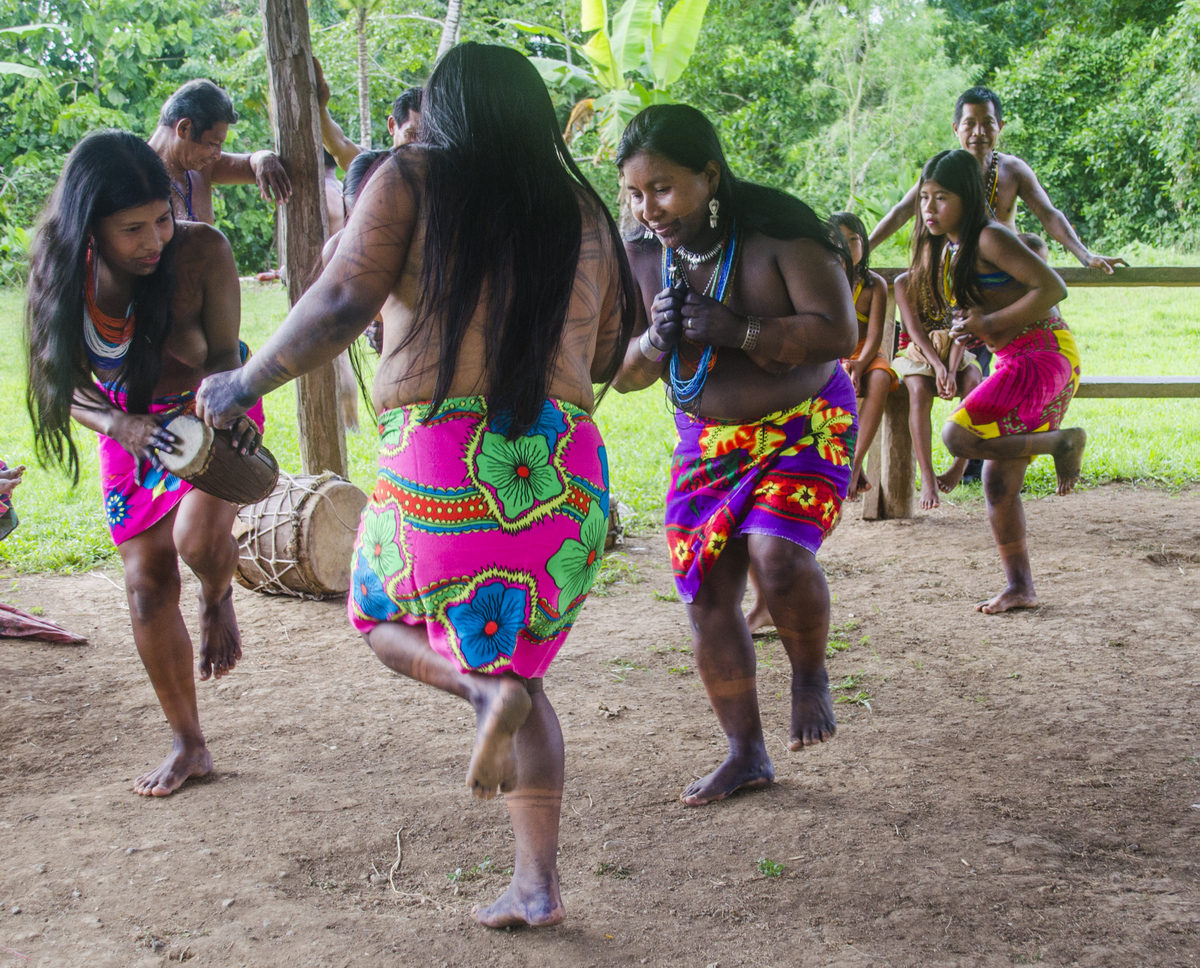
It was a very casual occasion, the dances were obviously not well practised and there was some good natured heckling and advice from the other ladies in the audience. The dance was interrupted by moments of laughter from the dancers – nice to see people enjoying themselves rather than some of the highly serious tourist displays that we’ve seen.
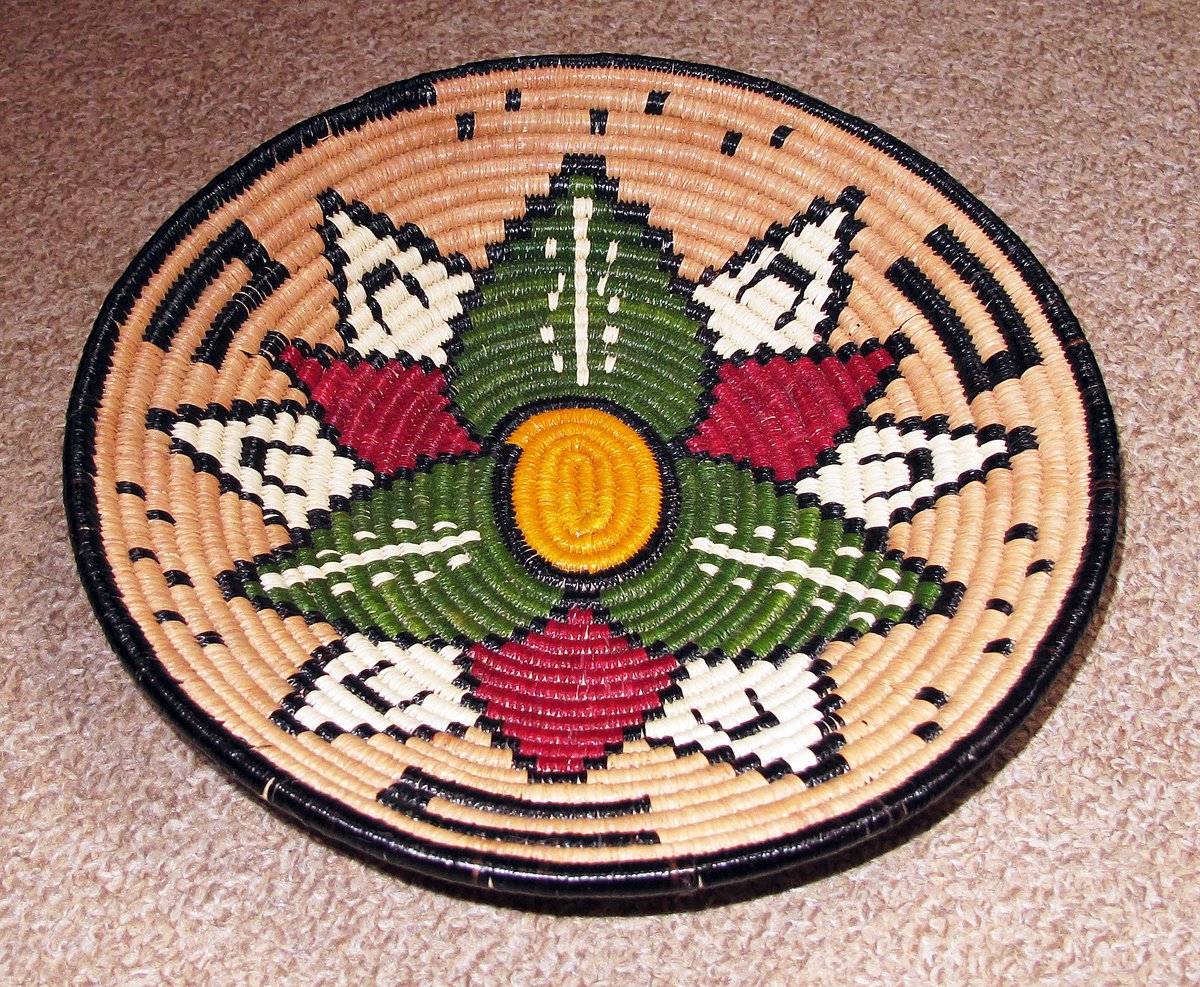
They showed us how they produce sugar cane juice in a huge hand cranked press and handed out the juice with a squeeze of lime – the only thing missing was a tot of rum. Meanwhile, the ladies brought out their handicrafts, which were very similar to the Wounaan items we’d seen in Puerto Lara a couple of days ago. Glenys bought a small Tagua Nut carving and another brightly coloured woven bowl - this one is eight inches in diameter. We were told that the natural colour of the palm leaf is almost white and the colours are made from plants found locally – the red comes from a flower and the black is made using mud.

A few people had themselves painted with dye from the Jagua fruit. This is a traditional temporary tattoo which lasts about 2 weeks and is similar to henna but much, much darker. The Indians paint their bodies and faces with this dye with different patterns for weddings, funerals, etc. We’re told that the dye has some medicinal effect and also acts as an insect repellent.

We arranged for the village to make us dinner tomorrow evening for $2.50 each - they wanted to know how many meals were needed, so that they knew how many chickens to kill. We managed to make it back to the boat well before dark.