
1 August 2014 Bora Bora to Penrhyn, Cook Islands (Day 3)
At around seven o'clock, Glenys gybed the genoa back across to port. We had one heavy shower during the morning, which sucked all the wind away, so we motored for twenty minutes. The rest of the day was lovely, bobbing along at 3-5 knots on a broad reach in six foot seas. We had quite a bit of cloud in the morning, but it brightened up later.
In the morning, I listened to the radio net and it's amazing the variation in reports from different areas. Harry from "Malua" is down at 17 degrees and a lot further west, sailing directly to the Va'vau group in Tonga and reported winds over 30 knots from the southeast and huge seas. The GRIB files forecast that Suwarrow will have some horrible heavy rain and squalls in two days’ time. Touch wood, we should be okay up here.
We've fallen into our normal routine, with Glenys sleeping in the morning and me in the afternoon. The rest of the time we're reading because there’s not much else to do. Glenys has started to make a courtesy flag for the Cook Islands. We put out two fishing lines, but no luck yet.
By dusk, the wind had veered again and was more behind us, so we gybed the genoa back to starboard, poled out wing on wing. I love this sail configuration. We've found that we can have the genoa poled out to starboard even when the wind is up to 120 degrees on our starboard side. You would think that the wind would get behind the genoa, but by moving the pole forwards, it stays inflated. The main advantage, especially in light winds, is that both the main and genoa have clean air.
It was another lovely night, but the gentle rocking motion is very soporific. Glenys had to wake me up three times at 0100 before I clawed my way out of deep sleep. At 0400, we had a set of showers pass over us giving us confused winds dropping down to 5 knots then gusting up to 20 knots from all directions, so I gave up trying to sail, rolled away the genoa and we motored for a few hours.
2 August 2014 Bora Bora to Penrhyn, Cook Islands (Day 4)
The days are starting to turn into a blur now - it was another lovely sunny day with light 10-15 knot winds from the east. We pulled the jib back out to port in the morning and poddled along on a broad reach at 4-5 knots in the 4-6 foot seas.

I checked into the Isabella net at eight o'clock and people are bolting for cover. "Malua" is two days from Tonga and Harry says that it's like being in the Southern Ocean, with 30-35 knot winds and huge seas. I'm glad that we're up here.
We landed a nice 3-4 foot long wahoo, which I filleted. Glenys cooked some for lunch and made Fish in a Creamy Mushroom Sauce for dinner with mashed potatoes and peas - yummy. She's put three meals worth into vacuum sealed bags and put them at the bottom of the drinks fridge because her small freezer is full up. The small vacuum sealing appliance is turning into an essential part of her food management - it not only seals food into a compact bag, but helps to preserve it longer by sucking out the air.
It was such a nice calm day that I spent most of it down below, catching up on editing photos and our website and spent a few more hours programming my Marine Life application. I got so engrossed in it that I had a "reality attack", when I suddenly realised that we're all alone in the middle of the Pacific Ocean.
The wind slowly backed during the day and by two o'clock in the afternoon, we were on a broad reach doing six knots with 180 miles to go - there was a fighting chance that we could make landfall tomorrow afternoon, so we pulled out the stay sail to go faster. Unfortunately, a hour later the wind dropped a little and we resigned ourselves to another two nights at sea.
By sunset, the wind had backed even more, so that we were on a close reach with the wind 80 degrees off our starboard bow. The forecast is for the wind to back even more over the next 24 hours, so we altered course to go 20 degrees further upwind. It's no hardship to go upwind in these light winds and calm seas and if the wind increases or backs more then we'll be able to ease the sheets and hopefully get to Penrhyn in one tack.
We had some short heavy showers during the night, which brought 20 knot winds. At 0200, during a particularly windy squall, I rolled away the staysail and reefed the genoa and we spent the rest of the night with one reef in the main and 5 wraps on the genoa. Why do we always seem to get these squalls at night?
Typically the wind will drop down to 5 knots and the sails will start to flop around. The wind then starts to increase and back and, in less than a minute, we'll have over 20 knot winds. Depending if the squall hits us directly, we may have heavy rain or even none at all, before the damn thing passes by and the normal winds return - until the next squall arrives... In the pitch black of a moonless night, it's very unsettling.
3 August 2014 Bora Bora to Penrhyn, Cook Islands (Day 5)
At 0800, we had 80 miles to go. The wind was 10 knots from the north east as forecast, and we were bumbling along at 3-5 knots in 4 foot seas, planning to sail slowly for 24 hours to arrive at the pass into Penrhyn in the morning. Unfortunately, we were surrounded by heavy rain showers, some of which brought 20 knot winds and heavy rain.

It could have been a lot worse. We heard reports on the net about the weather that others were getting. Boats in Suwarrow spent last night on anchor watch with 25-30 knot winds as squalls went through - one boat apparently dragged and went up on the reef (we heard that "Amiable" was a total write-off.) "Scotia" (on their way to Samoa) had to heave-to in 54 knot winds and "Malua" was hit by a huge wave which ripped off his bimini and cause other damage - they both still have sustained winds over 30 knots. Not exactly a "milk run".
The afternoon was pleasant being mostly sunny, but the wind dropped, so at times we were only making 2-3 knots. We continued bobbing along until midnight, when a huge black system approached and sucked all the wind away, forcing us to start motoring. Fifteen minutes later, we had over 20 knots of wind, then fifteen minutes later we were motoring again. This happened a few times during the rest of the night.
By 0300, we were 20 miles from the entrance, motor-sailing slowly. There are no navigation lights on this low lying atoll, so even though we've had reports that the charted position is accurate, we decided to keep a healthy five miles offshore until dawn.
I've been pondering why we always seem to arrive at the end of long passages at night or have to slow down to avoid arriving at night. If we say that the best time to enter coral-strewn waters is between 0900 and 1500, then that's only a 6 hour window. So there's only a 25% chance of making a perfect landfall.
If we average 5 knots on a 600 mile trip, then that works out to 120 hours (5 days). However, if that average speed changes by 1/2 knot, then the passage time could be between 109 and 133 hours - that's a massive 24 hours difference for a tiny change in speed. There's obviously no point in trying to plan - we should just leave when we're ready and accept that there's a 75% chance that we'll have to heave-to or slow down to wait for dawn.
4 August 2014 Bora Bora to Penrhyn, Cook Islands (Day 6)
At eight o’clock in the morning, we hove-to a mile from the pass into the Penrhyn atoll. It’s quite a narrow pass that runs roughly west to east, so we wanted to wait until the sun was higher in the sky to give us good visibility of the coral in the water. We made our approach at ten o'clock, but had to abort our first attempt because a big, black cloud came over just as we were getting close. Ten minutes later, the cloud had passed and we motored through. The tide was going into the lagoon at two knots, so the wind was against the tide, but we only saw small two foot standing waves.
After getting through the pass, we turned sharp right and roughly followed a series of markers that are shown on the Navionics charts. I say roughly because the markers are wooden sticks put in place by the locals - some are not there and some are on different coral reefs. With good light, we easily eye-balled a route through the many small reefs and dropped our anchor off the village of Omoka at 08°58.71S 158°03.10W.

The water at this side of the lagoon is very murky, so we couldn't see the sea bed, but it felt like we’d dropped the anchor in a sandy patch because the anchor held very well, which was a good job because we had a lee shore just 50 metres behind us. Fortunately, the wind was only blowing 10-12 knots, so we only had a 1½ foot chop. There’s a seven mile fetch across the lagoon and I've read that the sea builds up in strong easterly trade winds and makes this anchorage very uncomfortable.
After a wait of only 30 minutes, the customs and immigration officer, Ru Taime, came on board. He was dressed very casually in a pair of shorts and a flowery tropical shirt and was very friendly. After we’d filled in the normal paperwork, he sat and chatted for a while, then had a quick look around the boat, more for his own curiosity rather than an official function. He spotted Glenys’s ukulele and had a short play with it.
Ru told us that it was Constitution Day and a public holiday, so the Health and Quarantine officer may not come out today and we would have to stay aboard until we’d been fully cleared in. That wasn't too much of a hardship because after five nights at sea, we need the rest.
We’d read that the Penrhyn islanders are keen to trade for things because supply ships only come in every couple of months and they often need practical things that have broken or worn out. During our conversation, Ru told us that he was going snorkelling for pearl oysters for the rest of the day and asked if we had any gloves. I took this for a signal that he would like some gloves, so I was quite happy to give him a pair that I’d been using to catch fish.
Ru discovered that I knew something about computers and immediately said that he had a problem with the display on his laptop. After a bit of discussion, I've said that I’ll go to his house and have a look at it for him. I'm also going to take him some movies to copy onto his laptop.
We pottered around for the rest of the afternoon reading and napping.
5 August 2014 Omoka to Tetautua, Penrhyn, Cook Islands
I was up early and paid for an internet connection which was reasonably fast, so I published our website and did a few admin jobs. The Health and Quarantine officer, Tuku Marsters, turned up at around ten o'clock, filled in the forms and did a cursory tour of the boat lightly spraying everywhere with a pethidrin insecticide.

We then had a long chat about him and the island. Tuku is very proud of being a direct descendant of a sailor called William Masters, who came here in the late 1800s and married a local lady. He took his wife to the remote atoll of Palmerston and started a family there. After a few years, William left Palmerston and went wandering, coming back to Penrhyn where he married another two ladies from Penrhyn. Meanwhile, his first wife married his friend who had remained back on Palmerston.
Accounts differ, but I think that William Masters took one of his wives back to Palmerston and one remained here in Penrhyn. There are about 50 direct descendants on Palmerston and a thousand or so scattered across the other Cook Islands and beyond, with a fair number of Marsters here in Penrhyn, who are direct descendants of the third wife who stayed here. At some point in the past, the name changed from Masters to Marsters.
Tuku is in charge of all health matters on the island including the control of mosquitoes, flies and rats. Part of his job is going around looking for stagnant pools of water and treating them with chemicals to kill the mosquito larvae. He told us that there are quite a few derelict houses that exacerbate the problem, with unused water tanks and he is in a constant battle to get permission to pull them down.
Just before he left, Tuku asked for NZ$20 for his fees, but didn't have any change for the NZ$100 note that we’d got from a bank in Papeete. After a little negotiation, neither of us knowing the exchange rate to US dollars, we agreed that US$18 was acceptable.
Having cleared in properly, we went ashore leaving the dinghy in a small boat harbour. We first walked to find Ru’s house and arranged to come back later to look at his laptop. He gave us directions to the bank, which was open today, so we wandered along the dirt track that acts as the main road though the village.
At the bank we found Alex Maletapu sitting on a chair in front of the counter chatting to the bank teller and wielding a sharp looking knife. I introduced myself, shook hands and then asked if he was in the middle of an armed robbery, to which they both laughed and said where would he hide? The bank teller happily changed one of our NZ$ 100 notes into smaller denominations. After chatting for ten minutes (these people have time to spare), we found out that Alex’s wife bakes the bread for the village and that we should call by at the yellow house a little later.
We wandered off towards the church and were called over to a small house on the edge of the shore. William Masters, a large elderly gentleman was sitting on a plastic chair just outside his house and invited us to pull up a chair. We sat and chatted for over fifteen minutes with him and his wife, Jemima about various things. One of the first things he did was to inform us with great pride that he was a direct descendant of William Marsters from Palmerston.
Bizarrely, William asked us if we had a spare Cook Island flag - apparently, the flag used by the Girls Brigade at the Sunday church parade is getting very tattered and he wants to give them a flag. We apologised profusely, that we didn't have a flag and the conversation drifted onto pipi pearls.
The islanders collect small two inch diameter oysters, which grown on the many coral reefs within the atoll. These Pipi oysters produce a golden-coloured mother of pearl on the inside of the shell and the islanders find golden-coloured natural pearls. Jemima went inside and returned with a small jar containing a dozen of these beautiful pearls - ranging in size from tiny 1mm diameter to 6mm diameter.
She showed us her largest pearl (6mm diameter) and said that she would get $200 for it. The agent apparently pays between NZ$50 and $80 per gram for the smaller pearls. William showed us a shell with a small pearl embedded in the inside of the shell and, when Glenys showed great interest in it, they insisted on giving it to her.
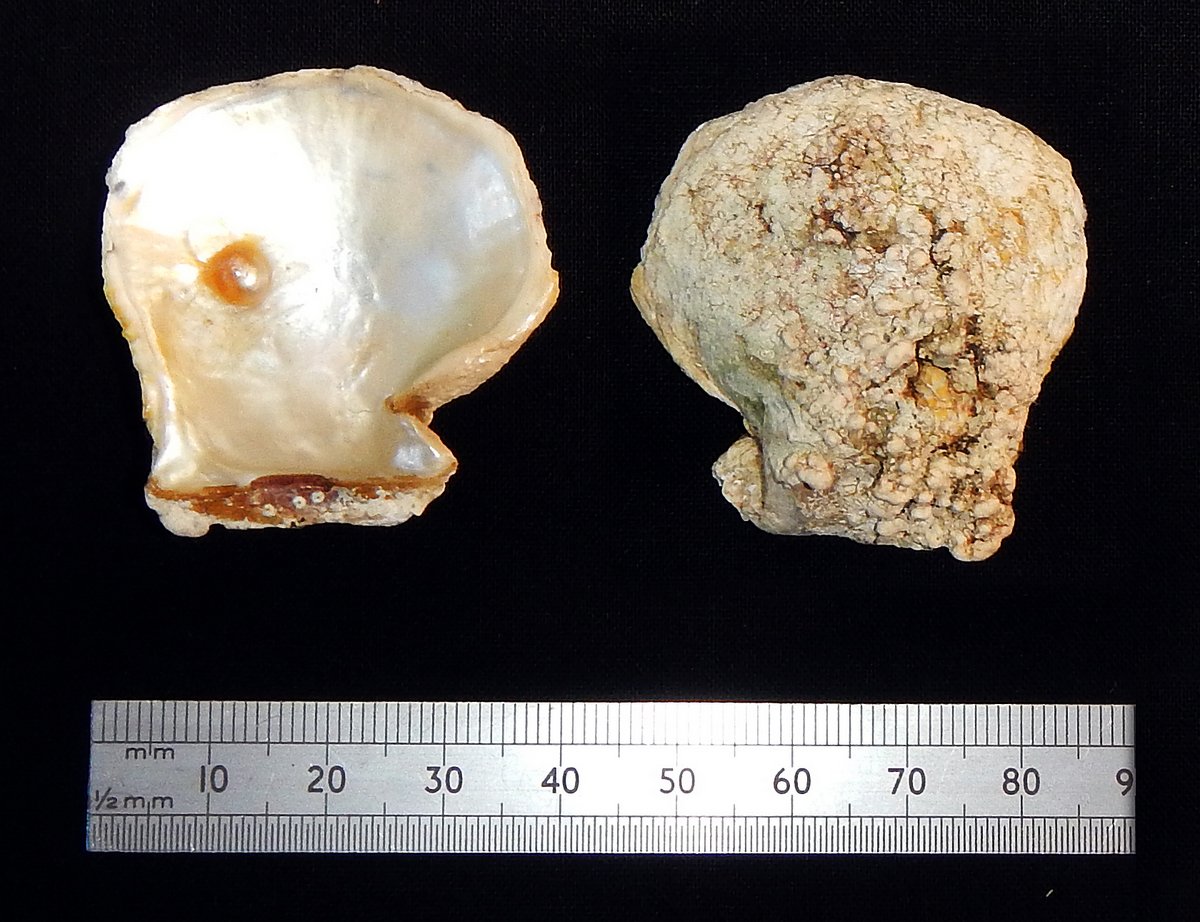
The ground next to William’s house was littered with cast-off Pipi oyster shells with the mother of pearl glinting in the sun. I wandered over to have a look at the beautiful gold colours. I asked if I could take a few, at which William’s wife opened a cupboard and handed me a huge bag of shells that she’d been collecting that had the deepest gold colour. I couldn't possibly take the whole lot, so after a lot of protesting, she allowed me to take only a handful. They also gave us some black pearl oyster shells, so we left with a heavier load than we arrived.
We wandered to the church and walked through the graveyard, noting that many of the gravestones were marked with the name Marsters. There are two churches in Omaka, a Catholic one at the other end of the village and the Cooks Island Christian Church, which we had a walk around. It is a simple church, but is decorated in carved wood and quite lovely. No-one is allowed to take photographs in the church, so I didn't (even though I was itching to.) There's no altar in the church, just a very high pulpit where I assume that the minister preaches from on high - very like a Baptist church.
We continued up the back road towards the bakery and stopped to chat with a lady sitting outside her house. She insisted that we take a seat and we found out that she was called Abba Taine (pronounced Ebba) and is the daughter in law of Ru Taine, the customs guy. (By this time, I was starting to get the feeling that all the islanders are related in some way.)
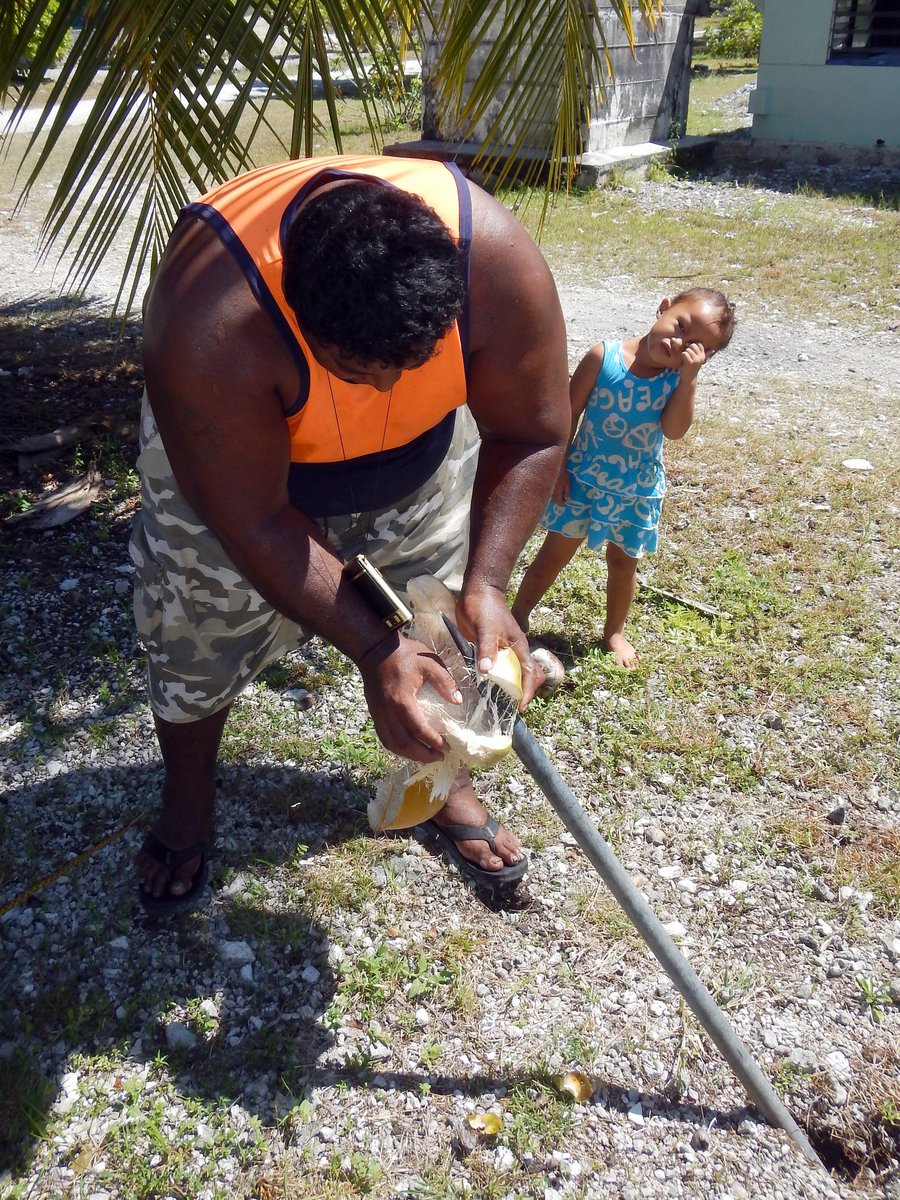
Abba’s father, Turoa, arrived and insisted on getting some coconuts for us to drink. It was interesting how easily he opened them up - he had a big four foot long metal stake that was driven into the ground and had a sharp point on the top end. Turoa simply hammered the coconut onto the spike and then tore the fibrous outer shell off using the stake as a lever - 30 seconds per coconut.
With two coconuts in my rucksack as gifts to drink later, we wandered off and found Alex’s yellow house and were of course invited in to chat a while. Alex told me that he had owned a pearl farm in the atoll, but a few years ago a yellow algae bloom had come into the atoll, carrying with it some disease that had killed off the farmed oysters. The islanders lost a lot of money and since then no one has been brave enough to start up again. Before we left, Alex produced a big loaf of bread and insisted on giving it to us.

We walked to Ru’s house, but I was unable to fix his laptop - it only had a minor fault on the screen and it was too risky to try to take it to pieces. I started copying movies from my hard drive to his laptop, but it was taking far too long, so he gave me a brand new 1TB hard disk drive to take away and copy films - the islanders might live on a remote atoll, but they have the latest high-tech toys.
This trading thing is quite subtle and easy to mis-understand. Ru asked me if we had any limes on board, to which I immediately assumed that he wanted some limes. I replied truthfully, that I didn't know and would have to ask Glenys. Ru then wandered off and returned with a bag of limes as a gift to me - I was embarrassed that I’d made a wrong assumption.
The wind was starting to blow harder and the waves were starting to build up in the anchorage, so we motored over to Tetautua on the east side of the atoll and anchored on a sandy patch at 08°57.48S 157°55.70W in six metres of water. There were two other boats already anchored here - David and Katrina on “Laragh” and Paul and Celeste on “The Beguine” had arrived a few days ago. After chatting to Katrina on “Laragh” to get some local knowledge, we took our dinghy ashore and tied up at Rio Teika’s house.
Rio and his wife Kura (pronounced Koola) are very welcoming and love to include yachties in their daily life. Rio is on the village council and seems to be the person who manages community projects. He’s discovered that yachties are a great source of technical knowledge and spare parts, so he looks after any visitors and, in return puts them to work on whatever needs fixing. It’s a brilliant strategy - the yachties get involved in village life and the village gets things fixed.
He’d already roped David and Paul into doing jobs ashore and we found them in a shed trying to fix the island’s flat-bed truck. The truck’s starter motor had burnt out and the villagers have been push-starting the truck for over a year. David and Paul were in the middle of fitting a new starter motor, so we left them to it and had a walk around the village, stopping every so often to say “Kia Orana” and to have a quick chat.

Back at Rio’s house, we were invited to go fishing with Rio and the other boats that evening, so we went back to the boat to re-group and have a sandwich before we went out again.
We all went out in Rio’s aluminium boat to a shallow reef in the middle of the Tetautua Pass. Rio provided us all with bamboo poles with a six foot length of fishing line tied to the end. Using small hooks and small bits of fish as bait, we started to pull in small 4” Soldierfish. For bait, Rio and Sam (Rio’s cousin) were biting a small chunk of skin off a fish’s belly - I had a go and was rewarded by a mouth full of scales and a cut on my lip from a spike on the fish’s fin.
After an hour of fishing, we had caught over 50 small fish, so we went back to Rio’s house where they barbecued the fish and laid on a meal for everyone with chicken, breadfruit and rice as well as the fish (which were very small and had to be eaten like sardines.)
David and Katrina had brought their musical instruments over, so I went back for my guitar and Glenys’s ukulele. These instruments were then commandeered by Rio, Tu Loa (known as Mr T, the community policeman), Dave (the Mechanic) and Tommy (another cousin) who treated us to some Cook Island Songs. The playing style is very relaxed and the singing was fabulous with close harmonies.
Rio told us that his guitar has a broken string and so has Mr T’s guitar, so they were very keen to play the instruments. We didn't leave until eleven o'clock.
6 August 2014 Tetautua, Penrhyn, Cook Islands
We had a late start to the day after our late night. When we went ashore we found Kura’s mother (Mama P) visiting. Kura gave Glenys a necklace that she’d made from small cowries & woven palm leaves and Rose (Kura's daughter) gave her a pair of earrings made from polished pearl shells and woven palm leaves.
I left Glenys visiting with the ladies and went to find Paul and David who were still working on the truck. They’d got the starter motor physically fitted and were struggling with the wiring. Someone had taken the old starter motor off a year ago and he was now off-island, so no-one knew what he had done.

Paul and David immediately roped me into the discussions and five minutes later I was under the truck, inspecting the wiring. It took me an hour or so to figure out what was going on and an hour to fix it, but just after lunch, I turned the key and the truck burst into life - sorted.
On hearing the truck start, we suddenly had a crowd of villagers in the shed all gathering to see the truck start. There’s still a problem with a broken light switch and the front headlights are stuck on, so they have to disconnect the battery after they've used the truck - a job for another day.
After being treated to lunch by Kura, we were then roped into helping to sort out the flag pole outside the Sunday School. The block at the top of the flagpole was missing and had to be replaced. The flag pole was made from two pieced of iron tubing - one concreted into the ground and a smaller one slid inside it from above.
Rio’s plan was to use the crane on the newly fixed truck to pull the top section clear of the bottom section. Unfortunately, the reach of the crane wasn't enough to lift it clear and every time we tried to move the sling up the pole, the top section would slide back down. We had a ladder, but it was only 10 foot long and barely reached a third of the way up. It was like a Monty Python sketch with everyone making a suggestion, none of which worked.
After an hour or so, I suggested that they lift the ladder higher using the digger arm on their tractor and I would climb up the ladder and tie the halyard in place. Rio wasn't too keen, but eventually we had the ladder in place and I was precariously balanced on the top step, lashing the small pulley in place. Having sorted that job out, we wandered back to Rio’s house.
Rio is quite subtle in the way that he works. We were chatting about life in general, when he said “I was wondering something.”
I replied, “What?”
“I was wondering when you’ll be fixing the light switch on the truck”
“Tomorrow morning, I guess”
Rio just nodded, satisfied.
Kura was just about to bake some bread and Rio wanted us to stay for a while and take some bread with us, but we politely declined and said that we’d see them in the morning. Just before sunset, I heard a shout from outside and found Rose alongside with two small loaves of fresh bread for us - these people are so generous.
7 August 2014 Tetautua, Penrhyn, Cook Islands
I reported in for community service at about half past nine and was put straight onto sorting out the lights on the truck. The truck is a Nissan, but it was bought from China, so all of the manuals and the labels on the truck are in Chinese. The problem was that the rotating knob on the indicator stalk on the steering wheel had broken off, leaving the headlights permanently switched on.
After trying to trace the wiring into the switch and being faced with 11 wires with no wiring diagram, I decided to put a switch in the main supply to the lights as it comes out of the fuse box. A bit of a Heath Robinson approach, but it worked and seemed to be good enough.

Glenys made some pizza from a loaf of bread that was just going stale and we took it over to Rio’s to share for lunch. Glenys and I then jumped into Rio’s aluminium boat and went off with Rose, Sam and Taou (the school teacher from Omoka) to help gather Pi-pi Pearl Oysters. It was a very bumpy ride upwind to the south east end of the atoll. All of the dozens reefs in the atoll have names and Rose was heading for one where her uncle had found one oyster with five pearls yesterday. As we approached the reef it became apparent that the whole village had heard the same story and had decided to try their luck on the same reef because there were five boats already anchored there. Rose decided that there were too many people there and we went to another reef.
The top of the reef is only two or three feet under the water and at the edges drop off very rapidly to 40 metres. I was a little concerned that I wouldn't be able to recognise the small Pipi Oyster clams, but I shouldn't have worried because the top and side of the reef are teeming with them. They’re growing like weeds. There’s no need for tools to pry them loose - it’s just a matter of giving them a small tug and they come away, so my basket was soon filling up.

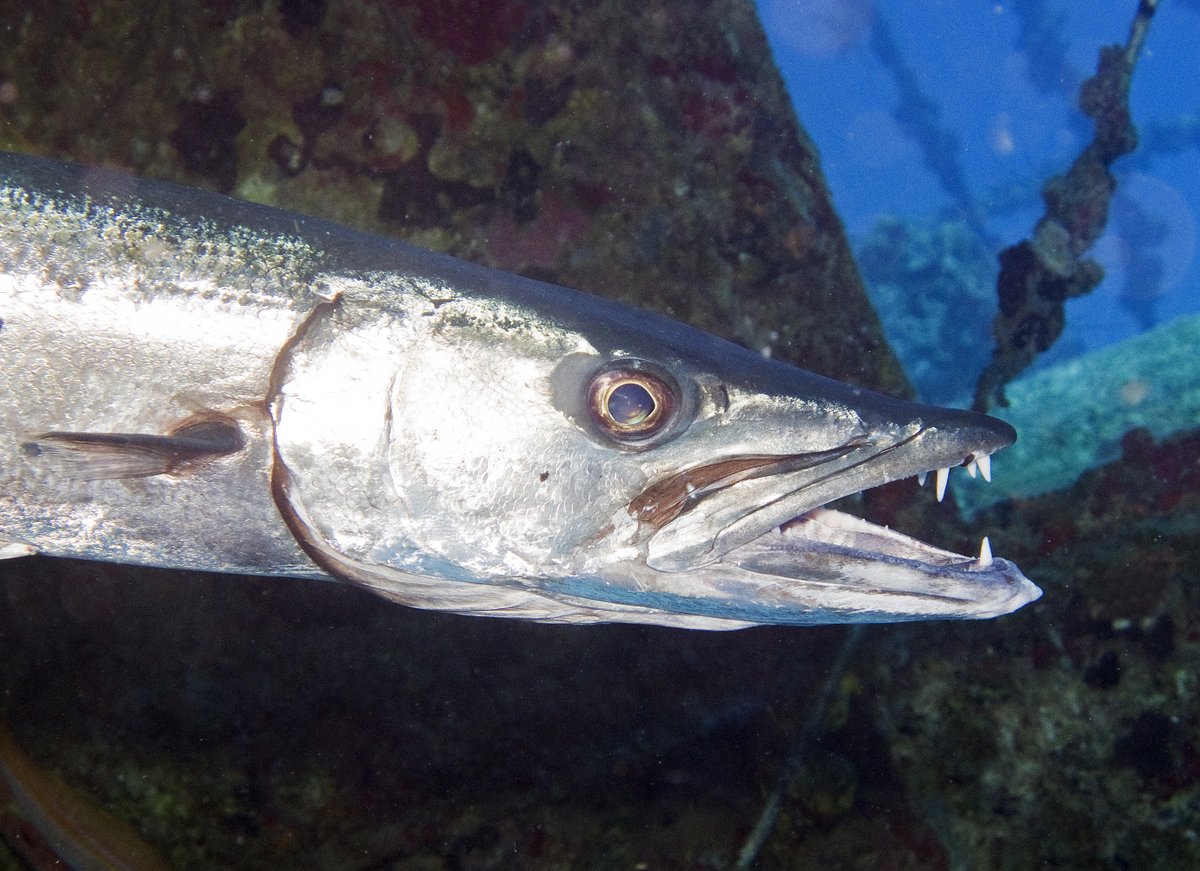
I took some time off and did some deeper diving down the side of the reef - not a huge amount to see apart from the ubiquitous Blacktip Reef Sharks and a mean looking Barracuda lurking in the distance. We spent two hours gathering clams and had quite a haul by the time we’d finished up.

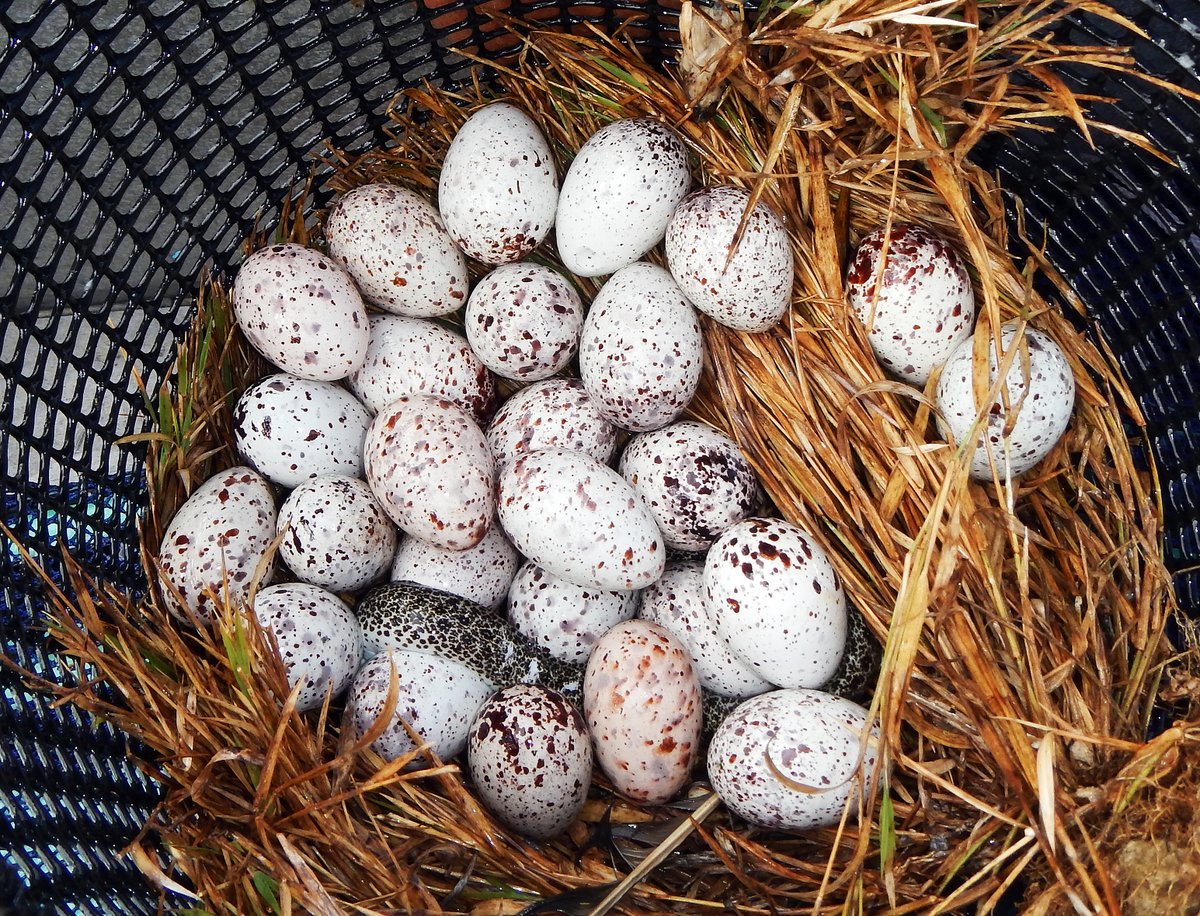
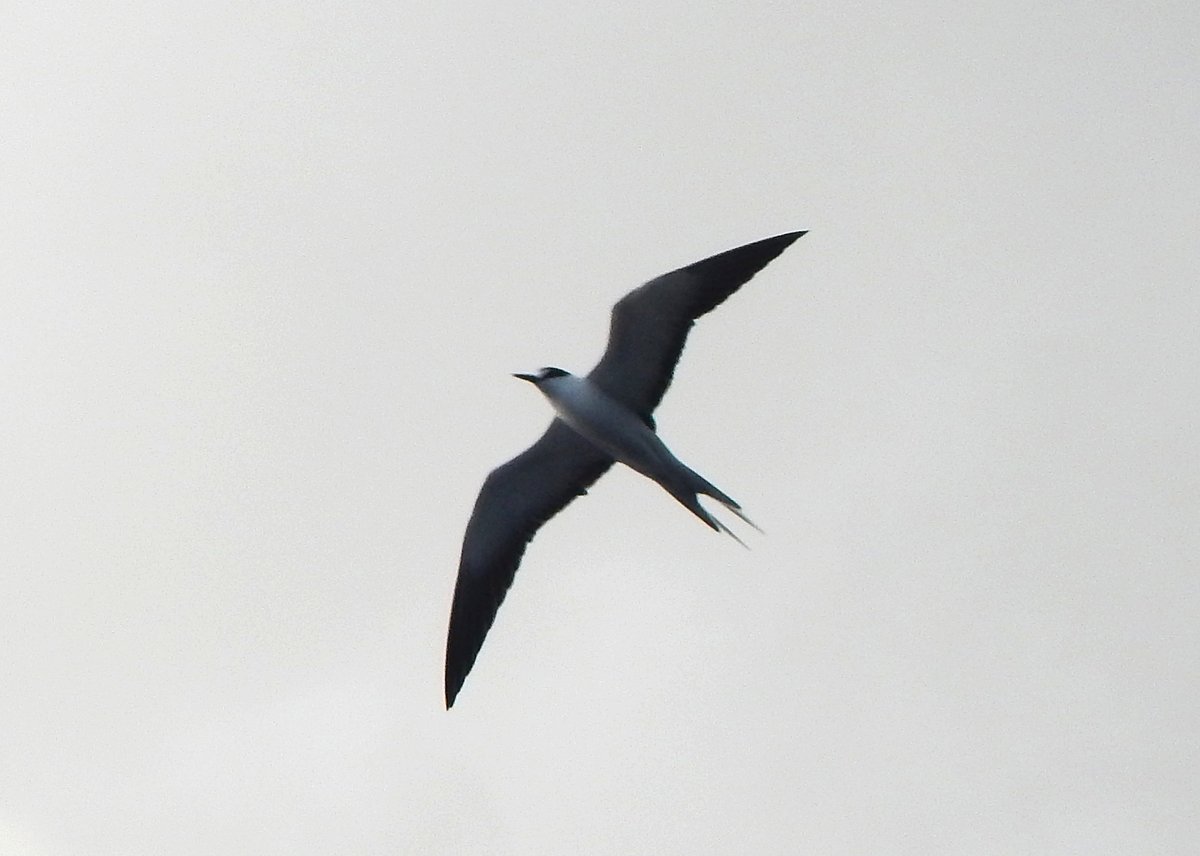
Rose called in at a motu on the way back and collected some Tern eggs. Sooty Terns lay one egg, but if the islanders remove the egg, the tern will lay another one on a few days’ time. So, by regularly harvesting the eggs the islanders are effectively farming these sea birds. White Terns also nest around the atoll, but they only lay one egg per year so the islanders leave those eggs. Rio also told me that Boobies are good to eat.

After going back to the boat and having a shower, Glenys and I went ashore and helped to open the Pipi oysters It’s a tedious task because hundreds of clams have to be opened to find each pearl, but most of the family sits around a table piled with clams and has a good old chat. We didn’t have much luck - Sam managed to get a couple of nice 5mm pearls, but the rest of us only got small ones. Glenys and I walked away with a tiny 1mm diameter pearl and a slightly larger 3mm diameter one as souvenirs. Interesting day and I hope to go again before we leave.
8 August 2014 Tetautua to Motu Atutahi, Penrhyn, Cook Islands
Today we went on holiday. Rio had arranged for the family to go and spend the night camping on Motu Atutahi at the south end of the atoll. Nothing much happened until midday, when two boat loads of people and kids came out to our three boats - nearly all twenty of the kids from the village were coming.
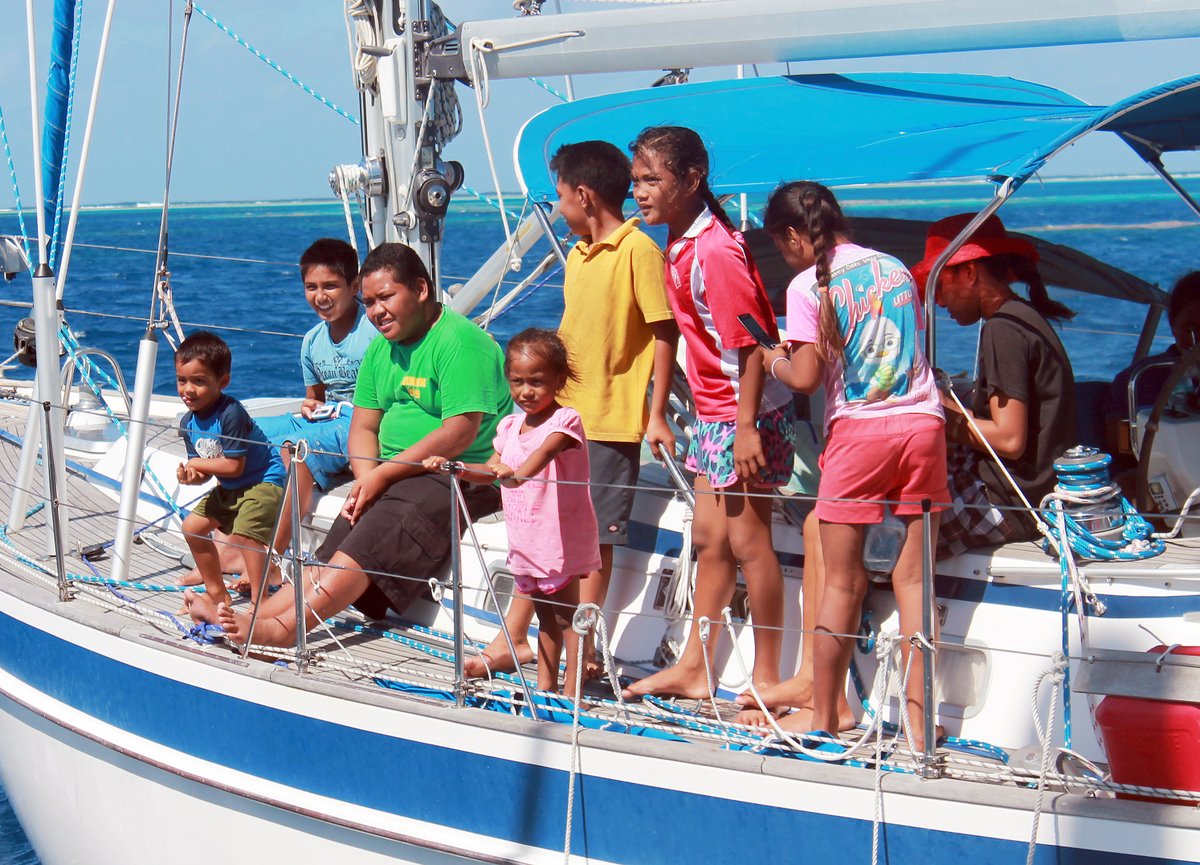
Our allocation was Joe Marsters (the minister’s brother), Matasa (the nursery school teacher), Rose and eight kids. They had a fabulous time. We had a nice 20 knot wind from the east putting us on a beam reach, so I unfurled the genoa and we set off the chase the two other yachts that were ½ mile ahead of us. Joe took control of the helm, while most of the kids sat on the foredeck enjoying the ride.
After twenty minutes, we weren’t making much gain on the other, so I pulled out some main and we soon caught them up. The kids thought that it was great to overtake the other boats, although they looked alarmed when we heeled over as I put the main up.
As we approached Motu Atutahi , Rio and Joe jumped into their aluminium boats (which we’d towed behind us) and went to scout out a route through the reefs. While we were circling around waiting, the kids had a great time taunting each other about who’d got the best yacht, singing school songs at each other and doing little Maori Haka dances. They were howling with laughter and even little Cina (Rio’s grandson, aged 3) was in on the act.
After 30 minutes, Rio returned and led us to an anchorage about ½ mile from the Motu, then explained that he wasn’t sure about the depth on the route through the reef. I hopped in his boat with our portable depth sounder and ten minutes later, we had a zigzag route through with at least 3 metres of water.
I led the procession of yachts and had to do some quick 90 degree turns to avoid shallow looking coral heads, but we all made it through safely and anchored in 12 metres of water close to Motu Atutahi at 09°04.77S 157°55.69W. The sea bed was sand with coral pinnacles rising to 3 or 4 metres under the water. We’d dropped our anchor in between two towering pinnacles, so I put a fender on the chain to try to lift it off the coral.
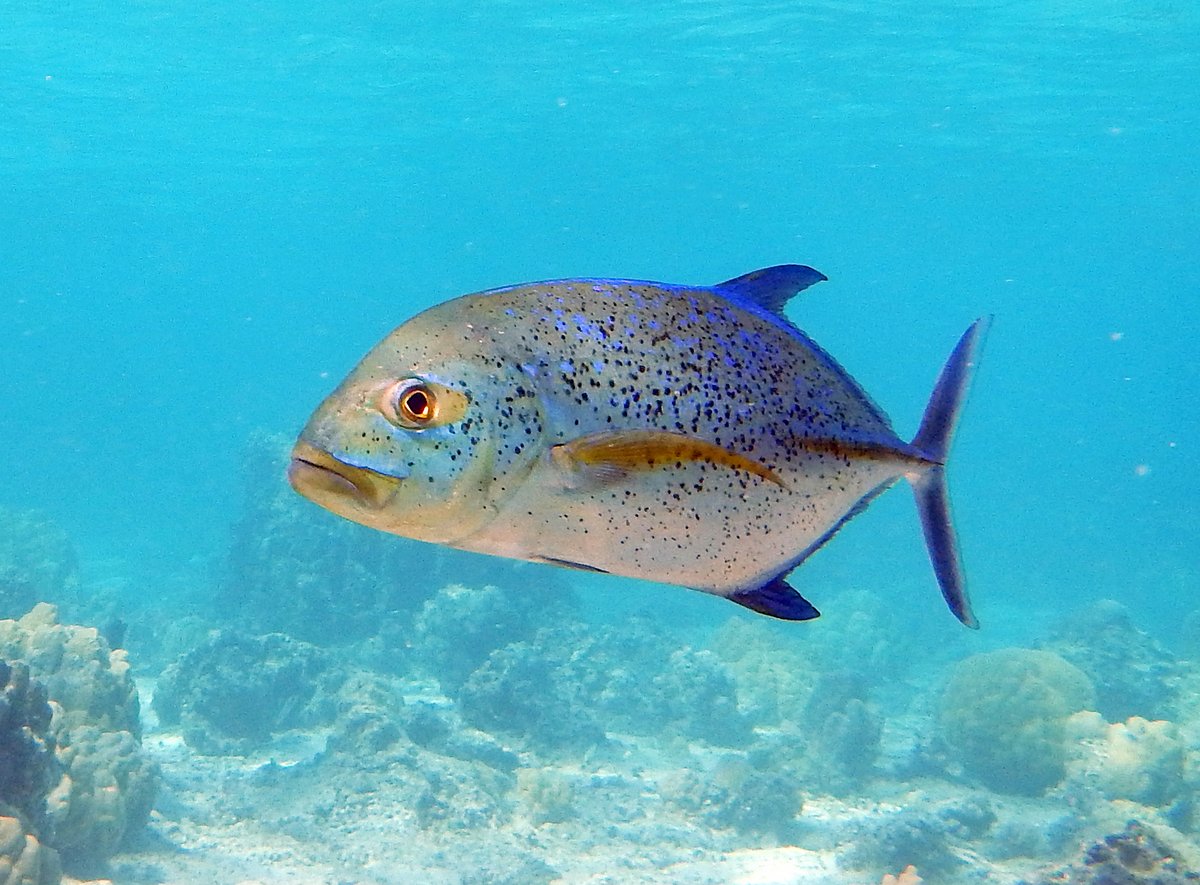
We chilled out for a couple of hours and then joined the villagers ashore just before sunset. They were very well organised with a huge tarpaulin to sleep under, some long tables for cooking and eating, with a dozen or so chairs scattered around. They were starting to prepare a meal using a combination of a gas burner and fire made from coconut husks. Rio had gone out and found three or four Coconut Crabs, which were being boiled, Tommy had gone out fishing and was gutting some Bluefin Trevally and the ladies were preparing the meal.

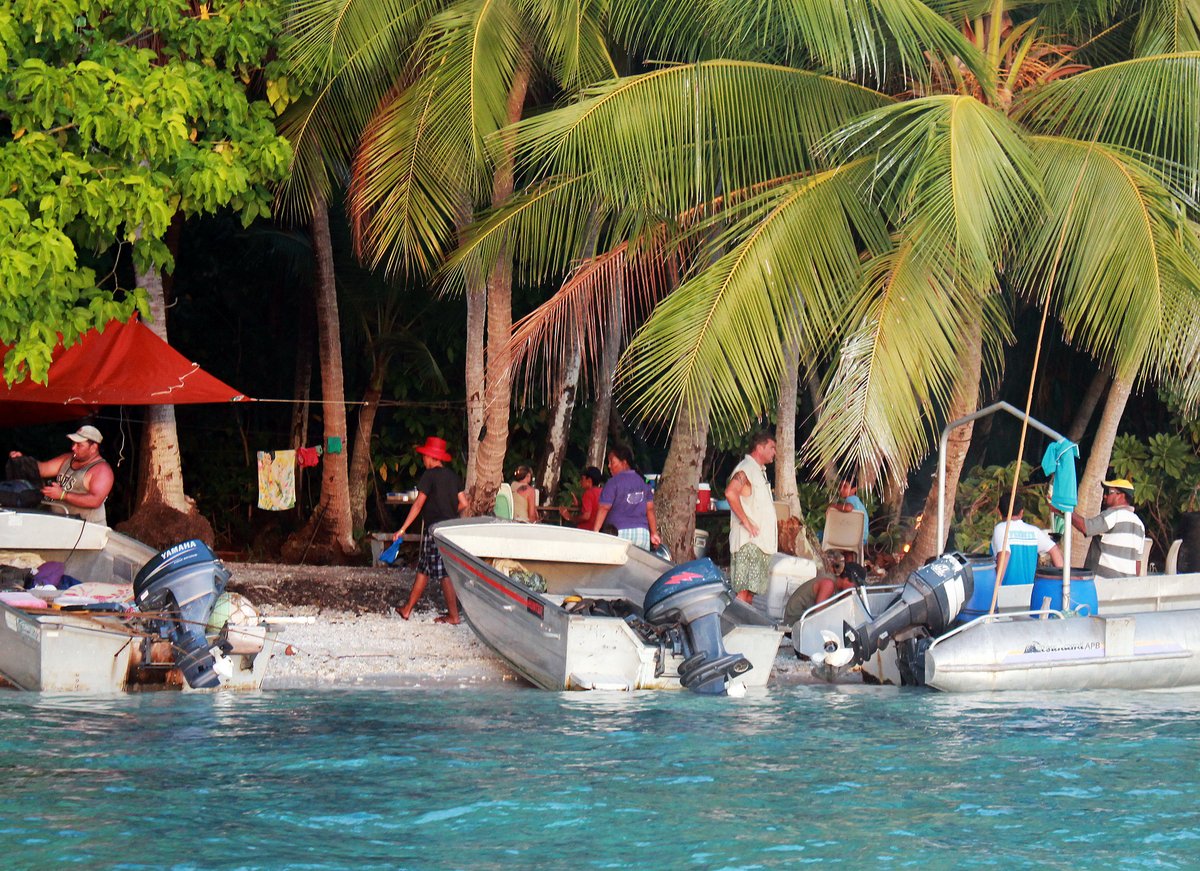
One of the things that attracts my attention is the casual way that the islanders use their environment - I saw Rose casually rip six leaves off a particular bush and then put them onto the table as a place mat for a hot pan of rice; coconut shells (including the white flesh) were being used as fuel for the cooking fire; Sam needed to lift a hot heavy pan from the fire, so used two pieces of coconut shell to insulate his hands from the hot handles; and, of course, what else would you use as a hammer to break open a coconut crab claw, but a coconut?
The meal was great - boiled Coconut Crab, Poached Trevally (fish), Poisson Cru (which Glenys made), Chili (from “Armagh”), a cabbage dish (from “The Beguine”); all accompanied by rice and Halaoa Uto (looks like mashed potatoes, but is made from grated coconut and flour). The villagers arrived here and caught or collected everything that they needed.
The islanders have a tradition that guests eat before everyone else. It’s not that we get served before everyone else, but we had to finish our meal before they would start to serve themselves - very unsettling.
After everyone had eaten, Rio and Sam took us into the thick undergrowth to hunt for Coconut Crabs. They are regarded as a treat and can only be found on the more remote atolls where there are no people or pigs because both love the taste of the sweet crabs. Rio was very good at finding them and we collected half a dozen, which will be eaten for breakfast.
Back at the camp site, the children were starting to go to bed, so after a short rest, we were taken out to the outside reef to go lobster hunting. This involved going in our dinghies out to the every shallow reef and then wading in water that was between ankle and thigh deep, looking for the elusive creatures. We were out there for over an hour and during that time I only spotted two and only managed to catch one. Rio caught three and told me later that the technique is to stand on them rather than trying to catch them by hand as I was doing.
9 August 2014 Motu Atutahi to Tetautua, Penrhyn, Cook Islands
No peace for the wicked - Rio came by at half past six and took Paul and me fishing. The locals troll for Trevally in a similar way that I do from Alba using squid lures and 3 mm diameter hand lines. We weren't very successful and only caught four fish in an hour.
We were naturally invited to camp for breakfast. The kids were already running around and had been up at four o'clock in the morning, out hunting for Coconut Crabs of which they had caught about twenty. So, we had lobster, Coconut Crab, boiled fish, rice, noodles and Halaoa Uto for breakfast. Again we were asked to eat first.
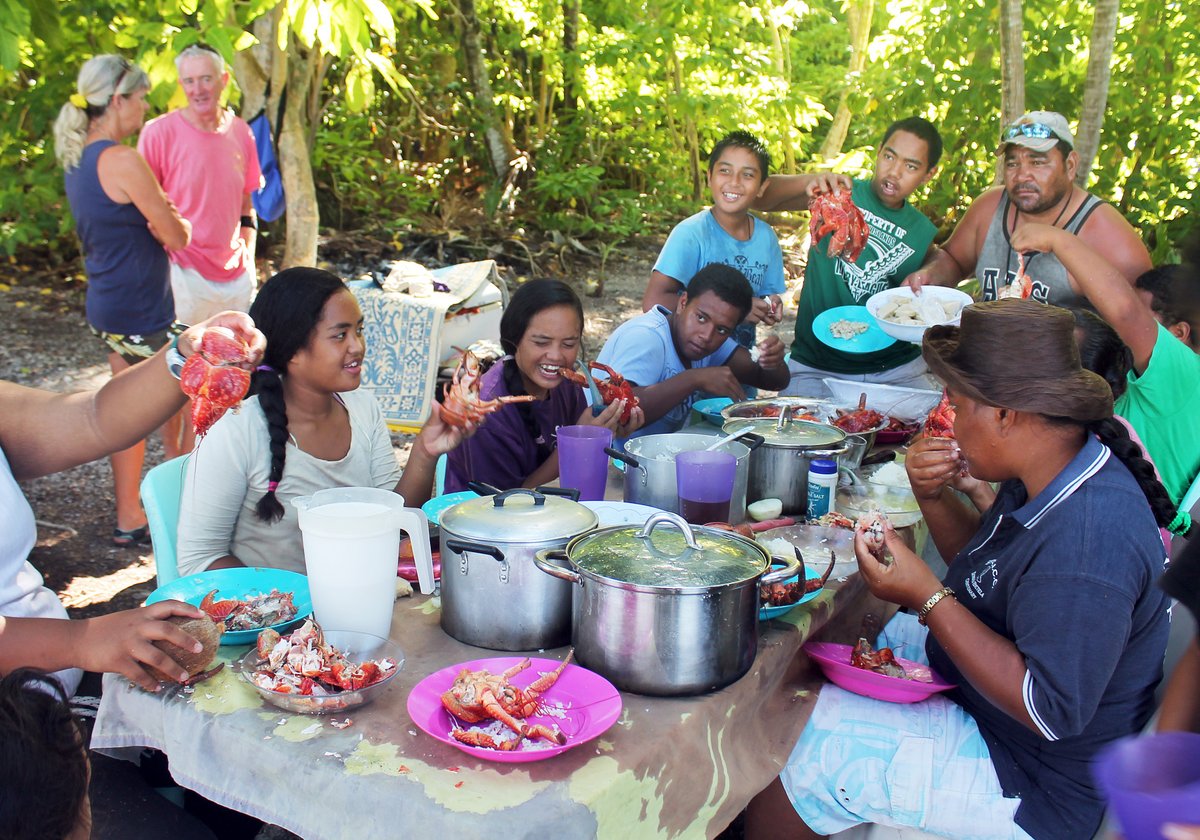
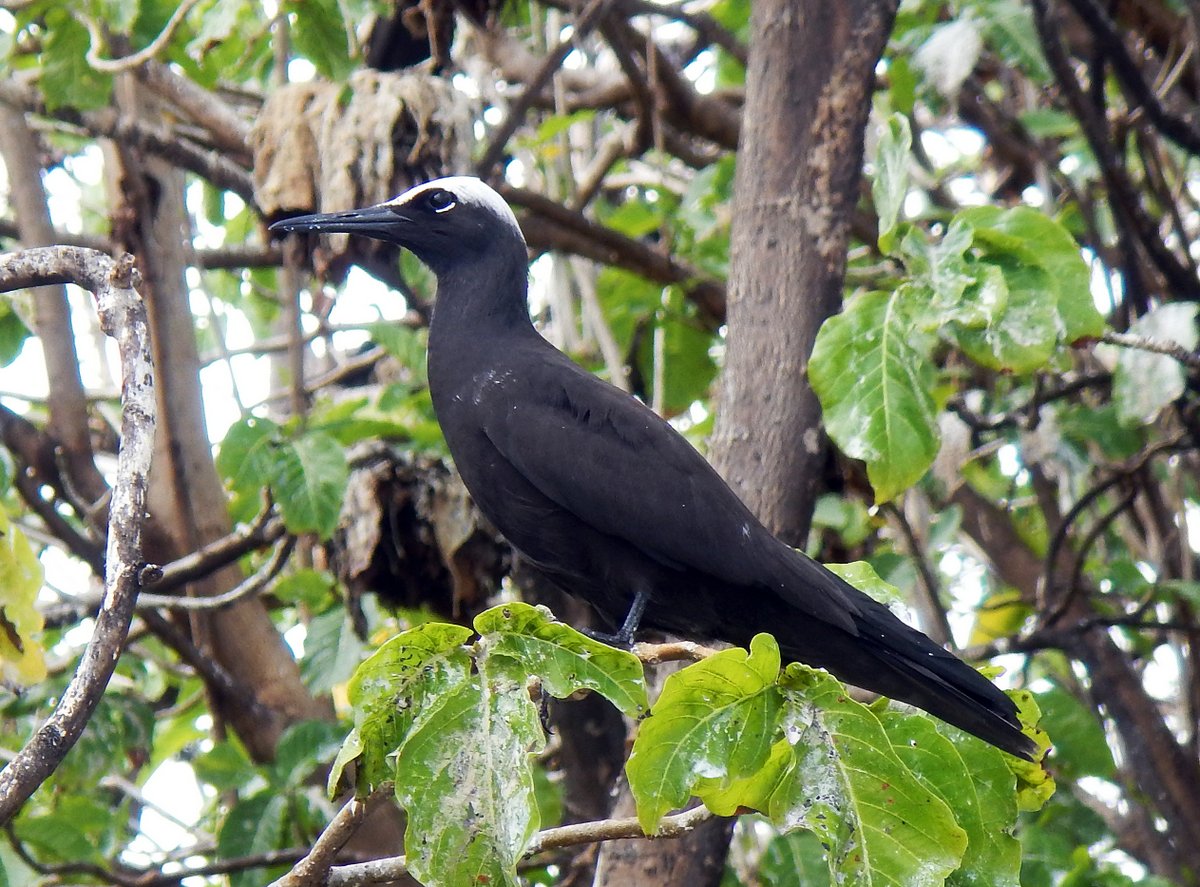
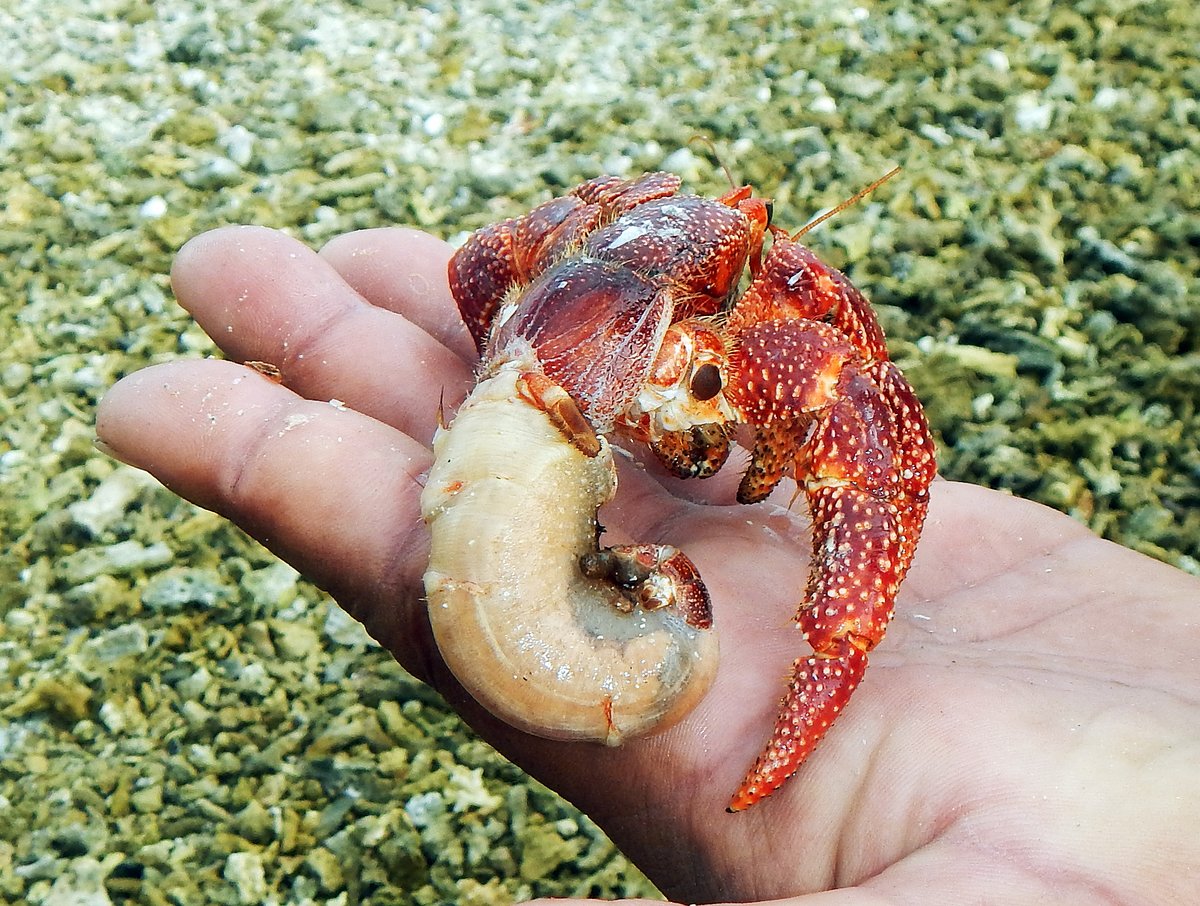
Joe then took us to small motu with thousands of nesting White-capped noddies and White Terns. He told us that they sometimes eat the Noddy eggs and that the “old people” like to eat the fledglings, which are boiled. As we were strolling around, Joe cracked open the shell of a Hermit Crab and showed us that they use the skin of the soft abdomen as bait to catch parrot fish. He went on to tell us that they also mix the oil from the abdomen with flower petals to make perfumed oil which is used for hair lotion and massages.
While the villagers packed up camp, Glenys and I went snorkelling for an hour and only just got tidied up before everyone arrived to be taken back to the village.
The track out of the anchorage was nail-biting again, but this time the minimum depth that we saw was 5 metres. We had a boisterous sail up the atoll because some squalls came through giving us 25 knot winds, so we had to reef down a couple of times, but that didn't stop the kids from going to sleep on the foredeck exhausted after not sleeping much last night.
Joe found our ukulele and immediately commandeered it and we were treated to twenty minutes of Sunday School songs sung by everyone. It’s hard to describe how lovely the close harmonies are.
We were the last to arrive in the anchorage because we were told to slow down so that the people on the other boats would do all the work of unloading. Glenys had made some currant buns, but our guests didn't want them until we arrived at the anchorage. They then had us circle around the other two boats while they taunted the other children in Maori with singing and dancing, showing off that they had two buns each and had had a much better time than the other kids - very funny.
Once we were anchored, our guests departed, shouting thank you as they motored away. By this time it was three o'clock and we hadn't had any lunch yet, so Glenys rustled up Fried Tern’s Egg, bacon and tomato. The eggs are slightly smaller than chicken’s eggs, had an orangey yolk and were a little more creamy, but not too dissimilar.
We then collapsed for what was left of the rest of the day.
10 August 2014 Tetautua, Penrhyn, Cook Islands
It was Sunday today, so we all went ashore at half past nine, dressed in our finery to go to church. We were told yesterday that the ladies had to wear a dress or skirt with their shoulders covered and a hat, while men had to wear a short with a collar and long trousers - it’s been a long time since I've worn long trousers.
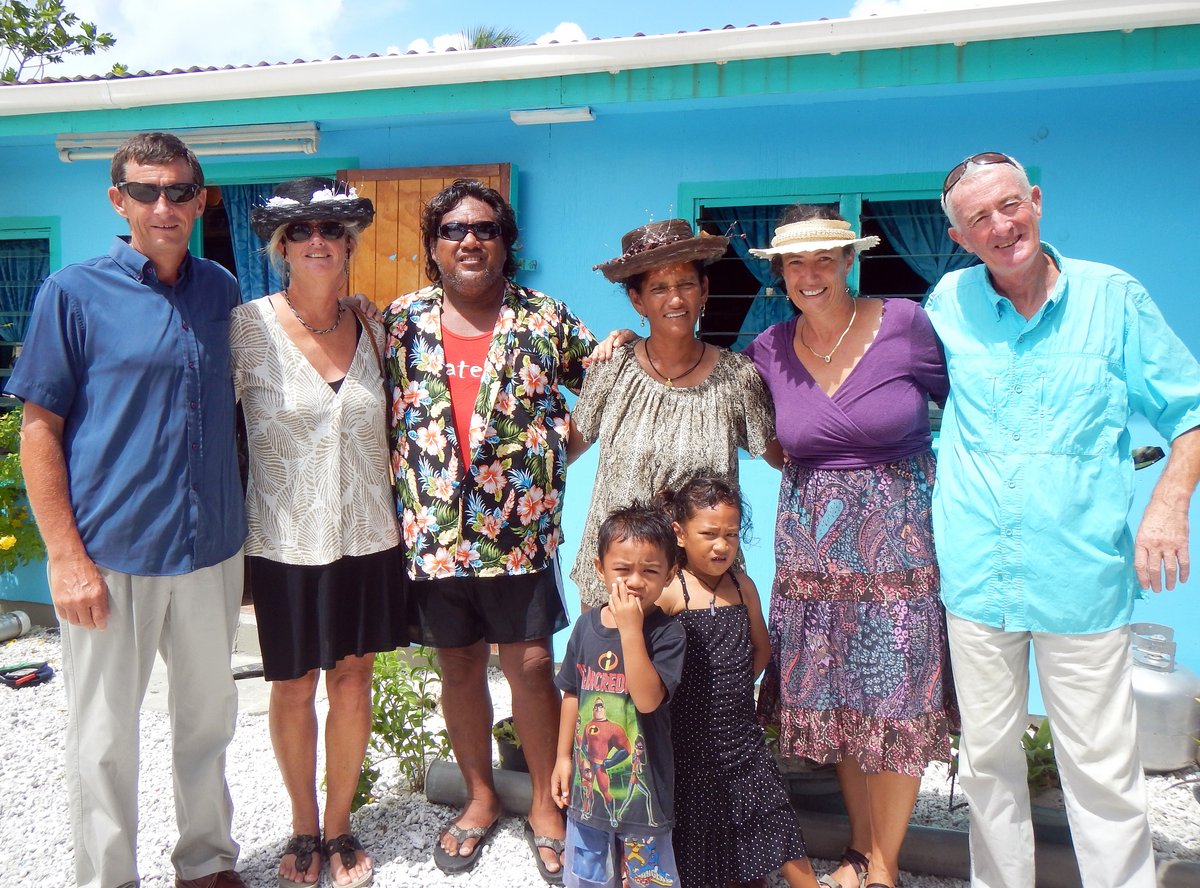
Rio, Kura and family were waiting for us and told us the rules for the Cook Island Christian Church - the church bell rings just before ten and when it stops no one is allowed to enter the church; no moving about in church; no photographs or electronic devices in church; no musical instruments in the church; if you need to go out during the service, then you can’t come back in; other than that we were to enjoy it.
Glenys and Katrina went to the Sunday School where the children were practising their hymns to sing in church. Tommy and some of the other adults were there to help tutor them in the words and harmonies. Meanwhile, Paul, David and I went to the main church where about eight adults were practising their songs and hymns. We were shown to pews at the back of the centre isle with a panoramic view of the whole church. There’s no altar in the church, just a pulpit raised above the congregation.
The bell tolled and the people arrived. Children at the very front and the adults scattered around obviously everyone has their own place on the pews. The whole village attends church, three times on Sunday and on Wednesday and Friday mornings. I counted about 30 adults and 20 children in the church which ties up with Rio’s estimate of 50 people living in the village.
The Reverend Marsters gave the service which was mostly in Maori, but he gave the sermon in English as well. The singing is stunning. No musical instruments and every song and hymn is sung with close harmonies. The Sunday school choir (all of the children) led a couple of songs, while the adult choir lead the rest. It was a wonderful and uplifting service.
The minister invited the three boats to his house after the service for light refreshments, which turned out to be a huge table laden with chicken, parrot fish, mullet, corned beef hash, rice and noodles. We stayed for an hour and had a good chat with the Reverend Marsters, his daughter Cindy and his daughter-in-law Hakono. Interestingly, the services in the Cooks Island Christian Church are done to a rigid format and the same reading and sermons are delivered in every church at the same time.
We wandered back to Rio’s house and visited for half an hour before heading back to the boat. It is forbidden to use outboards on a Sunday, except to go to church; no work is to be done and even swimming is not allowed, so we chilled-out for the rest of the afternoon. David and Katrina invited over to “Laragh” for sundowners - it’s allowed for us to use our outboards to visit other boats on Sunday.
11 August 2014 Tetautau, Penrhyn, Cook Islands
Glenys went ashore to make use of Kura’s washing machine, while I stayed on board and did a few jobs. I couldn't start the generator again and, after some investigation, found that this time the starter battery was flat. I put a jump lead across from the domestic batteries and it started fine. I'm not quite sure what happened, but I suspect the engine starter switch, which a couple of days ago wouldn't turn off the engine. The switch is on its last legs and needs replacing, so I guess that we might have left it in a powered-on position.
In the afternoon, I went ashore and looked at the truck. My bodge job on the lights the other day hadn't worked because I didn't realise that there were three separate fused circuits - my quick fix had not switched off the side lights and they had to disconnect the battery again. After a bit of agonising and staring at the eleven wired coming out of the stalk switch, I decided it was safer to extend my bodge.

The original switch was only turning of the left hand head light, so I installed another switch for the right hand head light and removed the fuse for the back and front side lights - they can use the fog lights instead. It all seemed to work, so Rio was happy.
While chatting to Rio this afternoon, he told me that there's been a steady reduction in the numbers of people living on the islands. In the 1960's there were over 1000 people living in Penrhyn; in 2012 there were 300 people in Omoka and 50 in Tetautua; now, only two years later, there are only 150 people in Omoka and 50 in Tetautua. It's a frightening drop in the population.
Rio says that it's the same throughout the Cook Islands. The young people want to go to and get well paid jobs in Rarotonga or New Zealand & Australia. The Cook Islands are administered by New Zealand, so it's fairly easy for people to get work permits. I wonder how long the villages will survive and feel saddened by the potential loss of this relaxed way of life.
In the late afternoon, we sat and helped the family open some Pipi oysters. I love sitting there and listening to them chat away in Maori. It’s a very addictive opening the oysters, hoping to find a big one. I'm much, much slower than they are, so they find more than I do - in fact I didn't find any today. As we neared the end of one huge batch, the dozen remaining oysters were on my side of the table. Mike scooped a handful and the first one he opened was a nice big round one - I was gutted that I’d missed it…
Kura baked bread this afternoon. She uses round corned beef tins as moulds for small rolls and she cooks the bread in an outside oven made from an oil drum, fuelled by the ever present coconut husks. She generously gave three rolls to each boat - she's unstoppable.
12 August 2014 Tetautau, Penrhyn, Cook Islands
Today, most of the village was involved in a community project to thatch a sun shelter for the school. Six of the men jumped into Tommy’s boat and sped off to a nearby motu and an hour later came back with a huge pile of coconut fronds. By the time that we got ashore, the villagers were sitting around in Rio’s yard weaving the coconut fronds into a kind of mat. We asked Kura to show us how to do it, found a space and started weaving.
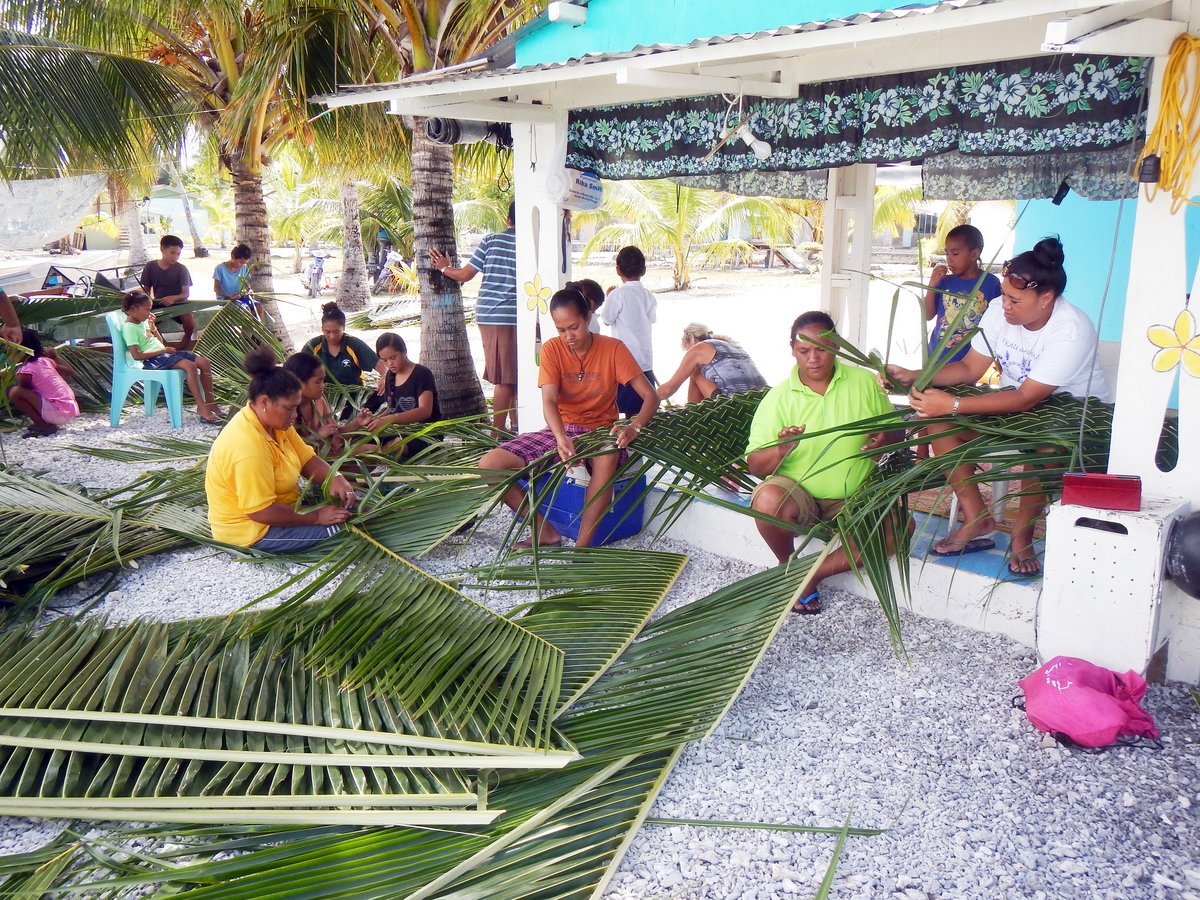
The coconut leaves have a thick stem with 30-40, two inch wide leaves on either side. The first thing that was done was to split the thick stem producing two halves. The leaves on each of these were woven to produce a mat that was four leaves wide. The two halves were then placed on top of each other and the tops and bottoms woven together to produce a double thickness mats, which I guess will be more water proof.
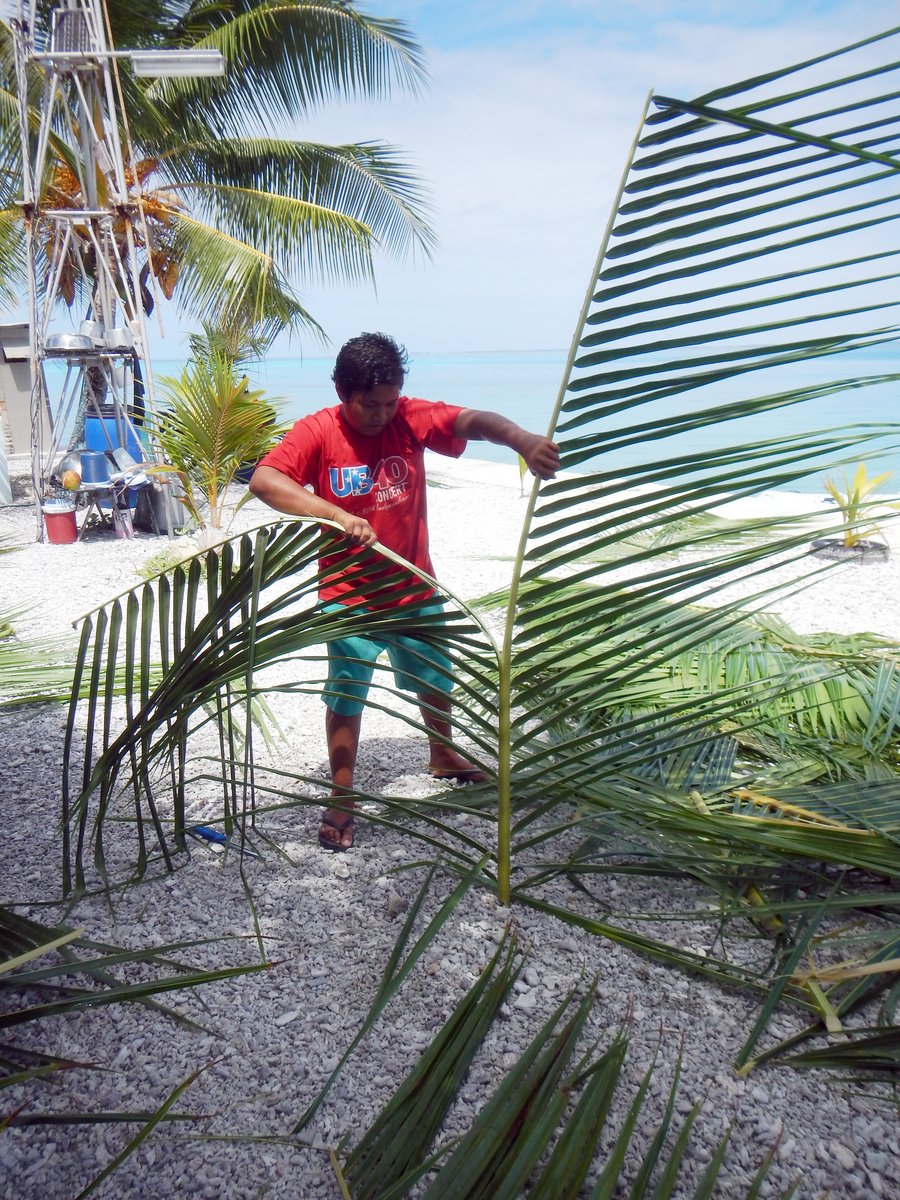
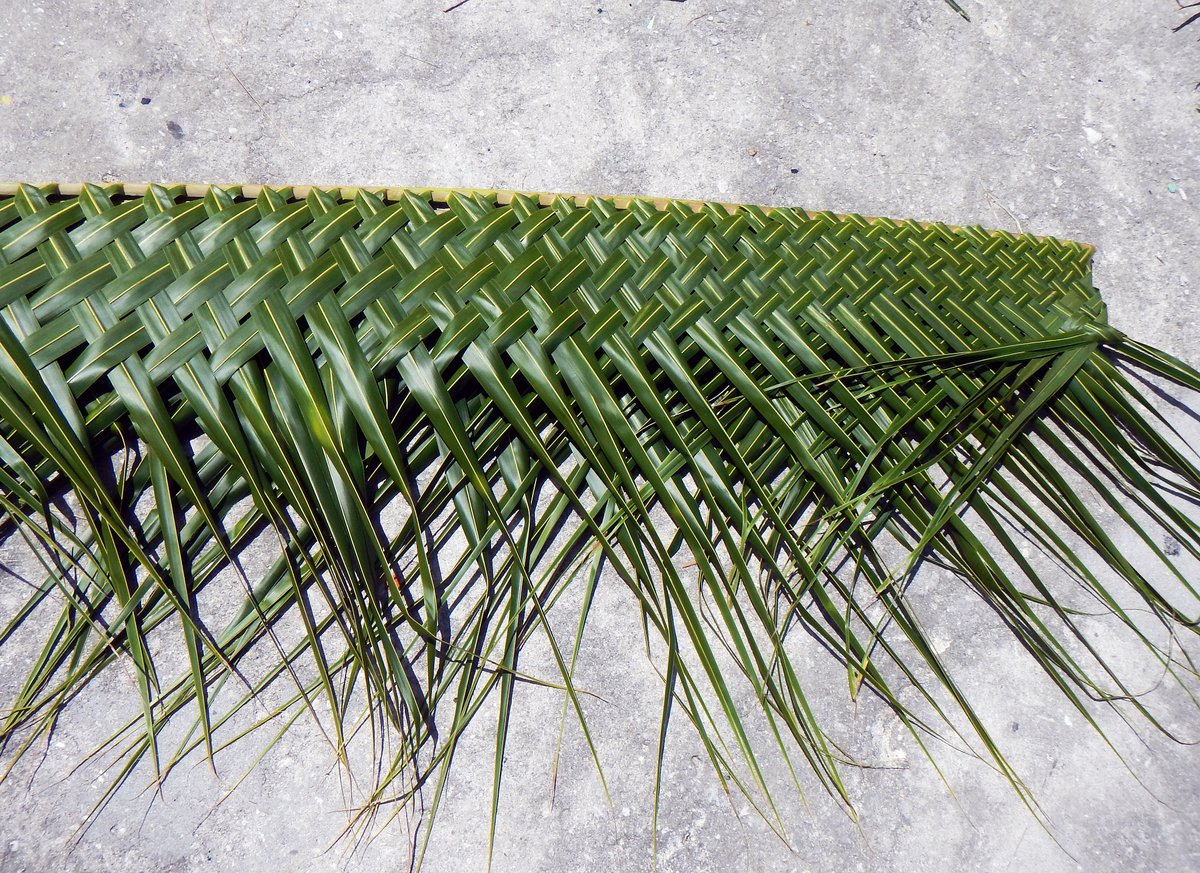
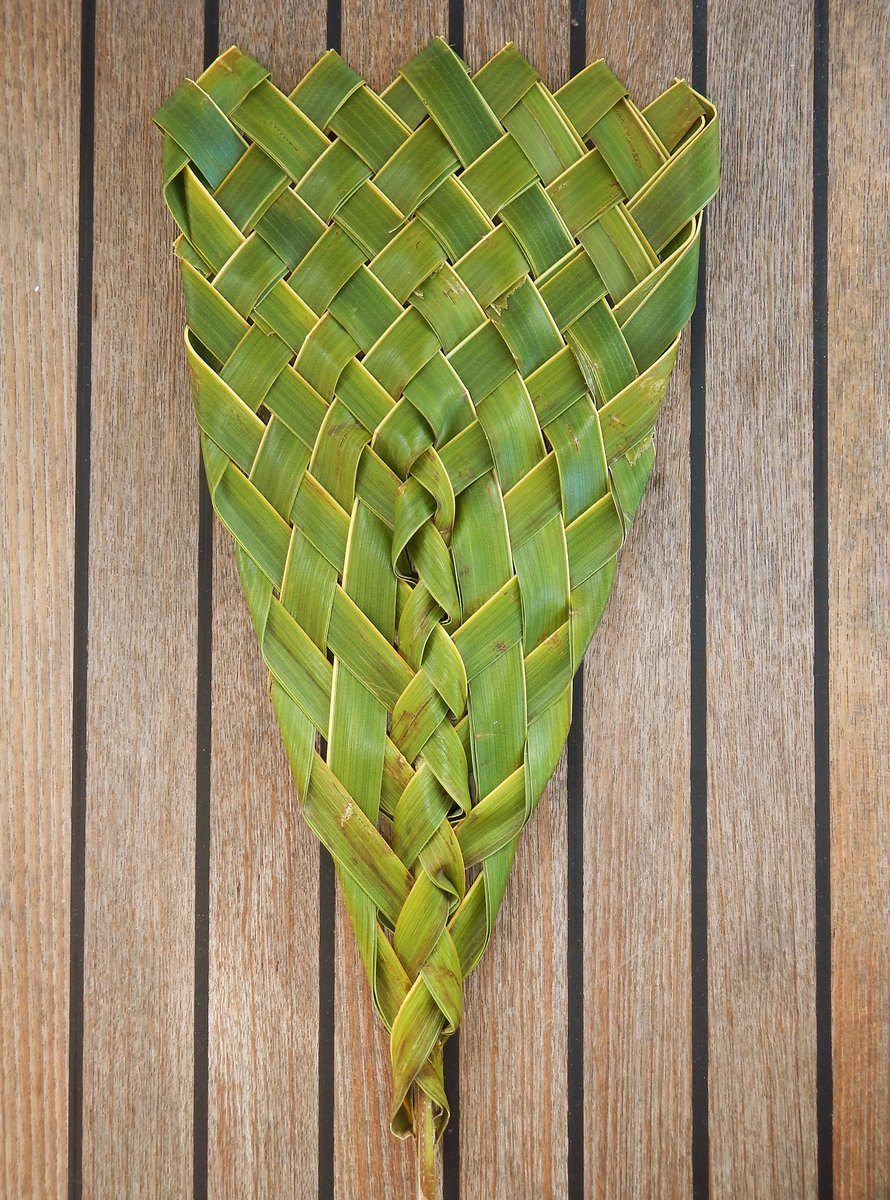
It was a happy event, with music playing and everyone singing or chatting in Maori. After half an hour, the village kids arrived having been let out of school early. They were all pressed-ganged into work, so the pile of mats soon grew and by lunch time the job was done. Tui Williams (the school teacher) was making a fan from the thinner tips of a palm frond and showed me how to do it, so Glenys now has a traditional Cook Island Fan.
Unfortunately, around lunch time, the villagers learned of the death of the young baby of a villager living in New Zealand. The village has declared the rest of the day and tomorrow as a period of reflection and no further work will be done during that time. It isn't as strict as a Sunday, so we are able to move around, but we’re not supposed to do any noisy jobs.
In the afternoon, we went snorkelling on the small reef to the west of the village. The large reef itself is a pile of rubble and not very interesting, but we found lots of fish around the smaller rocky outcrops in deeper water. There were some huge Napoleon Wrasses hanging around, but they were very cautious and kept at least 25 metres away. We saw three different species of shark. Dozens of sightings of Blacktip Reef Sharks; a few sightings of Whitetip Reef Sharks; and one sighting of the slightly more dangerous Grey Reef Shark, at which point we decided to call it a day.


In the evening, we were invited with “Laragh” to “The Beguine” and got very merry (Paul has a very loose elbow with the wine.)
13 August 2014 Tetautau, Penrhyn, Cook Islands
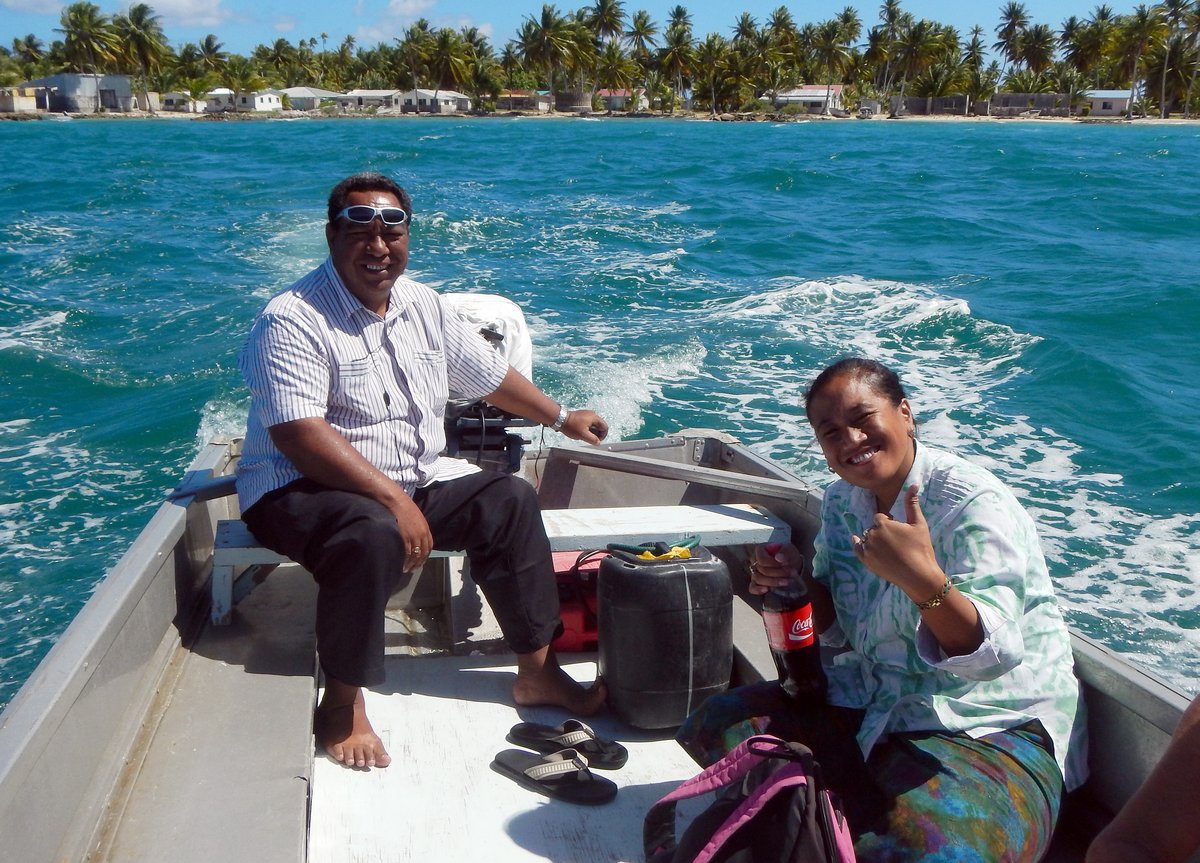
Together with “Laragh”, we hitched a lift with Mr T and Warren over to Omaka. It was a bouncy, wet ride even down-wind in the aluminium tender.
“Laragh” are planning to leave tomorrow and so we went to visit Ru (customs and immigration) to get their clearance papers t Samoa. While I was in Ru’s house, I met Michael, a marine biologist from Anglesey in the UK, who has been here for a couple of years doing research into Green Turtles. I had a long chat with him and he filled in a few more details about the Atoll.

It appears that the intense harvesting of Pipi oysters has only been happening over the last year, since an Iranian buyer turned up and spent hundreds of thousands of dollars buying pearls. The locals were selling a few pearls to an agent in Rarotonga, but they got a much better price from the Iranian - Rose tells me that she got NZ$2,000 for one large, perfect pearl. The Iranian is expected back in October, so everyone has gone into a Pipi frenzy.
The village council is having discussions about creating zones in the atoll where Pipi gathering with not allowed, in an attempt to try to control the Pipi population. He doesn't think that there’s a danger in overfishing for a couple of years yet, but it’s best to put a system in place sooner rather than later. Thousands of Pipi Oysters are gathered every day and the shore line around the villages is now littered with Pipi shells. Michael says that this in itself is already changing the environment of the shallow water in the lagoon.
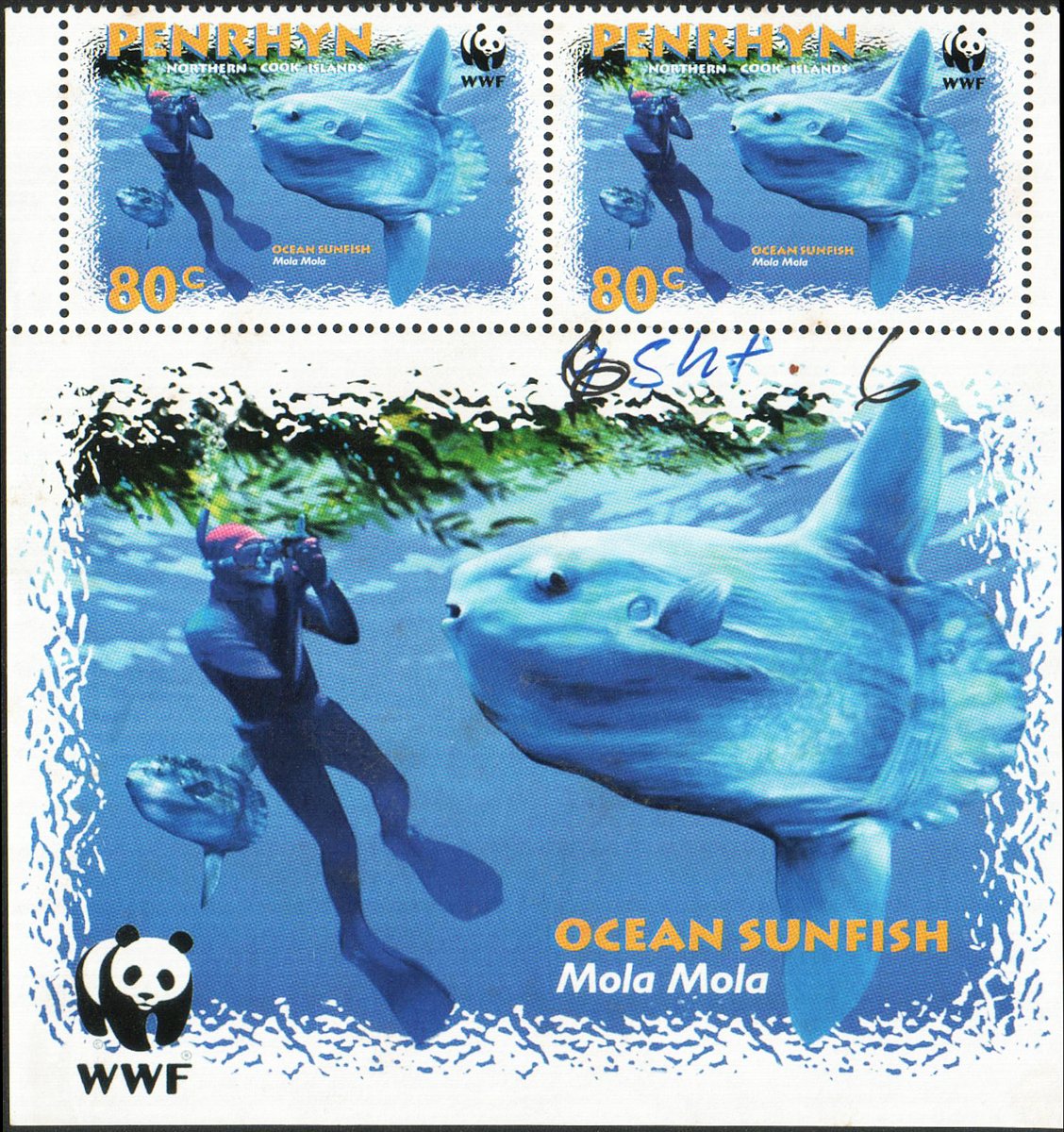
David rang Warwick, who runs the telecom office and owns the biggest store in the island. He came and picked us up in a trailer attached to his quad bike - a very bumpy, five mile ride on the dirt track full of pot holes. He dropped us off at the Telecom office, which is also the post office, where I was able to buy a stamp for a postcard to my mum. Each of the Cook Islands has its own design of stamps, which are prized by stamp collectors, so I bought a couple of pretty ones. The post card will leave Penrhyn on the next aeroplane, which should be sometime next month - it should be there before Christmas.
Warwick took us to the airfield, which was built by the Americans in the Second World War. It’s starting to breakup, but charter flights still occasionally come in. We were told that there are two regular flights a week to Manahiki which is 120 miles to the west, but only special charter flights organised by the government come here. It costs NZ$1,800 for a one way ticket to Rarotonga! If there is a medical emergency, then flights get diverted from Manahiki and the villager ladies get flown out to Rarotonga when they are 5 months pregnant, to have the baby in hospital, paid by the Health Department.
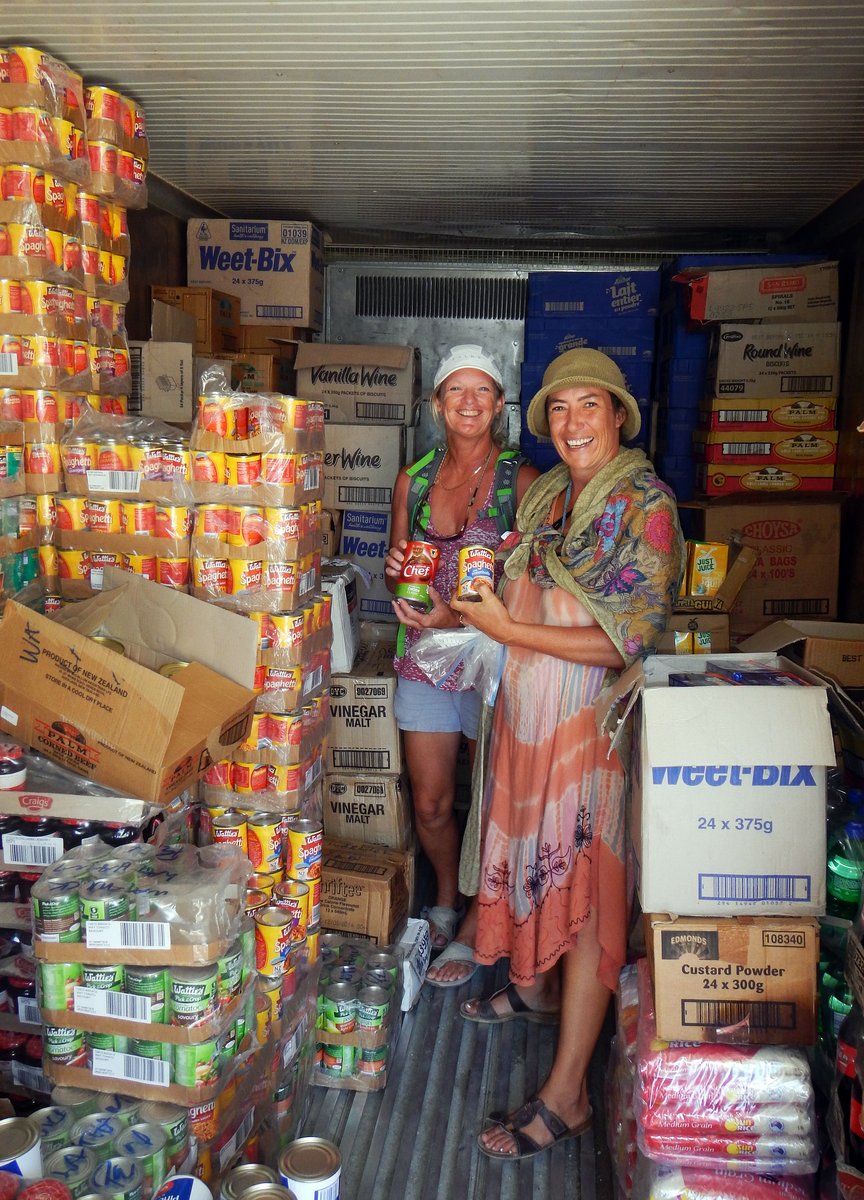
The shop is actually a shipping container jam packed with canned goods and Warwick has a freezer that has some basic meat like minced beef and sausages. Glenys and Katrina bought a few essentials. Corned beef is a very popular dish here, so Glenys bought a can to try it out. The Reverend Marsters and Hakono from Tetautua were at the shop and gave us a lift in a pick-up truck back to the village.
We had a couple of hours to spare because Mr T was still at the bank carrying out some elaborate process, so we wandered around the village and did a bit of visiting. William Marsters was sitting on the same chair as when we met him last week, so we stopped for a short chat. The Penrhyn villagers normally speak Maori, so their grasp of English is limited. They understand what we are saying some of the time, but if the conversation turns to abstract concepts then they simply smile and agreed with us.
By two o'clock, Mr T was still running errands, so Glenys and I hitched a lift back with Reverend Marsters and Hakono. The wind was blowing hard, so he took us around the north end of the atoll to get protection in the lee of the motus. On the way, we stopped off at a set of buildings that used to be a big pearl farm - another casualty of the mysterious virus that wiped out all of the pearls in the atoll.
The ride back to the anchorage was fabulous, skimming along in flat water along the line of the motus, under a brilliant blue sky. Back at the boat, we invited Hakono and the minister aboard for a cup of tea and spent a pleasant hour chatting about our respective ways of life.
“Laragh” are leaving tomorrow, so Rio and Kura invited everyone over for dinner. David and Katrina took their melodian and flute, while Glenys and I took our guitar and ukulele - although I never got to touch my guitar at all during the evening. The islanders have all grown up with playing the ukulele and guitar and know literally hundreds of songs, so we just sat back and enjoyed the evening.
14 August 2014 Tetautau, Penrhyn, Cook Islands
We went in early to help with today’s community project, which was to build the roof for the sun shelter at the school. Before we could do anything, Rio told us that the school children were coming over to give us a little thank you for taking them on the trip to Motu Atutahi. “Laragh” had started to pull their dinghy on deck getting ready to leave and had to put it back in the water when they were summonsed ashore.

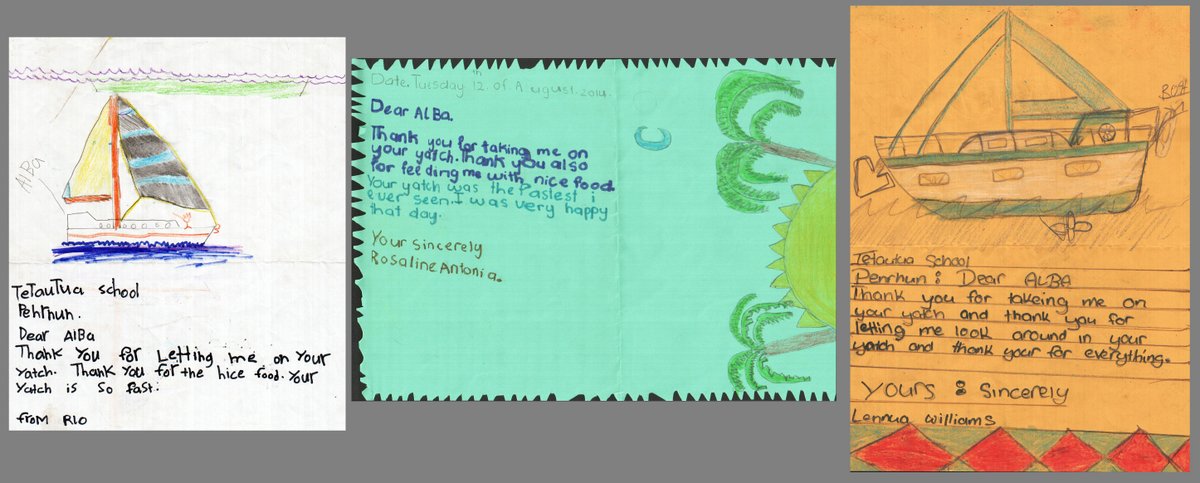
The whole school turned up in their school uniforms and formally presented each of us with a Thank-you Letter, which was very moving. The school teacher Tui Williams tells me that the kids have been talking about nothing else all week. With the little ceremony over, “Laragh” sailed off towards the horizon. I was put to work trying to fix a microwave that doesn't work, while Glenys went off to visit Mama P taking a cushion that she’d made for her.
Mama P is 73 years old and had a stomach problem a few days ago. Glenys had given her some sympathy, some pears and a couple of cups of yogurt, so Mama P is convinced that Glenys has cured her and now calls her "the doctor from the boat".
After a short walk to the south end of the motu, we went to the school and found nearly the whole village at work. The men were building the roof frame while the women were weaving more coconut roof mats. The roof frame was constructed on the floor and later lifted into place. The men were nailing the coconut mats into place on the roof trusses (I learned that the Maori word for hammer is “Hamula”). Glenys and I helped to re-weaved mats that had come loose during transport (or had been done badly by someone.)
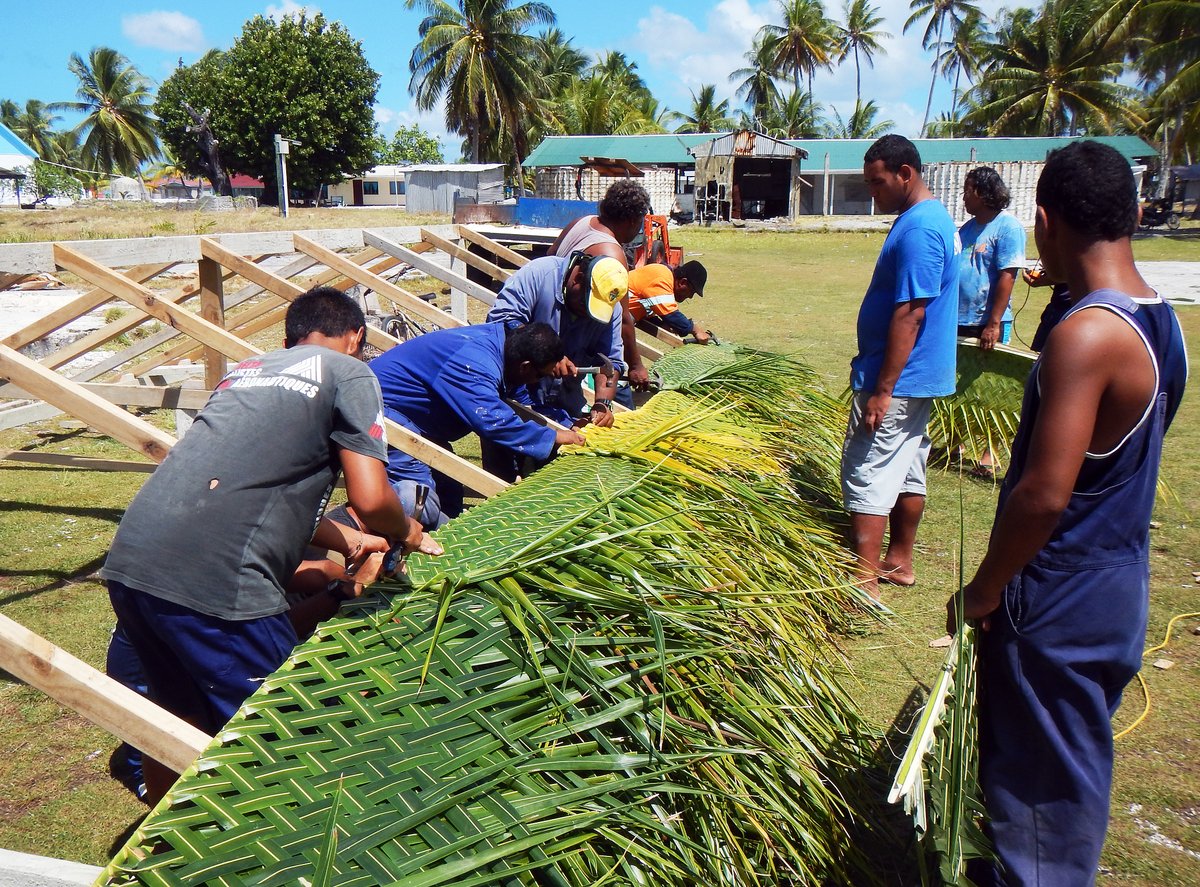
Once the roof was covered, Rio get everyone to lift the heavy roof and they walked it over and dropped it into place on six uprights that had been concreted in place - it fit perfectly. A bit more hammering of nails and the job was done. “Many Hands Make Light Work” is an apt saying.
The ladies of the village had prepared a huge lunch with chicken, parrot fish, trevally, corned beef in noodles, sausage curry and rice. To our embarrassment, as guests, Glenys and I had to go and get served first. The locals always eat with their fingers, so there were no utensils apart from serving spoons. It didn't bother us too much, but eating sausage curry and rice with just fingers is a bit of a challenge.
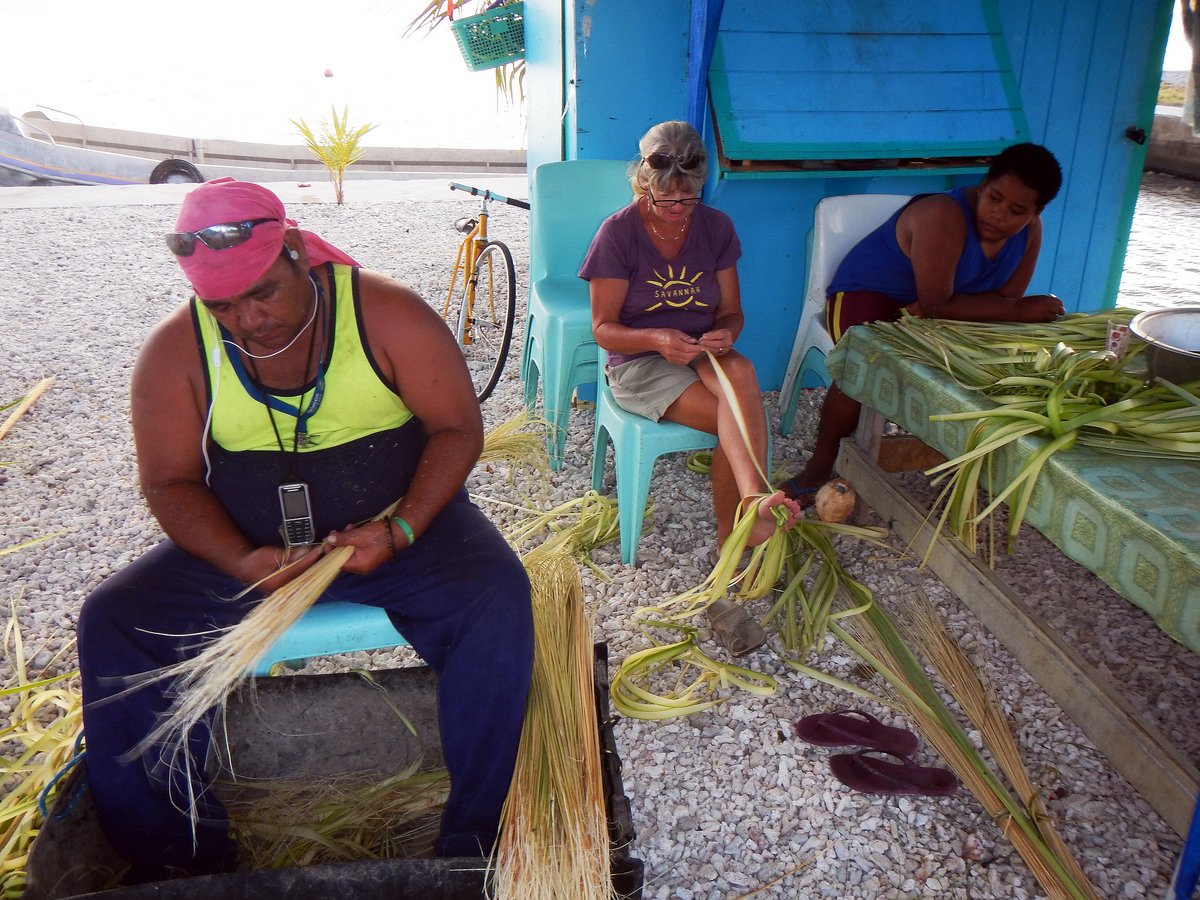
In the late afternoon, we went ashore to chill out with Rio’s extended family. Penryhn is famous for hats and fans woven from Rito, which is a dried coconut leaf. Selling for $200 to $300, these hats used to be a major cash generator for the island ladies, but it's now less popular as it’s a lot of work to prepare the Rito and do the intricate weaving. Kura still makes the hats, so Glenys joined Rose and Kura to help prepare the Rito.

They gather the young, straight leaves from the centre of a coconut tree, then using a needle, they slice open the leaf and then pull off a strip of tough almost transparent skin from the surface of the leaf. This is then boiled for ten minutes in a big pot and, while still wet, a knife is used to scrape off any residual vegetable matter from the skin. The strips of Rito are then left to dry. During the drying process the skin rolls itself up into a kind of string. The Rito is then dyed or left natural to be woven into hats.
It’s a labour intensive operation and the stripping of the skin is an acquired skill. Rose and Kura do it effortlessly with a quick pull, but both Glenys and I failed abysmally.
I asked if someone could show me how to select and open coconuts. They were very surprised that I don’t know much about coconuts. Kura asked me “Are there plenty of Coconuts on your island?” After some confusion on my part, I realised that she was referring to England and she seemed to be surprised when I told her that coconuts don’t grow there.
Rose took me off on her motorbike to a few coconut groves and we collected some coconuts that I could practise on. Coconuts have a thick fibrous shell about two inches thick protecting the coconut nut. In the UK, we only ever see the hard coconut nut, which typically has firm white flesh and coconut milk.
There are three phases to the coconut - the green, brown and sprouting.
The green coconut is young and contains a soft nut with a jelly like flesh and sweet coconut water inside. It's pulled from the coconut tree using a long pole with a hook on the end (or you have to climb the tree to pull them off.) The selection of the coconut is done by colour and size, but is typically green to light brown and the size of a football. It's mostly harvested for the refreshing drink inside and the jelly like flesh is then eaten as a snack.
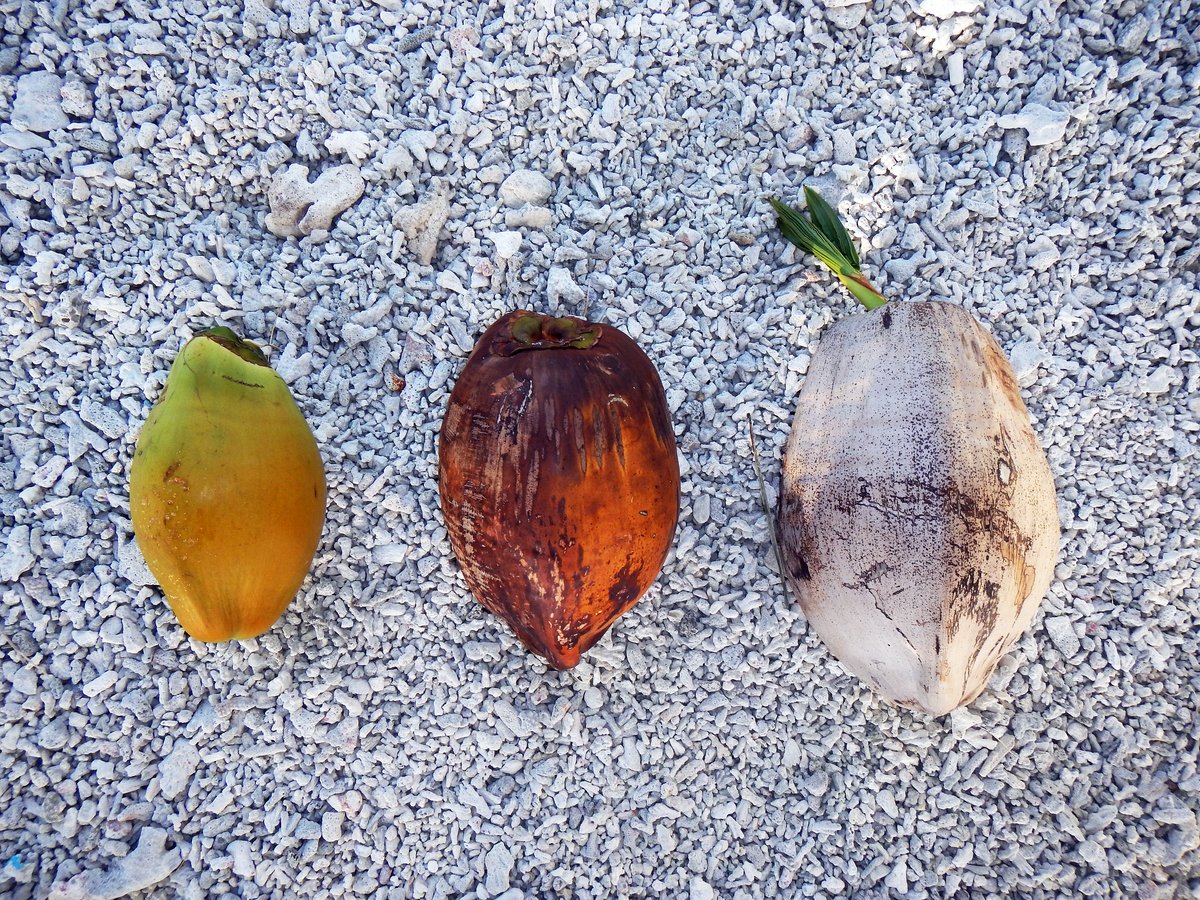
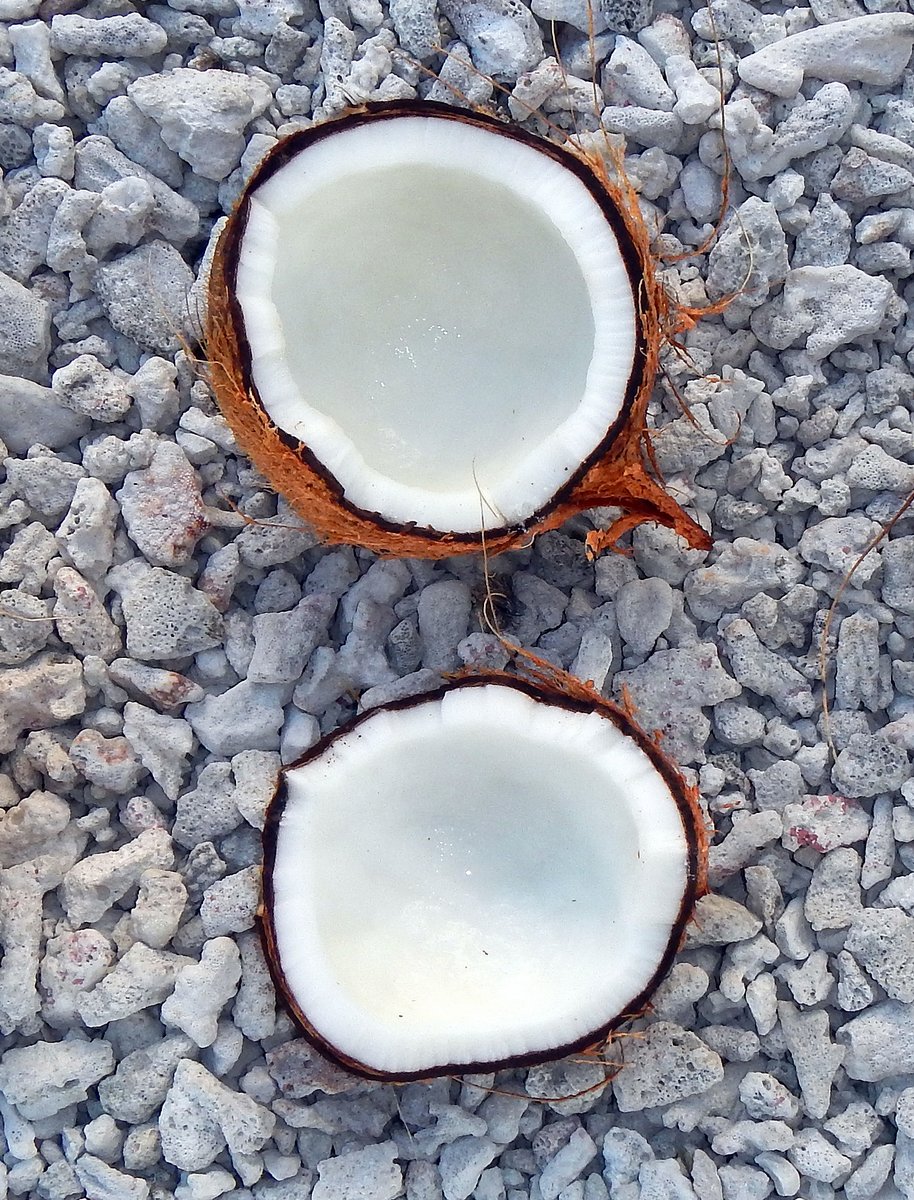
The brown coconut is more mature and contains a hard nut with hard white flesh and a creamier coconut milk. It's collected from the ground under the coconut tree. The selection is done by colour and size and also by the texture of the husk - some older coconuts look dry. By shaking the coconut, you can tell by the weight and sound if it has some coconut milk inside. It harvested for its milk and the firm white flesh inside.
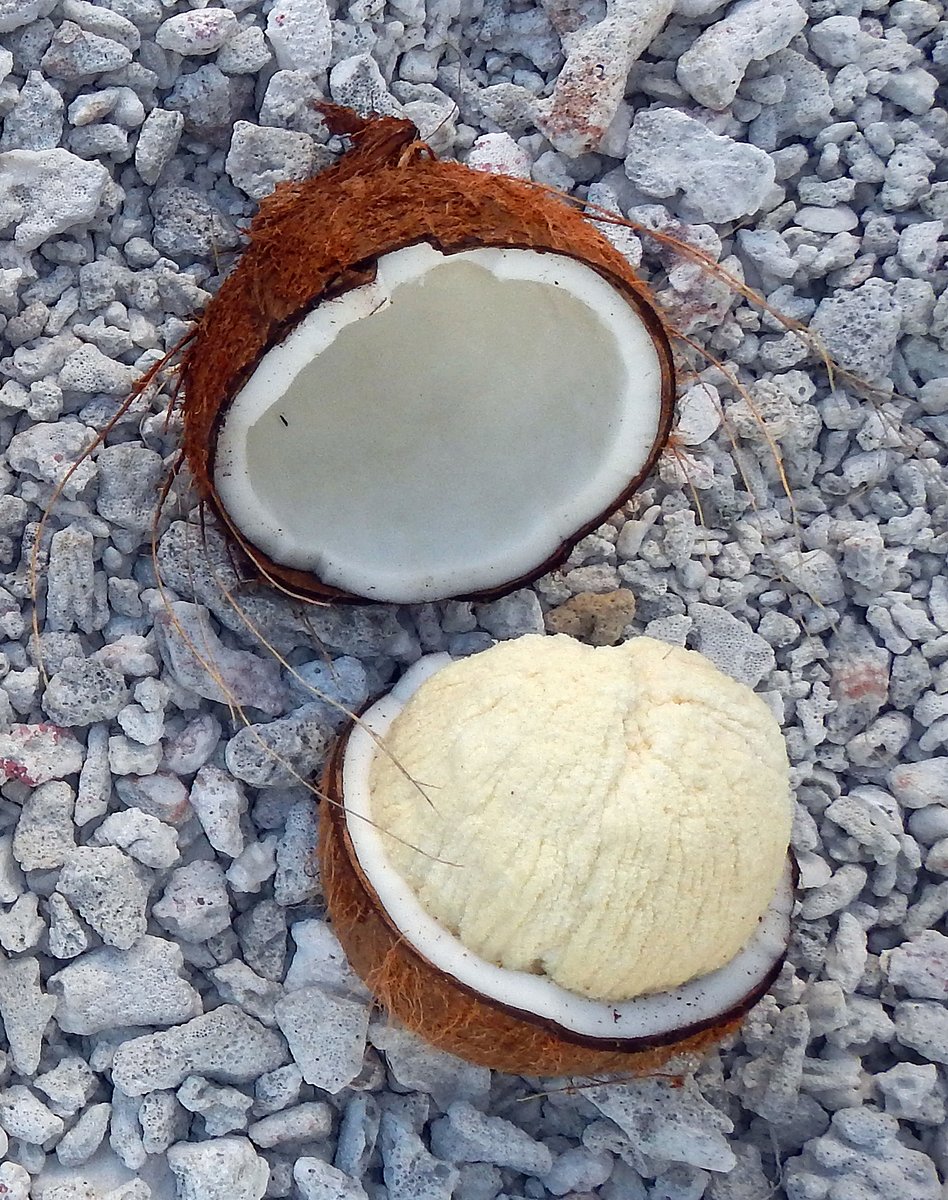
The Sprouting Coconut is very mature and has been on the ground long enough to sprout leaves. By this stage, the milk inside the nut has been turned into a firm fibrous consistence like a stiff candy floss. The selection is done by finding a coconut with a healthy looking green shoot about a foot long. It's harvested for the fibrous inside (which is eaten as a snack or a dessert) and the firm white flesh.
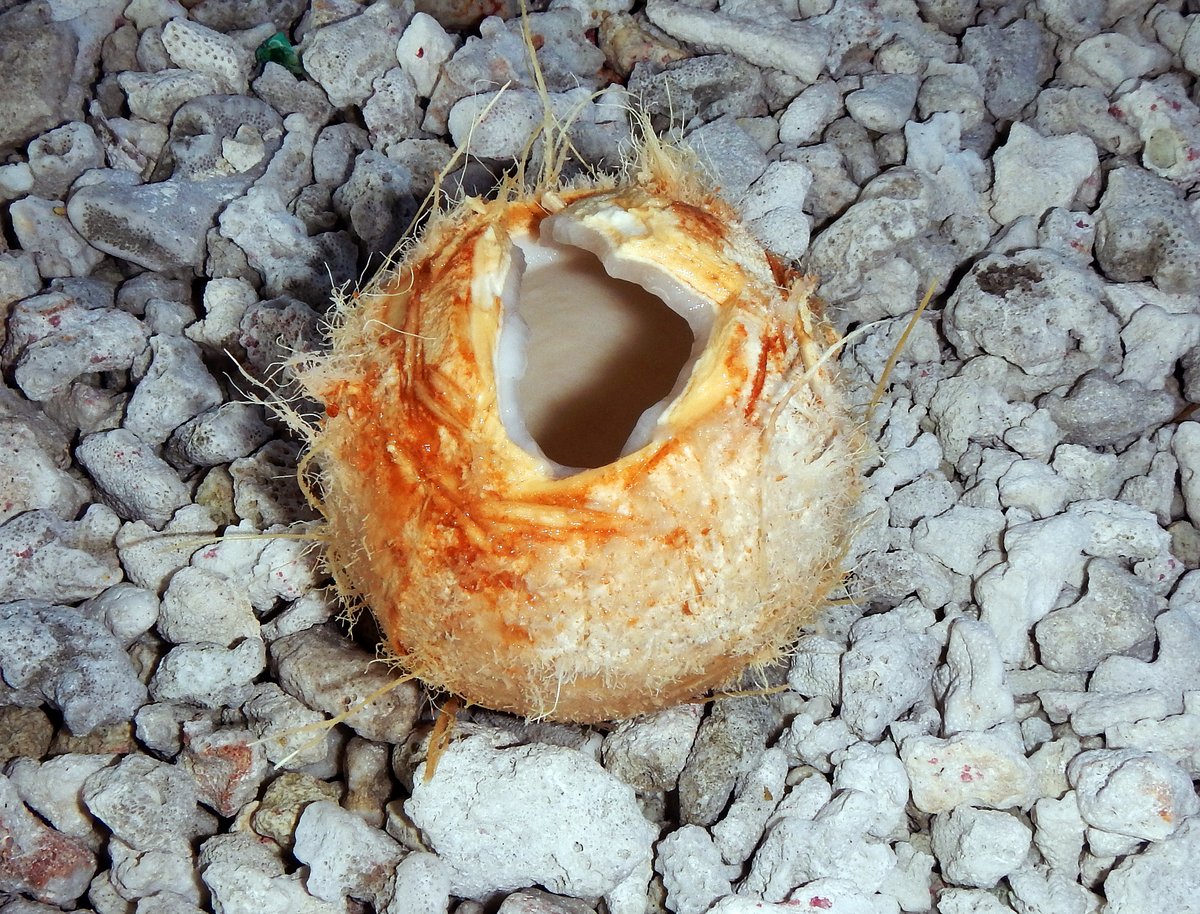
The islanders normally use a husking stake to open the fibrous outer husk. This is a four foot long, 30mm diameter iron bar with sharpened points on either end. One end is driven into the ground until it's firmly held. The coconut is then pushed onto the spike to tear it open. The technique is to pierce it at the top to open up a 2 inch wide segment and then by holding it firmly in place, rip the segment off the husk. Further segments are removed around the coconut to reveal the nut.
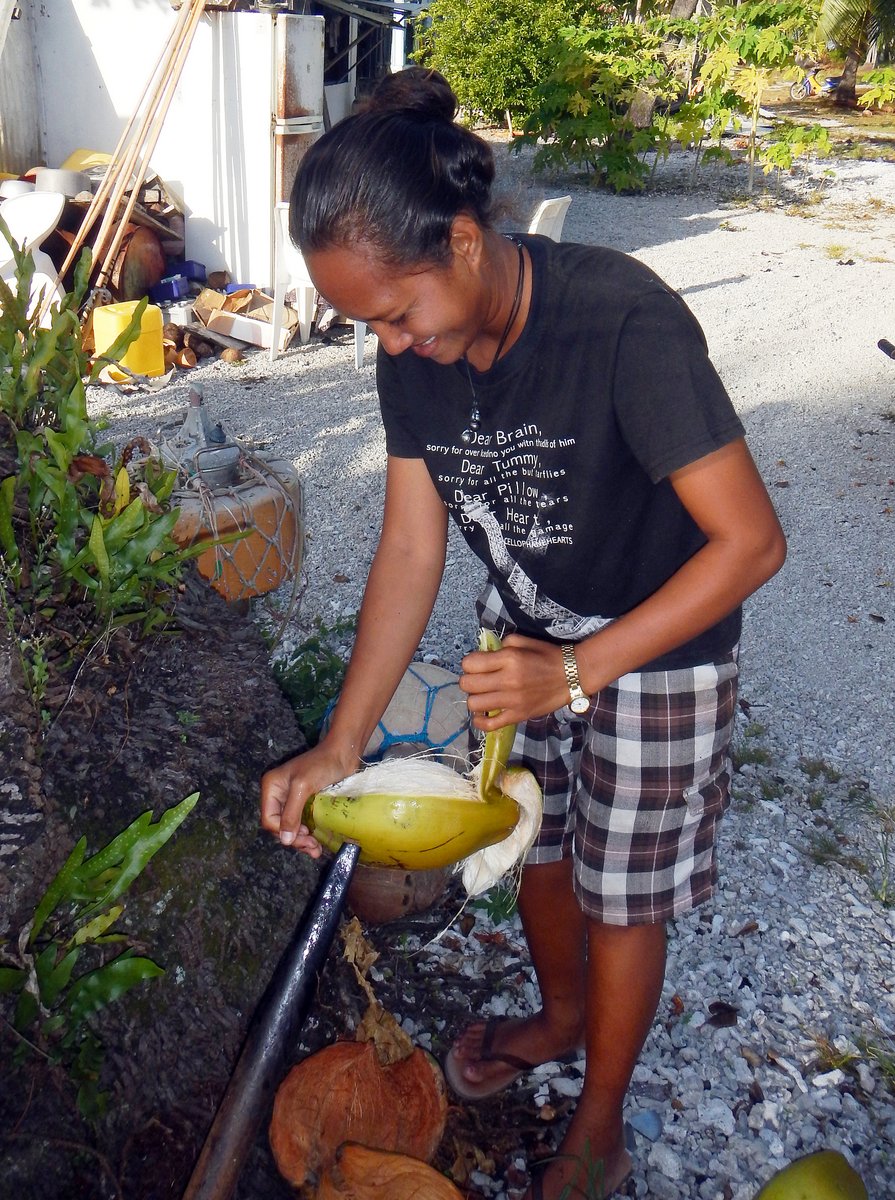
I don’t have a husking stake, so got Tommy and Mike to show me how to open the three different types of coconut with my small machete. The green coconut is opened by chopping slices off the top of the coconut. The easiest technique seemed to be to hold the coconut with the top on the ground and then to chop downwards. Small slices of the fibrous husk are then torn off to leave the nut.
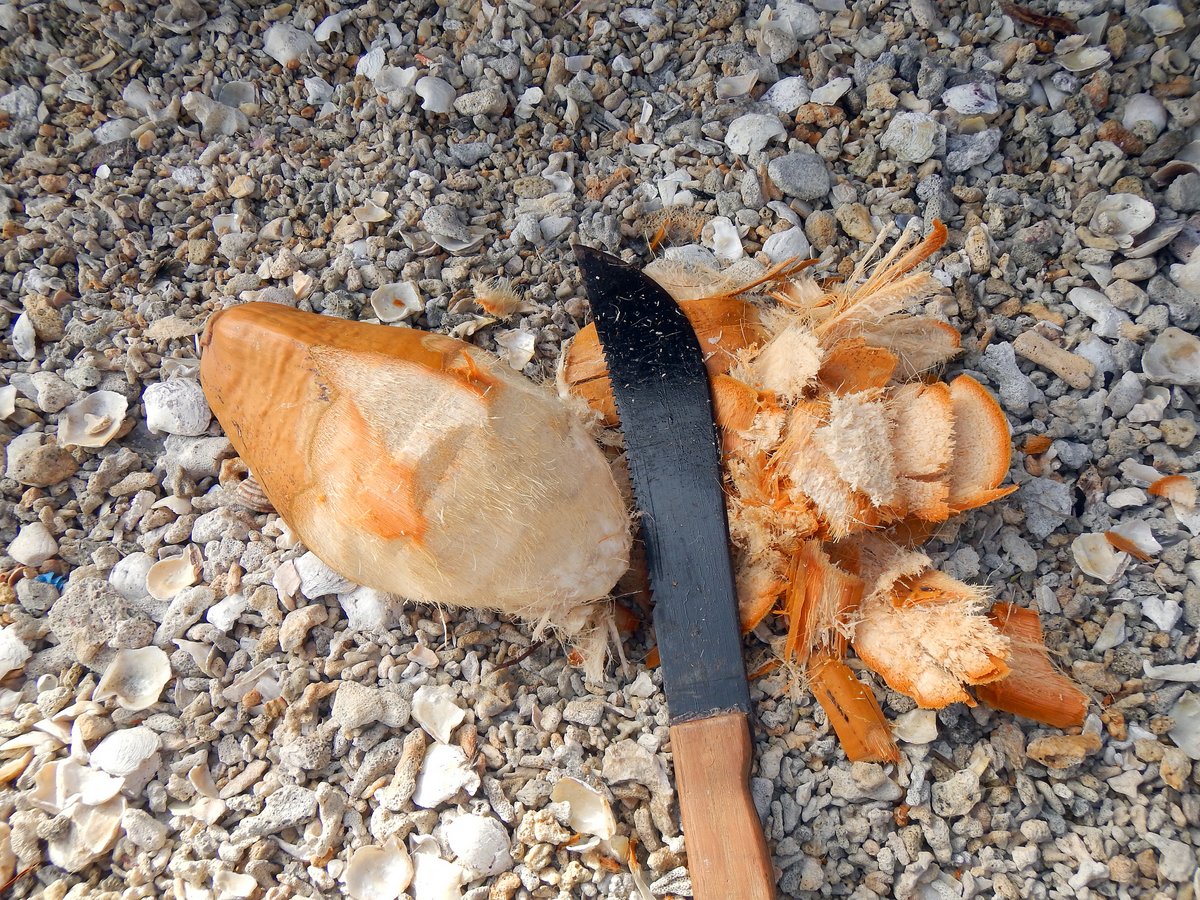
The Brown and Sprouting phases are opened by sticking the point of the machete into the top of the coconut and then prising out a segment. It’s very difficult to cut the coconut fibres, but the point of a machete easily penetrates it. Like using a husking stake, it’s a matter of prising of segments around the coconut.
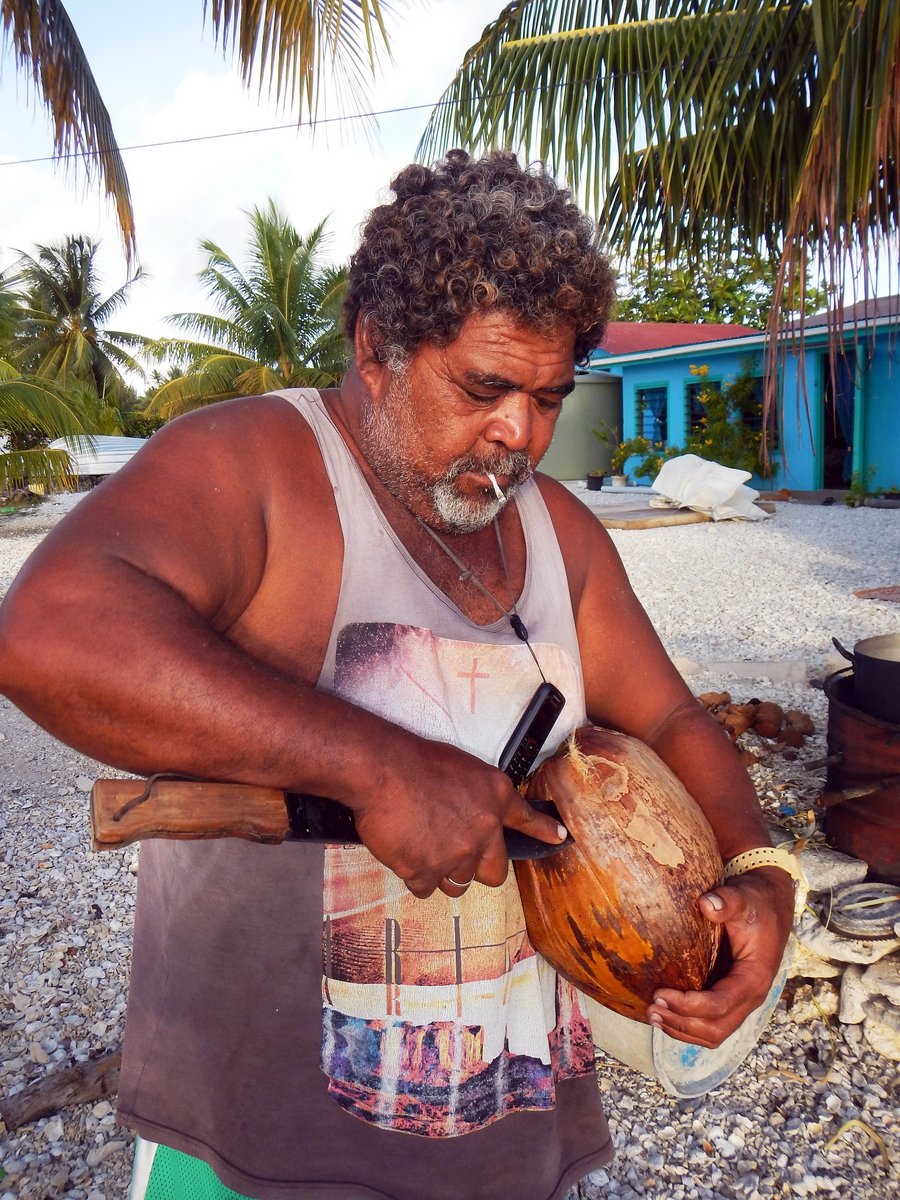
Once the nut is exposed, all three phases are opened using sharp blows to the nut, working around the circumference to crack it open. The green coconut is full of drinking water, so a small disk is removed from the round end of the coconut, using small vertical blows. The Brown and Sprouting coconuts are usually cracked around the middle and opened in half.
15 August 2014 Tetautau, Penrhyn, Cook Islands
Today was a fairly quiet day because the village had learned that a couple of Penrhyn islanders had died abroad and they were showing their respects. I went in to have a look at Rio’s laptop computer because he was having problems sending an email. He had to send off over 30 photographs of a community project which the Rarotonga government is funding and he was struggling to do it.
His laptop was running very slowly and his web mail was very slow as well, so I ended up taking his photos back to the boat, compressing them and emailing them to Rarotonga for him. I then went back ashore and downloaded a virus scanner which told me that his laptop is riddled with viruses, so I began the laborious process of cleaning it up, which took a couple of days of short visits to run scans and clean-up programs.
A couple of days ago, I gave Rio some sailing dinghy plans, so that he can make a dinghy for his son, Rio Jnr. He then discovered that Glenys has a good sewing machine, so he’s talked her into making a sail for it. A previous cruiser had given Rio an old main sail, so Glenys and I cut out the sail and she’s going to sew it in the next couple of days.
In the afternoon, Mr T came over to Alba with his guitar. I’d given him a set of guitar strings the previous day and he’d promised to come over and show me how the villagers play their local Penrhyn songs. It turns out that they only use 4 or 5 chords which are the common chords on a guitar (G, C, F and D), but they play them with strange left hand fingering, which is why I've been confused while watching them at Rio’s house.
Mr T played and sang us a couple of local songs including the Cook Island national anthem - “Te Atua mou e” which is lovely especially when sung as a group with their close harmonies. Glenys and I really ought to learn how to play it.

In the evening, we had Paul and Celeste over from “The Beguine” for a glass of wine or two.
16 August 2014 Tetautau, Penrhyn, Cook Islands
Some of the village kids hadn't come out to Motu Atutahi last weekend, so I offered to take them out for the day. It was only supposed to be six kids and two ladies, but somehow it grew to sixteen!
We had a great day out. We upped anchor, pulled out the genoa and set off south, aiming for Motu Tepuka. The kids really enjoyed the sailing and it’s a delight how they spontaneously burst into song and sing together in harmony. One of the ladies, Art, got hold of our ukulele and then the kids really went to town singing along with her.
Once we arrived a mile from Motu Tepuka, we rolled away the genoa and tentatively motored towards the reef that fringes the motus. We spent a fraught hour trying to edge our way past coral heads and then backing out - we couldn't find a way into the deeper water past the reef.
Eventually, with the aid of a couple of the teenagers, Don and Doctor, who know the area well, we found a reasonable anchorage about a mile south of the village at 08°58.61S 157°55.30W. Once anchored, I rigged up our spinnaker pole with a rope swing and the kids had a whale of a time swinging and jumping in the water from the side of the boat.
I called time-out at two o'clock and we sailed back to the village. The kids got very excited when they spotted a small pod of dolphins, which they tell me are fairly unusually in the atoll lagoon. Once we anchored, I started to ferry people ashore in our small dinghy because Rio had gone pig hunting with Paul from “The Beguine”.
I told the older kids to swim ashore, but they wouldn't get into the water once they saw our resident six sharks swimming around the boat. This was surprising because they happily play in the water close to shore where there are loads of Blacktip and Nurse sharks, but they told me that the sharks out here can’t be trusted. I wonder if their parents tell them that, to keep them close to shore?
Once I’d ferried them all ashore, we collapsed into a heap and went to bed early.
17 August 2014 Tetautau, Penrhyn, Cook Islands
It was another Sunday, so we went to the ten o'clock church service. Rio was waiting for us ashore with one of Kura’s hats for Glenys. Before the service, we went to Sunday School to listen to the children practising hymns. They all attend Sunday school for an hour before the church service and then return to Sunday School after the service for one hymn and a closing prayer. There were about four men and five women who are Sunday School teachers and lead the children in the hymns. Most of the singing is lovely, but there were a couple of hymns that seemed to be off-key and strident to my western ear.

Just before ten o'clock, there was a short prayer and everyone queued up outside the Sunday school in a long line with the youngest at the front and we all walked into the church. The Sunday School always sits in the centre pews at the front and the village adults sit on the right hand side - we were shown to the back centre pew.
Again the singing was lovely. A couple of times, the minister started a prayer and after the spoken words, the congregation then sang a prayer which was so gentle and done with such feeling that it brought tears to my eyes.
After the service, we were invited by Rio and Kura to have a drink and a chat. Rio told us that the sermon was all about the recent election of a new Member of Parliament (MP) for Penrhyn. Apparently, the old MP was in term for three years, but did very little for the islanders and, according to Rio, was actually opposing funds for island projects. There was an election in July and there was a division in the voting.
Most of the people in Omoka village voted for the old MP while the Tetautua villagers voted for the new MP. It was a narrow majority of 78 to 68 and there is still some resentment, with the old MP challenging the vote. Even in this remote paradise, people have to worry about politicians.
We spent the rest of the afternoon chilling out and went to “The Beguine” for a barbecued steak dinner.
18 August 2014 Tetautau, Penrhyn, Cook Islands
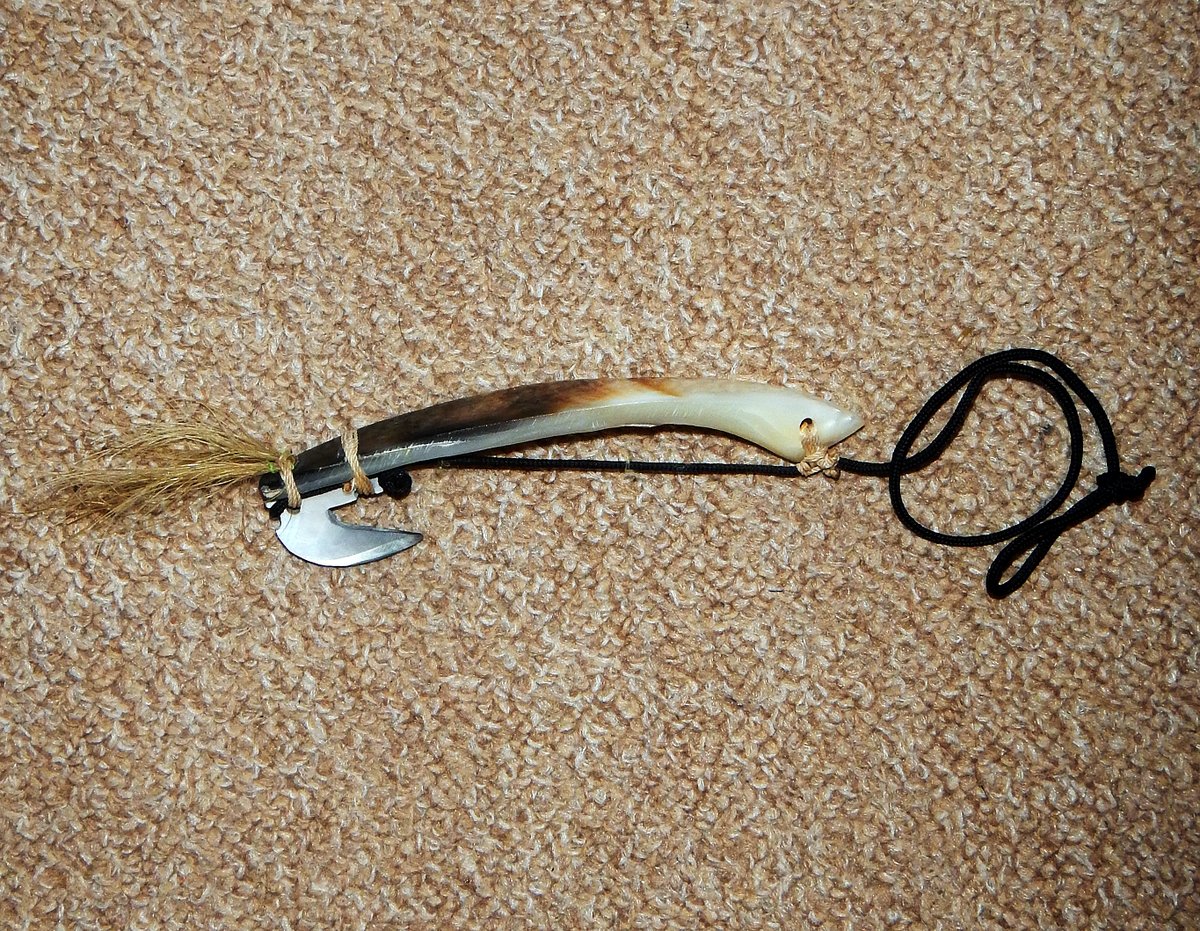
We went ashore mid-morning to go out Pipi gathering, but as soon as we arrived at Rio's house, he asked Paul and me to follow him to the house of one of the village elders, Rongo (the Assistant Minister and Judge). I had no idea why we were going and was surprised to receive a gift of some traditional fishing lures that Rongo had made for us out of shell. We stayed and chatted a while and promised to drop by tomorrow with some stainless steel bolts and screws that he needed for the catamaran that he’s building.
Rio and Rose took us all gathering Pipi on one of the remote reefs in the south of the atoll. We were out there for a few hours and gathered a massive haul of oysters - Rio also collected a dozen or so Giant Clams and some large black pearl oysters. Half way through the session, Rose called me over and showed me a Pipi Oyster which contained a pearl. She could see the pearl glinting in the sun, but with my aged eyes, I couldn't see anything. She insisted that I take it and push it in my glove to open later. Rio did a similar thing for Glenys - they’re so generous.


After a quick shower, Glenys and I went shore to open our pile of pearl oysters - we did fairly well and added another ten pearls to our collection, but they are all small at only 1-3 mm diameter.
Half way through opening the clams, Rio suddenly announced that he wanted to go tuna fishing because the wind was so calm, so Paul and I went along with him. He took us out of the Tetautua Pass and 2½ miles north-east to Venus Reef. We then spent a couple of hours trolling back and forth near the reef, chasing flocks of sea birds, which were diving for the small bait-fish being driven up to the surface by feeding tuna. Some of these flocks look like dense black clouds as hundreds of birds congregate in a feeding frenzy.
Paul and I held the two hand-lines rigged with rubber squid lures and double hooks, while Rio steered the boat alongside, and sometimes through, the flocks of birds. My red and silver lure was particularly effective and I caught three, 20lb YellowfinTuna and a Rainbow Runner, while Paul didn't land anything - just shows how the colour of the lure is important.

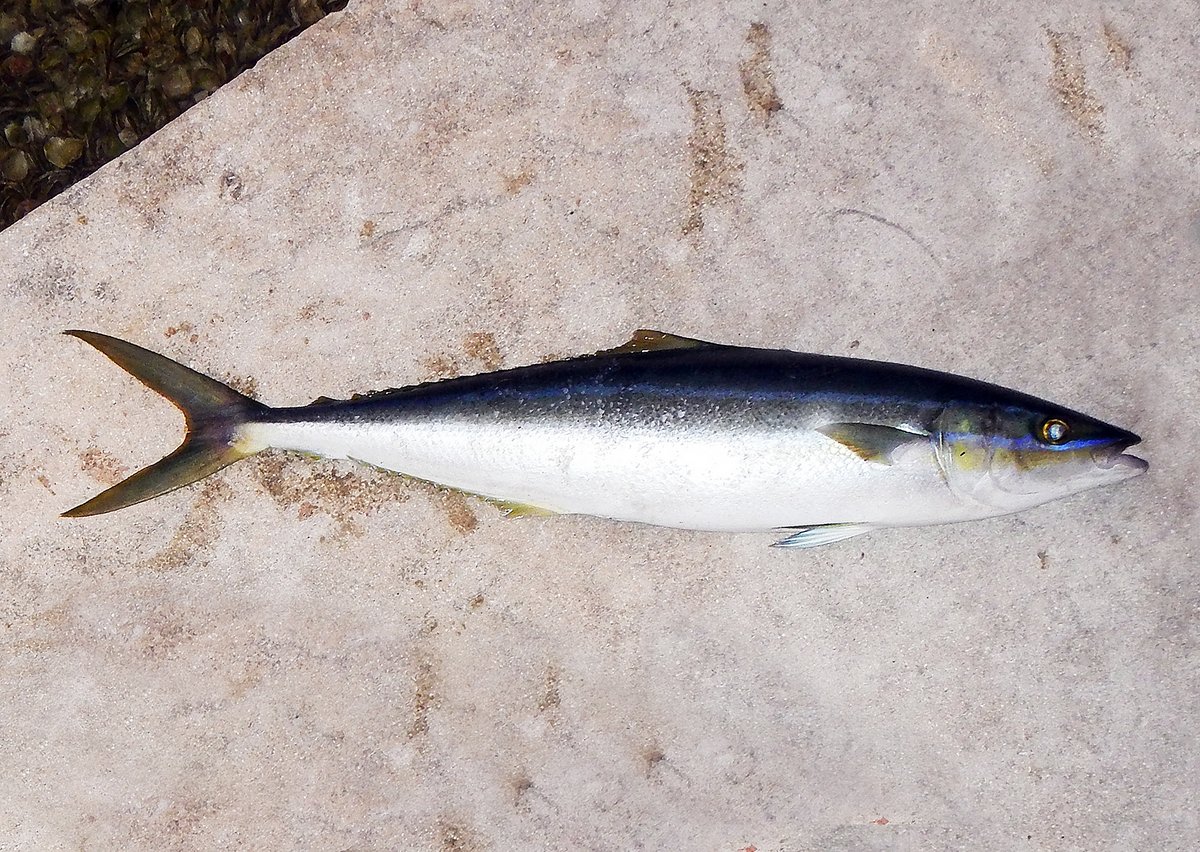
Rio told us to haul the line in fast otherwise sharks will get the hooked Tuna, which was good advice because the only tuna that Paul hooked was eaten in a huge splash by a big shark about ten feet from the boat. After catching one particularly bloody tuna, I went to wash my hands in the sea and Rio asked me not to because it attracts sharks who will then follow the boat.
We were back at Rio’s house just after sunset and were invited to dinner again. This time we had Curried Oysters, marinated Clam Salad, Barbecued Barracuda and rice.
19 August 2014 Tetautau, Penrhyn, Cook Islands
This morning, I found a huge two-inch long Cockroach in our front heads and immediately crushed it with my bare hand. We’ve had light winds for the last couple of days and I think that it’s flown from the shore, landed on our deck and found its way in through the open hatch in the heads. Fortunately, the heads door and all the cupboard doors were closed, so there was no way for it to get into the bilges where it could have hidden. Glenys is now paranoid.

We had a quiet morning and got on with a few jobs - Glenys made the sail for Rio’s future dinghy, while I caught up on editing the dozens of photos that I’ve taken in the past few days.

In the afternoon, I went ashore and did a few errands and visited people - I dropped of some stainless bolts to thank Rongo for the lures, then checked Warren’s batteries and microwave - both appear to be knackered and there’s not much I can do about them, but I got him to leave his batteries on charge, so I can test them properly tomorrow. I wandered over to Mr T’s house and gave him some mp3 music that I’d promised him, then back at Rio’s, I had a go at getting his printer/scanner working - I managed to get the printer working, but the scanner is beyond me.
We had a quiet night in for a change.
20 August 2014 Tetautau, Penrhyn, Cook Islands
We pottered about on the boat in the morning and I went in about eleven o'clock to go and see a few people. Rio had gone out with Rose to gather Pipi - Kura told me that he needed a bit of a rest because people in the village keep asking him to do things.
We’ve thought for a few days that having us around is creating more work for the family. They are such nice people that it’s apparent that they will try to help us with anything that we want, so Glenys and I been trying to back off from asking them to do things. However, Paul from “The Beguine” is a tad hyperactive and wants to do all sorts of things. He’s persuaded Rio to take him off hunting Boobies tonight, but I declined the offer - I don’t particularly want to go killing sea-birds in the middle of the night.
I wandered around the village and did a few little jobs. I checked Warren’s batteries again - they both seem to be useless and not coming up to voltage. I suspect that too much over-charging and deep discharging has destroyed them. None of the villagers have charging regulators on their solar panels - they wire the panels directly into the battery, so there’s a great danger of overcharging the one or two 100Ah batteries that they use.
While at Rio’s house, I did a bit more work on his laptop, removing viruses from his USB hard disk drive - every PC, hard disk drive and memory stick on the island appears to be riddled with viruses. Celeste on “The Beguine” has spent two days recovering her laptop after she plugged a villager’s infected hard drive into her laptop, which her virus scanner didn’t pick up.

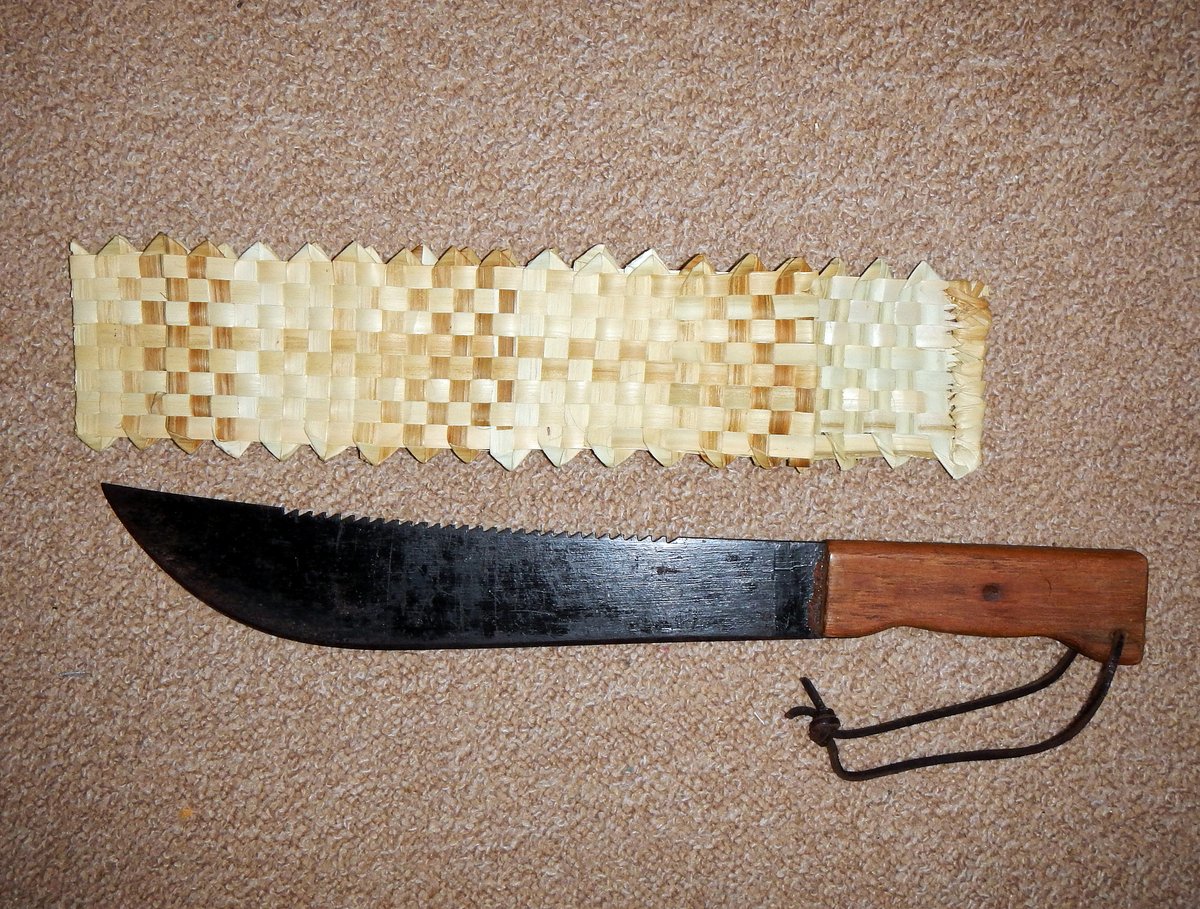
Kura very kindly gave me a Sheath for my small machete that she’d made from Pandanus leaves which is a kind of palm tree - I’ll now be able to put it into my rucksack when we go hiking.
In the afternoon, Glenys and I put the 15hp outboard on the dinghy and whizzed out to a big reef about a mile to the east of the village. The water was surprisingly murky and was hopeless for taking photographs, so I collected a dozen Giant Clams for dinner, then just looked around the reef and helped Glenys collect a few more shells.
We took the clams ashore, where we found Rio and family opening the Pipis that they’d collected today. I asked Rio and Mike to show me how to open and clean the clams, which is a messy job. The whole idea was for me to learn how to do the job, so that we could eat clams further on in our voyage, but it was a mission to stop them helping me. Eventually, I had to ask them quite forcefully to let me do it.
I thought that I’d collected too many clams for just us, so we gave half of our clams to Kura and asked her for her recipe for curried clams/oysters. She was already making a Clam Curry, so she added our clams to it and insisted we wait to take some of her curry back to the boat - she’s unstoppable… We took our bowl of curry (and the remainder of our raw clams) back to the boat and had a quiet night.
21 August 2014 Tetautau, Penrhyn, Cook Islands
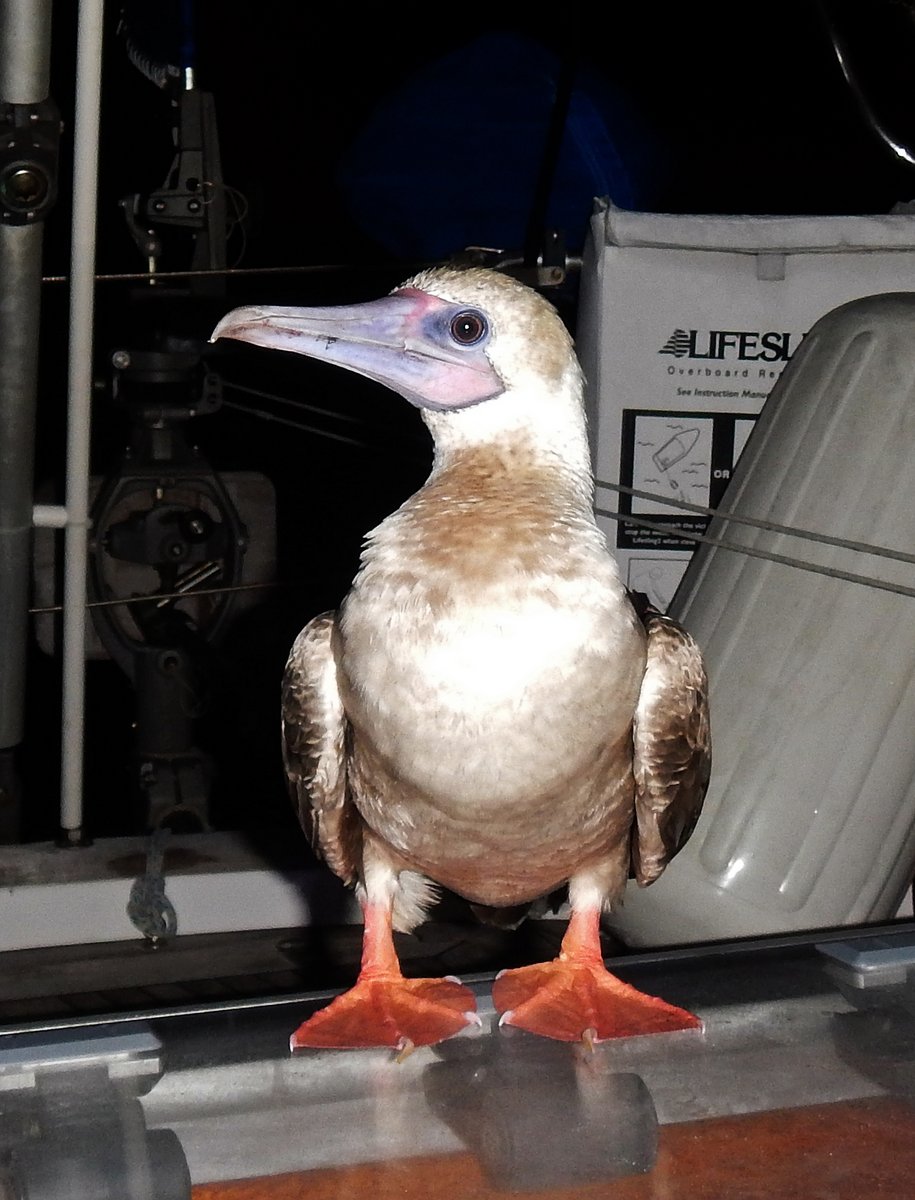
We went ashore early, because we saw booby wings floating past our boat. Rio, Sam and Paul had a profitable time hunting last night and returned with 30 Red-footed Boobies & a dozen lobster. They'd gone down to Motu Tepuka at about eight o'clock at night and walked along the narrow beach, looking for the birds roosting in the trees. The hunting technique is to smack the boobies with long bamboo poles to stun them and knock them out of the tree. They are then dispatched by clubbing them to death - sounds unpleasant.

Mike and Sam had already plucked & gutted the birds and they were boiling in a huge pan on the outside oil drum stove. There were so many that Kura shared half of them with the village. (In case you want to Cook your Boobies in the same way, they are boiled for 30 minutes.)

Kula and Rio insisted that we join them in a breakfast of lobster and rice, which was huge. Completely stuffed, we wandered around the village and did a bit of visiting. Glenys went to the school with our iPad to show the photos of the two sailing trips to the kids and Tui (the teacher). Meanwhile, I visited the minister, gave him a pack of photo printer paper and then used his printer to print some colour photos to stick in the yacht visitor’s book. While I was there, the minister kindly let me take some pictures of his wife’s intricately woven Rito Hats.

Back at Rio’s house, I gave him a hammock and told him that he needs to stop running around as much and take a rest - he liked that. Kura was sitting outside in the shade, cleaning more Rito. She tells us that she’s going to be making ten hats, fans and some baskets, so there a lot of work to prepare all the Rito. Before we could escape, she gave us two lobsters and two boiled Boobies to take back to the boat. Goodness knows when we’re going to eat it all - we've still got a freezer full of stuff that we brought from Bora Bora, some tuna from the other night and load of clams that need cooking.
In the late afternoon, Rio, Sam, Paul and I went hunting for wild pigs to some uninhabited motus on the north end of the atoll. Rio was armed with an old, rusty .22 rifle; Sam and Paul had spears made from steel conduit with a metal point and I had my camera. Sam and Paul went along the north side of the motu while I followed Rio along the south side.

The motu is covered completely by coconut palm trees with thick vegetation below. There are lots of ankle breaking crab holes and coconuts lying on the ground as well as dead coconut leaves, so it’s difficult to walk silently. Rio was like a wraith gliding along, but it took me twenty minutes to learn what I could stand on without sounding like an enraged elephant crashing through the bush.
Every so often, Rio would signal me to stop still and then would creep ahead looking and listening for the canny wild pigs. After half an hour he signalled me to stop again and then kicked off his sandals and crept barefoot through the bush towards a watering hole. Five minutes later, I heard the crack of the rifle and a whistled signal for me to go to him. I found him stood by a 50lb black pig - a good shot with his aged rifle.
We stashed the pig by the shoreline and set off across the motu, to where Sam and Paul had found a pig hiding under a bush next to the beach. One rifle shot later, we were dragging another pig to dump it next to the other one. Rio left Paul and I next to the kills and carried on ahead, while Sam went back for the boat.
Ten minutes later, I heard the crack of another rifle shot and, following Rio’s whistle, I found him with two more dead pigs, which he told me to drag back to the stash. Dragging two dead bodies through the dense undergrowth by myself was a bit of a mission, but I was soon at the shore adding to our growing pile of pigs. Sam arrived, we loaded the four pigs on board and motored along the motu to pick up Rio.
We continued to another motu. The mosquitoes had been pretty thick in the previous motu, so I sprayed myself with deet. As soon as I’d done it, Rio told me I shouldn't put it on because the pigs will smell the strong scent. We spent another twenty minutes creeping through the motu and saw or heard a few pigs running through the bush, at which point Rio sent Paul and smelly old me back to the boat and carried on hunting by himself, but didn't catch anything else.

Back at Rio’s house, they already had a big pan of water boiling and a table set up for the village butcher, Aru Kia to work on. Mike and Sam immediately started to remove the hair from the pigs by pouring boiling water over the skin to loosen the hair and scraping it off with the blade of a sharp knife. When a couple of pigs had been shaved, Aru Kia set to butchering them. I’ll not go into the gory details here, but for those who are interested, there is a set of step by step instructions on how they gutted and butchered the pig in Glenys’ cookbook.
It was interesting that they only kept the main carcass of the pigs - the head, feet and all of the offal including the heart and liver went into the sea. The villagers obviously have more than enough food easily available without having to process the more difficult parts of the pig. The sharks enjoyed it though. There were soon over thirty sharks circling around the side of the dock and when the entrails were thrown in, the water literally boiled as they went into a feeding frenzy - in three seconds it was gone.
While we were watching the butchering process (which took a couple of hours) Kura made a meal just for us and, despite our protests, insisted that we sit and eat. Our stock pile of food on-board is growing because we keep getting fed. To add to it, they gave us a rack of ribs and a whole boned leg of pork. Glenys has totally run out of space and has asked Kura to put it into her freezer until we leave.
22 August 2014 Tetautau, Penrhyn, Cook Islands
In the morning, we ran the water maker and caught up with a few chores. Both fridges now have leaks and I had to top them up again today. I'm going to have to have a day trying to trace the leak on the food fridge which is definitely getting worse.
As Glenys was planning lunch, trying to use up some of the food that we've been given, we got a call on the VHF from Rio telling us that Kura has cooked some pork for us for lunch! Glenys went ashore and picked up a pan of pork in a sauce, which was far too much for lunch, so we had Lobster Pasta instead and had Kura’s pork for dinner.
We chilled out, pottering about and listening to Penhryn music that Rio had given me. Some of the music is an album by Mr T and a group called Tongareva 5, which was Mr T’s group in the 1990’s (Tongareva is the Maori name for Penrhyn).

Glenys did some cooking to use up food that is building up and made some Tuna Empanadillas, which she took ashore for snacks for everyone while they were opening their Pipis - they disappeared in the twinkling of an eye.
We had a quiet night in.
23 August 2014 Tetautau, Penrhyn, Cook Islands
I got up early, which was a good job because Rio and Sam came by at half past six to ask Paul and me to go out trolling for tuna. I jumped in their aluminium boat with its 25hp outboard and we sped out to Venus Reef. Despite trolling for over an hour, chasing flocks of sea birds, we didn’t catch anything, so Rio decided that we’d go out netting.
After a quick breakfast and picking up some gill nets (and Rio Jnr), we motored along the inside edge of the atoll to a shallow reef to the south of Motu Tepuka. As we passed by the lovely motu, I could see why they’d come here to hunt Boobies a couple of nights ago because there are thousands of them roosting in the trees.
Rio took us right up to the fringing reef in knee deep water, and then had us lay out two nets parallel to the reef. As we waited, Rio explained that the parrotfish move into the lagoon on a falling tide and then return to the fringing reef on a rising tide, sometimes going out to sea at high tide. The tide was falling, so Rio was hoping to catch shoals of fish going into the lagoon.
He was right. After a short wait of ten minutes, we started to collect the captured parrotfish from the nets. It’s a fiddly job removing a flailing, 12-15 inch long, slimy fish when it’s wrapped in a thin nylon net (I lost seven.) Eventually, by watching Sam, I figured out that the best technique was to push the head through the net mesh, then to grip the fish by the gills and slide it though the net. Meanwhile, Rio Jnr was walking alongside us with half a plastic oil drum collecting the fish as we freed them from the net.

Blacktip Reef Sharks soon appeared and were nuisances getting caught up in the net. The Islanders are so used to dealing with these predators that they simply grabbed the smaller ones and freed them from the net. Bigger ones over three foot long were speared with the same steel conduit spear that we’d used pig hunting. Rather than killing the sharks, they simply cut off its tail and let it limp off to die. It sounds a bit brutal, but it’s effective and doesn’t create a lot of blood, which would attract even more sharks.
After an hour or so, Rio decided that the run of Parrotfish had finished, but there were quite a few parrot fish trapped in a pool between the reef and our nets, so we spent half an hour dragging the net in a circle around the pool and catching the rest. In all we caught about 200 parrotfish with a couple of hours' work. Rio told me that he was a little disappointed - we were a bit late getting there and we should have caught twice as many…
We motored back along the atoll to a place with knee-deep water over sand, next to a gap between two motus. Our prey now was Milkfish and Mullet, which swim in the shallows in large shoals. The technique was to locate a shoal of fish, deploy the net in a long line and slowly walk towards the fish, with a couple of people wading wide and ahead to scare the fish towards the net.


The net was slowly closed into a U-shape and the fish scared into the net. The shoal hit the net at such a high speed that the net was lifted out of the water. After gathering one shoal of about 80 Milkfish, we had a quick lunch. Kula had thoughtfully made Paul and me some boxes of food containing spaghetti, rice and breadfruit, while the others simply ate raw fish (which tastes very nice.)
We then targeted a shoal of Mullet, which moved into the very shallow water (3-6 inches deep) between the motus - Rio told me that Mullet often do this. We slowly walked in a long line towards the fringing reef and found the shoal of fish in a 9 inch deep “pool” next to the reef. It was then a matter of encircling the pool and scaring the fish into the nets. After untangling the 80 Mullet, Rio called it a day.

Before we left, Sam and Rio Jnr went off to the bushes, next to the beach on one of the motus. Paul and I followed then and found them “playing” with nesting Red-tailed Tropic Birds. These birds nest on the ground under bushes and when approached, defiantly stay on their nests to defend their chicks or eggs. I'm sure conservationists will be appalled, but the “game” was to grab a bird by the scruff of the neck without being pecked with the ferocious looking beak. I didn't partake in the “game”, but did accept a beautiful, long, red tail feather from Sam.
Back at Rio’s house the family had set up a long working table and set off cleaning the 350 fish that we’d caught. We sat with them as they worked, but kept out of the way because they were so efficient that we’d have been a hindrance. To process the Parrotfish, one person used a knife to slit the belly and cut between the gills, while another used their bare fingers to pull out the entrails and the gills. The heads of the Mullet and Milkfish were cut off before gutting.
Some of the fish were de-scaled ready to eat in the next few days, while the rest were left with their scales and packed to ship to friends and family in Rarotonga. The fish were washed in sea water and packed into six old seed sacks - 45 fish per bag. The sacks were sewn shut by Rose and Mike, then taken off by motorbike to a chest freezer. The plan is to put the frozen fish onto the cargo ship that is coming in early next week. The whole job was complete in a couple of hours.
In the evening, we invited Paul and Celeste over for sun-downers and finally got to eat the Boiled Red-footed Booby, which Glenys shredded and served with Hoi Sin sauce wrapped in pieces of tortilla as an appetisers. It was very nice - like a strong version of duck. We’re now desperately short of alcohol and soft drinks now - two cans of beer left, no wine, no coca cola and only three small bottles of rum. We scrounged some drinking coconuts from Kura, so that we could make Pussers Painkillers.
24 August 2014 Tetautau, Penrhyn, Cook Islands
It was another Sunday - our third one already. We did the same routine - picked up a hat for Glenys from Kura, went to Sunday School to listen to them singing Hymns and then into church. Most of the service is in Maori, so to stop myself being too bored during the bible readings and the sermon, I've started to read the Bible, which I guess is acceptable - I'm half way through Genesis.
We stopped to visit with Rio and Kura on the way back to the boat and they told us that they shared some of the pork from the pig hunt with the rest of the village - of course, she wouldn't let us walk away with out our share, which was a plate of tender roasted pork and breadfruit cooked in coconut cream - very nice.
With bellies full of pork, we chilled out for the afternoon - well I slept for two hours, while Glenys cooked a lemon cake for the evening. Paul & Celeste on "The Beguine" are leaving tomorrow, so Rio and Kura arranged a get-together at their home as a farewell. There was the normal extended family of six adults plus the minister and Mr T, the four of us cruisers and half a dozen kids. Kura laid on another huge meal and it was a pleasant evening, but unfortunately, the playing of musical instruments is not allowed on Sunday, so it was a fairly subdued affair.

We've received an email from our friends Michael and Charlotte on "Salamander" who have told us that they're heading towards Penrhyn, so we're now going to stay here for another week and wait for them. This gives us a great excuse to hang out here longer and also a chance to take part in the famous "White Sunday" next weekend.
25 August 2014 Tetautau, Penrhyn, Cook Islands
A cargo ship called the “Lady Moana” arrived from Rarotonga early this morning, so we hitched a lift across to Omoka with Sam and Rose. It was a fairly windy day, so the 30 minute ride across the atoll was very bouncy and even downwind we were getting sprayed with sea water every so often.
By the time that we’d arrived off Omoka, the sea had picked up and there were 2-3 foot waves crashing against the shoreline. Sam manoeuvred the aluminium tender into the small harbour and went alongside the ship. Rose and I clung onto the side of the ship as we bounced up and down and Sam tossed big bags of frozen fish up to the crew members for transporting to Rarotonga to Rio’s family.
Having escaped the side of the ship without losing any fingers, we tied up in the tranquil small boat harbour and stepped ashore. There was lots of activity at the dock. Most of the village of Omoka seemed to be hanging about, plus four or five boat loads of people from Tetautua. Groups of newly arrived people were huddled in the scant shade surrounded by luggage and boxes cargo that they’d brought with them, waiting for the rest of the cargo to be unloaded.
We chatted to various people who were returning to Tetautua. One of the biggest parties was Mike’s mother (Aloha) and assorted family, who had just returned after five months away in New Zealand. They were weary after the five day passage in a cramped cabin and were looking forward to getting home.
We had a walk around Omoka, but most people were at the town dock or out delivering goods that had arrived. I managed to find Ru (customs and Immigration) and told him that we’d be coming over on Friday to clear out, ready to depart on Tuesday. He was okay with that. The small village shop was closed because the lady running it was working in the bank today, so we couldn't buy anything. Back at the main dock, we found that Christine (the baker) had made some lunch for the new arrivals and she invited us to join them. Poisson Cru, fried fish and Fried Halaoa Uto - very, very nice.
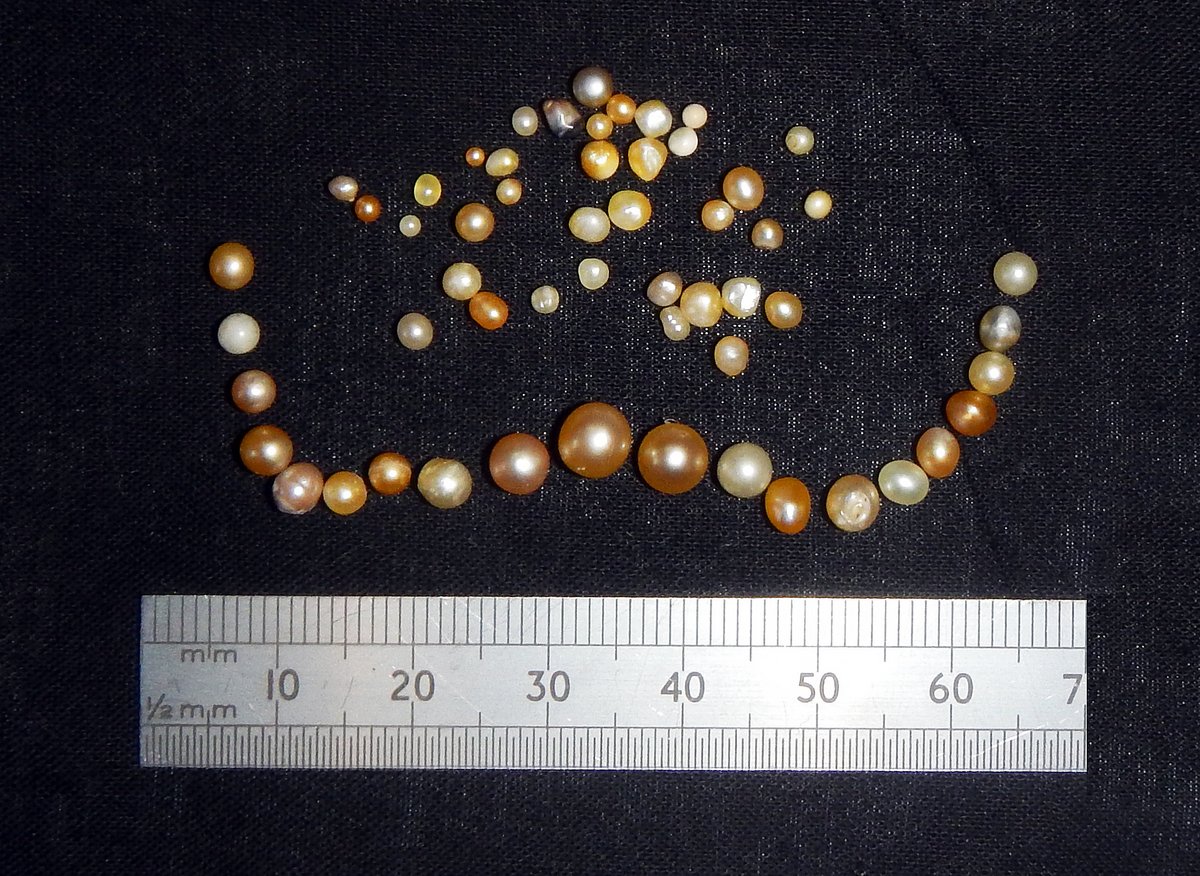
Rose eventually persuaded Warwick’s wife, who runs the bigger store out by the airport, to give us a lift in her trailer to her shop. Glenys bought essentials - flour, margarine and she found some big bottles of Coca Cola. To my great disappointment there was no beer because it hadn't been unloaded from the ship yet.
We bummed a ride back to the village and then, after a bit more chatting, Sam drove us back to Tetautua, which was very, very bouncy and wet. We were a little dehydrated and tired when we got back to the boat, so we had a quiet night in and watched a movie.
26 August 2014 Tetautau, Penrhyn, Cook Islands
We went Pipi gathering with Rio and Rose. I tried to be more scientific about it and reasoned that the bigger oysters would be older and therefore have more chance of having formed pearls. My other theory was that the ones a little deeper and in sandy hollows would have more chance of getting grit in them and creating pearls. So, I was a little more selective and kept my basket separate from Glenys’s.
Glenys went for the easier “Blitzkrieg” method and gathered anything that was easy to get to - mostly on the shallow top of the reef. She gathered twice as many as I did.
Back at Rio’s house, we sat down to open our pipi oysters (assisted by Mike’s newly returned family). My “scientific” approach was totally misguided. Glenys yielded four times as many pearls as I did and had the biggest ones - it’s obviously a lottery and a matter of gathering as many as you can.
It was six o'clock by the time that we’d finished opening our oysters, so we went back to Alba for dinner. We've now got a collection of over 50 Pipi pearls, but unfortunately most are very small with only one decent 5 mm diameter pearl. We're not too sure about what to do with the small ones, so we'll probably give them to Rio and Kura, who can sell them to the dealer when he arrives in a couple of months.
27 August 2014 Tetautau, Penrhyn, Cook Islands
We received an email from our friends on “Salamander” telling us that they aren't coming up here because the wind is wrong, which is a shame. After a bit of debate, we've decided to stay here until next week anyway.
We've been given quite a few "Pu-pus" which are Pipi shells with embedded pearls on the inside of the shell, so I went ashore to use Rio's bench grinder to clean and polish the outsides of the shells. It's quite a time consuming job and the small shells get extremely hot during the process, so in a couple of hours, I only managed to clean six shells - four "pu-pu" and a couple of nice golden plain shells. I enjoyed doing it and the finished shells are lovely, glinting gold in the sunlight. My plan is to do some more and then to make some earrings and pendants.

In afternoon, we went for walk on a motu on the windward side of a small lagoon about a mile south of the village. There were lots of nesting White-capped Noddies and we found some beautiful Red-tailed Tropicbirds nesting under the bushes (we didn't play the local game of "Grab a Tropicbird by the Neck".)

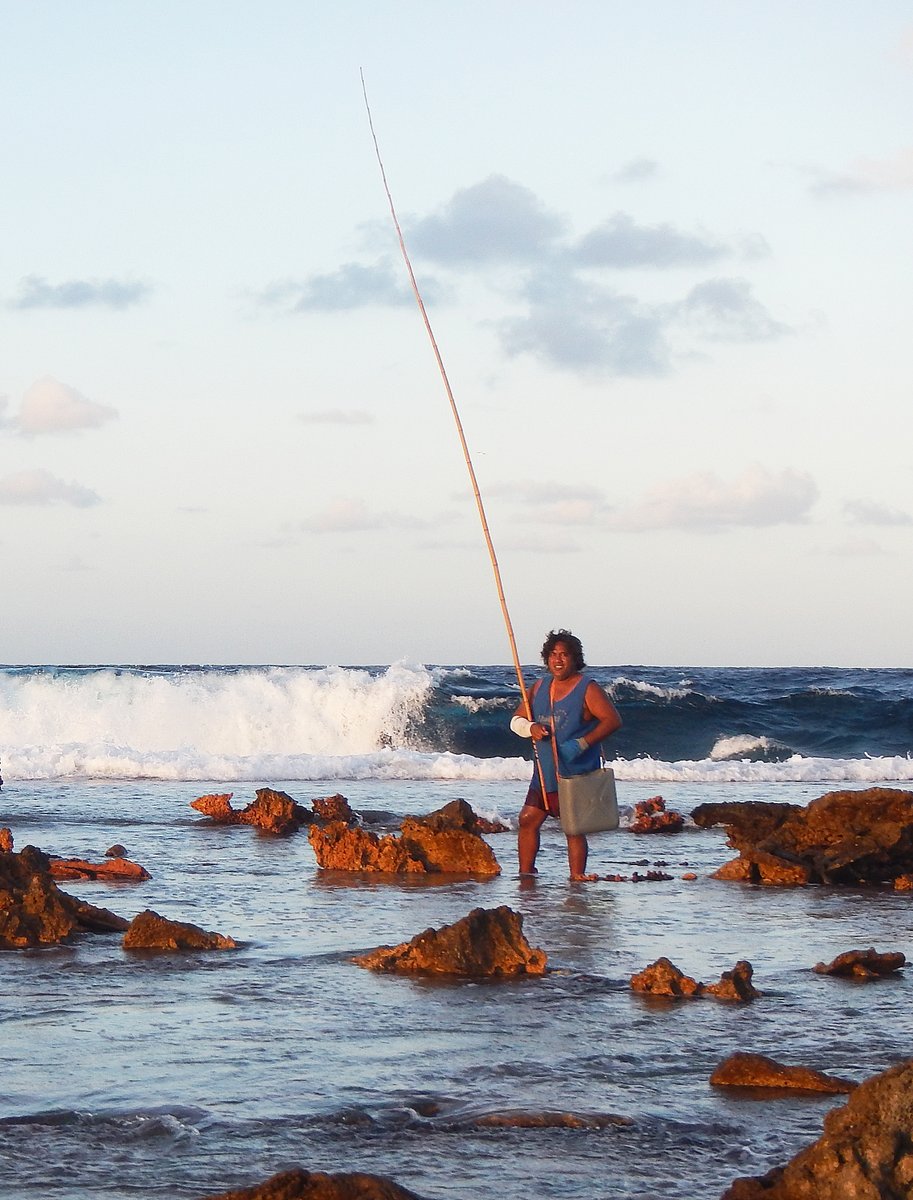
We stopped in the southern pass into the lagoon to do some snorkelling. The water was very clear in the shallows, but at the drop off into the deeper water in the atoll, the water was very murky, presumably plankton builds up in the slow-moving deeper water. I swam over to investigate, but retreated when a couple of Grey Reef Sharks came up out of the gloom to investigate me.
Glenys had a good time snorkelling around the shallow coral patches and picked up some nice new species of shells for her collection. While we were there, Rio, Rose and Mike stopped by to make sure that we were alright. They'd just returned from three hours of gathering Pipis and I don’t think that they really understand why we snorkel for fun.
In the evening, we'd invited Rio and Kura over to Alba for dinner. We suggested six o'clock, so that they could have a relaxed evening, but Rio was far too busy to stop that early. He went fishing for Grouper just before sunset with Sam and invited me along. They took me out to the shallow reef that fringes the atoll and then we went wading through the knee deep water.
They only had two of the long bamboo fishing poles, so I was relegated to being an observer. The fishing poles were 20 feet long and very thin at the top. A 20 foot length of 25lb nylon fishing line was simply tied to the top of the rod with a small artificial lure at the business end. The lure was a small lead weight with some pig’s tail hair.
The method of fishing was to flick the lure into the shallow water and then drag it just fast enough that it splashed on the surface of the water. Small 6 inch long grouper were hitting the lure and being swung to the fisherman who unhooked the fish and dropped it into a bag slung over his shoulder. It was very effective because in 30 minutes, they caught over fifty fish between them.
Rio and Kura came on board at half past seven with Cina in tow. They had a good look around our boat and Kura was very interested in the Woven Baskets that Glenys has picked up in the Manamo and Darien regions. She also loved the molas from San Blas islands.
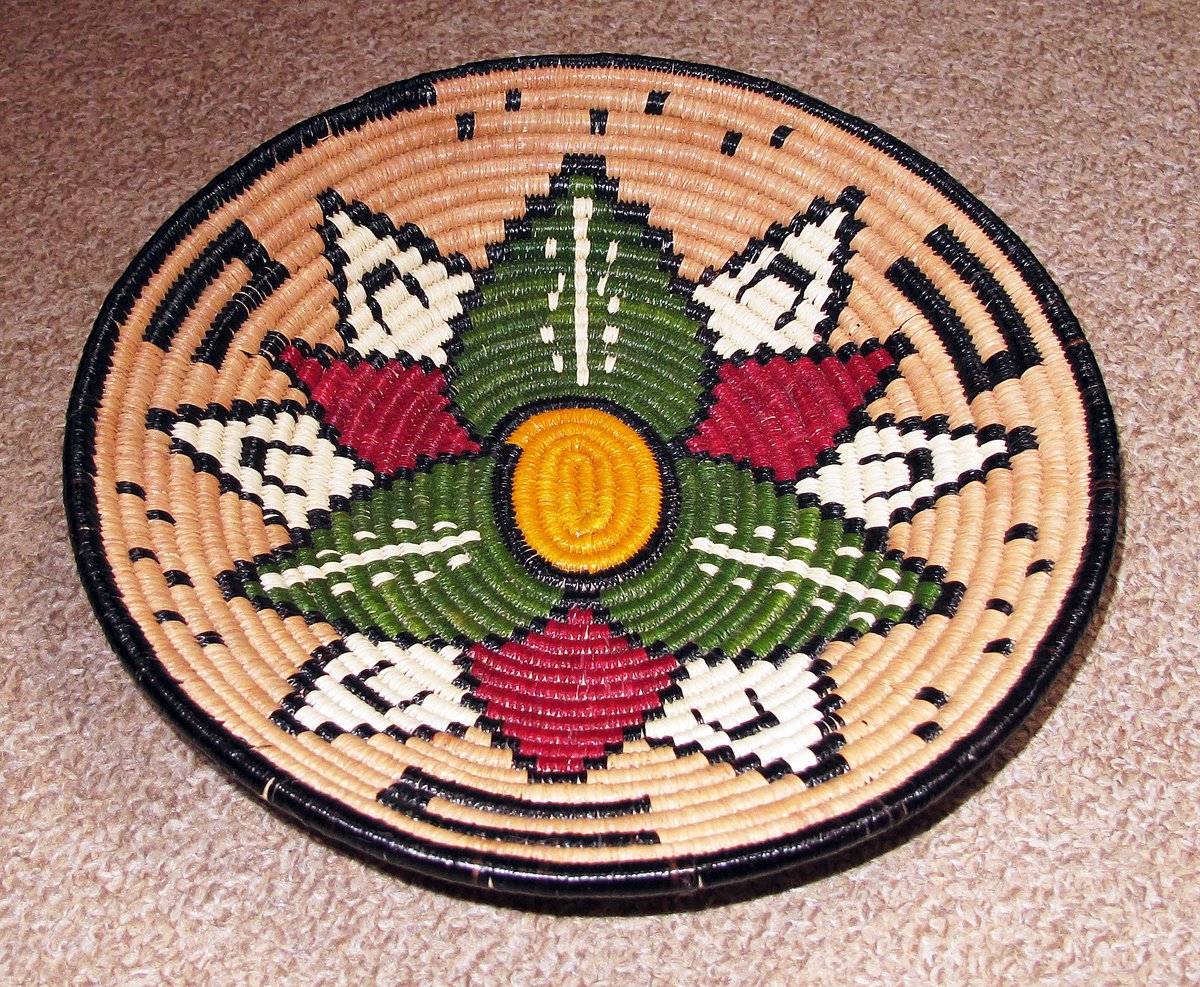

We had a great evening - Glenys served Texan Beef Chili and Chicken Mole with rice. They'd never had food cooked with chocolate before, so the Chicken Mole went down well. It was lovely to have them on board and give Kura a break from feeding their extended family.
28 August 2014 Tetautau, Penrhyn, Cook Islands
I went ashore and finished off grinding my Pipi shells. Kula had already asked Sam to grind some for me , so even though I only cleaned five, I've walked away with over twenty…

Glenys decided that she wanted a nice pair of matched pearls to make a set of earrings as a memento of this fabulous place, so we did a trade with Rio. He selected a matched pair of 5mm diameter pearls with a deep gold colour from his pearls and we gave him all of our pearls. We already had a nice 5mm pearl, so we effectively swapped 50 small pearls for a 5mm round pearl , so I'm pretty sure that Rio did very well out of the deal, but we’re happy and he’s happy, so it was a good deal.
In the afternoon, we went exploring the reef where Rio took me fishing last night, but there weren't any shells worth having. We went for a snorkel in the northern pass coming out of the small reef side lagoon and the current was wicked, so we drift snorkelled at 3 knots. There are lots of big fish in the pass and I spotted a few Whitetip Reef Shark. We messed around in the shallows out of the main current looking for shells and found a fair selection again.
We had a quiet night in. We’re now out of Beer, Coca Cola, Orangina, Lemonade, so we’re reduced to drinking fresh orange juice & rum or Iced Tea & rum. Fortunately, “The Beguine” gave us a bottle of wine just before they left, so we drank that with our Spaghetti Bolognese. It’s definitely time to leave.
29 August 2014 Tetautau, Penrhyn, Cook Islands
Kura and Rose were going to Omoka because another cargo ship called the Kwai had arrived, so we hitched a lift to go to clear out. Rose had problems starting the outboard before we left, so Mike the Mechanic came over to fix it.
I've been watching the villagers having problems with their outboards for three weeks and it amazes me how they struggle on with bodged repairs when they rely so much on their boats. Mike was able to unscrew one of the spark plugs with his bare fingers and he used a pair of pliers to unscrew the other one. The lead going to the spark plug didn't have a proper connector, so the bare wire was just twisted into a loop and crimped onto the spark plug with (you've guessed it) the pliers.

Most of the outboards are 25hp or 40hp two-stroke Yamahas, so I really don't understand why they don't have a set of spare parts like I do for my Mercury outboards. Is it the cost of spares or the hassle of ordering the parts and shipping them all the way from Rarotonga?
When we arrived in Omoka, we first went to Ru's house to clear out, ready to leave on Tuesday (2nd September). Altogether it cost us NZ$250 for our 29 day stay in Penrhyn, which was a bit of a shock to the system. We've been spoiled in French Polynesia with no fees at all, but we're now back to paying big fees. There was a $65 immigration fee per person, a charge for the officer's time and port fees of $2.50 per day.
Having received our expensive exit papers, we wandered down to the quayside to look at the Kwai, which is a hundred foot, steel cargo ship with sails. I chatted to the owner, who told me that with their main sail, top sail and jibs, they normally do five to six knots and sail when ever they can to save on fuel costs. They're based in Hawaii and regularly sail in the Line Islands and down to Rarotonga - from here they're off to Christmas Island.
The Kwai has a store where they sell a variety of goods including some clothes as well as food. They open a hatch on deck and the villagers go on board to peer down into the hold to see what is available. Everything is expensive and they only sell bulk groceries - 25 lbs of rice, 300 chocolate bars, etc, so we didn't buy anything.
Instead, we got a lift to Warwick's store in the back of Kura's cousin's pick-up truck, where we were able to buy 6 bottles of coke and sprite for our passage and a case of beer to keep me happy until we leave.
Back in the village, we helped Kura and Rose take six, 8 * 4 sheets of plywood from the Kwai, then load it onto their aluminium boat along with a huge 100lb propane tank. It was another bouncy passage back, so we all got soaking wet again.
It was very hot all day and we didn't drink enough, so both of us were feeling a bit beat up with dehydration, so we crashed out for the rest of the afternoon and had a quiet night in sipping a few nice cold beers.
30 August 2014 Tetautau, Penrhyn, Cook Islands
We went ashore, but being a Saturday, it was very quiet - this is the villagers’ main day for relaxing and doing things as a family. Rose wasn't going out for Pipi’s today and we found Rio chilling out, chatting in Papa Saitu’s house, while Kura was at home looking after the kids and making another Rito hat.

The Cook Islanders have an interesting attitude to family. The family members are very mobile. Not only do people move to Australia and New Zealand for work, but family members will happily go visiting for long periods of time - four months is not unusual. I guess the large distances and long travelling times on ships has something to do with it.
Parents are affectionate with their very young children, but the older ones seem to be quite independent. Children are often given away and adopted by other family members. We know of one couple who gave their son to the husband’s brother because the brother didn't have any boys. It’s fairly common for children of families working abroad to send one or more of their children to live with grandparents. In some cases, the children never see or have any communication with their real parents and regard the grandparents as their parents.
In the afternoon, we went snorkelling in the main Tetautua pass. There’s a big pinnacle reef in the centre of the pass, which would have been a great place to snorkel if we’d got the tides right, but when we were there the current was ripping out. We went to the north side of the pass where there's a shallow reef blocking the current and found a great area next to two poles marking a small channel through the reef.
There is very nice coral at depths of 2-8 metres and we saw a good variety of fish. A huge shoal of Convict Surgeonfish came swirling around us. The must have been over 500 of the six inch long fish, who swarmed over the reef. I think that they were eating some kind of algae that grows on the coral and is normally protected by aggressive Damselfish. Presumably, the huge shoal overwhelms the Damselfish leaving the Surgeon fish free to steal the algae.

31 August 2014 Tetautau, Penrhyn, Cook Islands
Today was another Sunday, so we attended our fourth church service. Unfortunately, it wasn't a White Sunday, which is the one service of each month where the members of the Cook Island Christian Church take communion. On this special day, everyone wears white clothing for the service, which I should imagine is a lovely sight and it’s a shame that we've missed it, but we've got to move on.

Rio and Kura invited us over for breakfast before the ten o'clock service and served us roasted pork, two kinds of fish, rice and breadfruit in coconut cream - we could get used to this kind of breakfast. As usual, Glenys borrowed a hat from Kura and we went to Sunday School to listen to them singing Hymns before going in for the church service.
On the way back to the boat, we stopped to visit with Rio and Kura. Rio told us that he’s going to become a minister, which was a surprise to us. The plan is for him to move to Rarotonga in 2018 to receive four years' training and then he will be moved to a church anywhere a minister is required. Kura will also be doing some training and I'm sure that together they will be an asset to any church.
We chilled out for the afternoon. Glenys booked some flights from New Zealand to the UK - we’ll fly back just before Christmas and return to New Zealand in the middle of January. It's exciting to know that we’re going home to see our family - we've not seen them since July last year. However, we've still got another 2,000 miles to sail over the next three months to get to New Zealand.
This evening, we had ten Blacktip Reef Sharks swimming about under the boat - the most that we've had so far. We've got so used to them that I now find it relaxing to be sipping a cold beer and watching these sleek predators prowling about.