
7 August 2014 Tetautua, Penrhyn, Cook Islands
I reported in for community service at about half past nine and was put straight onto sorting out the lights on the truck. The truck is a Nissan, but it was bought from China, so all of the manuals and the labels on the truck are in Chinese. The problem was that the rotating knob on the indicator stalk on the steering wheel had broken off, leaving the headlights permanently switched on.
After trying to trace the wiring into the switch and being faced with 11 wires with no wiring diagram, I decided to put a switch in the main supply to the lights as it comes out of the fuse box. A bit of a Heath Robinson approach, but it worked and seemed to be good enough.

Glenys made some pizza from a loaf of bread that was just going stale and we took it over to Rio’s to share for lunch. Glenys and I then jumped into Rio’s aluminium boat and went off with Rose, Sam and Taou (the school teacher from Omoka) to help gather Pi-pi Pearl Oysters. It was a very bumpy ride upwind to the south east end of the atoll. All of the dozens reefs in the atoll have names and Rose was heading for one where her uncle had found one oyster with five pearls yesterday. As we approached the reef it became apparent that the whole village had heard the same story and had decided to try their luck on the same reef because there were five boats already anchored there. Rose decided that there were too many people there and we went to another reef.
The top of the reef is only two or three feet under the water and at the edges drop off very rapidly to 40 metres. I was a little concerned that I wouldn't be able to recognise the small Pipi Oyster clams, but I shouldn't have worried because the top and side of the reef are teeming with them. They’re growing like weeds. There’s no need for tools to pry them loose - it’s just a matter of giving them a small tug and they come away, so my basket was soon filling up.

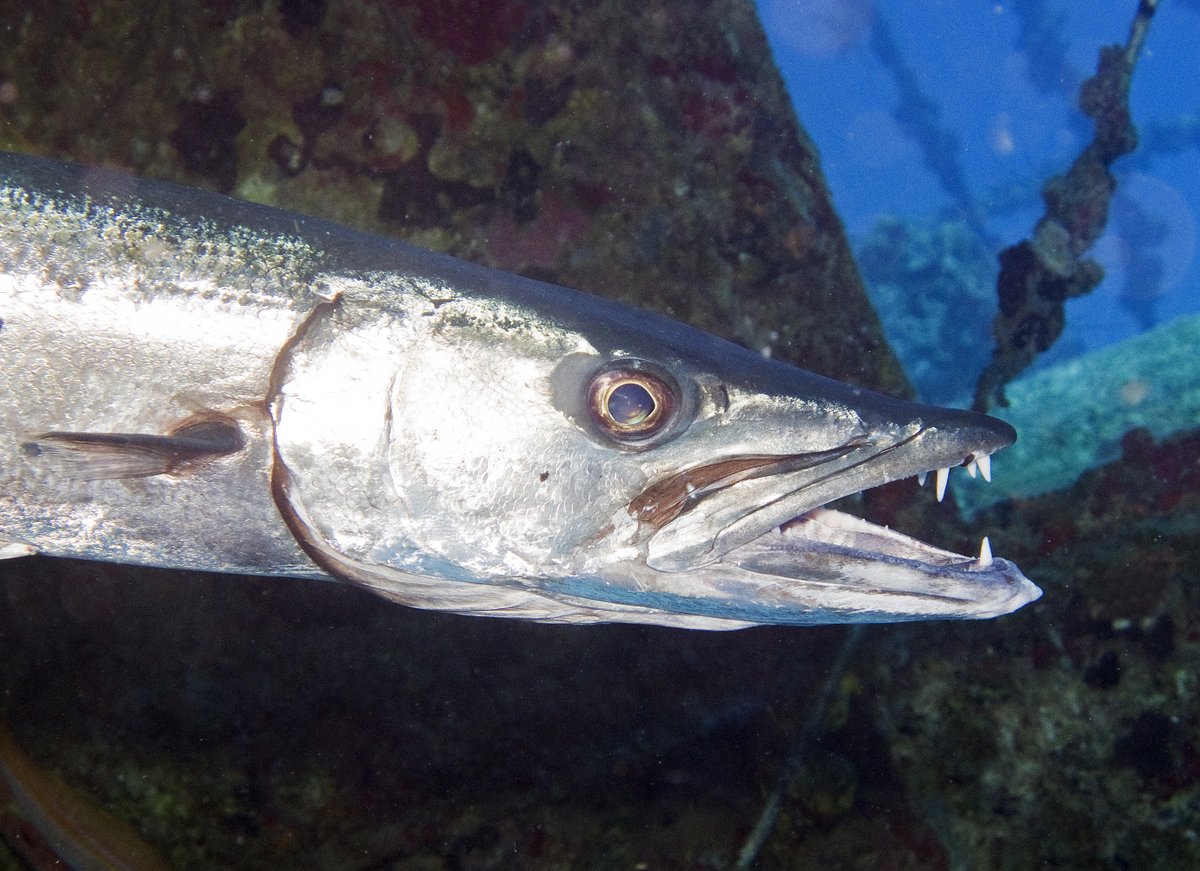
I took some time off and did some deeper diving down the side of the reef - not a huge amount to see apart from the ubiquitous Blacktip Reef Sharks and a mean looking Barracuda lurking in the distance. We spent two hours gathering clams and had quite a haul by the time we’d finished up.

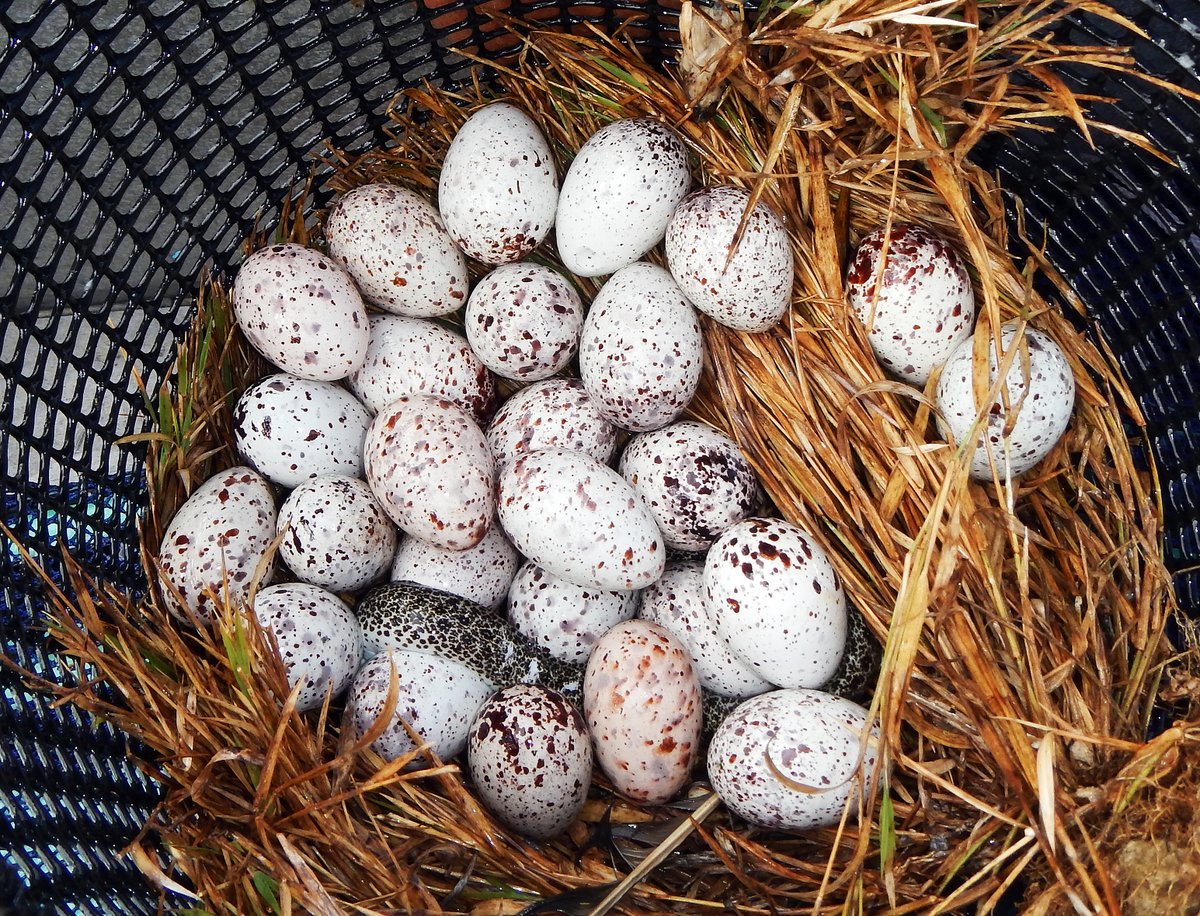
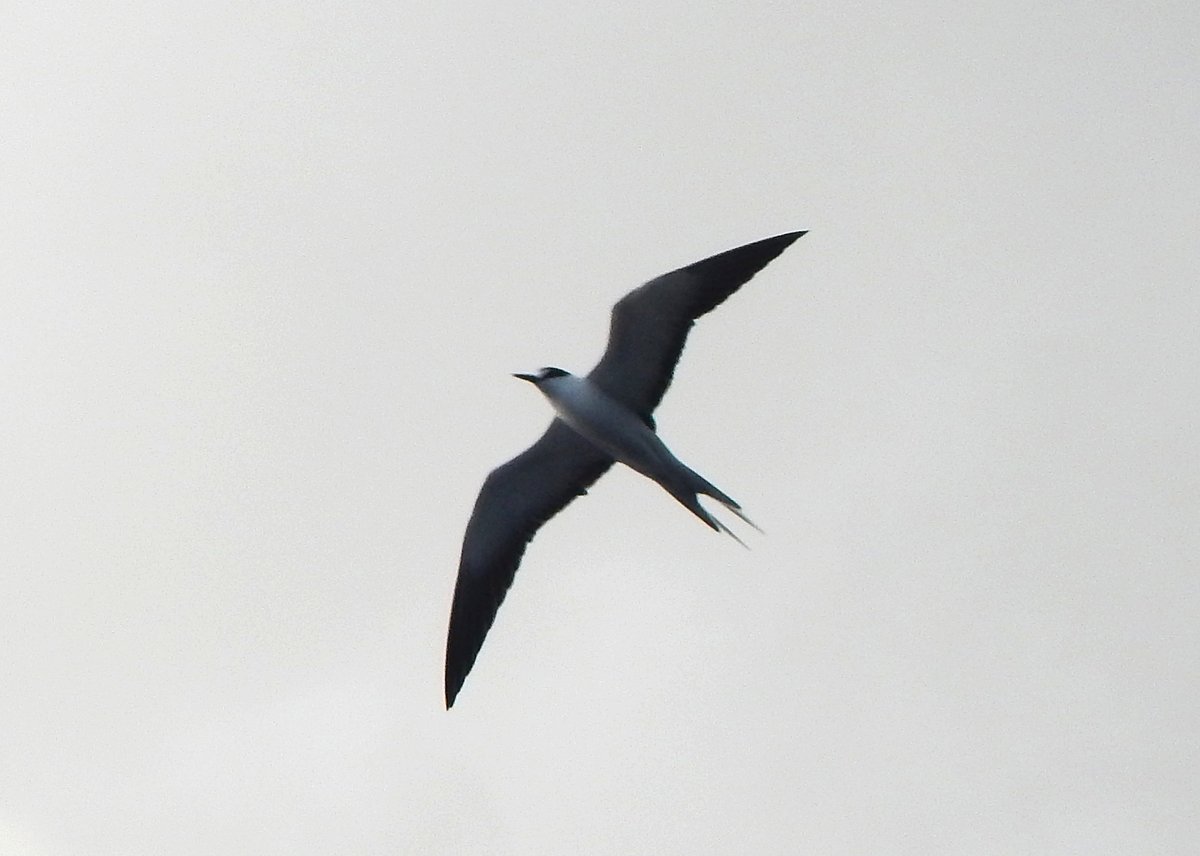
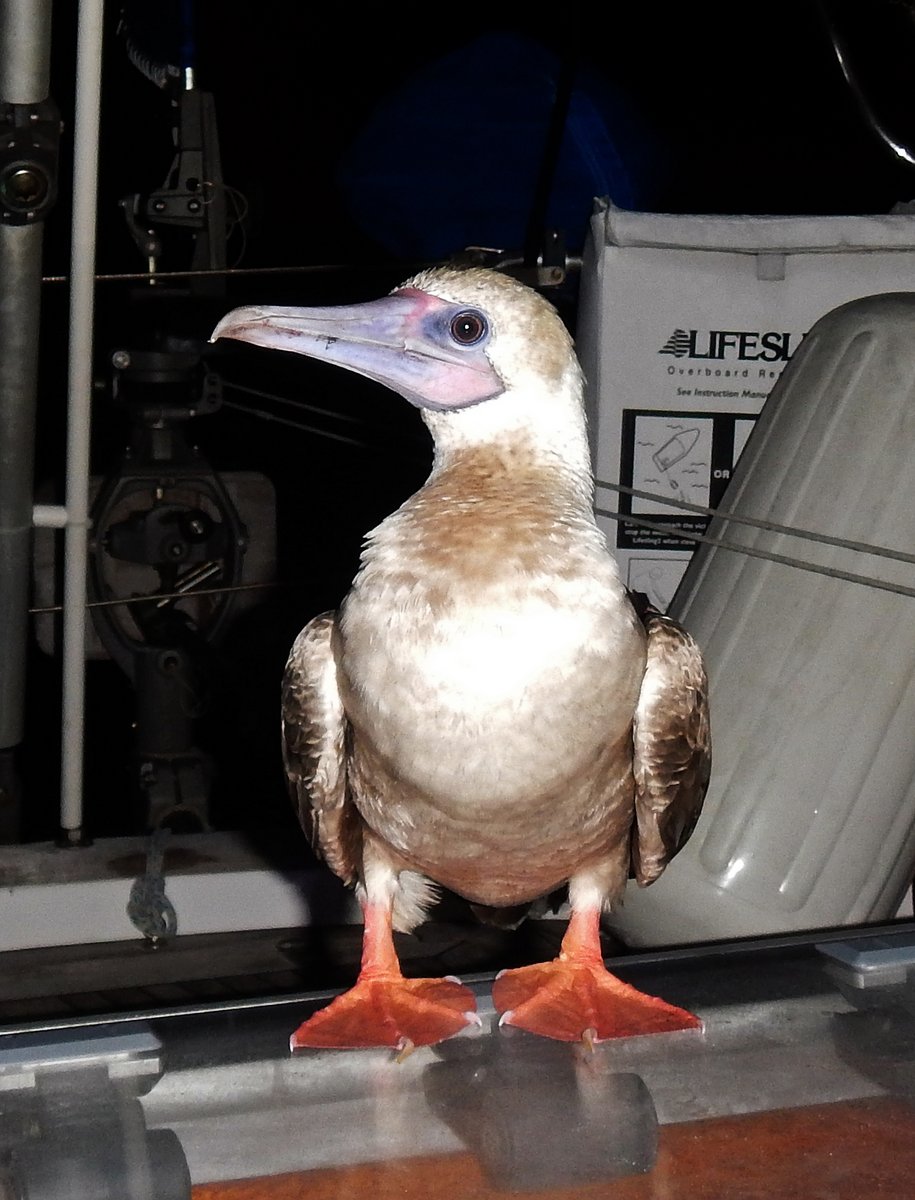
Rose called in at a motu on the way back and collected some Tern eggs. Sooty Terns lay one egg, but if the islanders remove the egg, the tern will lay another one on a few days’ time. So, by regularly harvesting the eggs the islanders are effectively farming these sea birds. White Terns also nest around the atoll, but they only lay one egg per year so the islanders leave those eggs. Rio also told me that Boobies are good to eat.

After going back to the boat and having a shower, Glenys and I went ashore and helped to open the Pipi oysters It’s a tedious task because hundreds of clams have to be opened to find each pearl, but most of the family sits around a table piled with clams and has a good old chat. We didn’t have much luck - Sam managed to get a couple of nice 5mm pearls, but the rest of us only got small ones. Glenys and I walked away with a tiny 1mm diameter pearl and a slightly larger 3mm diameter one as souvenirs. Interesting day and I hope to go again before we leave.
8 August 2014 Tetautua to Motu Atutahi, Penrhyn, Cook Islands
Today we went on holiday. Rio had arranged for the family to go and spend the night camping on Motu Atutahi at the south end of the atoll. Nothing much happened until midday, when two boat loads of people and kids came out to our three boats - nearly all twenty of the kids from the village were coming.
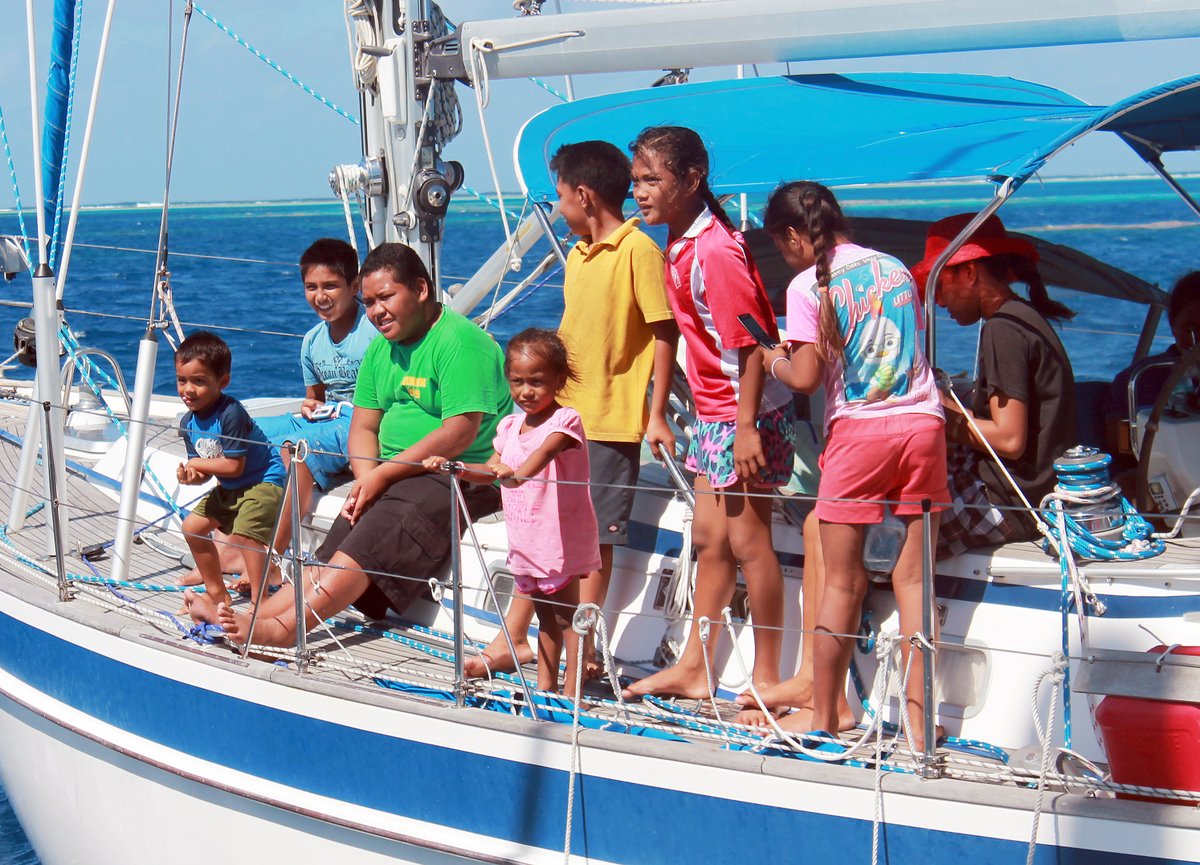
Our allocation was Joe Marsters (the minister’s brother), Matasa (the nursery school teacher), Rose and eight kids. They had a fabulous time. We had a nice 20 knot wind from the east putting us on a beam reach, so I unfurled the genoa and we set off the chase the two other yachts that were ½ mile ahead of us. Joe took control of the helm, while most of the kids sat on the foredeck enjoying the ride.
After twenty minutes, we weren’t making much gain on the other, so I pulled out some main and we soon caught them up. The kids thought that it was great to overtake the other boats, although they looked alarmed when we heeled over as I put the main up.
As we approached Motu Atutahi , Rio and Joe jumped into their aluminium boats (which we’d towed behind us) and went to scout out a route through the reefs. While we were circling around waiting, the kids had a great time taunting each other about who’d got the best yacht, singing school songs at each other and doing little Maori Haka dances. They were howling with laughter and even little Cina (Rio’s grandson, aged 3) was in on the act.
After 30 minutes, Rio returned and led us to an anchorage about ½ mile from the Motu, then explained that he wasn’t sure about the depth on the route through the reef. I hopped in his boat with our portable depth sounder and ten minutes later, we had a zigzag route through with at least 3 metres of water.
I led the procession of yachts and had to do some quick 90 degree turns to avoid shallow looking coral heads, but we all made it through safely and anchored in 12 metres of water close to Motu Atutahi at 09°04.77S 157°55.69W. The sea bed was sand with coral pinnacles rising to 3 or 4 metres under the water. We’d dropped our anchor in between two towering pinnacles, so I put a fender on the chain to try to lift it off the coral.
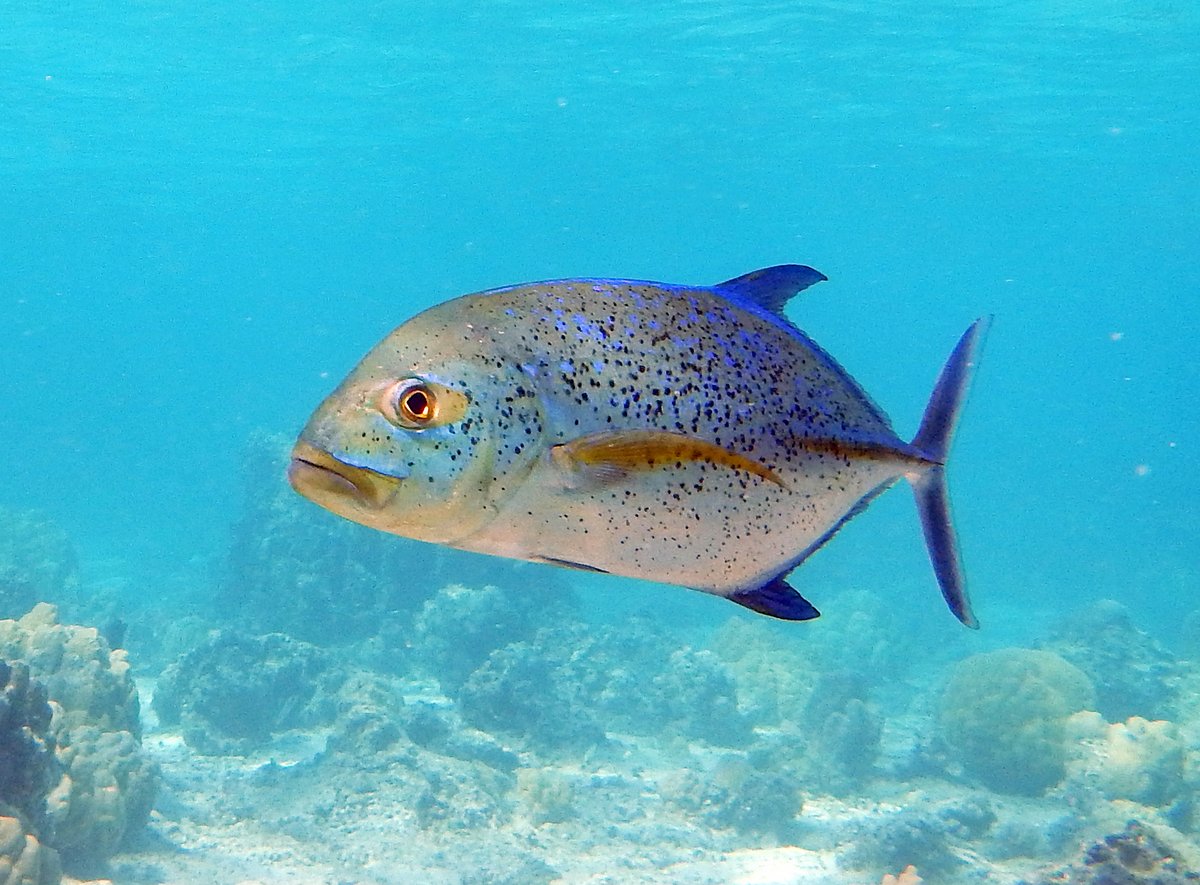
We chilled out for a couple of hours and then joined the villagers ashore just before sunset. They were very well organised with a huge tarpaulin to sleep under, some long tables for cooking and eating, with a dozen or so chairs scattered around. They were starting to prepare a meal using a combination of a gas burner and fire made from coconut husks. Rio had gone out and found three or four Coconut Crabs, which were being boiled, Tommy had gone out fishing and was gutting some Bluefin Trevally and the ladies were preparing the meal.

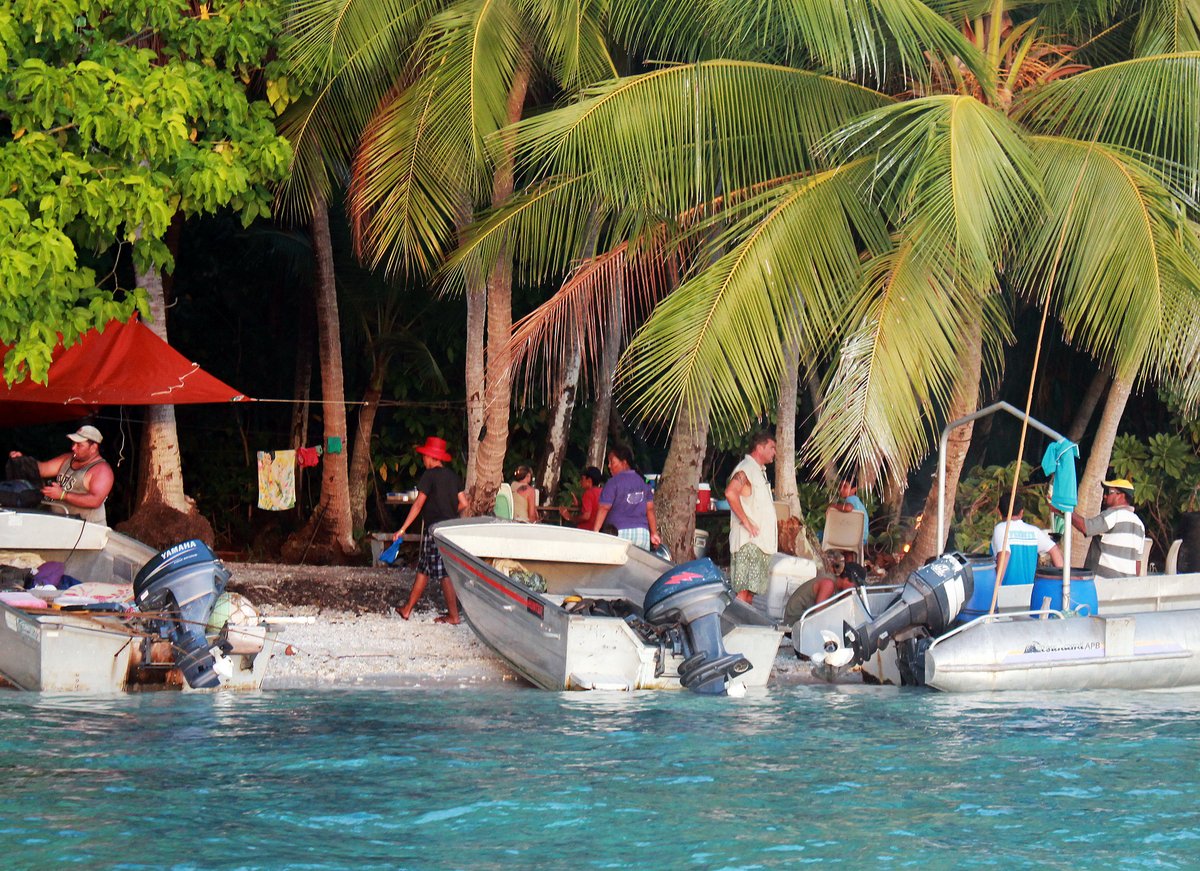
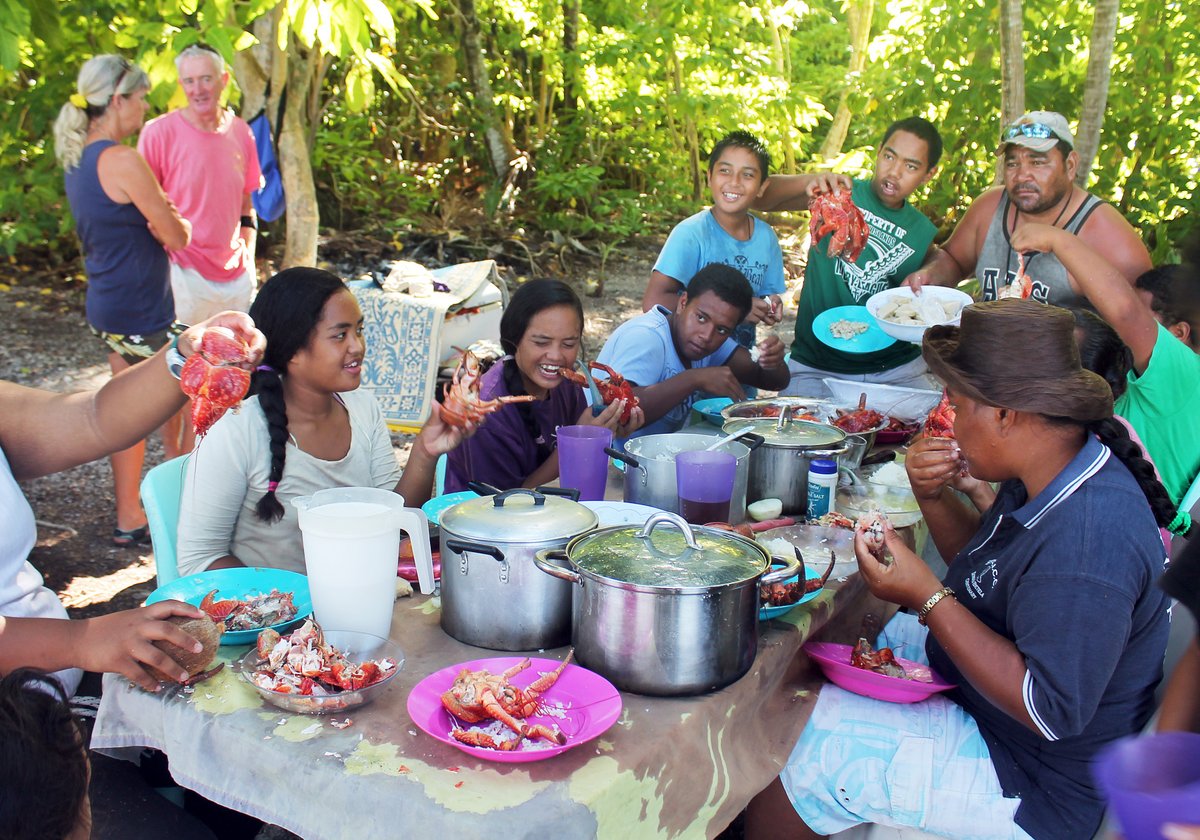
One of the things that attracts my attention is the casual way that the islanders use their environment - I saw Rose casually rip six leaves off a particular bush and then put them onto the table as a place mat for a hot pan of rice; coconut shells (including the white flesh) were being used as fuel for the cooking fire; Sam needed to lift a hot heavy pan from the fire, so used two pieces of coconut shell to insulate his hands from the hot handles; and, of course, what else would you use as a hammer to break open a coconut crab claw, but a coconut?
The meal was great - boiled Coconut Crab, Poached Trevally (fish), Poisson Cru (which Glenys made), Chili (from “Armagh”), a cabbage dish (from “The Beguine”); all accompanied by rice and Halaoa Uto (looks like mashed potatoes, but is made from grated coconut and flour). The villagers arrived here and caught or collected everything that they needed.
The islanders have a tradition that guests eat before everyone else. It’s not that we get served before everyone else, but we had to finish our meal before they would start to serve themselves - very unsettling.
After everyone had eaten, Rio and Sam took us into the thick undergrowth to hunt for Coconut Crabs. They are regarded as a treat and can only be found on the more remote atolls where there are no people or pigs because both love the taste of the sweet crabs. Rio was very good at finding them and we collected half a dozen, which will be eaten for breakfast.
Back at the camp site, the children were starting to go to bed, so after a short rest, we were taken out to the outside reef to go lobster hunting. This involved going in our dinghies out to the every shallow reef and then wading in water that was between ankle and thigh deep, looking for the elusive creatures. We were out there for over an hour and during that time I only spotted two and only managed to catch one. Rio caught three and told me later that the technique is to stand on them rather than trying to catch them by hand as I was doing.
9 August 2014 Motu Atutahi to Tetautua, Penrhyn, Cook Islands
No peace for the wicked - Rio came by at half past six and took Paul and me fishing. The locals troll for Trevally in a similar way that I do from Alba using squid lures and 3 mm diameter hand lines. We weren't very successful and only caught four fish in an hour.
We were naturally invited to camp for breakfast. The kids were already running around and had been up at four o'clock in the morning, out hunting for Coconut Crabs of which they had caught about twenty. So, we had lobster, Coconut Crab, boiled fish, rice, noodles and Halaoa Uto for breakfast. Again we were asked to eat first.
Joe then took us to small motu with thousands of nesting White-capped noddies and White Terns. He told us that they sometimes eat the Noddy eggs and that the “old people” like to eat the fledglings, which are boiled. As we were strolling around, Joe cracked open the shell of a Hermit Crab and showed us that they use the skin of the soft abdomen as bait to catch parrot fish. He went on to tell us that they also mix the oil from the abdomen with flower petals to make perfumed oil which is used for hair lotion and massages.
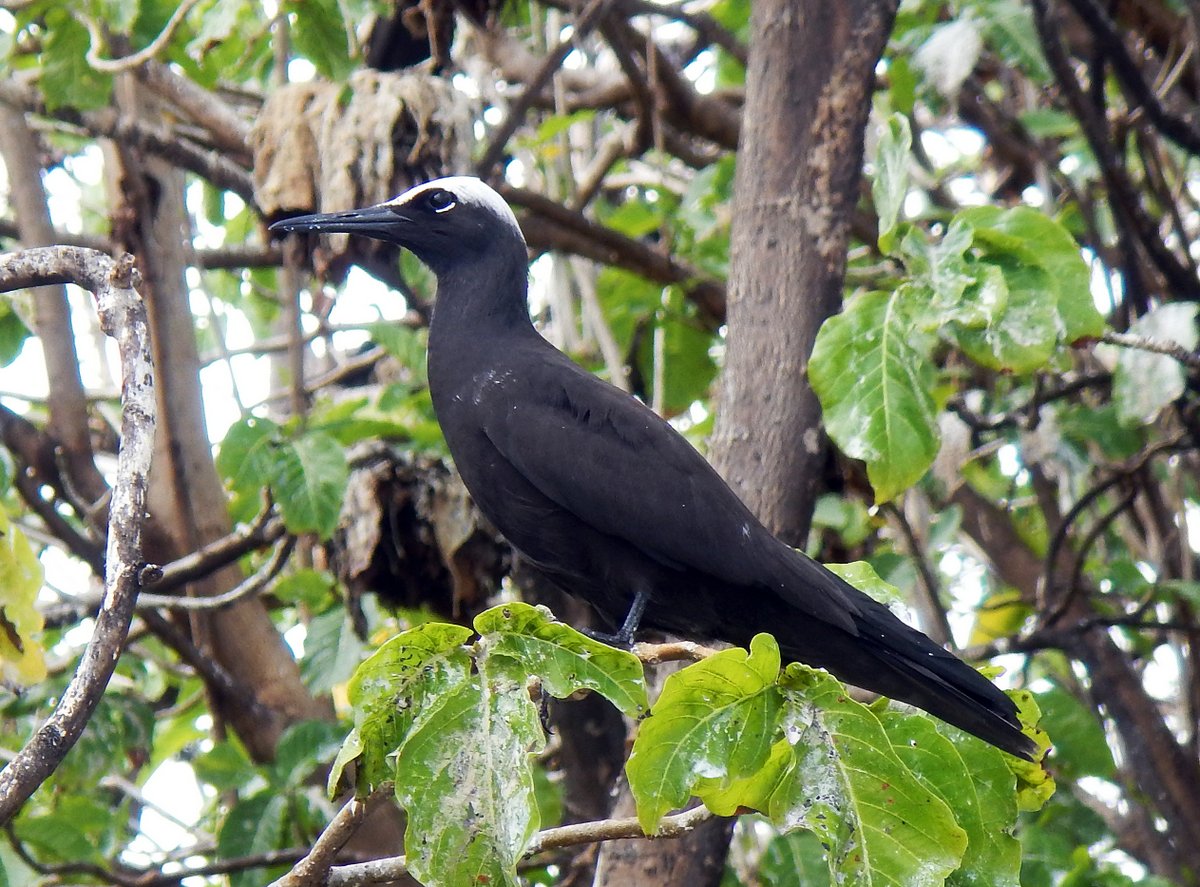
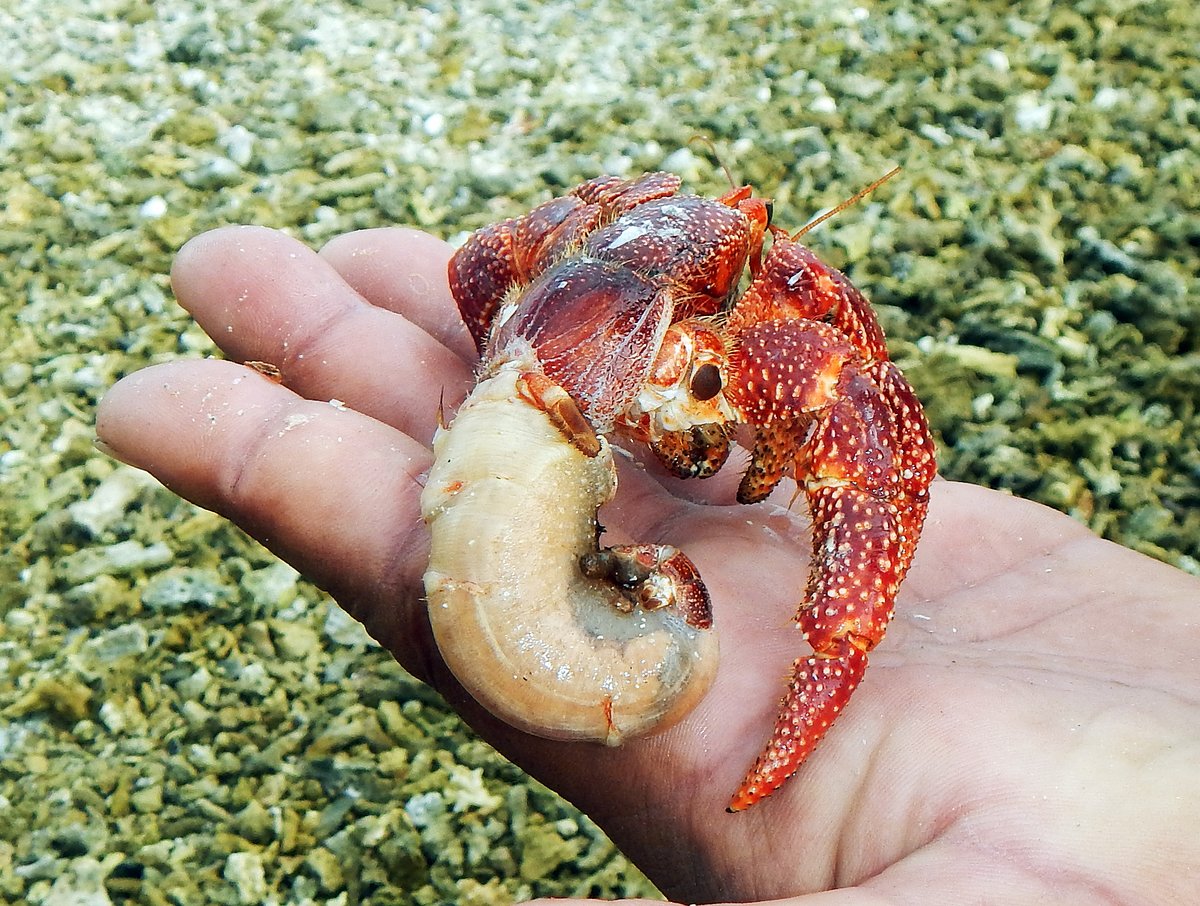
While the villagers packed up camp, Glenys and I went snorkelling for an hour and only just got tidied up before everyone arrived to be taken back to the village.
The track out of the anchorage was nail-biting again, but this time the minimum depth that we saw was 5 metres. We had a boisterous sail up the atoll because some squalls came through giving us 25 knot winds, so we had to reef down a couple of times, but that didn't stop the kids from going to sleep on the foredeck exhausted after not sleeping much last night.
Joe found our ukulele and immediately commandeered it and we were treated to twenty minutes of Sunday School songs sung by everyone. It’s hard to describe how lovely the close harmonies are.
We were the last to arrive in the anchorage because we were told to slow down so that the people on the other boats would do all the work of unloading. Glenys had made some currant buns, but our guests didn't want them until we arrived at the anchorage. They then had us circle around the other two boats while they taunted the other children in Maori with singing and dancing, showing off that they had two buns each and had had a much better time than the other kids - very funny.
Once we were anchored, our guests departed, shouting thank you as they motored away. By this time it was three o'clock and we hadn't had any lunch yet, so Glenys rustled up Fried Tern’s Egg, bacon and tomato. The eggs are slightly smaller than chicken’s eggs, had an orangey yolk and were a little more creamy, but not too dissimilar.
We then collapsed for what was left of the rest of the day.
10 August 2014 Tetautua, Penrhyn, Cook Islands
It was Sunday today, so we all went ashore at half past nine, dressed in our finery to go to church. We were told yesterday that the ladies had to wear a dress or skirt with their shoulders covered and a hat, while men had to wear a short with a collar and long trousers - it’s been a long time since I've worn long trousers.
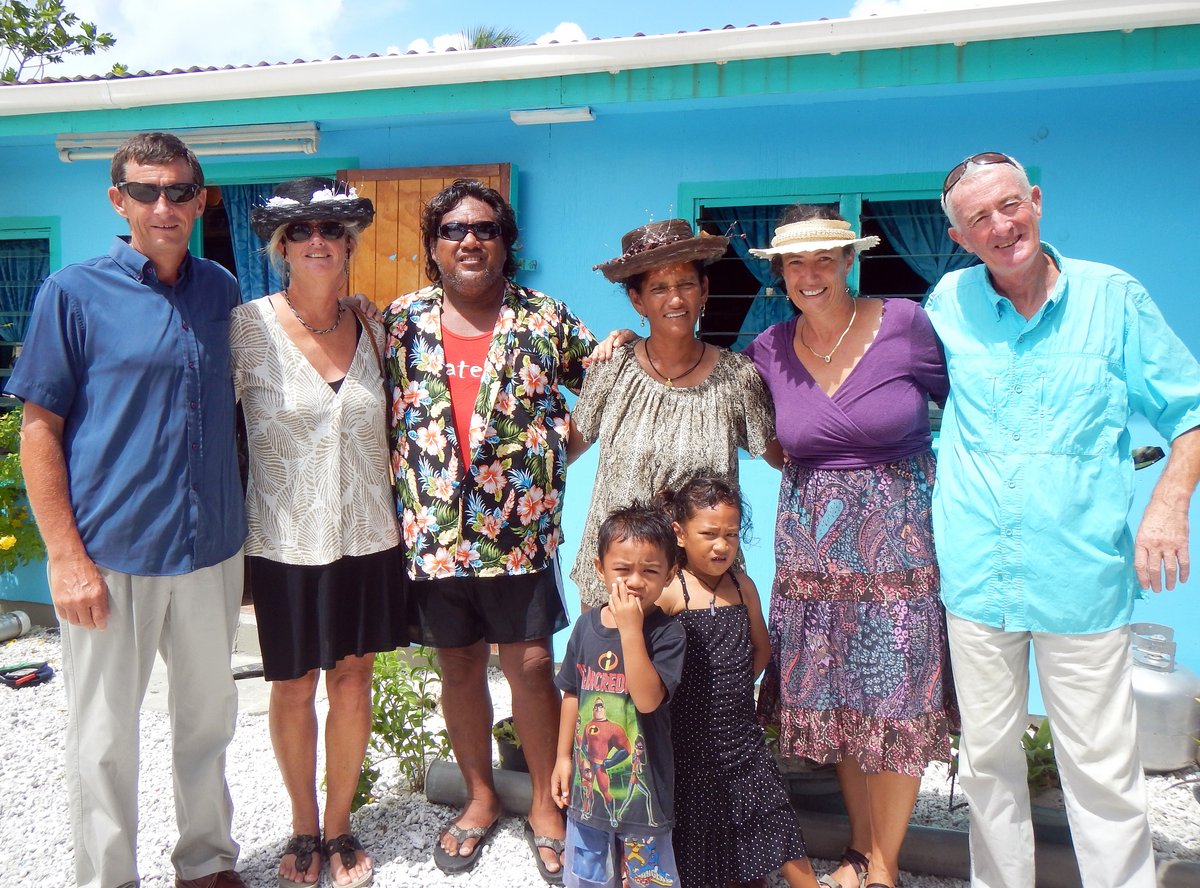
Rio, Kura and family were waiting for us and told us the rules for the Cook Island Christian Church - the church bell rings just before ten and when it stops no one is allowed to enter the church; no moving about in church; no photographs or electronic devices in church; no musical instruments in the church; if you need to go out during the service, then you can’t come back in; other than that we were to enjoy it.
Glenys and Katrina went to the Sunday School where the children were practising their hymns to sing in church. Tommy and some of the other adults were there to help tutor them in the words and harmonies. Meanwhile, Paul, David and I went to the main church where about eight adults were practising their songs and hymns. We were shown to pews at the back of the centre isle with a panoramic view of the whole church. There’s no altar in the church, just a pulpit raised above the congregation.
The bell tolled and the people arrived. Children at the very front and the adults scattered around obviously everyone has their own place on the pews. The whole village attends church, three times on Sunday and on Wednesday and Friday mornings. I counted about 30 adults and 20 children in the church which ties up with Rio’s estimate of 50 people living in the village.
The Reverend Marsters gave the service which was mostly in Maori, but he gave the sermon in English as well. The singing is stunning. No musical instruments and every song and hymn is sung with close harmonies. The Sunday school choir (all of the children) led a couple of songs, while the adult choir lead the rest. It was a wonderful and uplifting service.
The minister invited the three boats to his house after the service for light refreshments, which turned out to be a huge table laden with chicken, parrot fish, mullet, corned beef hash, rice and noodles. We stayed for an hour and had a good chat with the Reverend Marsters, his daughter Cindy and his daughter-in-law Hakono. Interestingly, the services in the Cooks Island Christian Church are done to a rigid format and the same reading and sermons are delivered in every church at the same time.
We wandered back to Rio’s house and visited for half an hour before heading back to the boat. It is forbidden to use outboards on a Sunday, except to go to church; no work is to be done and even swimming is not allowed, so we chilled-out for the rest of the afternoon. David and Katrina invited over to “Laragh” for sundowners - it’s allowed for us to use our outboards to visit other boats on Sunday.
11 August 2014 Tetautau, Penrhyn, Cook Islands
Glenys went ashore to make use of Kura’s washing machine, while I stayed on board and did a few jobs. I couldn't start the generator again and, after some investigation, found that this time the starter battery was flat. I put a jump lead across from the domestic batteries and it started fine. I'm not quite sure what happened, but I suspect the engine starter switch, which a couple of days ago wouldn't turn off the engine. The switch is on its last legs and needs replacing, so I guess that we might have left it in a powered-on position.
In the afternoon, I went ashore and looked at the truck. My bodge job on the lights the other day hadn't worked because I didn't realise that there were three separate fused circuits - my quick fix had not switched off the side lights and they had to disconnect the battery again. After a bit of agonising and staring at the eleven wired coming out of the stalk switch, I decided it was safer to extend my bodge.

The original switch was only turning of the left hand head light, so I installed another switch for the right hand head light and removed the fuse for the back and front side lights - they can use the fog lights instead. It all seemed to work, so Rio was happy.
While chatting to Rio this afternoon, he told me that there's been a steady reduction in the numbers of people living on the islands. In the 1960's there were over 1000 people living in Penrhyn; in 2012 there were 300 people in Omoka and 50 in Tetautua; now, only two years later, there are only 150 people in Omoka and 50 in Tetautua. It's a frightening drop in the population.
Rio says that it's the same throughout the Cook Islands. The young people want to go to and get well paid jobs in Rarotonga or New Zealand & Australia. The Cook Islands are administered by New Zealand, so it's fairly easy for people to get work permits. I wonder how long the villages will survive and feel saddened by the potential loss of this relaxed way of life.
In the late afternoon, we sat and helped the family open some Pipi oysters. I love sitting there and listening to them chat away in Maori. It’s a very addictive opening the oysters, hoping to find a big one. I'm much, much slower than they are, so they find more than I do - in fact I didn't find any today. As we neared the end of one huge batch, the dozen remaining oysters were on my side of the table. Mike scooped a handful and the first one he opened was a nice big round one - I was gutted that I’d missed it…
Kura baked bread this afternoon. She uses round corned beef tins as moulds for small rolls and she cooks the bread in an outside oven made from an oil drum, fuelled by the ever present coconut husks. She generously gave three rolls to each boat - she's unstoppable.
12 August 2014 Tetautau, Penrhyn, Cook Islands
Today, most of the village was involved in a community project to thatch a sun shelter for the school. Six of the men jumped into Tommy’s boat and sped off to a nearby motu and an hour later came back with a huge pile of coconut fronds. By the time that we got ashore, the villagers were sitting around in Rio’s yard weaving the coconut fronds into a kind of mat. We asked Kura to show us how to do it, found a space and started weaving.
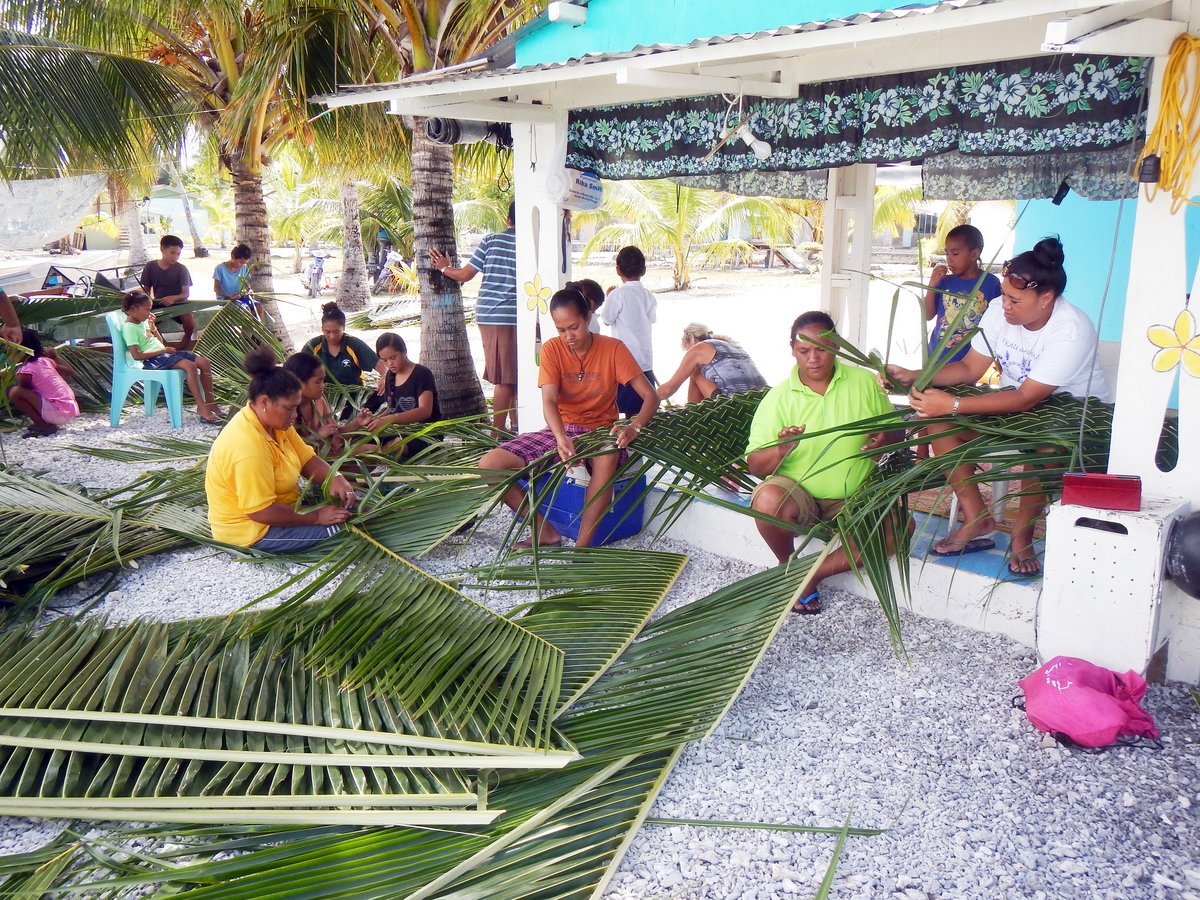
The coconut leaves have a thick stem with 30-40, two inch wide leaves on either side. The first thing that was done was to split the thick stem producing two halves. The leaves on each of these were woven to produce a mat that was four leaves wide. The two halves were then placed on top of each other and the tops and bottoms woven together to produce a double thickness mats, which I guess will be more water proof.
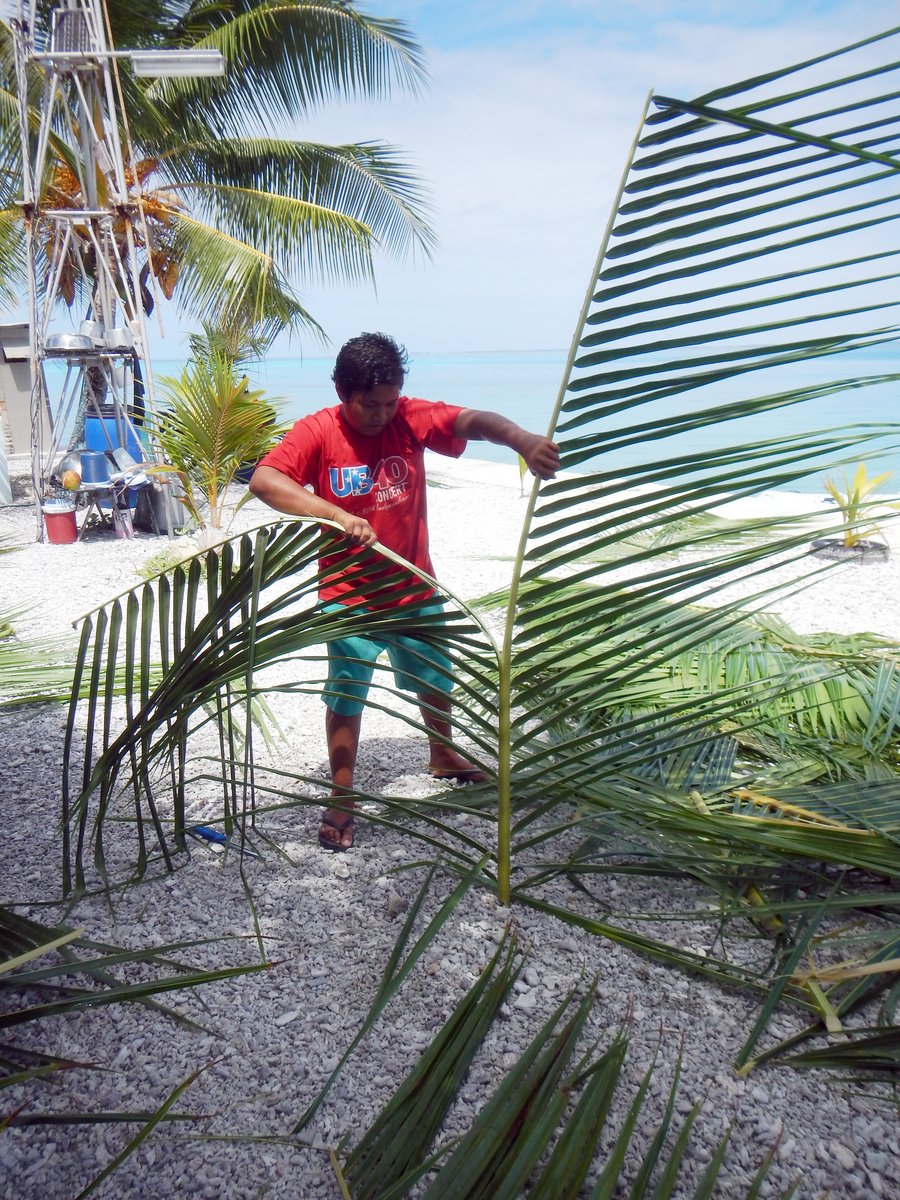
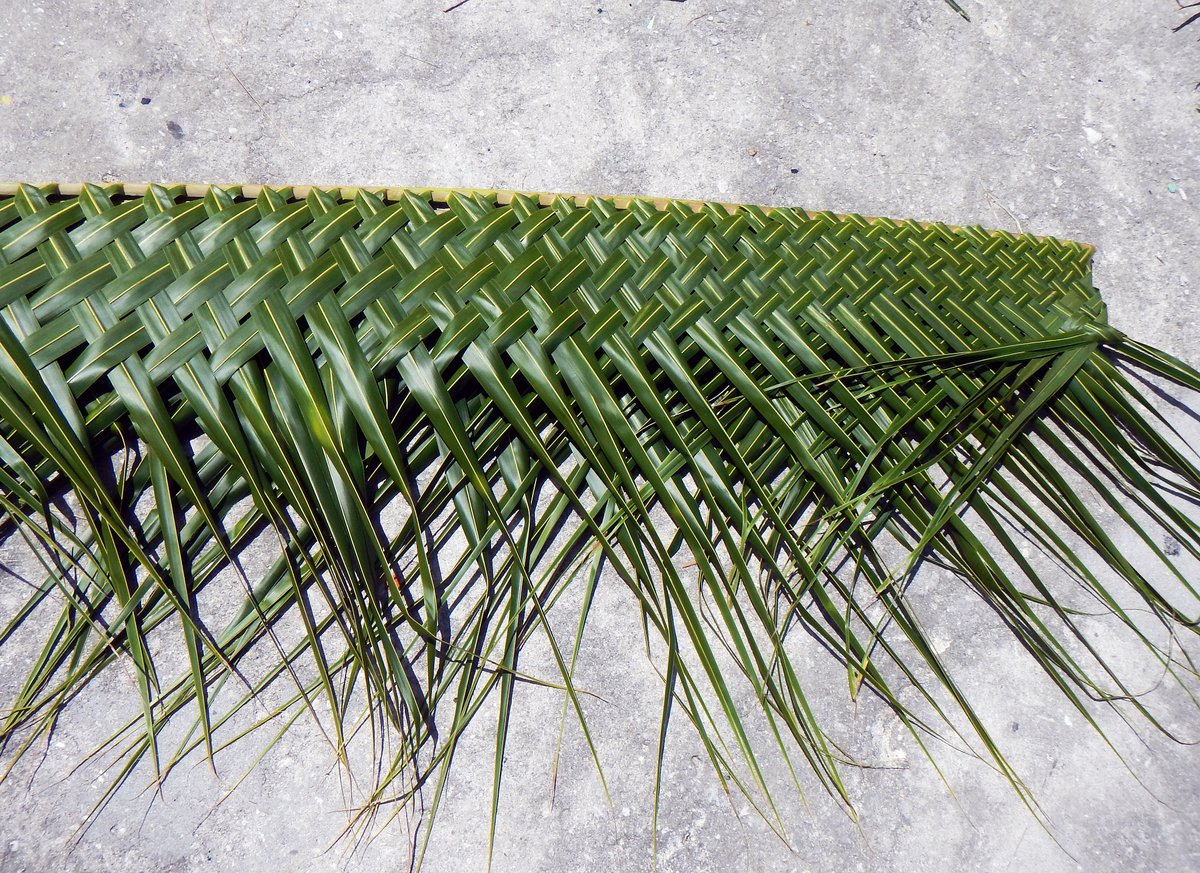
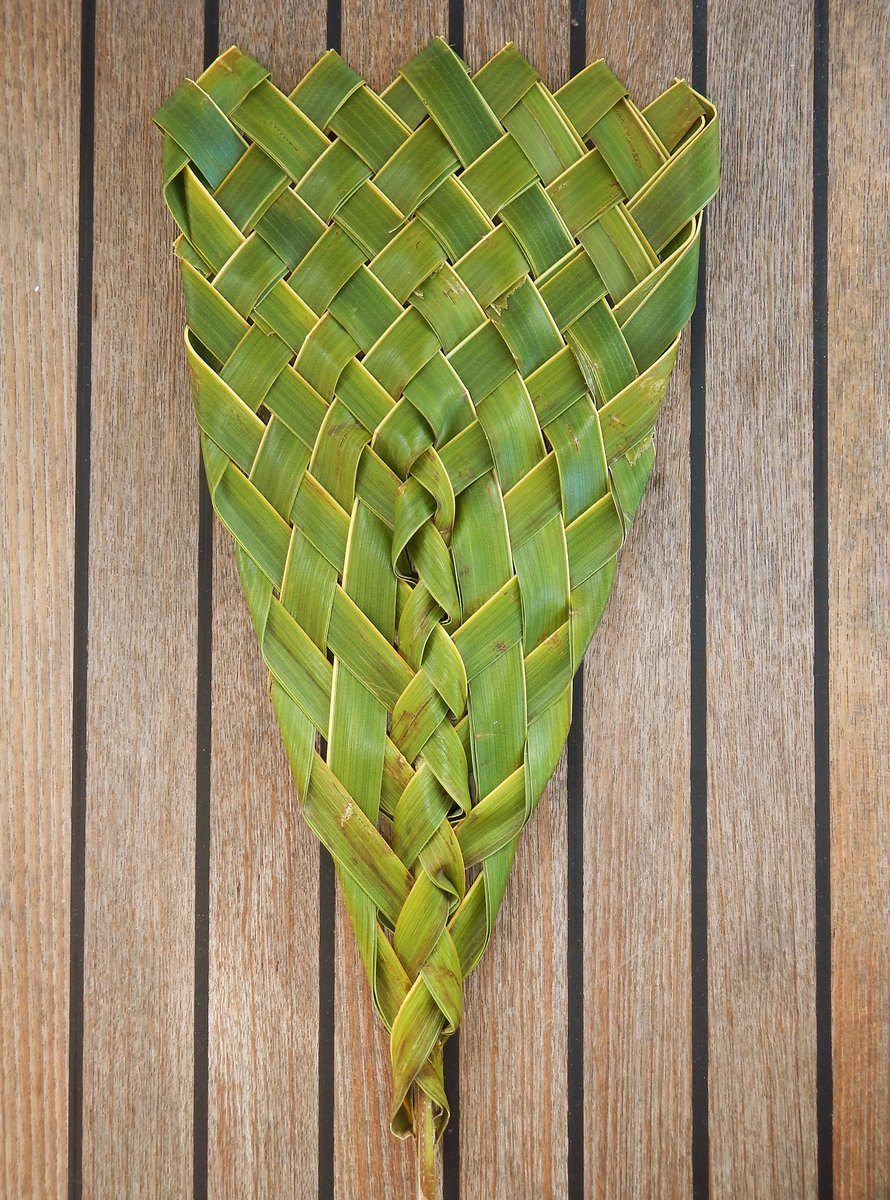
It was a happy event, with music playing and everyone singing or chatting in Maori. After half an hour, the village kids arrived having been let out of school early. They were all pressed-ganged into work, so the pile of mats soon grew and by lunch time the job was done. Tui Williams (the school teacher) was making a fan from the thinner tips of a palm frond and showed me how to do it, so Glenys now has a traditional Cook Island Fan.
Unfortunately, around lunch time, the villagers learned of the death of the young baby of a villager living in New Zealand. The village has declared the rest of the day and tomorrow as a period of reflection and no further work will be done during that time. It isn't as strict as a Sunday, so we are able to move around, but we’re not supposed to do any noisy jobs.
In the afternoon, we went snorkelling on the small reef to the west of the village. The large reef itself is a pile of rubble and not very interesting, but we found lots of fish around the smaller rocky outcrops in deeper water. There were some huge Napoleon Wrasses hanging around, but they were very cautious and kept at least 25 metres away. We saw three different species of shark. Dozens of sightings of Blacktip Reef Sharks; a few sightings of Whitetip Reef Sharks; and one sighting of the slightly more dangerous Grey Reef Shark, at which point we decided to call it a day.


In the evening, we were invited with “Laragh” to “The Beguine” and got very merry (Paul has a very loose elbow with the wine.)
13 August 2014 Tetautau, Penrhyn, Cook Islands
Together with “Laragh”, we hitched a lift with Mr T and Warren over to Omaka. It was a bouncy, wet ride even down-wind in the aluminium tender.
“Laragh” are planning to leave tomorrow and so we went to visit Ru (customs and immigration) to get their clearance papers t Samoa. While I was in Ru’s house, I met Michael, a marine biologist from Anglesey in the UK, who has been here for a couple of years doing research into Green Turtles. I had a long chat with him and he filled in a few more details about the Atoll.

It appears that the intense harvesting of Pipi oysters has only been happening over the last year, since an Iranian buyer turned up and spent hundreds of thousands of dollars buying pearls. The locals were selling a few pearls to an agent in Rarotonga, but they got a much better price from the Iranian - Rose tells me that she got NZ$2,000 for one large, perfect pearl. The Iranian is expected back in October, so everyone has gone into a Pipi frenzy.
The village council is having discussions about creating zones in the atoll where Pipi gathering with not allowed, in an attempt to try to control the Pipi population. He doesn't think that there’s a danger in overfishing for a couple of years yet, but it’s best to put a system in place sooner rather than later. Thousands of Pipi Oysters are gathered every day and the shore line around the villages is now littered with Pipi shells. Michael says that this in itself is already changing the environment of the shallow water in the lagoon.
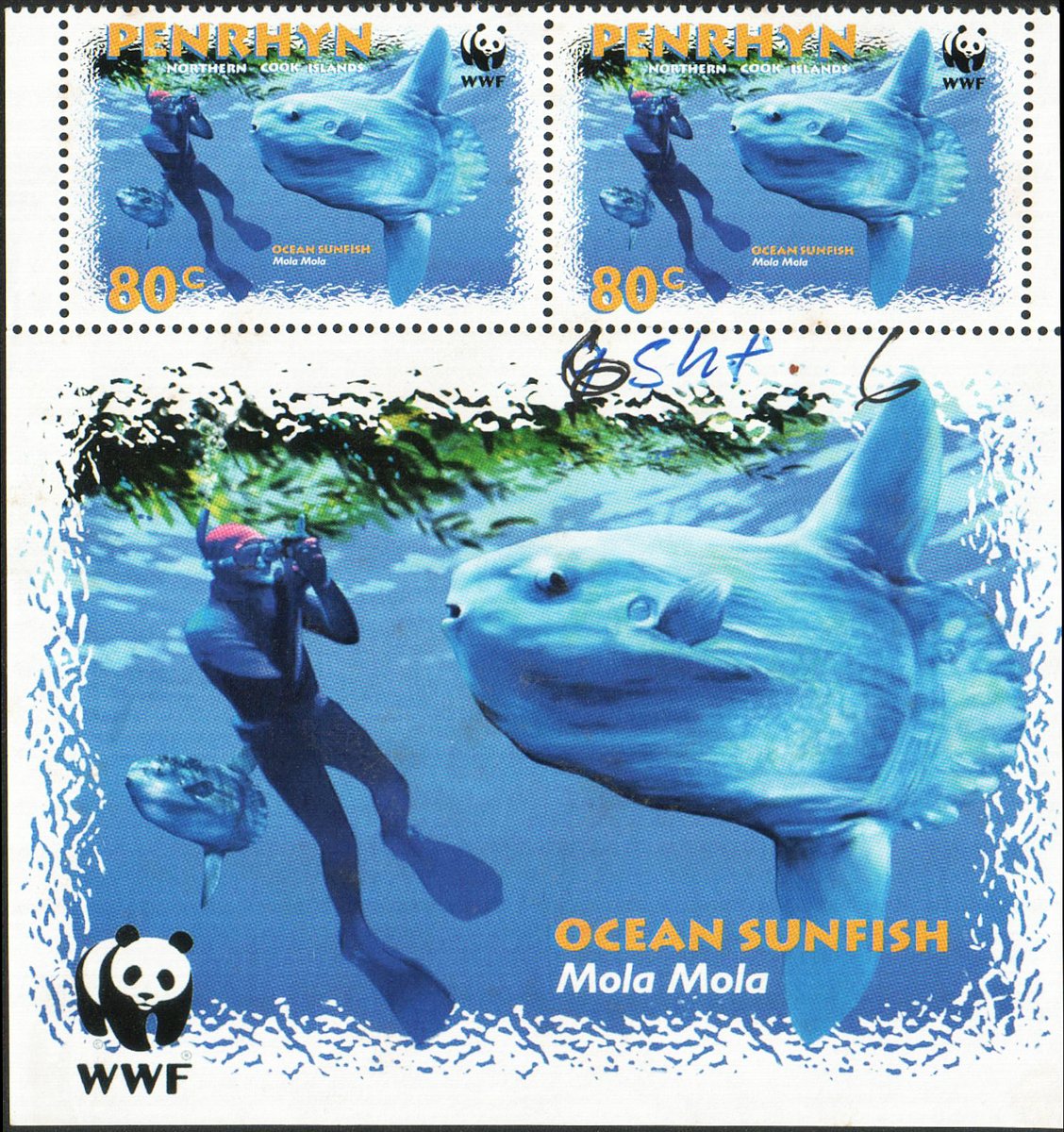
David rang Warwick, who runs the telecom office and owns the biggest store in the island. He came and picked us up in a trailer attached to his quad bike - a very bumpy, five mile ride on the dirt track full of pot holes. He dropped us off at the Telecom office, which is also the post office, where I was able to buy a stamp for a postcard to my mum. Each of the Cook Islands has its own design of stamps, which are prized by stamp collectors, so I bought a couple of pretty ones. The post card will leave Penrhyn on the next aeroplane, which should be sometime next month - it should be there before Christmas.
Warwick took us to the airfield, which was built by the Americans in the Second World War. It’s starting to breakup, but charter flights still occasionally come in. We were told that there are two regular flights a week to Manahiki which is 120 miles to the west, but only special charter flights organised by the government come here. It costs NZ$1,800 for a one way ticket to Rarotonga! If there is a medical emergency, then flights get diverted from Manahiki and the villager ladies get flown out to Rarotonga when they are 5 months pregnant, to have the baby in hospital, paid by the Health Department.
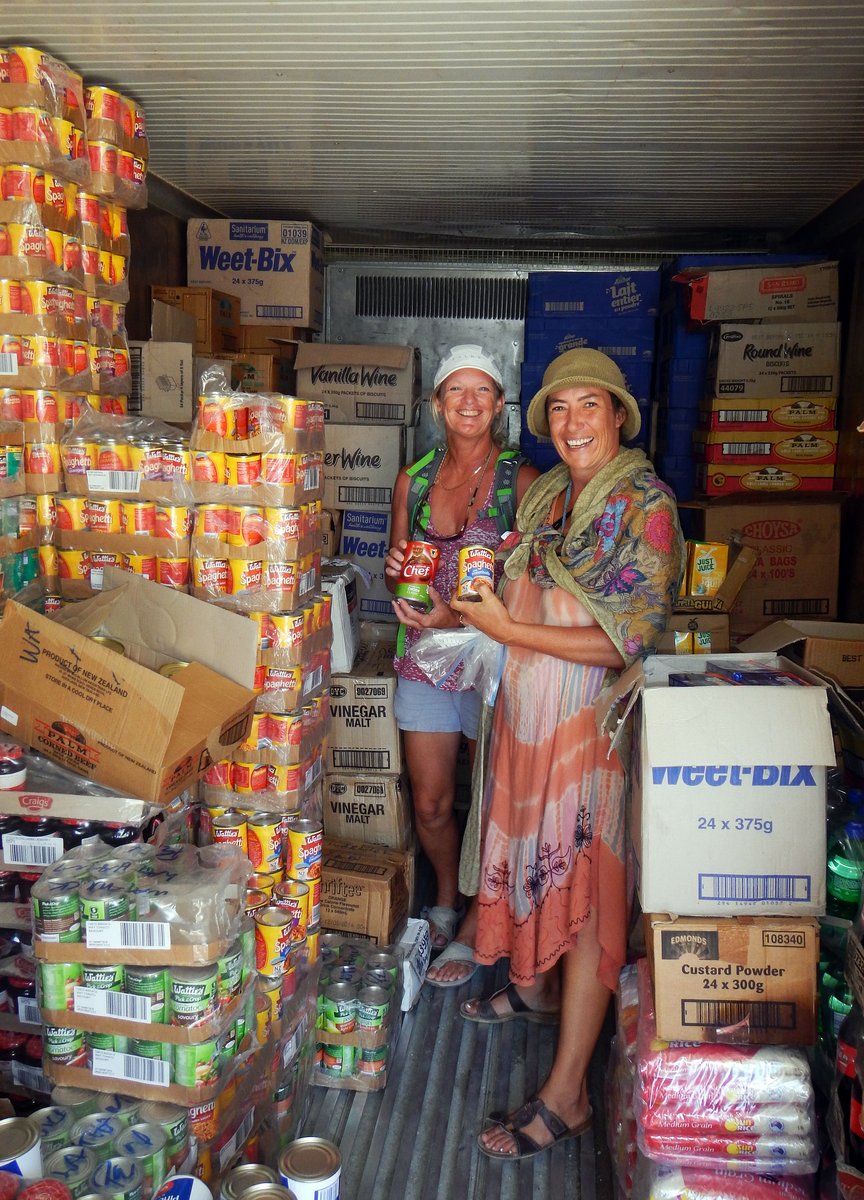
The shop is actually a shipping container jam packed with canned goods and Warwick has a freezer that has some basic meat like minced beef and sausages. Glenys and Katrina bought a few essentials. Corned beef is a very popular dish here, so Glenys bought a can to try it out. The Reverend Marsters and Hakono from Tetautua were at the shop and gave us a lift in a pick-up truck back to the village.
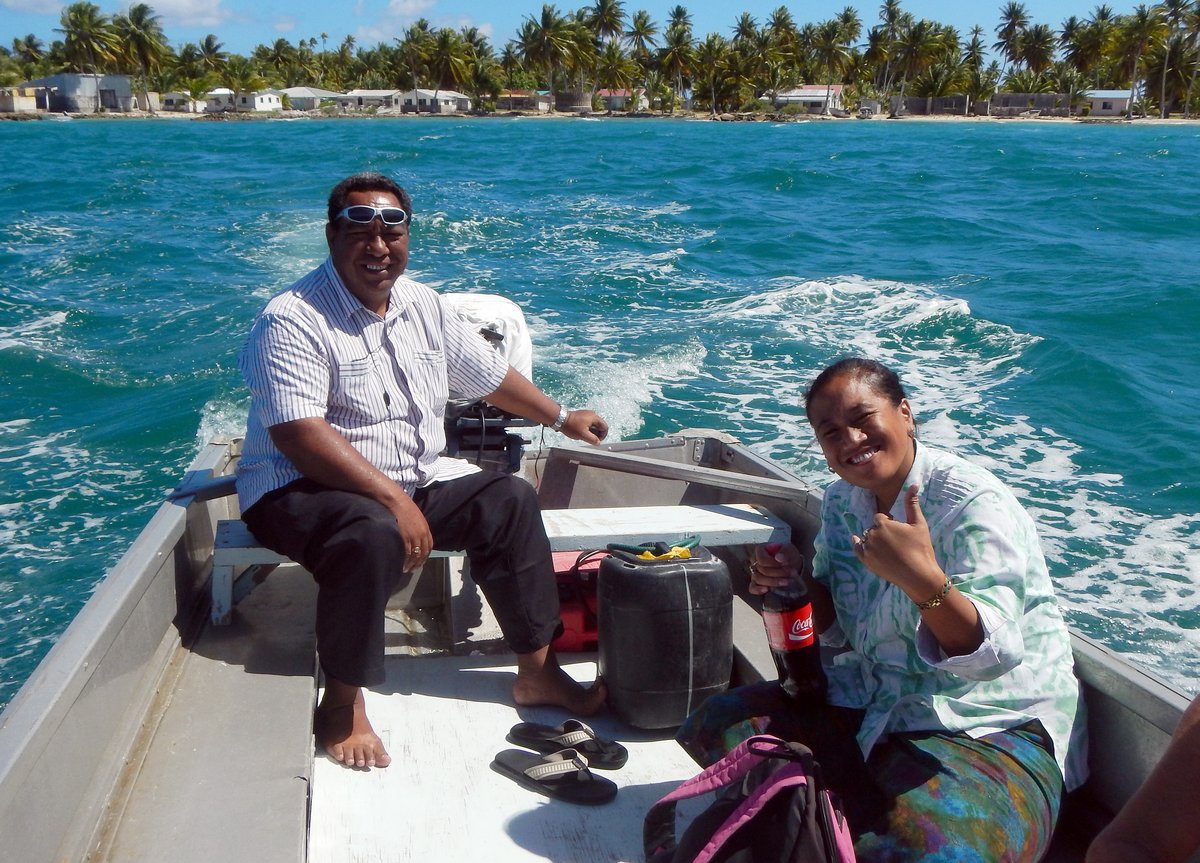
We had a couple of hours to spare because Mr T was still at the bank carrying out some elaborate process, so we wandered around the village and did a bit of visiting. William Marsters was sitting on the same chair as when we met him last week, so we stopped for a short chat. The Penrhyn villagers normally speak Maori, so their grasp of English is limited. They understand what we are saying some of the time, but if the conversation turns to abstract concepts then they simply smile and agreed with us.
By two o'clock, Mr T was still running errands, so Glenys and I hitched a lift back with Reverend Marsters and Hakono. The wind was blowing hard, so he took us around the north end of the atoll to get protection in the lee of the motus. On the way, we stopped off at a set of buildings that used to be a big pearl farm - another casualty of the mysterious virus that wiped out all of the pearls in the atoll.
The ride back to the anchorage was fabulous, skimming along in flat water along the line of the motus, under a brilliant blue sky. Back at the boat, we invited Hakono and the minister aboard for a cup of tea and spent a pleasant hour chatting about our respective ways of life.
“Laragh” are leaving tomorrow, so Rio and Kura invited everyone over for dinner. David and Katrina took their melodian and flute, while Glenys and I took our guitar and ukulele - although I never got to touch my guitar at all during the evening. The islanders have all grown up with playing the ukulele and guitar and know literally hundreds of songs, so we just sat back and enjoyed the evening.