
14 August 2014 Tetautau, Penrhyn, Cook Islands
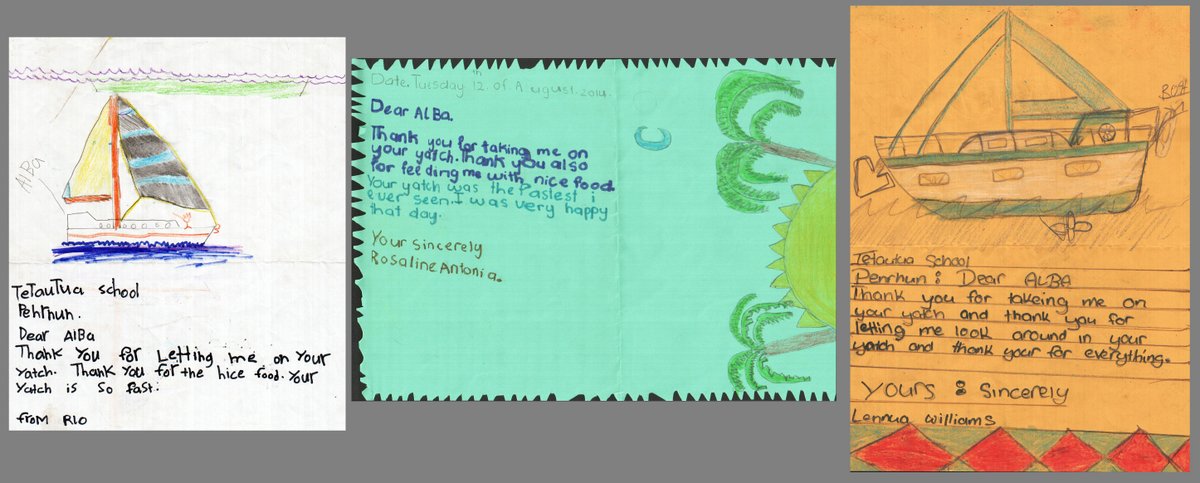
We went in early to help with today’s community project, which was to build the roof for the sun shelter at the school. Before we could do anything, Rio told us that the school children were coming over to give us a little thank you for taking them on the trip to Motu Atutahi. “Laragh” had started to pull their dinghy on deck getting ready to leave and had to put it back in the water when they were summonsed ashore.

The whole school turned up in their school uniforms and formally presented each of us with a Thank-you Letter, which was very moving. The school teacher Tui Williams tells me that the kids have been talking about nothing else all week. With the little ceremony over, “Laragh” sailed off towards the horizon. I was put to work trying to fix a microwave that doesn't work, while Glenys went off to visit Mama P taking a cushion that she’d made for her.
Mama P is 73 years old and had a stomach problem a few days ago. Glenys had given her some sympathy, some pears and a couple of cups of yogurt, so Mama P is convinced that Glenys has cured her and now calls her "the doctor from the boat".
After a short walk to the south end of the motu, we went to the school and found nearly the whole village at work. The men were building the roof frame while the women were weaving more coconut roof mats. The roof frame was constructed on the floor and later lifted into place. The men were nailing the coconut mats into place on the roof trusses (I learned that the Maori word for hammer is “Hamula”). Glenys and I helped to re-weaved mats that had come loose during transport (or had been done badly by someone.)
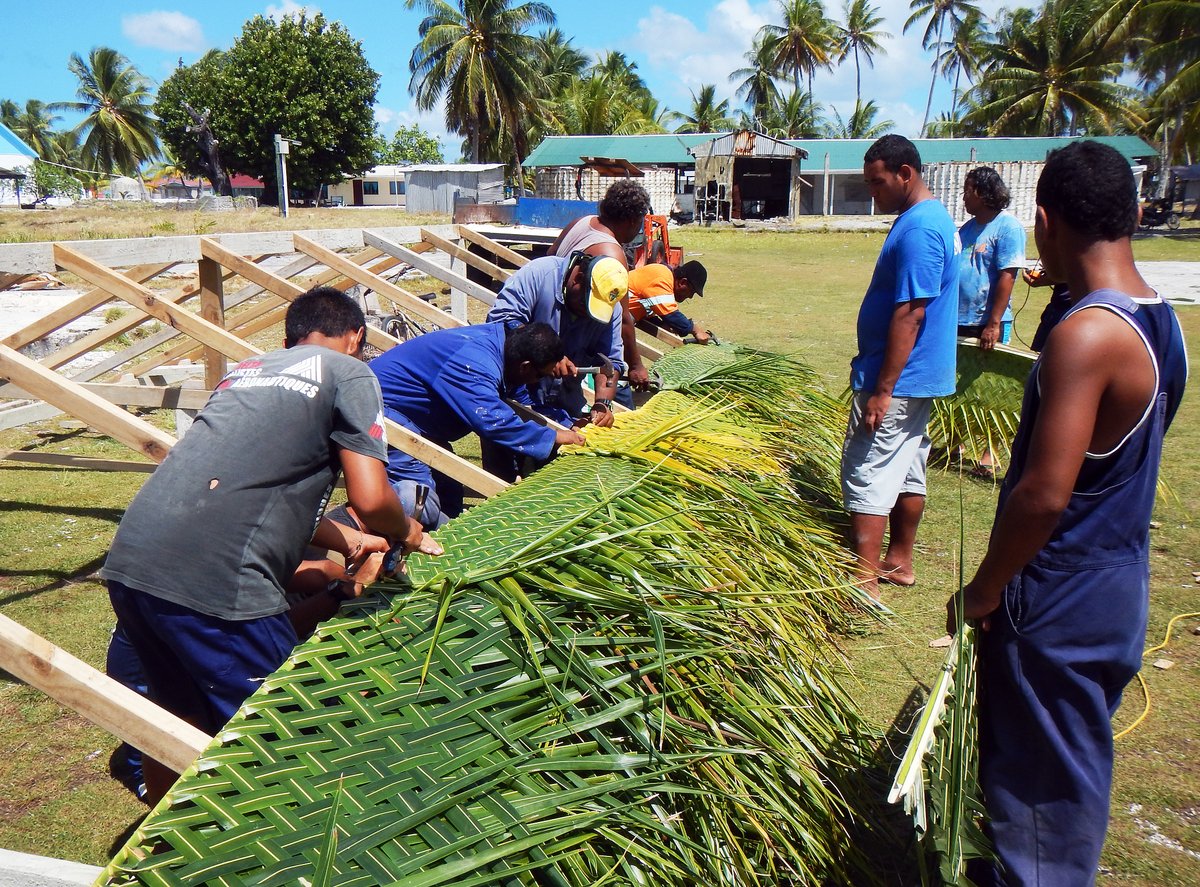
Once the roof was covered, Rio get everyone to lift the heavy roof and they walked it over and dropped it into place on six uprights that had been concreted in place - it fit perfectly. A bit more hammering of nails and the job was done. “Many Hands Make Light Work” is an apt saying.
The ladies of the village had prepared a huge lunch with chicken, parrot fish, trevally, corned beef in noodles, sausage curry and rice. To our embarrassment, as guests, Glenys and I had to go and get served first. The locals always eat with their fingers, so there were no utensils apart from serving spoons. It didn't bother us too much, but eating sausage curry and rice with just fingers is a bit of a challenge.
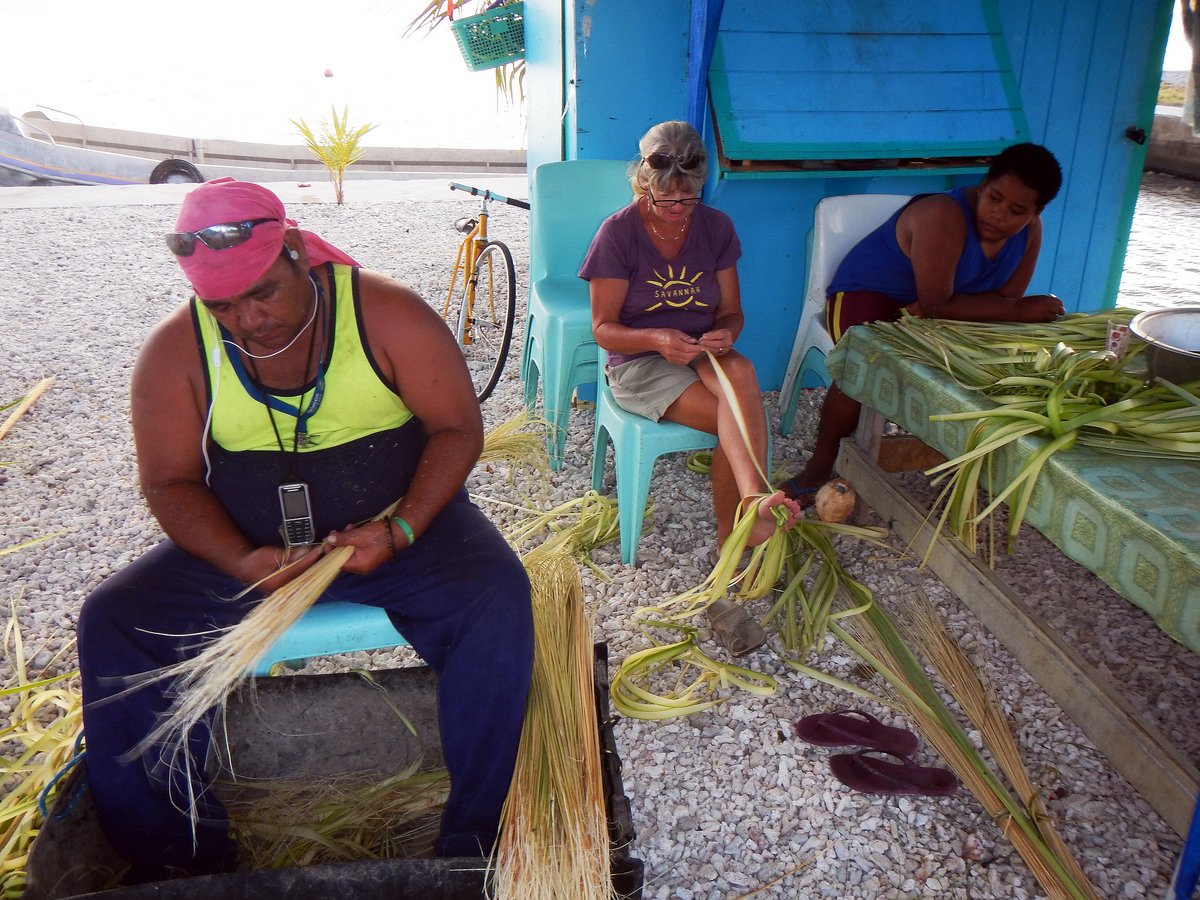
In the late afternoon, we went ashore to chill out with Rio’s extended family. Penryhn is famous for hats and fans woven from Rito, which is a dried coconut leaf. Selling for $200 to $300, these hats used to be a major cash generator for the island ladies, but it's now less popular as it’s a lot of work to prepare the Rito and do the intricate weaving. Kura still makes the hats, so Glenys joined Rose and Kura to help prepare the Rito.

They gather the young, straight leaves from the centre of a coconut tree, then using a needle, they slice open the leaf and then pull off a strip of tough almost transparent skin from the surface of the leaf. This is then boiled for ten minutes in a big pot and, while still wet, a knife is used to scrape off any residual vegetable matter from the skin. The strips of Rito are then left to dry. During the drying process the skin rolls itself up into a kind of string. The Rito is then dyed or left natural to be woven into hats.
It’s a labour intensive operation and the stripping of the skin is an acquired skill. Rose and Kura do it effortlessly with a quick pull, but both Glenys and I failed abysmally.
I asked if someone could show me how to select and open coconuts. They were very surprised that I don’t know much about coconuts. Kura asked me “Are there plenty of Coconuts on your island?” After some confusion on my part, I realised that she was referring to England and she seemed to be surprised when I told her that coconuts don’t grow there.
Rose took me off on her motorbike to a few coconut groves and we collected some coconuts that I could practise on. Coconuts have a thick fibrous shell about two inches thick protecting the coconut nut. In the UK, we only ever see the hard coconut nut, which typically has firm white flesh and coconut milk.
There are three phases to the coconut - the green, brown and sprouting.
The green coconut is young and contains a soft nut with a jelly like flesh and sweet coconut water inside. It's pulled from the coconut tree using a long pole with a hook on the end (or you have to climb the tree to pull them off.) The selection of the coconut is done by colour and size, but is typically green to light brown and the size of a football. It's mostly harvested for the refreshing drink inside and the jelly like flesh is then eaten as a snack.
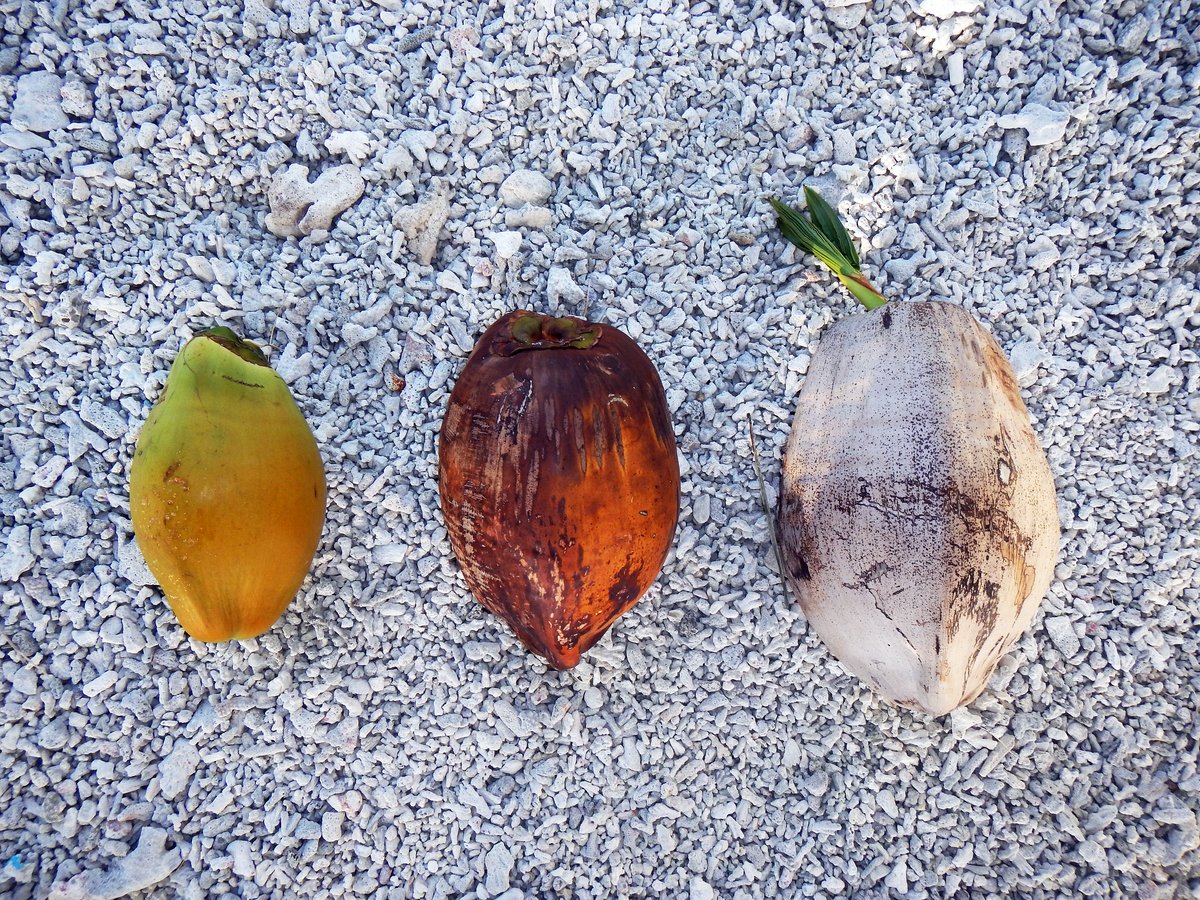
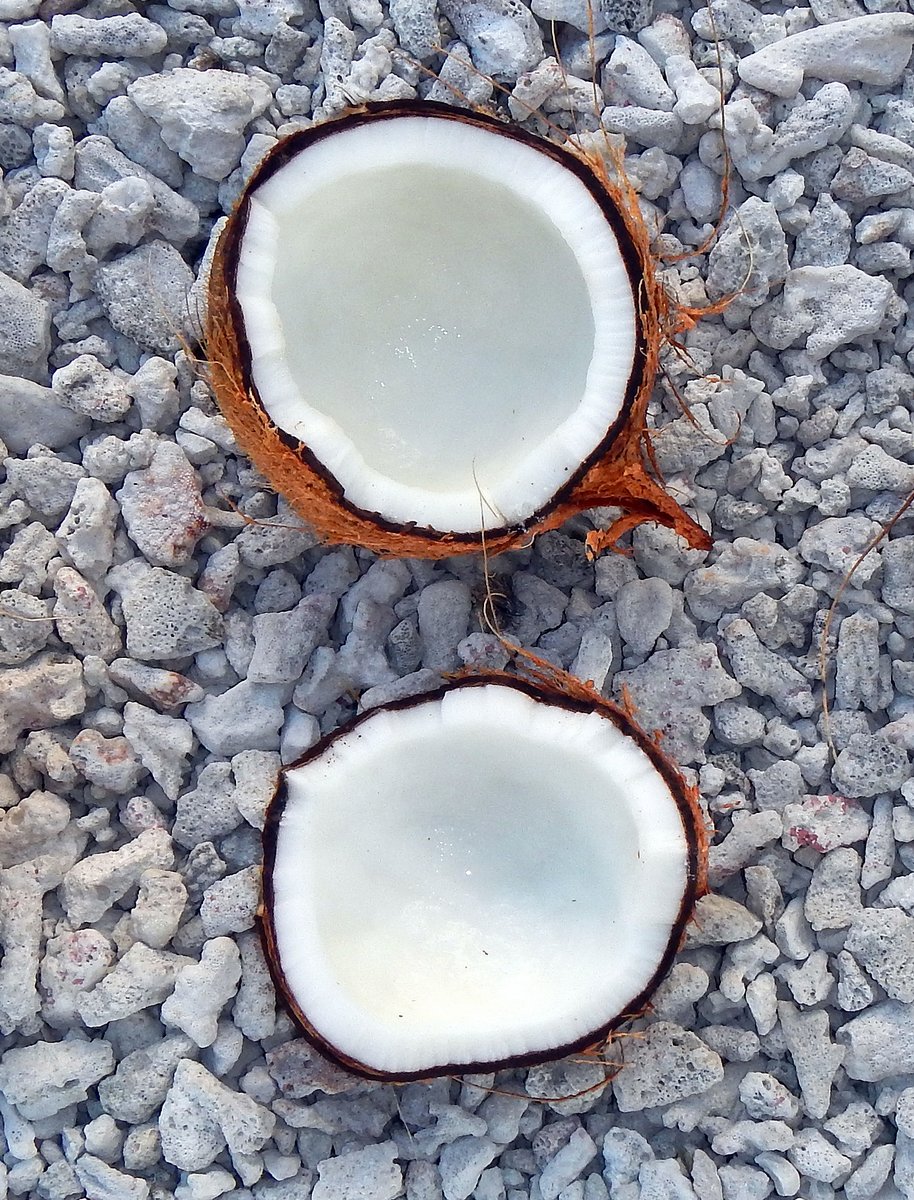
The brown coconut is more mature and contains a hard nut with hard white flesh and a creamier coconut milk. It's collected from the ground under the coconut tree. The selection is done by colour and size and also by the texture of the husk - some older coconuts look dry. By shaking the coconut, you can tell by the weight and sound if it has some coconut milk inside. It harvested for its milk and the firm white flesh inside.
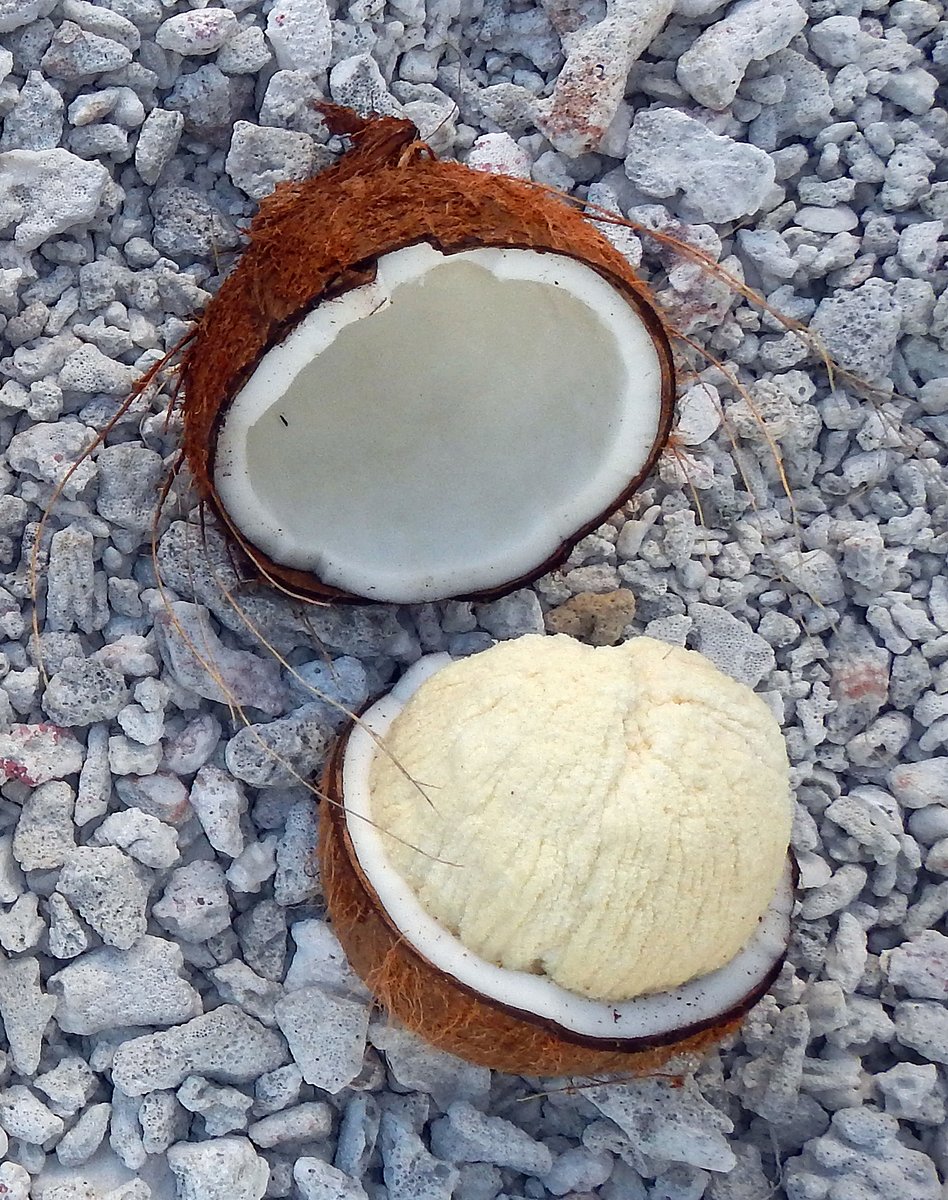
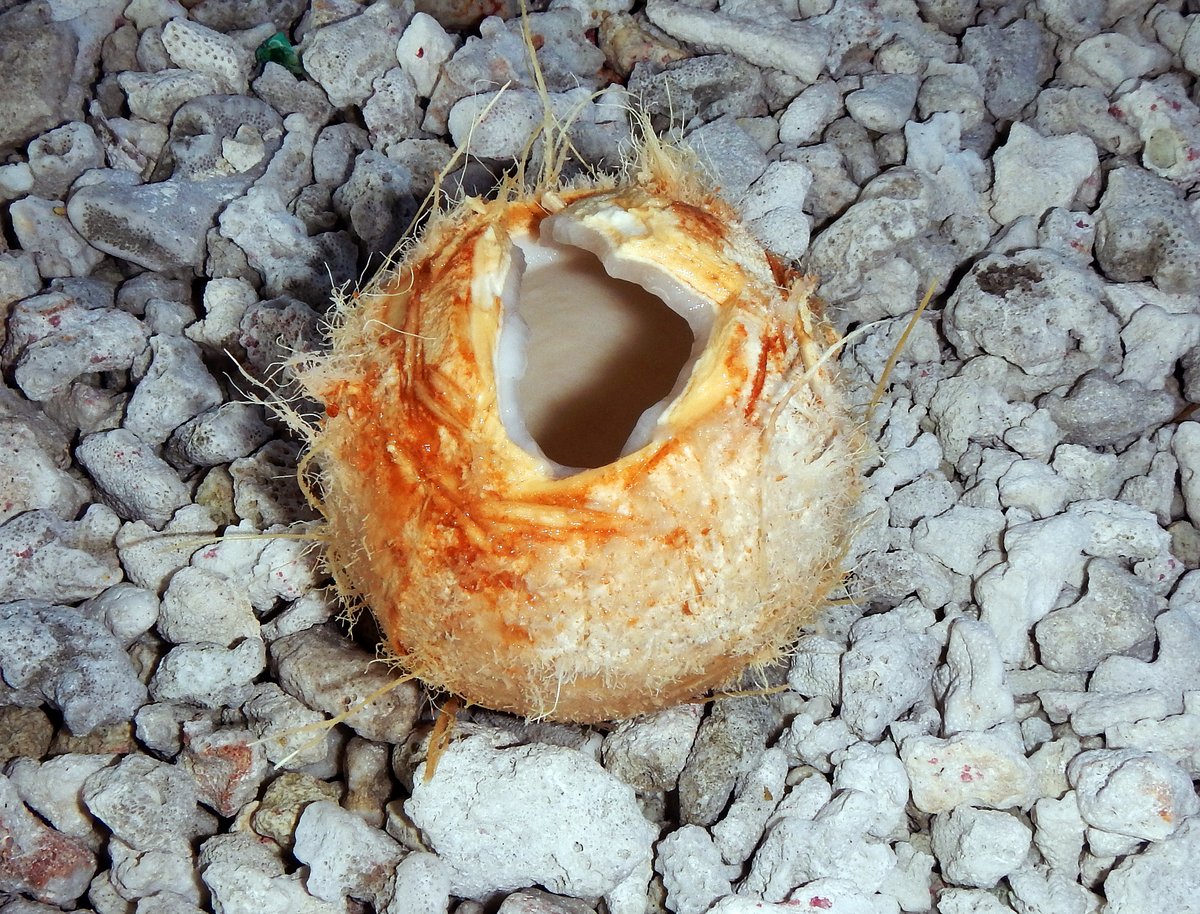
The Sprouting Coconut is very mature and has been on the ground long enough to sprout leaves. By this stage, the milk inside the nut has been turned into a firm fibrous consistence like a stiff candy floss. The selection is done by finding a coconut with a healthy looking green shoot about a foot long. It's harvested for the fibrous inside (which is eaten as a snack or a dessert) and the firm white flesh.
The islanders normally use a husking stake to open the fibrous outer husk. This is a four foot long, 30mm diameter iron bar with sharpened points on either end. One end is driven into the ground until it's firmly held. The coconut is then pushed onto the spike to tear it open. The technique is to pierce it at the top to open up a 2 inch wide segment and then by holding it firmly in place, rip the segment off the husk. Further segments are removed around the coconut to reveal the nut.
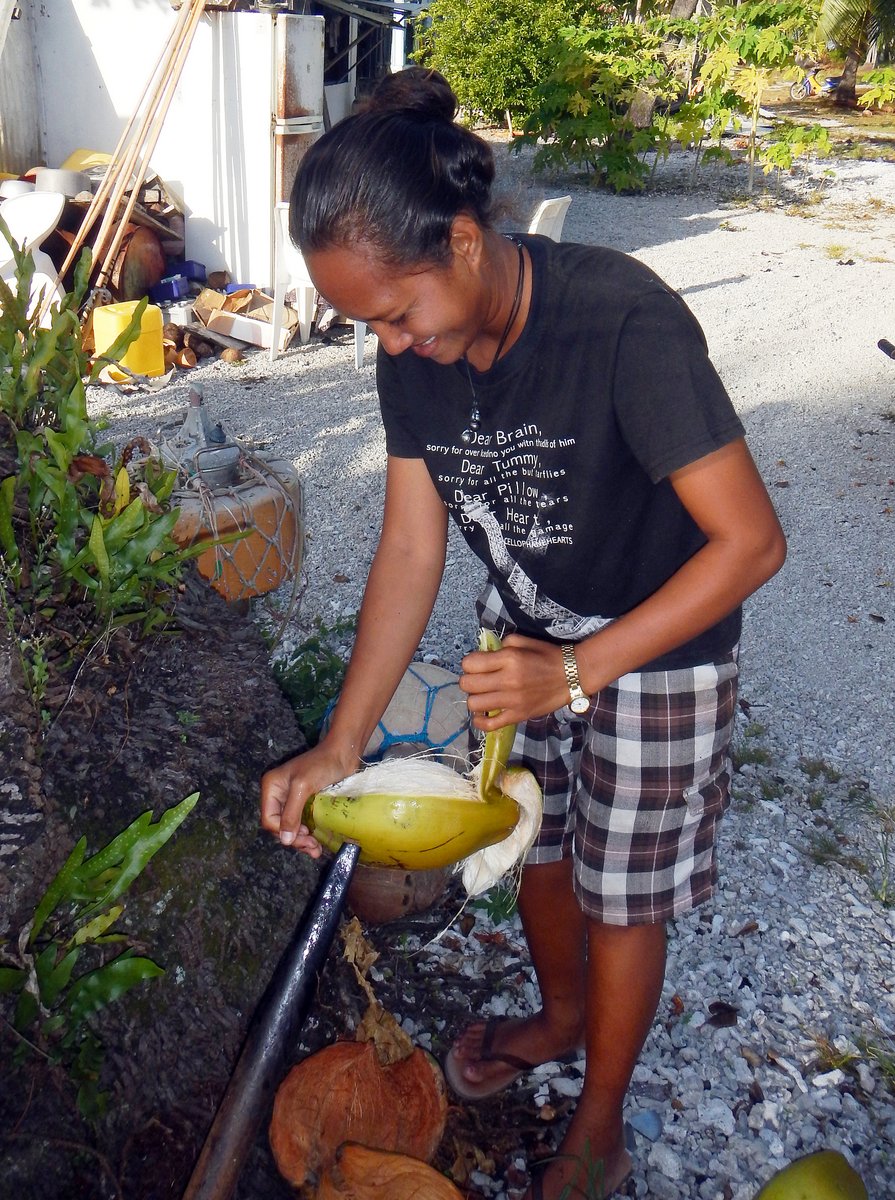
I don’t have a husking stake, so got Tommy and Mike to show me how to open the three different types of coconut with my small machete. The green coconut is opened by chopping slices off the top of the coconut. The easiest technique seemed to be to hold the coconut with the top on the ground and then to chop downwards. Small slices of the fibrous husk are then torn off to leave the nut.
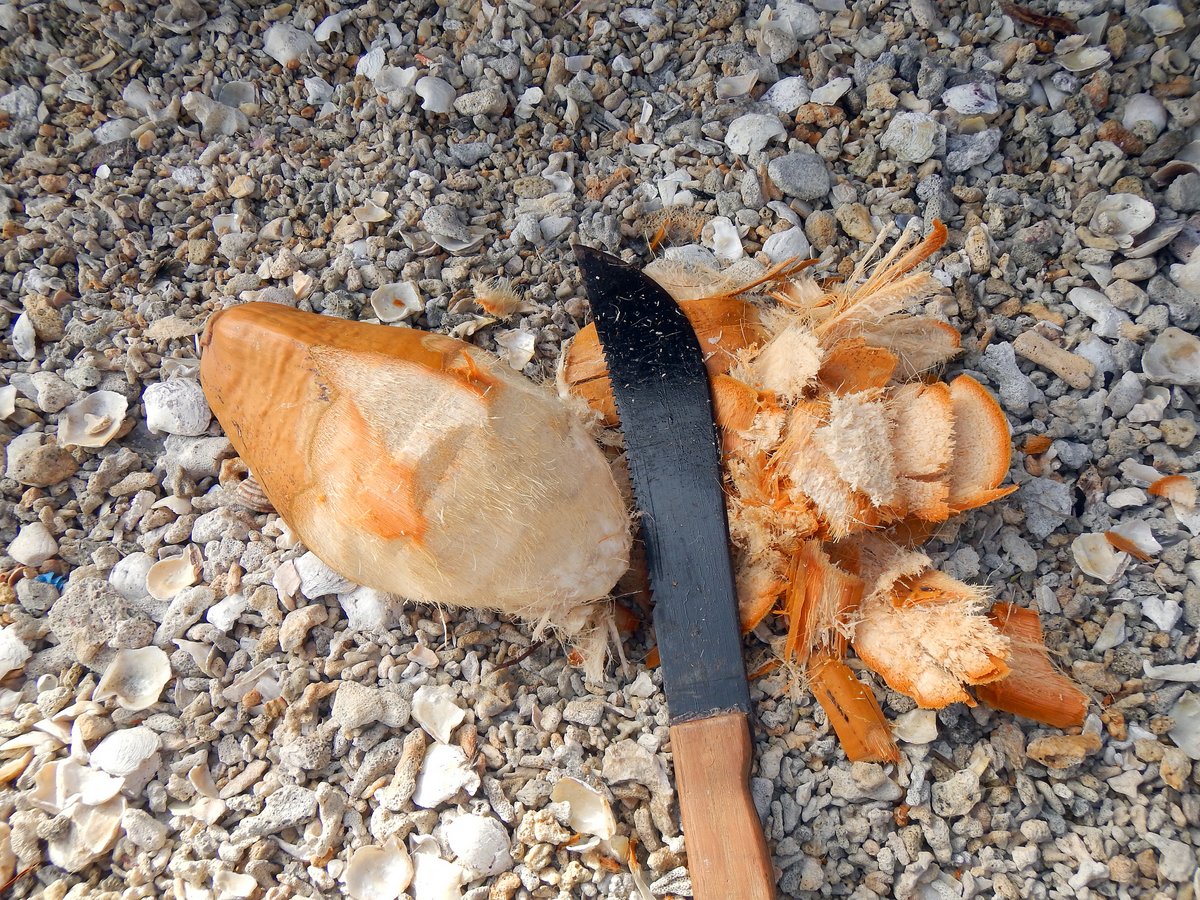
The Brown and Sprouting phases are opened by sticking the point of the machete into the top of the coconut and then prising out a segment. It’s very difficult to cut the coconut fibres, but the point of a machete easily penetrates it. Like using a husking stake, it’s a matter of prising of segments around the coconut.
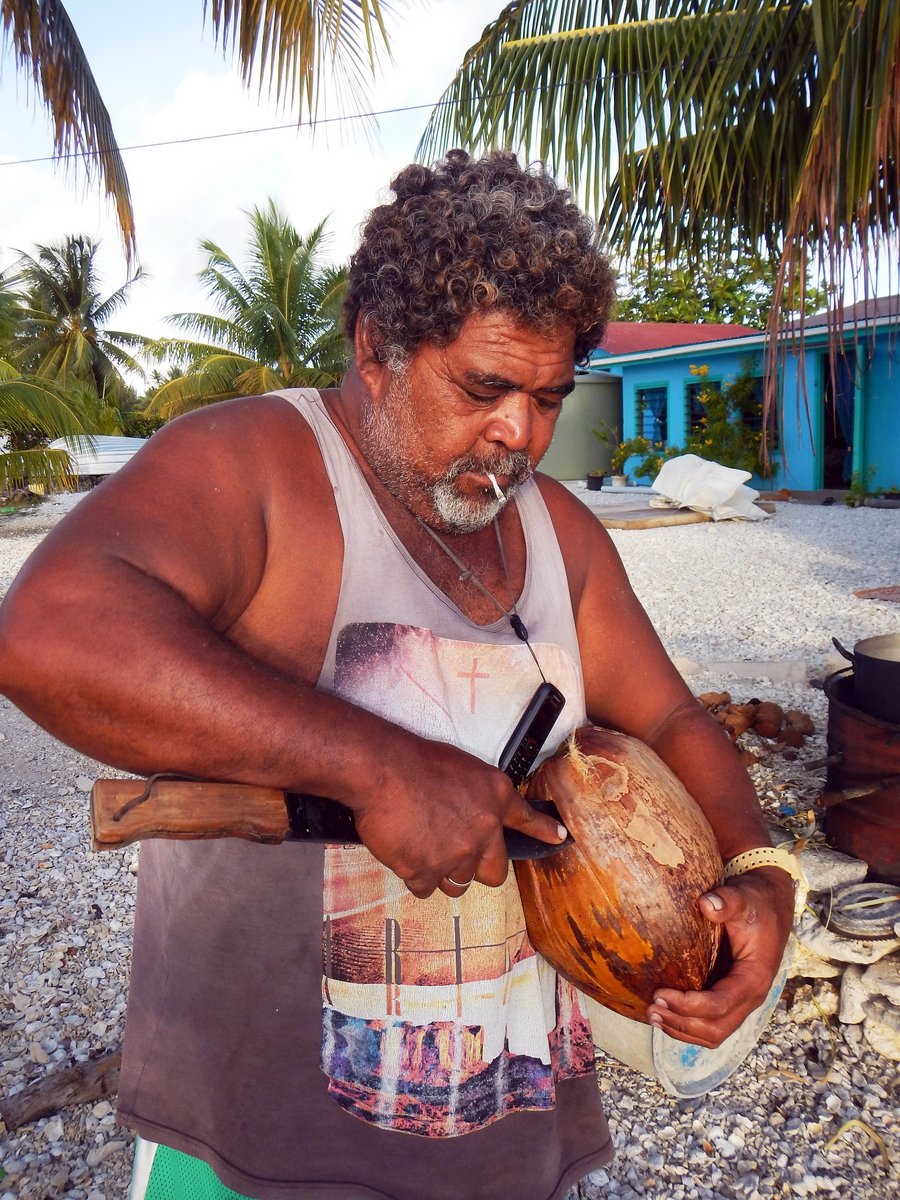
Once the nut is exposed, all three phases are opened using sharp blows to the nut, working around the circumference to crack it open. The green coconut is full of drinking water, so a small disk is removed from the round end of the coconut, using small vertical blows. The Brown and Sprouting coconuts are usually cracked around the middle and opened in half.
15 August 2014 Tetautau, Penrhyn, Cook Islands
Today was a fairly quiet day because the village had learned that a couple of Penrhyn islanders had died abroad and they were showing their respects. I went in to have a look at Rio’s laptop computer because he was having problems sending an email. He had to send off over 30 photographs of a community project which the Rarotonga government is funding and he was struggling to do it.
His laptop was running very slowly and his web mail was very slow as well, so I ended up taking his photos back to the boat, compressing them and emailing them to Rarotonga for him. I then went back ashore and downloaded a virus scanner which told me that his laptop is riddled with viruses, so I began the laborious process of cleaning it up, which took a couple of days of short visits to run scans and clean-up programs.
A couple of days ago, I gave Rio some sailing dinghy plans, so that he can make a dinghy for his son, Rio Jnr. He then discovered that Glenys has a good sewing machine, so he’s talked her into making a sail for it. A previous cruiser had given Rio an old main sail, so Glenys and I cut out the sail and she’s going to sew it in the next couple of days.
In the afternoon, Mr T came over to Alba with his guitar. I’d given him a set of guitar strings the previous day and he’d promised to come over and show me how the villagers play their local Penrhyn songs. It turns out that they only use 4 or 5 chords which are the common chords on a guitar (G, C, F and D), but they play them with strange left hand fingering, which is why I've been confused while watching them at Rio’s house.
Mr T played and sang us a couple of local songs including the Cook Island national anthem - “Te Atua mou e” which is lovely especially when sung as a group with their close harmonies. Glenys and I really ought to learn how to play it.

In the evening, we had Paul and Celeste over from “The Beguine” for a glass of wine or two.
16 August 2014 Tetautau, Penrhyn, Cook Islands
Some of the village kids hadn't come out to Motu Atutahi last weekend, so I offered to take them out for the day. It was only supposed to be six kids and two ladies, but somehow it grew to sixteen!
We had a great day out. We upped anchor, pulled out the genoa and set off south, aiming for Motu Tepuka. The kids really enjoyed the sailing and it’s a delight how they spontaneously burst into song and sing together in harmony. One of the ladies, Art, got hold of our ukulele and then the kids really went to town singing along with her.
Once we arrived a mile from Motu Tepuka, we rolled away the genoa and tentatively motored towards the reef that fringes the motus. We spent a fraught hour trying to edge our way past coral heads and then backing out - we couldn't find a way into the deeper water past the reef.
Eventually, with the aid of a couple of the teenagers, Don and Doctor, who know the area well, we found a reasonable anchorage about a mile south of the village at 08°58.61S 157°55.30W. Once anchored, I rigged up our spinnaker pole with a rope swing and the kids had a whale of a time swinging and jumping in the water from the side of the boat.
I called time-out at two o'clock and we sailed back to the village. The kids got very excited when they spotted a small pod of dolphins, which they tell me are fairly unusually in the atoll lagoon. Once we anchored, I started to ferry people ashore in our small dinghy because Rio had gone pig hunting with Paul from “The Beguine”.
I told the older kids to swim ashore, but they wouldn't get into the water once they saw our resident six sharks swimming around the boat. This was surprising because they happily play in the water close to shore where there are loads of Blacktip and Nurse sharks, but they told me that the sharks out here can’t be trusted. I wonder if their parents tell them that, to keep them close to shore?
Once I’d ferried them all ashore, we collapsed into a heap and went to bed early.
17 August 2014 Tetautau, Penrhyn, Cook Islands
It was another Sunday, so we went to the ten o'clock church service. Rio was waiting for us ashore with one of Kura’s hats for Glenys. Before the service, we went to Sunday School to listen to the children practising hymns. They all attend Sunday school for an hour before the church service and then return to Sunday School after the service for one hymn and a closing prayer. There were about four men and five women who are Sunday School teachers and lead the children in the hymns. Most of the singing is lovely, but there were a couple of hymns that seemed to be off-key and strident to my western ear.

Just before ten o'clock, there was a short prayer and everyone queued up outside the Sunday school in a long line with the youngest at the front and we all walked into the church. The Sunday School always sits in the centre pews at the front and the village adults sit on the right hand side - we were shown to the back centre pew.
Again the singing was lovely. A couple of times, the minister started a prayer and after the spoken words, the congregation then sang a prayer which was so gentle and done with such feeling that it brought tears to my eyes.
After the service, we were invited by Rio and Kura to have a drink and a chat. Rio told us that the sermon was all about the recent election of a new Member of Parliament (MP) for Penrhyn. Apparently, the old MP was in term for three years, but did very little for the islanders and, according to Rio, was actually opposing funds for island projects. There was an election in July and there was a division in the voting.
Most of the people in Omoka village voted for the old MP while the Tetautua villagers voted for the new MP. It was a narrow majority of 78 to 68 and there is still some resentment, with the old MP challenging the vote. Even in this remote paradise, people have to worry about politicians.
We spent the rest of the afternoon chilling out and went to “The Beguine” for a barbecued steak dinner.
18 August 2014 Tetautau, Penrhyn, Cook Islands
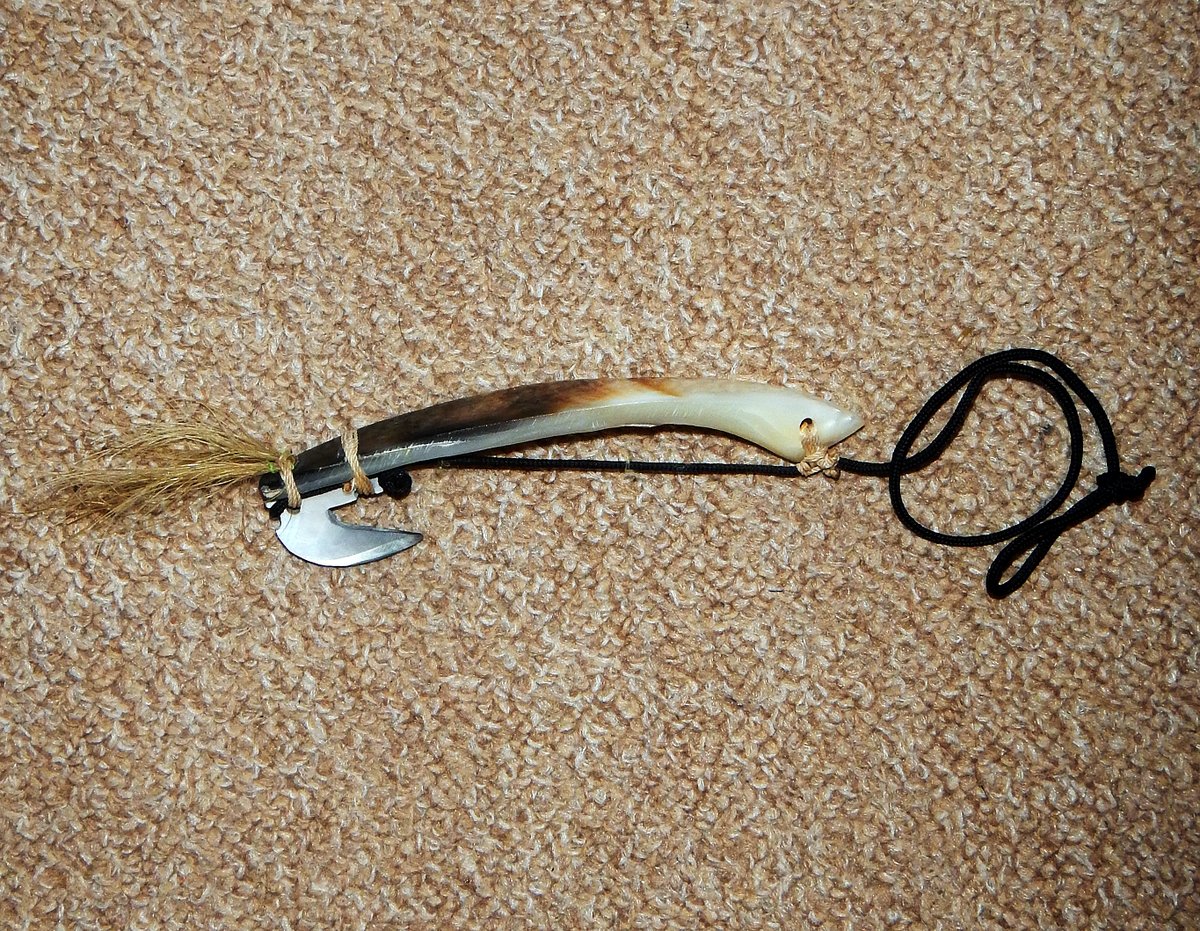
We went ashore mid-morning to go out Pipi gathering, but as soon as we arrived at Rio's house, he asked Paul and me to follow him to the house of one of the village elders, Rongo (the Assistant Minister and Judge). I had no idea why we were going and was surprised to receive a gift of some traditional fishing lures that Rongo had made for us out of shell. We stayed and chatted a while and promised to drop by tomorrow with some stainless steel bolts and screws that he needed for the catamaran that he’s building.
Rio and Rose took us all gathering Pipi on one of the remote reefs in the south of the atoll. We were out there for a few hours and gathered a massive haul of oysters - Rio also collected a dozen or so Giant Clams and some large black pearl oysters. Half way through the session, Rose called me over and showed me a Pipi Oyster which contained a pearl. She could see the pearl glinting in the sun, but with my aged eyes, I couldn't see anything. She insisted that I take it and push it in my glove to open later. Rio did a similar thing for Glenys - they’re so generous.


After a quick shower, Glenys and I went shore to open our pile of pearl oysters - we did fairly well and added another ten pearls to our collection, but they are all small at only 1-3 mm diameter.
Half way through opening the clams, Rio suddenly announced that he wanted to go tuna fishing because the wind was so calm, so Paul and I went along with him. He took us out of the Tetautua Pass and 2½ miles north-east to Venus Reef. We then spent a couple of hours trolling back and forth near the reef, chasing flocks of sea birds, which were diving for the small bait-fish being driven up to the surface by feeding tuna. Some of these flocks look like dense black clouds as hundreds of birds congregate in a feeding frenzy.
Paul and I held the two hand-lines rigged with rubber squid lures and double hooks, while Rio steered the boat alongside, and sometimes through, the flocks of birds. My red and silver lure was particularly effective and I caught three, 20lb YellowfinTuna and a Rainbow Runner, while Paul didn't land anything - just shows how the colour of the lure is important.

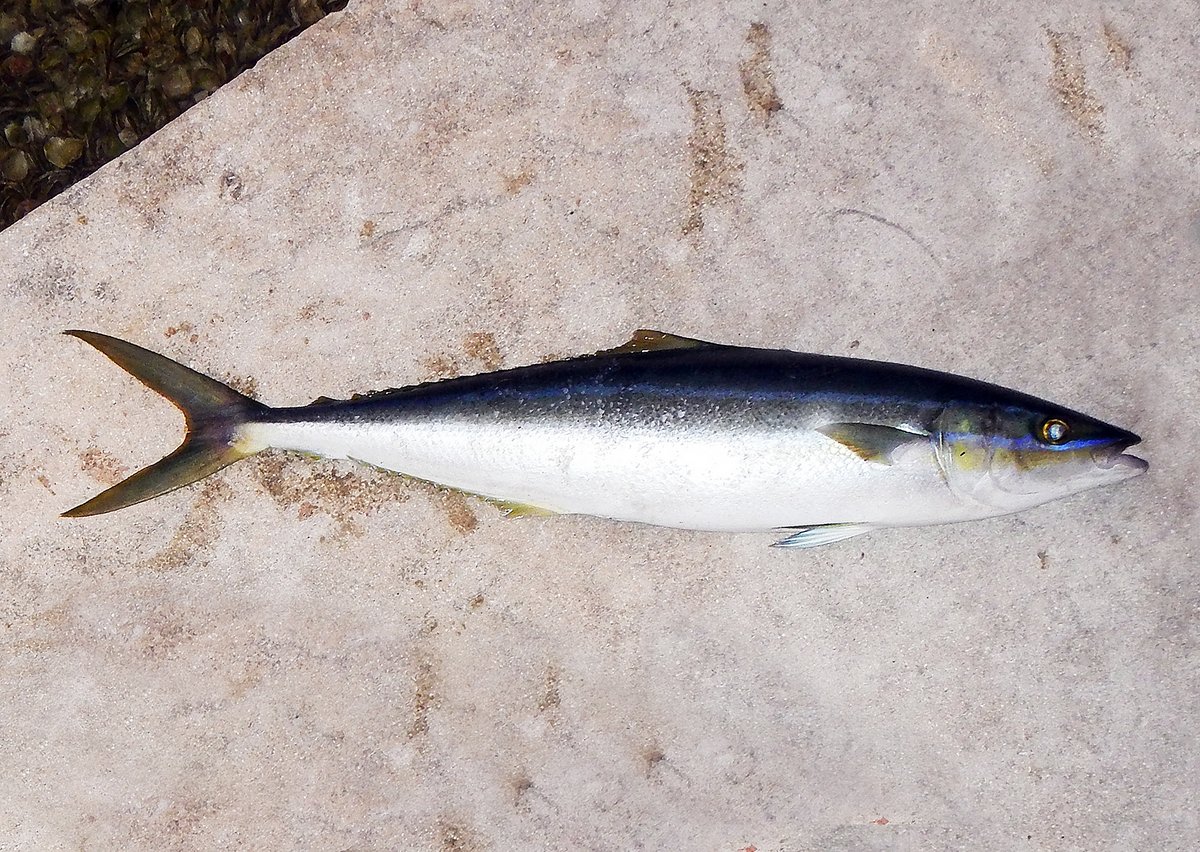
Rio told us to haul the line in fast otherwise sharks will get the hooked Tuna, which was good advice because the only tuna that Paul hooked was eaten in a huge splash by a big shark about ten feet from the boat. After catching one particularly bloody tuna, I went to wash my hands in the sea and Rio asked me not to because it attracts sharks who will then follow the boat.
We were back at Rio’s house just after sunset and were invited to dinner again. This time we had Curried Oysters, marinated Clam Salad, Barbecued Barracuda and rice.
19 August 2014 Tetautau, Penrhyn, Cook Islands
This morning, I found a huge two-inch long Cockroach in our front heads and immediately crushed it with my bare hand. We’ve had light winds for the last couple of days and I think that it’s flown from the shore, landed on our deck and found its way in through the open hatch in the heads. Fortunately, the heads door and all the cupboard doors were closed, so there was no way for it to get into the bilges where it could have hidden. Glenys is now paranoid.

We had a quiet morning and got on with a few jobs - Glenys made the sail for Rio’s future dinghy, while I caught up on editing the dozens of photos that I’ve taken in the past few days.

In the afternoon, I went ashore and did a few errands and visited people - I dropped of some stainless bolts to thank Rongo for the lures, then checked Warren’s batteries and microwave - both appear to be knackered and there’s not much I can do about them, but I got him to leave his batteries on charge, so I can test them properly tomorrow. I wandered over to Mr T’s house and gave him some mp3 music that I’d promised him, then back at Rio’s, I had a go at getting his printer/scanner working - I managed to get the printer working, but the scanner is beyond me.
We had a quiet night in for a change.
20 August 2014 Tetautau, Penrhyn, Cook Islands
We pottered about on the boat in the morning and I went in about eleven o'clock to go and see a few people. Rio had gone out with Rose to gather Pipi - Kura told me that he needed a bit of a rest because people in the village keep asking him to do things.
We’ve thought for a few days that having us around is creating more work for the family. They are such nice people that it’s apparent that they will try to help us with anything that we want, so Glenys and I been trying to back off from asking them to do things. However, Paul from “The Beguine” is a tad hyperactive and wants to do all sorts of things. He’s persuaded Rio to take him off hunting Boobies tonight, but I declined the offer - I don’t particularly want to go killing sea-birds in the middle of the night.
I wandered around the village and did a few little jobs. I checked Warren’s batteries again - they both seem to be useless and not coming up to voltage. I suspect that too much over-charging and deep discharging has destroyed them. None of the villagers have charging regulators on their solar panels - they wire the panels directly into the battery, so there’s a great danger of overcharging the one or two 100Ah batteries that they use.
While at Rio’s house, I did a bit more work on his laptop, removing viruses from his USB hard disk drive - every PC, hard disk drive and memory stick on the island appears to be riddled with viruses. Celeste on “The Beguine” has spent two days recovering her laptop after she plugged a villager’s infected hard drive into her laptop, which her virus scanner didn’t pick up.

Kura very kindly gave me a Sheath for my small machete that she’d made from Pandanus leaves which is a kind of palm tree - I’ll now be able to put it into my rucksack when we go hiking.
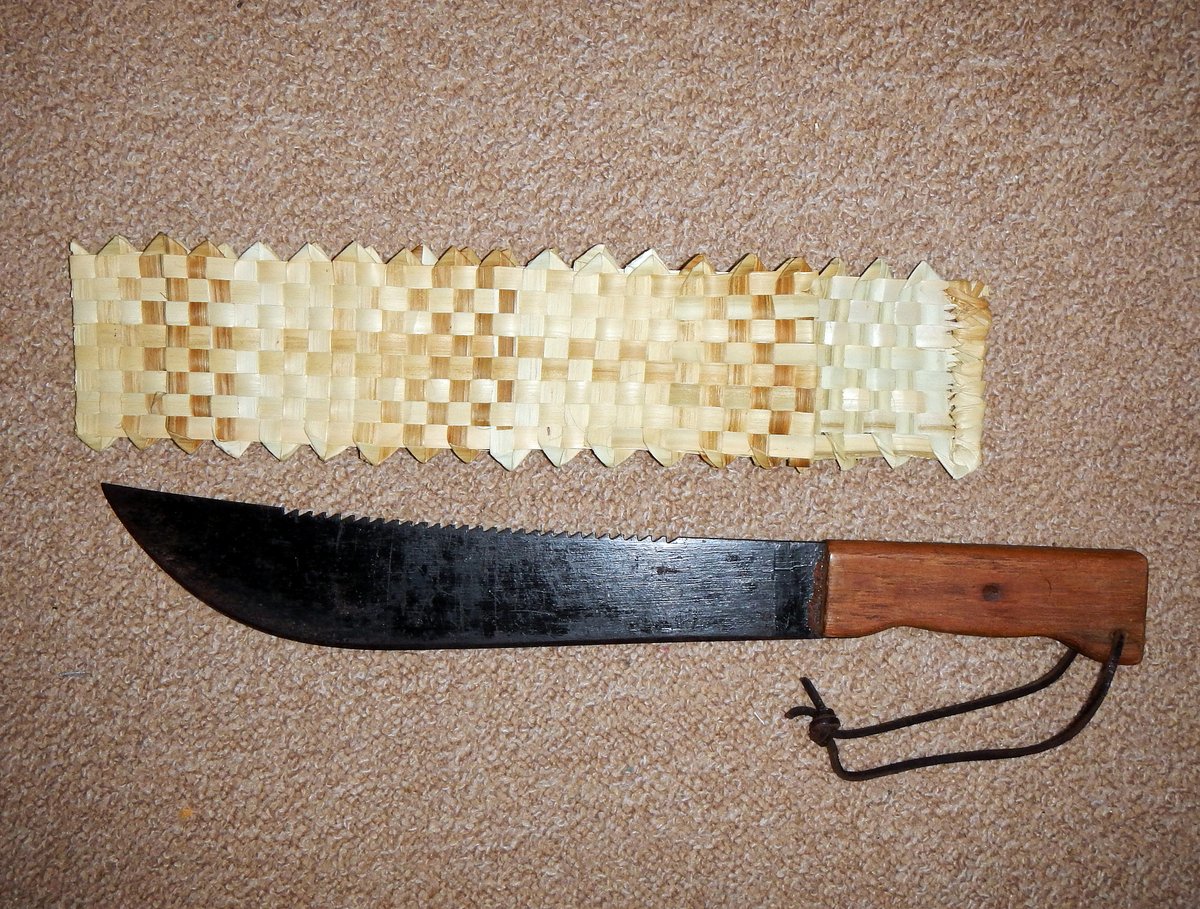
In the afternoon, Glenys and I put the 15hp outboard on the dinghy and whizzed out to a big reef about a mile to the east of the village. The water was surprisingly murky and was hopeless for taking photographs, so I collected a dozen Giant Clams for dinner, then just looked around the reef and helped Glenys collect a few more shells.
We took the clams ashore, where we found Rio and family opening the Pipis that they’d collected today. I asked Rio and Mike to show me how to open and clean the clams, which is a messy job. The whole idea was for me to learn how to do the job, so that we could eat clams further on in our voyage, but it was a mission to stop them helping me. Eventually, I had to ask them quite forcefully to let me do it.
I thought that I’d collected too many clams for just us, so we gave half of our clams to Kura and asked her for her recipe for curried clams/oysters. She was already making a Clam Curry, so she added our clams to it and insisted we wait to take some of her curry back to the boat - she’s unstoppable… We took our bowl of curry (and the remainder of our raw clams) back to the boat and had a quiet night.