11. SOUTH OF NOSY BE
11.1 Introduction
2015 Gambit:
Nosy Be to Cap St Andre is pretty relaxed and you could spend a couple of weeks cruising this section as there are a number of great places to stop over. If you are accessing internet via a local service provide you will have strong signal inshore down the NW coast all the way to Baly Bay. The wind up there is constant, but at least by staying in close you get away from the worst of the swell which is usually the problem.
As you will discover once you get to the NW coast, things get a lot more relaxed and these conditions hold good all the way down the NW slope to Cap St Andre (16deg S). The one element you must take into account are severe katabatic winds SE blowing offshore between Ananalava and Majunga, which persist the whole day and die at night. This kicks up quite a swell, up to 4m during the day, but obviously calms down to dead flat at night. Suggest you stay within 5nm, which is exciting sailing in flat water, till night fall. We and many other yachties have anchored offshore at night, as you will be sailing in 5-15m of water inside the drop off and if you can live with a bit of swell up to about 1900hrs, the rest of the night is peaceful. Would suggest anchor watch or radar guardsmen if you have it, as there are quite a few prawn trawlers operating in that area.
Cap St Andre is notorious for tropical squalls and lightning the closer you get to November, so if your timing puts you there in November - beware. A yacht 40m from us was struck at 0700 in the morning in Baly Bay which is something you don’t need, especially facing the run down the channel. If in doubt stay 20-30nm offshore and head due west to Mozambique.
11.2 Anchorages
Anchorages are listed heading south.
|
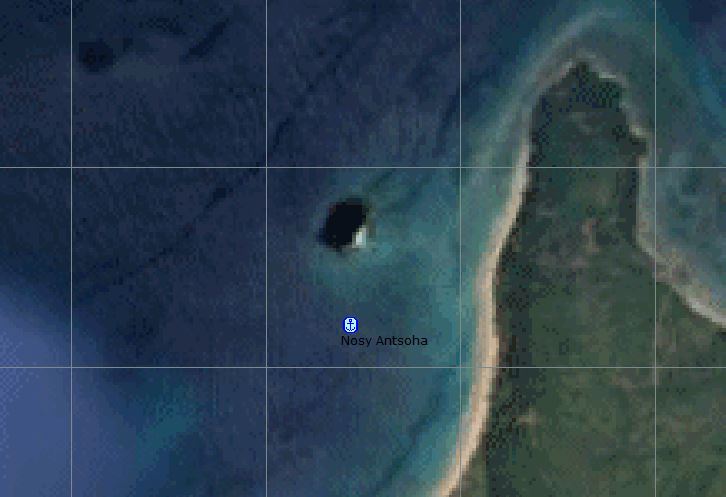
Nosy Antsoha (13°30.926S 47°57.692E)
2016 Adina - (13°30.926S 47°57.692E) 10m,Sand/Mud. Good spot for lemur lovers with four species kept on this small island. 10,000Ar per person. Guide arrives around 8am, try to get in before the first tour which seems to be at 10am. There is a trail around the island and the guide will call out to the lemurs. Take your own fruit or the guide should have some bananas. Also a turtle breeding ground and you may see some of the turtles they look after until releasing them once they are three months old. 2014 Inifini - (S13deg30.864min/ E047deg57.682min. Unfortunately, no one was on island (0900 hours) to show us around! Hiking thru the overgrown paths didn't appear too inviting, so we left without seeing any lemurs. Two large Madagascar sea eagles were in a nearby tree, so our stop wasn't totally wasted. |
|
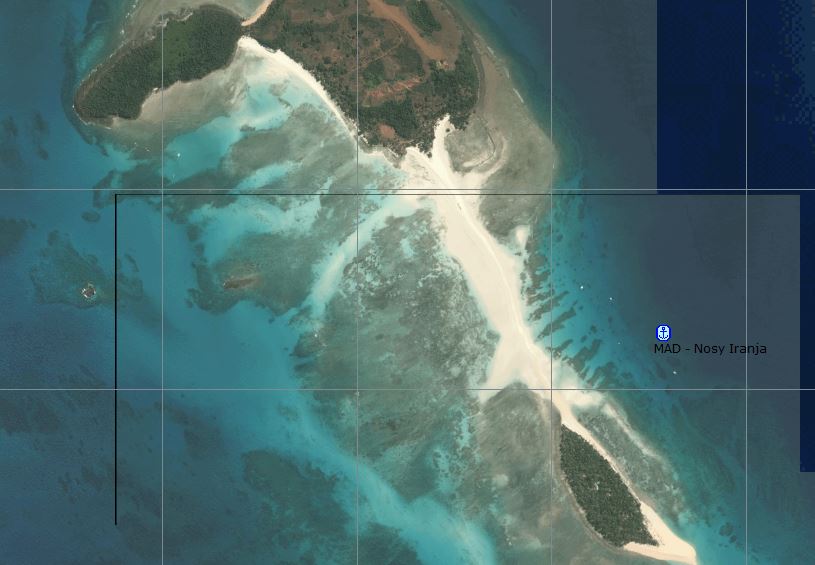
Nosy Iranja (13°36.359S 47°49.790E)
2016 Adina - 13°36.359S 47°49.790E 13m,Sand. Two islands with a spit in between which can be seen at low tide. Ok snorkelling, rolly and a lunch time stop only. 2016 Tintin - 13°36.319S 47°49.688E, sand, 10 meters. FYI, the Navionic Charts are ok in most places we visited however some of the mud banks are missed so we always used the Ovitalmap Bingle Satellite images, (better than Google in this region) when entering any river or anchorage. The Nosy Iranja Archipelago is located 40 kilometers south of Nosy Be Island and is comprised of two islets, Nosy Iranja Be and Nosy Iranja Kely, linked together by a picturesque sandbar at low tide. Nosy Iranje Be is home to a delightful abandoned lighthouse designed by the famous Gustav Eiffel, who also designed the Eiffel Tower in Paris. Nosy Iranja Kely has stunning white sandy beaches that are important breeding sites for the Hawksbill and Green Sea Turtles. The lush vegetation is home to a diversity of bird life and giant Coconut Crabs. A 4-star hotel with 24 lodges spreads over the small island. Here Sue (Camomile) and I swam with 4 very friendly and very large turtles, this will most likely be our last swim in Madagascar as the further south we go the cloudier the water and more Crocodiles are found. At time of writing this blog a crocodile was caught in Russian Bay. 2016 Camomile - We didn’t have any wind so decided to stop at and anchored at 13 36.353S 047 49.715E. The little island is private but the bigger island has a village on it. Similar to Komba it had beautiful embroidered tablecloths hanging everywhere and the ladies were encouraging us to buy. After wandering around for about an hour we decided to have a swim off of the beautiful sandy beach, Jacqui found some turtles and we swam with those for a while. The water was lovely and warm and the sand soft under our feet. This will be the last swim in the sea until the Caribbean! 2015 Totem - Sailing south from Nosy Be, we take a path with longer days and fewer stops so we can reach a beautiful destination, Moromba Bay, with time to linger before pressing on to Mahajanga. The first anchorage on the way is Nosy Iranja: we’d been looking forward to a swim in what we’re told is the last clear warm water and coral reef we’re likely to see until the Caribbean. Everybody wants in! We saw half a dozen turtles in less than an hour, but otherwise, it’s nothing special. 2014 Inifini - (Pos: S13deg36.452min/ E047deg49.805min. We continued our Nordhavn imitation and motored to Nosy Iranja, anchoring in 33' of sand. The water is crystal clear here, and you can see the bottom at 40'. We went to the village, which turned out to have more people than we thought, and hiked up to the light house. It was locked up, but the surrounding views were great, and the children's school is right next to it. Returning by dinghy, we saw several turtles about 3'-4' in length, and we understand they use the south beach of the nearby island to lay their eggs. This is a rolly anchorage, so we decided to leave the next morning. |
|
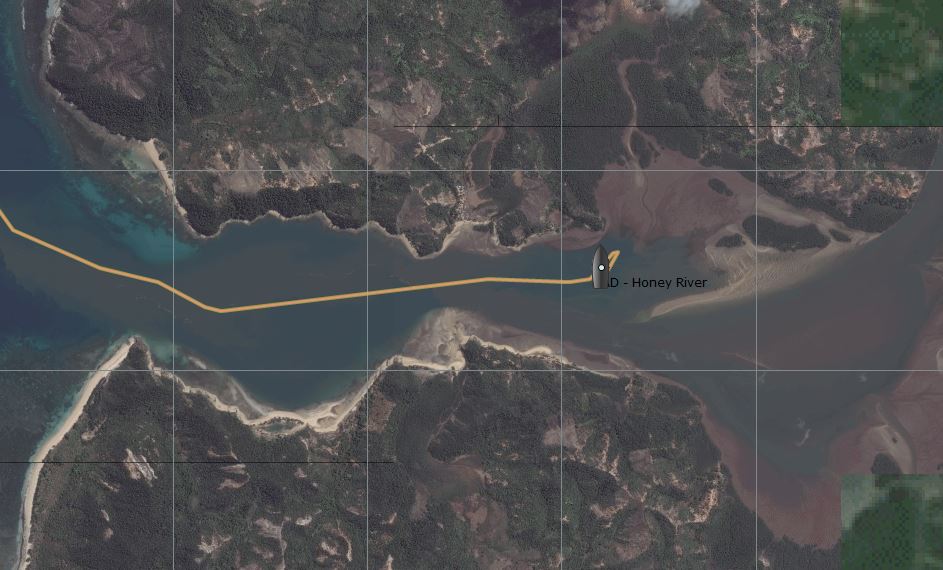
Baramahamay (Honey) River (13°42.806S 47°54.040E)
2016 Adina - 13°42.806S 47°54.040E 10m,Mud. Navionics charts are good but Bing satellite images are helpful. 6m sandbar at entrance. Don?t go too far down the river as there is a sandbank not marked on the chart but visibe at low tide. Very well sheltered. Honey in 1.5L bottles was 15,000Ar when we were there. Mud Crabs 10,000Ar for a small one, big they wanted 15000Ar but they can be haggled down (expensive vs other places). Theophile/Jozianne live in the smaller village on the south bank. Historically they look after yachts but were out when we were here. We did a full day trip taking a pirogue up river to a village. Long day but a very authentic experience! We sailed on and deep into Baramahamay River, named Honey River or Honey Pot by cruisers. It’s not long before someone paddles out selling honey and crabs. Unfiltered honey, cheap as chips and rather tasty. Damn expensive crabs, they clearly see us as cash cows and good old haggling in a friendly manner helps. We look for things to do and run into a lady who says she can row us in her little pirogue (boat/wooden canoe) to visit a village further downstream. Looking at the size of her pirogue we are both a little sceptical. “Expect the unexpected” has always been our motto. The next day she turns up with her husband, son and a much bigger sailing pirogue much to our relief. We sail past mangroves and up into the mainland and walk into a village. The village is a collection of thatched huts, red/brown soil, and people going around doing chores or simply watching life go by. Kids, happily filthy as can be in tattered clothes, run around and play. Part of it is incredibly humbling, we know all too well we are lucky to lead a privileged life, people here have so little. Yet they don’t go around long-faced, they deal with the deck of cards life has dealt them. Kids watch us from a distance peering around a corner. There’s always one little brave one and we always bring things hoping to get a smile, hoping it breaks the ice. A simple tennis ball is treasured. Eyes light up and a smile beams through, a “Merci” and the ball is gripped tightly. Time for some fun. Tom throws the ball for a game of catch. More kids join in, lining up trying to catch it, jumping here and there, laughing at each other. They are not having half the fun we are. 2015 Yolo -The Honey River anchorage is located at 13.31 S and 047.58 E. This is usually the last anchorage in the Nosy Be area when heading south along the coast. During the 2015 cruising seasons things were NOT sweet at Honey River. Prior to early October at least four dinghies and outboards were stolen during the night at this anchorage. All the dinghies were tied to the back of the mothership, unlocked. Early the next morning most of the dinghies were recovered, however their outboards disappeared into the small rural community, supposedly unnoticed. For those seeking Madagascar honey, there was none available at Honey River in 2015. FYI, mantas were observed just south of the shallows located near the river entrance at 13.41 S and 047.51 E. 2016 Tintin - 13°42.823S 47°54.018E, mud, 6 meters. There is a bar at the river’s entrance however we did not have less than 5 meters and we used Ovitalmap Bingle Satellite images to assist. The Baramahamay River is characterised by verdant hills behind beautiful white beaches. The river in the early hours of the morning was so serene you could hear a pin drop, then once the morning breeze picked up it was busy with Pirogues going forwards and backwards across and down the river. The villages are known locally for their blacksmiths and boat builders and one small village is known by all the cruising community for its wild honey, which can be purchased from the locals who sell the bottles of honey as well as crabs from their little pirogues. We bought a litre of this delicious honey and some Mangos. The village also has a small primary school. We traded and gave pencils, paper, crayons, toiletries, basic wound care, and food packs to all the visitors to TINTIN. Unfortunately both Sue and Jacqui were unwell so going ashore and then up the river in a pirogue was cancelled. 2016 Camomile - We went back to the boats for a spot of lunch then continued south to the Baramahamay river (honey river). There’s a bit of a bar at the entrance but we didn’t have less than 6M of water at low tide. We anchored at 13 42.792S 047 54.074E. Tuesday morning I awoke early and sat out on deck. A truly magical place, strikingly quiet. No phones ringing because there’s no signal. No television, power tools or music because there’s no electricity. There aren’t any outboards or noisy Thailand long tails here just a paddle or a sail on their outrigger canoes that are made from trees. So quiet. I could hear birds tweeting in the trees 200M away, a cock crowing,a local boat builder hammering now and again. Their houses are made from the materials that surround them. The locals get up at dawn and go to sleep soon after sunset. There was very little sound of children’s laughter or playing which probably means many of them have gone away to school and the ones left behind the parents can’t afford to send them. As the sun came up I got some stunning photos of the reflections of the mountains behind us before the wind started blowing. Unfortunately we didn’t get to do very much there because I had had my cold for 3 weeks now and also had a very bad cough, (it sounded like I smoked 40 a day when I coughed.) I felt so tired all the time. Jacqui had also picked up a bit of a bug so we spent the day just resting. The Turkish boat Keyif came in later that day and soon after some local canoes come out to us to sell some honey but I didn’t buy any. Jacqui did and said it was delicious. Wednesday morning Keyif left early so we and Tintin decided to go to. It was a shame not to go ashore at Honey river because there are supposed to be some nice walks there but I didn’t have the energy. We had a lovely sail down to Berangomania point and anchored at 14 05.761S 047 54.435E. Keyif and Tintin joined us in the anchorage as well and I went to visit Nadire on Keyif who was a doctor. She gave me some strong antibiotics and advised me to rest because she felt my cough was going on too long and complications could develop. As we are now in a very remote part of the world it’s not worth taking any chances with our health. Within a few days I felt a lot better. Thank you Nadire. We also heard that Norsa’s gearbox was fixed and they were able to continue on their journey. As I still didn’t have the energy to go walking it was decided to move south again the next day. 2014 Inifini - (S13deg42.802min/ E047deg54.084min. The entrance to the river has lots of shoal water, and care must be taken. We had read to hug the northern side, and had no difficulty finding 24' to anchor in towards the end of the bay before the river forks. The anchor was hardly set when a young guy came over in his pirogue asking if we wanted to buy honey (though no English is spoken) . We did; a 1.5L plastic bottle cost 10000Ar, and has a quite distinctive taste. Other folks came by to try to sell crab or just to say hello. The chief of the village was gone to Nosy Be, so we missed her. We did meet the school teacher, Daniel, and walked to the small school house. The kids go to local school from ages 6-12, and may then go to Hellville (Nosy Be) for college (our high school) if their parents can afford to send them. The village here has 60 people, and the school 65 children, according to Daniel (kids also come from other villages in the bay). This is a nice, quiet place; there is no internet or cell coverage, and no electricity or running water either, although well water is available. 2007 Ocelot - S13°42.8 E47°54.0 24' (7m) mud Buy honey from chief's wife.We left Russian Bay mid-morning and had a great sail for about 4 hours, south, to Honey River (S13°42.8 E47°54.0) shown on the charts as Baramahamay Bay. We arrived in time to meet the chief's wife and purchase a liter of fresh honey that the villagers collect from wild bees in the hills behind the village. The whole bay is well protected and surrounded by lush green hills and small villages. With more time, a walk in the hills would be great. We did get to wander the chief's village, photograph the women, children and the pet black lemur, and see how the huts are constructed of wooden poles and thatch. As with other coastal anchorages on the mainland of Madagascar, the water is not clear, and there are numerous shoal areas, especially deeper into the interior where rivers flow into the bay leaving silt. |
|
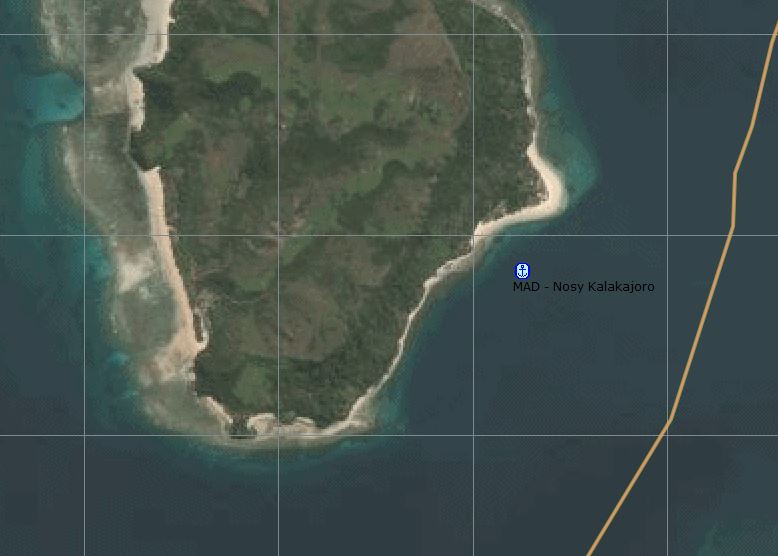
Nosy Kalakajoro (13°57.092S,47°46.626E)
2016 Adina - (13°57.092S 47°46.626E) 18m,Sand/Coral. We ended up wrapped around coral heads. Better to move in further and anchor in sand close to shore. Calm weather anchorage, ensure you are well dug in as with land breezes at night and in the morning you will be on a lee shore but these tended to be light. Nice beaches, small welcoming resort and village. A path around the shore/land takes you to the west side of the island where a small village is situated in a bay. 2015 Totem - (13°57.039S 47°46.616E), 52ft, Sand, Appears as all sand bottom, but anchored just before sunset so not certain. Good protection from afternoon winds, but exposed to nighttime - so hope it stays calm. Nice beach. |
|
Berangomaina, Mainland (14°05.824S 47°54.378E)
2016 Adina - 14°05.824S 47°54.378E 10m,Mud. Navionics charts are off; use Bing satellite images which clearly show the reef at the entrance and in the bay or come in at low tide with sun behind/overhead. Well sheltered, excellent holding in mud. Village closest to shore has a path out the back leading to a short walk to the headland for beautiful views. Ask to 'Changa Changa' which means 'walk' and someone will show you the way (small gift/money appreciated). There is a longer walk on the opposite south shore but it is harder to find the path (drop dinghy where other pirogues are inside the mangroves). Villages are poor, no-one seemed to be able to speak french, but friendly. Nice stop. 2016 Tintin - 14°05.848S 47°54.406E, mud, 5 meters. Entrance to anchorage 14 6.53S and 47 53.360E, suggest you use satellite images as charts were out slightly here and you need good light to see the reef and mud banks. SV Keyif, Camomile and later Antares all anchored here the night. Talk about peaceful not a sound except the ducks quaking and a yacht generator or 2 humming away. We were visited by 2 young boys who traded 2 fresh eggs for a new Poloshirt with the SV TINTIN Logo (TINTIN and Snowy). His face once he put it on just made our day. We also gave them a "Kids Pack" that contains; lead pencils, coloured pencils, sharpener, crayons, paint, paper, balls, hair bands and ribbons, long life puddings, Nutella or milo and some treats. Up early to arrive in Moramba Bay before dark. 2014 Inifini - (S14deg06.029min/ E047deg54.244min. We departed Honey River early and experienced a counter-current that seemed to help us although the breeze was light. The main and jib went up and the Perkins ticked over at just over idle speed as we motor sailed down here. This entrance is shoal and a bit tricky as the charts are off (what else is new!). We're getting very weak internet here, and updated gribs show a strong system coming our way in a couple of days. We've anchored in 35' and are hunkered down for a blow, forecast to last 3-4 days. There's a very small village nearby, and the surrounding hills appear somewhat barren. |
|
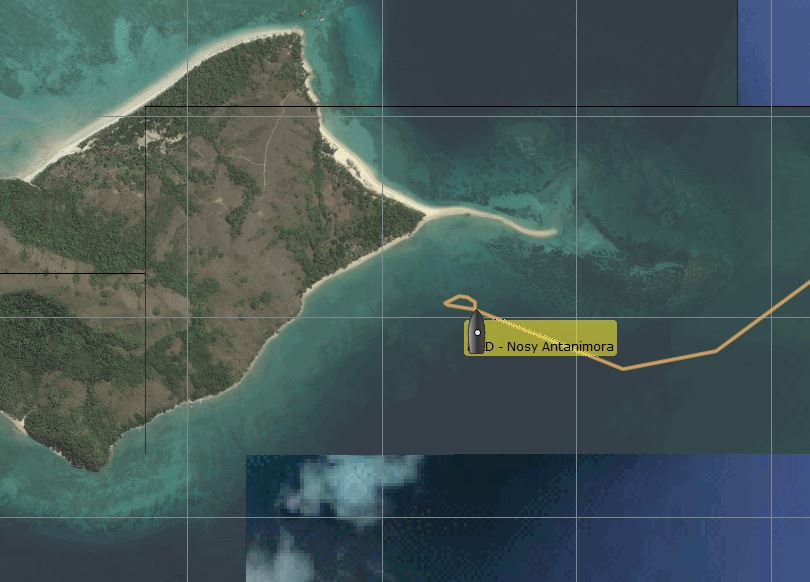
Nosy Antanimora (14°07.04S,47°45.74E)
2017 Alba - |
|
No name, Mainland (14°25.432S 47°41.365E)
2016 Adina - 14°25.432S 47°41.365E 11m,Mud. We anchored here overnight due to the forecast for SE winds which would make Nosy Saba a lee shore. We used satellite images looking for areas with mud and no reef, and any hooks in the land to get a little extra shelter. Navionics charts aren't accurate enough and don't show the shallows well enough. On the satellite images you can work out if the water is deep or not, you can see the detail of the reef and where there are breaks in it. Interestingly we realised these were good spots as local villages were located in the breaks in reef so pirogues could be pulled up. We could have gone in further but it was dark when we anchored so chose to stay a little out. Sea state was a lot calmer inshore, slight roll. We used radar and a GPS on top of satellite images. This advice to stop on the coast overnight rather than on the islands was courtesy of Des Cason who sailed here for many years. Leaving Bergomaina Point we start to find more wind. Madagascar has daily land and sea breezes that mean the winds blow in completely different directions at different times of day and finding an all-round sheltered anchorage is not easy. So during the day we visit the offshore islands and then for the evening when strong breezes blow offshore we use satellite images to find good spots to tuck into on the coast. We can’t think of any country that has had better holding for our anchor – thick rich mud everywhere. Although lifting the anchor means the chain and anchor need a good clean every time and we count our blessings Adina has an anchor hose. We cherish these offshore islands, our last islands with white beaches and blue seas – it’s the last time we will be swimming at one of these for a long time. |
|
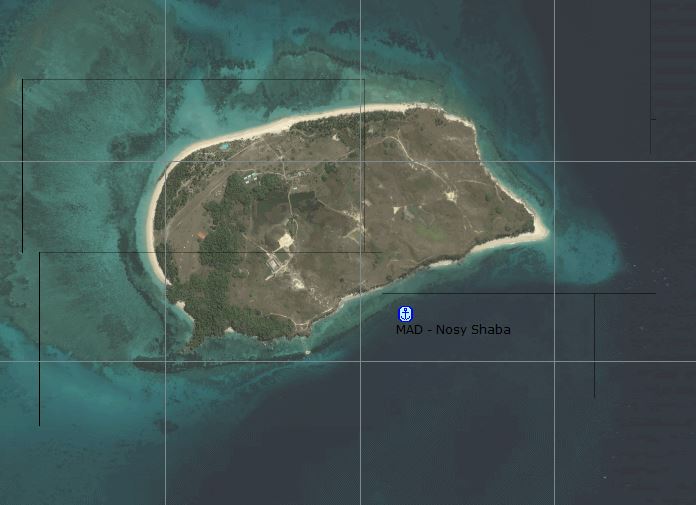
Nosy Saba (14°21.883S 47°38.620E)
2016 Adina - 14°21.883S 47°38.620E 12m,Sand. Navionics charts are off. A calm weather anchorage. We opted to anchor overnight off the mainland coast and visit Saba during the day when the winds were from the west/north. The shelf here drops quickly. When we arrived the land breeze was still blowing and we were close to the shore but knew the breeze would flick so stayed onboard until we swung round and ended up at 14 21.917S 47 38.639E in 20m. Chop in the morning. Nice beach and walking ashore. There is a well defined walking/cycling track made by the resort (resort is on the NW ) which is easy to follow and nice beaches. Seemed to be no-one in the resort when we were there. 2007 Ocelot - S14°21.8 E47°37.9 22' (6.5m) mud Nice, but exposed to east winds at night. Sailing past several off-shore islands, we succumbed to temptation and pulled into (almost) uninhabited Nosy Shaba (S14°21.8 E47°37.9). Here, on the west side, we found white sand (it was too late in the day for snorkeling), some shelling to be had, and a nice walk on the grassy hills overlooking the sea. With more time, many of these off-shore islands are worth exploring! But if you plan to spend the night you need to be prepared for the wind to shift around after the land cools off a bit. Or else treat it as a day anchorage only. True to form, the on-shore breeze turned at about 9 pm, putting us on a lee shore, with a bit of fetch from the east kicking up an uncomfortable chop. Luckily we had a GPS track to follow from cruisers who had obviously had the same problem a couple years before! We pulled the anchor and motored straight across 8 miles to the mainland where (in the dark) we tucked into the shore at a little spot called Mahavanga (S14°21.0 E47°42.0). We spent a calm night, anchored in 20' (6m) over mud/sand, in the lee of Madagascar. |
|
No name, Mainland (14°28.353S 47°42.256E)
2016 Adina - 14°28.353S 47°42.256E 6m,Mud. Having confidence from our first overnight coastal anchorage we repeated it finding this spot with mud. Only downside is wind drops off around 7pm so a bit bumpy if you arrive in daylight but rather that than a night on a lee shore at one of the offshore island anchorages. |
|
Nosy Lava 1 (14°32.165S 4736.650E)
2016 Adina - (14 32.165S 47 36.650E) 10m,Clay. Anchored here around 10am as the land breeze was easing. Lots of space to swing. Old prison ashore. A man who says he is the guard walks you around pointing out the cells, offices, small hospital etc. He will expect a gift of some sort. Ok stop. 2015 Totem - (14°32.145S,47°36.675E), 32ft ,Sand, anchored off sand beach with nearby abandoned prison. En route to Moramba is Nosy Lava, site of a former prison (where inmates escaped and murdered two cruisers a couple of decades ago. The facility has been closed for only a few years, but the ruins appear much older – testament to the power of cyclones in this area? While I’m wandering around trails inland, Siobhan and Jamie meet a man on the beach who leads them on an impromptu tour that includes a dungeon and cell block units inside a large surrounding wall, now guarded by dive-bombing birds instead of paid guards. I find Jamie later on the beach, shirtless; he wanted to offer something to the guide, but was at loose ends. The guys clothes were rags, so Jamie just took off his t-shirt and handed it over – everybody’s happy! We bring the man (with a name I can’t seem to get right: Jor? Dzor?) and Samuel, who I’ve met in my wandering, back to Totem for coffee, cookies, and stories. Their French is rough, but with Aline’s help we learn so much more than we might have otherwise about their lives and this island. |
|
Nosy Lava 2 (14°31.701E 47°36.388E)
2016 Adina - (14 31.701E 47 36.388E) 6m, Mud. We moved as the winds were from the north and the sea was choppy. Nice beach and a path to the top allows good views. Lots of walking to be found. Our last island swim before the Caribbean!
|
|
No name, Mainland (14°32.536S 47°43.448E)
2016 Adina - 14°32.536S 47°43.448E 5m,Mud. Another good coastal overnight stop in mud. Nothing around. Winds dropped around 7pm so sloppy until then, a bit rolly overnight. |
|
Moramba Bay 1,Mainland (14°53.614S 47°19.767E)
2016 Adina - (14 53.614S 47 19.767E) 5m at LW,Mud,Excellent,"Karst rocks, resort, lots of walking, some provisions",Good,We arrived at low tide and slowly made our way to this point experiencing a minimum depth of 3m (spring tides). Good protection from the SE winds but with sea breeze from the west and north west becomes sloppy to unpleasant. Fortunately these only lasted about 2 hours. Height of tide at spring tides for us was 3m. Lots of small rock islands to be explored. Ashore is Bridgette who has set up a small simple 'resort' and will do meals if arranged in advance. She can speak french and will advice where to find the Sunday market. Sifaka lemurs are often spotted as are Greater Vasa Parrots and Fish Eagles. Prawns can be bought from locals. Lots of walking and exploring around this huge bay. No fighting over the lovely prawns. That's if any are left after we filled our freezer! It's a place to take your time and explore. We had planned to be there about a week but stayed nine days and enjoyed it. People are friendly etc. BTW - with the prawns, they really don't know what to charge for them. Be warned though they quite often ask in Francs! Divide by five to convert Francs to Ariary. We'd take a pile of them and offer an amount. They'd always accept it and then insist we bought the remainder and would discount it. We often gave them some extras of sugar, soap, washing powder etc. We had heard good things about Moramba Bay and had planned to stop at least a week. Another place to get out and explore, one of those places it takes time to appreciate. Strong winds are forecast so we look at where we can find shelter, we pick an island and take our dinghy to check the depths. We use a thin line with a heavy lead tied to the end and make records. The depths are good so we move. The winds deliver and blow strong but the anchor is set and we stay put. Early one morning Tom is on deck when he sees a dhow flying along and ducks below to get the binoculars. Coming up the naked eyes show things are a little amiss – it’s almost like the dhow is beneath a wave, the hull can’t be seen, odd. The binoculars reveal the truth, the hull is indeed beneath the water, it’s hit a submerged rock. As fast as we can we launch our dingy and head off. The dhow has not sunk but the people are in the water or standing on the submerged hull, the wind is blowing, the water is choppy and they are drifting in the strong currents. We take onboard immediately the one solitary female already shivering and everyone’s personal belongings. Another dhow stops to help and we ferry as much over as we can. With all the choppy water our dinghy is getting full of water and starting to struggle – we have to ask the dhow for a water scoop. The people on the submerged dhow are trying to save everything, we ferry across broken bits of dhow. It’s clear the sail is treasured and they haul it to the rescue dhow. There’s not much more we can do, we’ve drifted a long way from Adina and simply thank our lucky stars that in our hurry to help we thought to bring an extra can of fuel. Once the winds calm we move close to the mainland. On shore are wild Sifaka lemurs; we spend ages watching them over several days, absorbed by their behaviour. Spring is coming and the new buds make a tasty meal. Our favourite is when the Sifaka bound along the ground holding their arms high up to help them balance, it’s a peculiar sight and makes us smile broadly. In the trees they effortlessly swing from branch to branch. Everywhere we look are big fat Baobab trees with their branches looking like the roots of a tree jutting naked high into the air. Susie describes them aptly as the friendly trees, always waving. They just need smiley faces. More and more people come out to the boat to trade. People bring crabs, lobster, eggs, a few vegetables, honey comb and, best of all, prawns. Moramba Bay has nice big juicy prawns; we take any that are bought to the boat and indulge. Everyone is friendly and gentle. They lack so much and we try our best to help with what we can. Adina needs a clear out so why not! As we walk and explore the islands we’re playing a new game. Back home in England we will visit friends and many of them now have children. So it’s time to ensure we know the names. Susie asks, “Chris and Kath?”; I reply “Two children, one girl, one boy, two Gs, Grace and George.” “Correct! Now, Neil and Hallie?” “Ahh – more tough – Amelia and Lorreliss?” “It’s Lorelei. Close!” We hope our friends similarly are making mental notes and checking up on the website “Name three countries they have visited this year”. “Where is their boat now?” 2016 Tintin - 14°53.495S 47°20.413E, mud, 6 meters. 3 words to describe Moramba Bay: baobabs, prawns, beautiful people, well that's 4 words. This is one of our favourite stops on the Madagascar coast. Surrounded by weathered limestone rock, beautiful uninhabited beaches, Baobab Trees and forest inhabited by Sifaka Lemurs all waiting to be explored. We are anchored next to a group of small rocky islands covered in Baobab Trees and we wake up to the beautiful sound of birds singing. The bird life was prolific with the Madagascar fish eagle, the all-black Greater Vasa Parrots and dozens of Dimorphic Egrets in their rookeries. The Baobabs look almost real, with personalities of their own, and we can just imagine when nobody is looking they just pull out their roots and go for a walk or change their position. Everyday we traded with the locals for freshly caught, absolutely delicious prawns and mangos. We were visited by 3 young girls from 10 to 15 years. We showed them around TINTIN our home, offered them a can of Sprite and a snack. We had to show them how to open the can, once they got the hang of it they left with our supply of Sprite and a few more goodies including TShirts, canned food, flour, noodles, dried fruit, flour, washing up detergent and so much more. Earlier we gave a bucket, flippers, "a kids pack" to 2 young boys. We think they all come from the same tiny village, however we do try to share what we have to give away and trade as much as possible. I had definitely over stocked for the Indian Ocean crossing so was happy to give/trade anything we do not need, did not use etc. So 9 shopping bags later since leaving Nosy Be, TINTIN feels a lot lighter. 2016 Camomile - Leaving at 4.45 we motored, and later sailed all day past the islands of Saba and Lava and arrived at Moramba bay at 17.00 along with Tintin, Keyif and also Antares. Sadly when we got there we were hoping to meet up with Tom and Susie on Adina but they had moved on the day before. We anchored at 14 53.432S Keyif and Antares left on the Saturday morning and, after an assessment of the weather, Tintin and Camomile left on Sunday morning. It was a shame we didn’t stay longer because Moramba bay was beautiful but we all wanted to get to South Africa so we plodded on. 2015 Totem - (14°53.536S,47°20.367E), 25ft, Mud, CM93 charts wrong and Navionics need to shift a little east. Water viz hard to read so approached slowly as we didn't trust depth soundings. All ok though. Moromba feels like a deep cleansing breath: a beautiful place to slow down and just appreciate WE’RE IN MADAGASCAR (still feels a little surreal). Stately baobabs look down from shore. Most spectacular is the batik baobab. Squwaking black parrots wheeling and fluttering around the bay remind me of the cockatoo flock in Sydney. Thankfully, unlike their Aussie cousins, these birds don’t seem to have connected “boat rigging” with “beak sharpening” just yet. The kids got into the pace pretty quickly… this particular afternoon included reading, drawing, and just ruminating for several hours under shade on the beach. Aline and I got into a late-afternoon beach yoga habit, once the sun had dipped low enough to dampen the heat. This turned out to be when lemurs came out to play too, the big fuzzy sifakas silhouetted against the sun. I think they must be abundant here, since even a dinghy ride inadvertently turned into lemur stalking. We do a lot of exploring: the karst islets that dot the bay are full of interesting corners. There’s the rumor of a 1500 year old baobab on one, which toppled two years ago but would still be an impressive site. We find it, and the middens nearby with their bits of pottery and shells. Rumor had it that among the treasures to encounter on this bay were burial sites for ancestral bones. Ancestor worship is still part of life for many Malagasy, even those who also profess a major monotheist religion. Saving bones, turning them annually, are active traditions. We find one, and appreciate it with a few minutes of quiet, curious respect before leaving the site …untouched except for the crunch of shells on sharp limestone that we climb over to reach it. Dugouts stop by with eggs, fruit, and seafood to offer. We trade a combination of cash and glass jars. In anticipation of Madagascar, I’ve been saving every olive and tomato sauce jar for months: Jamie is very happy to slowly reclaim the locker space. We really would have stayed for weeks if we could – but there’s just a few days to enjoy it. You can feel the season changing, and we’ve got crew to meet in Mahajanga. 2014 Inifini - (S14deg52.490min/ E047deg16.961min. We left Point Berangoma thinking we'd start our transit to SA, but changed our minds after a full day of close reaching in sustained 25-31 knot winds. Seas weren't too bad at 2 meters, but we pulled into the entrance of Moramba Bay in the waning light with an adverse tide, and dropped the hook just nearby the cell tower in 31'. Tomorrow we'll re-anchor further down the Bay and go look for lemurs. All's well aboard. 2014 Inifini - (S14deg54.281min/ E047deg20.157min. It blew all night and this morning, 22-25 knots sustained. At about mid-day, the wind went down to about 20 knots and we decided it was as good a time as any to haul anchor and go up into the bay. Even though we had a favorable current, winds continued to gust to SE 25, pretty much right on our nose, and the water depth was 20' in most areas; our speed was down to 2 knots much of the time. Yuck. We finally anchored at our destination in 31' and although it's still blowing, we're well protected. The Sifaka lemurs are supposed to be on the beach directly in front of us, and a big baobob tree stands sentinel over the surrounding trees. 2007 Ocelot - S14°53.6 E47°19.8 23' (7m) mud Fun to explore. We left early the next morning, as we had many miles to cover. Luckily, with the flat seas and nice winds abeam, we made awesome time, sometimes seeing 9 knots as we sailed with some of the larger dhows plying the coast. Sailing close to shore we had great views of the stark red-soiled land cut by sharp black rock formations and sparse greenery in the form of thorn trees and the occasional baobab. We arrived at what was to be one of our all-time favorite anchorages in Madagascar, Moramba Bay (S14°53.6 E47°19.8) by early afternoon. The anchorages (lots of nooks and crannies to tuck into, depending on the wind direction) are nestled between small rocky karst outcroppings that look like sharp mushrooms sprouting from the sea. Holding is excellent in 23' (7m) over mud/sand. On the islands stands of stocky, fleshy, other-worldly baobabs tower over lesser trees. The bird life was prolific with the large, all-black Greater Vasa Parrots prominent in the trees and dozens of Dimorphic Egrets (they appear equally in white or dark plumage) in their rookeries. Perched at the highest point in the trees, Madagascar Sacred Ibises balanced against the afternoon breeze, their black necks, heads, legs and tails contrasting with their white backs and bellies. Small beaches afforded great places for yachitie get-togethers in the evening. Again, with time, it would have been a great place to explore for more than the 2 nights that we did. |
|
Moramba Bay 2, Mainland (14°53.364S 47°21.356E)
2016 Adina - (14 53.364S 47 21.356E) 2.5m at LW Springs,Mud. With a forecast for strong SE winds we took the dinghy out and sounded this anchorage. The depths gradually reduce as you approach the beach. Further in is better shelter but be aware at spring tide there is a tidal difference of about 3.25m. We went in as close as we could and watched the depth at low tides during this period. Good shelter, holding is excellent, any wind generators will work well! We approached the island by leaving on a rising shortly before mid-tide. We sailed NE before turning and approaching the anchorage square on. There is an umarked rock covered at HW that we saw a dhow come to an arupt end on - if you use Navioncs and stay well clear of the area marked with reef you will be fine otherwise cross on a rising tide before mid-tide. |
|
Moramba Bay 3, Mainland (14°53.284S 47°20.435E)
2016 Adina - (14 53.284S 47 20.435E) 3.5m at LW ,Mud. Well sheltered from westerlies in the afternoon but exposed to SE. Ok to stay if the SE are forecast to be mild, gets a bit bumpy at times. Also no swirling currents. Close to Bridgette who has a small 'resort' and is a good source of information. She will do a local meal (15 000Ar) per person. From here it is 1.5hr walk to village that has a market on Sundays. Sifaka are often seen ashore around here. Water hole but water is muddy. Locals will come to boat to trade, ask for prawns (crevette) which are excellent. |
|
Moramba Bay 4, Mainland (14°52.938S 47°20.590E)
2016 Adina - (14 52.938S 47 20.590E) 3m at LW neaps,Mud. Same protection as above but closer to the villages which are strewn along the coast here. We tried to head further south but shallows too much for an overnight stay. Always anchor in Moramba Bay considering tidal heights! |
|
Mahajamba Bay (15°17.00S 46°58.7 13'E)
2007 Ocelot - S15°17.0 E46°58.7 13' (4m) sand/mud. We scooted down the coast south from Moramaba Bay, finding shelter that night in the red waters of huge Mahajamba Bay at S15°17.0 E46°58.7 (yes, all these anchorages sound the same!). We anchored in 13' (4m) in good-holding sand. Amanda and Sue went ashore to the tiny village that was no more than a set of grass and thatch huts hugging the sandy beach, just behind a low wall of dunes. We offered a whole bag of used clothing in exchange for some fresh fruit (we could see the mango trees behind the huts) but it took quite a while to get the idea across. Only one person in the village spoke French! And our Malagasy was limited to a brief Hello and Thank you! When they figured it all out, it was like Christmas on the beach with the men all trying on the hats and T-shirts, and they gave us the biggest mango we've ever seen! The beach combing was pretty non-descript, but it was good to stretch our legs. By the way, we found most Malagasy villagers to be cautiously friendly, and very honest. We never worried about leaving our inflatable dinghy and outboard hauled up on a beach anywhere (except in the big towns like Hellville and Majunga). We left early the next morning (wide open bays are good for those dawn get-aways) as we had 40 miles to make by early afternoon. Luckily the winds stayed true, and we scooted along at over 8 knots. 2016 Camomile - The Sunday evening we stopped overnight in Mahajamba bay (not to be confused with Mahajanga bay)anchoring at 15 15.755S 046 58.345E. I wouldn’t recommend this anchorage because both boats had a very rolly night and the following morning when we were ready to leave Tintin got their anchor chain jammed around a rock or something. They spent over an hour trying every thing they could to free it, the water was the colour of red oxtail soup; the visibility was zero. Kevin considered swimming down to it but he wouldn’t have been able to see it plus there was a very strong current running passed the boats,it would have been too dangerous. Sadly there was no option but to drop it along with about 30M of chain, Kevin sawed it off and we continued on our journey. 2016 Tintin - 15°15.683S 46°58.363E, mud, 5 meters, very, very rolly, strong tidal current, awful anchorage. Unfortunately we lost our Manson Supreme and 30 meters of anchor chain here. We spent over an hour trying to get our anchor up. Obviously we found the only rock in all this huge bay. Visibility was so poor due to the thick red muddy water, so impossible to see and impossible to dive on even though relatively shallow. Sue and Bill from SV Camomile had already up anchor and had started heading out, kindly they returned to provide support. We had so many messages of support and offers of spare anchors and chain from other cruisers in the area. Luckily we had our old CQR so we were ok and will buy a new anchor and chain in South Africa $$$$$. Due to the delay in leaving we did not make our preferred destination of Boeny Bay and diverted to Katsepe on the other side of Bombeteka Bay opposite the Port of Mahajanga. 2014 Inifini - (E047deg02.535min. Early morning the wind was howling, and it we figured it'd be a real hassle to launch the dinghy and outboard to go to the beach to spot lemurs. By 1000 hours, we felt it was a bit late for critter encounters, so decided to up-anchor and sail south. We're glad we did; winds settled down to 15-20 knots, and we had a beautiful sail, anchoring at 1500 hours. This is a protected spot for winds from NNE thru SSW, and we found 36' close to shore. |
|
Katsepy, Mainland (15°46.086S,46°14.757E)
2016 Adina - 15°46.086S,46°14.757E 5.5m at LW ,Mud. Small town opposite Majunga. Strong current at times. Village is a transient point for people crossing to Majunga. No great shakes, but people friendly. 2016 Tintin - 15°46.094S 46°14.759E, 7m, mud, good holding, strong tidal currents. On the other side of the Bay from the Majunga Port. We anchored off a small village with a beach bar, limited fruit and veges and some bread. We bought some tomatoes, potatoes and baguettes. Diesel is sold 200m from shops. After a walk around the village on very, very hot sand we decided to spend the afternoon at the beach bar watching the cargo/passenger ferry unload and load, and the zebus, goats and ducks walking by. The Malagasy people are incredibly poor, the villages are without fresh water, electricity, education and health support. However, they seem generally happy and content and at all times throughout our travels they made us feel very welcome. This is definitely a country we would love to return and explore more. On the way south from Nosy Be to Katsepe in the Bay of Bombeteka, the landscape changed from very lush Mountainous rainforest, to rocky cliffs and flowing hills, then cliffs with sand dunes and then finally flat desert plains. The water also changed significantly from crystal blue/turquoise to a rusty blood red or hot english mustard colour. The “running blood red and staining” can be seen by astronauts in space, and they say it “looks like Madagascar is bleeding to death”. The red soil is rich in iron and aluminium. We are anchored in the Bay of Bombeteka and the Betsiboka River flows directly into the bay depositing huge amounts of sediment, the largest amount recorded anywhere in the world. The removal of native rainforest and coastal mangroves for cultivation and pastureland has lead to the massive bright red soil being washed from hillsides into streams, rivers and finally to the coast. Betsiboka River is Madagascar’s largest river and this northwest coast is one of the fastest changing coastlines in the world. We left Katsepe for Baly Bay with a night stopover in Boeny Bay. Boeny Bay is just 5 hours south from Katsepe, unfortunately there was no wind, so we motored most of the way. Enjoying a fast passage we find we can make Majunga/Mahajunga in a day, not two as planned. Alas, the wind dies at the end of the day so we scurry to find if we can safely anchor just after nightfall. We can – we anchor in a village opposite Majunga/Mahajunga called Kalepsy. When you anchor the first twenty-four hours can be nervy; the focus is on the boat – are we safe, is the anchor holding, what is the wind doing, do we risk dragging, what are the people ashore like? Just imagine uprooting your home and depositing the whole thing in some completely random place in a remote country. You’d also get up at 2am to check your home hasn’t moved. Daylight arrives, there are strong currents, wind against tide, our home is being rocked but she is not moving an inch. Ok, let’s go meet the locals. In the afternoon we get in the dinghy, and remind ourselves of our motto ‘expect the unexpected’. There are small waves on the shore and falling out of the dingy in the waves is how not to impress so thank you the Seychelles for teaching us how to drive our dinghy onto the beach; we throttle fast and run the dinghy up the beach, jump out and pretend like we do this each day but in our minds going “Thank goodness that worked!”, or words to that effect. “Bolatsara!” (Hello!) We call it out to each and every person, hoping it will break the ice. In Madagascar more than any other country we’ve learnt the value of learning some of the local language. It really draws appreciation here, they smile, laugh and it makes friends. The odd person even thinks we can speak Malagasy and starts chatting and our blank eyes and polite smiles disappoint. We are no more than tourists and we revert to French. We wander around Kaletpsy. One horse town, the Wild West, the real Wild West. It’s a transit point to take a ferry across to the main town of Majunga/Mahajunga and all sorts of people and produce from the south arrive here. They come in trucks piled high. About fifty pigs lie on the beach, we can’t work out if it’s a mass delivery or someone running a business. A slaughtered pig appears and gets loaded into a ferry boat. The ferry boats are loaded with people: “Excuse me, please don’t stand on my pig.” We wonder around and venture into in a local beachfront bar busy with locals consuming the amber nectar. Seize the day, Margaret! The local beer is called Three Horse Beer and Susie pipes up, “Here’s to a Three Horse Beer in a one horse town”. We love it, we watch the colourful flavour of the town, people come up and talk to us, some are sober, some are decidedly not, all have one thing in common – they are smiling. 2007 Ocelot - S15°46.3 E46°14.6 22' (7m) mud Apparently safe - 5 miles from Majunga. Wanting to sleep soundly, we motored on across the bay where we found a spot for Ocelot in 22' (7m) in mud, near the village of Ketsepy (S15°46.3 E46°14.6). We walked the beach at sunset and in chatting to both the lodge owners and the truckers who congregated there we learned that none of them had heard of the troubles with armed robbery on sailboats in Majunga. Hmmmm. Closed ears? No interest? Too common an occurrence? Or just the isolation of small villages that keep to themselves. We deployed our Radio Shack intruder detection system and DID sleep soundly. 2016 Camomile - Despite sailing all day there wasn’t time to get to Boing bay where Adina was before nightfall. We couldn’t go into Mahajanga because we’d already checked out so we went over to Katsepe which is on the western side of the bay opposite Mahajanga. We anchored at 15 46.19S 046 14.71E. The next morning, Tuesday, we heard on the net that Antares and Keyif had left Baly bay further west and were going for South Africa. They both had difficult starts to their passage with strong winds and rolly seas. They are both much bigger than us and we decided to wait for a few days for the west winds to drop. Adina made it to Baly bay. On the Wednesday we went ashore with Tintin to look around the village of Katsepe. There wasn’t much there although we had watched a landing craft style ferry arriving each morning that had come from Mahajanga with an assortment of vehicles and leaving with an equal amount of goods and passengers including a huge container lorry almost as big as the ferry and a herd of zebu’s. I managed to get a few tomatoes and little peppers from one of the little market stalls and some bread. As we walked along the beach we found a bar serving cold beers so we sat down for a few hours and enjoyed a beer with the locals. Thursday the wind was still blowing hard on the nose, there was no chance of leaving. We’d heard that Adina had attempted to leave Baly bay the evening before but had to turn back. The wind was still blowing hard from the west, we were pinned into the bay. The anchorage was still quite calm even though the wind was blowing overhead but it was coming across land. Friday after long discussions about the weather Bill and Kevin decided it wasn’t good to go. Adina had managed to get out and leave but had a very bumpy ride but for us it would mean a day of sailing into the wind that was blowing 15 – 20kts on the nose. We would make another attempt the next day. Saturday we didn’t go – I was totally gutted because it meant I wouldn’t get to south Africa in time to fly home for my niece’s wedding. It was always going to be a long shot but really a very sad day for me. Although the wind had dropped the forecast was now showing our window to get south was blocked by a deep low forming over the west coast of Madagascar which was giving building southerlies – something you don’t want in this area. It also meant it would be possibly a week before the window opened again. A very quiet down in the dumps day. I went through so many emotions, sad, angry, regret but it still wouldn’t get me to the wedding. I felt a bit better at the end of the day when I was resigned to it. 2015 Totem - (15°46.179S,46°14.714E) 15ft, Sand -fine, Much better than the other side. Still a bit exposed if wind against tide. |
|
Majunga/Mahajanga, Mainland (15°43.927S,46°18.676E)
2016 Adina - 15°43.927S,46°18.676E5.5m at HW ,Mud. Advised to anchor here by Port Control who came to the boat and checked papers. Take dinghy to S15ø43.565' E46ø18.385' to get ashore (avoid low tide as you will end up walking in very thick mud) and pay someone to guard your boat. In 2016 there was a tall man doing guard duty (not the most savoury person). Harbour master was somewhere around here S15ø43.5112' E46ø18.2681' - very friendly and efficient. Police in main harbour and again friendly. Port area doesn't have much to take a taxi into main town. Fresh market, shops etc. The wind died just at the end of the day and left us with a night time anchorage so we headed to Katsepe. There we enjoyed, as Susie put it, "A three horse beer in a one horse town". We pulled into Majunga this morning and so far so good. The port officials came out to us and were very friendly and even took our rubbish. It's a proper port unlike good old Hellville and much more professional than there. We're tucked in quite close in the 'small craft harbour' as the officials seem to have taken a shine to Susie with her French and told us to move in closer and she's been on the radio chatting to them and a fishing boat this morning. After our long journey south we've piled into the fresh goodies and the supermarkets which are very good here. It's not exactly Singapore and is rather shabby but it's definitely a few notches above Hellville. Everyone is very friendly. So fingers crossed it continues. Nearly ten years back Majunga/Mahajunga became notorious with cruisers due to a couple being attacked while at anchor there. With cruisers these things live long in the memory, and rightly so; common sense tells you if you want to attract visitors you need to welcome them not attack them. But the flip-side is that these things can be isolated, the minority can ruin it for the majority. You need to check. Time and things change. Ascertain the facts. And that is what we try to do; we ask questions on Facebook, we e-mail cruisers who have been before. We learnt Chinese whispers are just that – many people said to us it’s a bad place to visit, you shouldn’t go there. When we asked those people if they had been, their response was “No!” Way back when we planned to sail to Algeria we were told we were mad; we did our homework, we went, we had the time of our lives. But we never take it for granted, we aren’t smug, we prepare, we go to great lengths to make sure we are safe. And of course we still get a little nervous. But we also have a motto that if the real facts stack up, forget the whispers, go check it out for yourself. So the next day we head to the ‘evil’ Majunga/Mahajunga and tuck into the port. Port Control come over, they are very friendly, check our papers and then tell us where to anchor to be out of the way of shipping traffic and to be safe and secure. Over the next few days we stock up, treat ourselves to a good meal and check out. A highlight is the daily departure and arrival of dhows sailing in and out – early in the morning, they are everywhere, it’s like being anchored in the middle of a sail regatta. Many sail close to us waving happily away, it’s a sight we shall never forget. Checking out the police and port officer are friendly and incredibly professional. We are left very impressed. 2015 Yolo - Majung/Mahajanga is a large town with all of the basics. A very nice craft market, Score and Leader Price grocery stores, fuel, and drinking water. Take your fuel cans to shore and flag down a tuk-tuk for a round trip to the service station, cost 2,000 Ar. The grocery stores and craft market are near the service station. The city is packed full of neglected colonial buildings so take your camera. You can purchase drinking water from the small shop located where the wharf road and dinghy landing alley intersect. Go during high tide to northwest corner of the inner harbor and the distance to the water taps is less than 25 meters. You will pay 10 Ar per liter, so $1 USD will get you 3,300 liters! There is no dinghy dock at Majunga. When you approach the inner harbor in your dinghy, on the port side (west) you will see a small beach and a concrete ramp in a corner still outside the harbour entrance. A tall young man named Jean Luc will probably grab your painter and pull you dinghy up on the shore. He often works with another partner in crime. During our stay in Majunga cruisers were paying Jean Luc 5,000 Ar to watch their dinghies and burn their trash. Some cruisers paid him in traded goods (DVDs, CDs, rope, etc.). He prefers cash. Unfortunately, after using his services for several days, three of the yachties notice that the fuel in their dinghy tanks was being siphoned off while Jean Luc was "watching" their dinghies. Ten liters of fuel disappeared from my tank one day, costing me 33,000 Ar to replace. After the discovery of the theft, dinghy owners would publicly measure the amount of fuel in their tanks in front of Jean Luc before entrusting their dinghies to his care. Thus, making it clear to him that we expected his double dipping to stop. 2013 Wapiti - We had been in doubt about visiting Mahajanga as we had had some bad reports about theft and crime. However we considered that these were probably old and out of date and we had no problems during our stay which we enjoyed very much. The port is one of the last strongholds of sail anywhere and it was fascinating to see the large schooners without engines coming in to the quay and being unloaded by hand. We would recommend a stop here as it is such an interesting place. Anchorage is difficult – the small craft harbour is shallow and very busy, anchoring off the port is exposed and there is a lot of traffic . We anchored as close in to Schneider Bay as possible, GPS 15deg 42.91’ S 46deg 17.79’ E right on the edge of the shallows. The bay itself is too shallow for mooring except for a cat. This was close to a mooring buoy that oil tankers used but they tie up between the buoy and the mole so there was no problem. The anchorage was mostly OK apart from one night when a westerly swell persisted. We took our dinghy to a small beach and paid 5000 Ar as a minding fee. From there it was a 3000 Ar taxi ride to town. Facilities: There is a very good supermarket – Score – much better than any in Hellville. Also there is a good fresh market. Or you can sit in a café having a cold drink and the food will come to you on ladies’ heads – the strawberries were excellent! Formalities: The harbour master was very helpful (Ratovonjanahary Pascal Tel: 032 11 257 20) and he lent us his car and driver to complete formalities. The only cost was 20,000Ar departure tax from immigration. They did not want to see the last port clearance. 2015 Crystal Blues - Mahajunga is our final port of call or provisioning, before we head down the coast for South Africa. Like Helleville, its a bustling old time port, the old town filled with decaying French buildings and the new town growing up in a "1960's concrete modern" sort of way around the old port. Here again we were captivated by the maritime culture, dominated by sailing vessels of all kinds. Schooners, outrigger sailing canoes, dhows, just about anything that floated had a rig and sails of some kind. Of course the sails were not hi-tech and they often had large pieces missing, but the boats still traveled well and the crews were always happy to see us. That sailing bond works wonders, even when we don't speak the language. The waterfront was a dynamic place, a blur of old and new, goods being loaded and unloaded on the backs of smiling young men, running along rickety wooden planks carrying everything from live chickens to crates of Coca Cola. We provisioned here for our crossing to South Africa, a 1400 nautical mile voyage that crosses the Mozambique Channel and takes us south, eventually to Cape Town. Majunga has fabulous markets, and we were able to stock up with everything we needed - fresh fruits, vegetables, local pork sausages and diesel to top off our fuel tanks. To our surprise we also found a fabulous restaurant and brasserie, serving world class cruising with a local twist. At La Rotonde, the Malagasy chef is a certified artist and we'll remember his plates fondly as we cross the ocean for the next few weeks. The primary service locations for visiting sailboats (supermarkets, fuel stations, port captain etc) are relatively simple to find, however we marked them up on the Google map below. Just click on the map to explore Mahajunga. From here we will coastal hop south for another two days, then head west across the Mozambique Channel when we have a good weather forecast. Our blog posts will be less frequent without internet access, but you can track our voyage on the live map at the top of the page, which updates hourly. 2015 Totem - 15°42.845S, 46°17.770E), 19ft, Mud, South of breakwater - lousy spot. Can't get behind breakwater enough in the afternoon winds. Very sloppy when wind against tide. 2015 Totem - (15°43.580S 46°17.950E). 23ft, Mud, West of Pt du Sable instead of the other side because several tug/tows lightering off cargo from a ship. Don’t go to Mahajanga, they said. It’s dangerous, they said. The coconut telegraph passes information from one cruiser to the next, and typically it’s useful data about destinations. It’s also good at propagating messages with half-truths or misinformation. In Madagascar, that message is: it’s a bad idea to go to Mahajanga – also known as Majunga, Madagascar’s second largest port, and the closest clearance port to the Cap Saint Andre where cruising boats typically jump to cross the Mozambique channel. This reputation isn’t undeserved: cruising boats in Mahajanga have been boarded at night by thieves… stuff was taken, and people got hurt. This is probably the primary reason that every boat we know here (and it’s quite a few) is doing outbound clearance up north in Nosy Be, even if they plan to sail by Mahajanga. We went to Mahajanga anyway. We didn’t go because we’re risk-takers, or looking our acts derring-do to trumpet about. Just the idea of that makes me giggle: we are VERY risk averse. Our reasons for going were practical: our crew was flying and would join Totem there. Outbound clearance couldn’t be done until Ty was on board. So we worked out a plan for security, and went. For us, staying safe meant anchoring away from town in the evenings. The sleepy village of Katsepy is a five mile hop cross the mouth of the delta from Mahajanga’s inner harbor. It felt more like our style anyway: instead of the shipping traffic bustle, we watched zebu on the beach at dusk, the crazy ferry loading on the beach in the morning. We had a lovely evening getting an impromptu tour around town from Patrick, an articulate man who ferries passengers across the delta in his boat a couple of times a day. He told us about the village: it’s a terminus for bush taxis to drop passangers to be ferried to Mahajanga (a much faster ride than driving around). There’s no clean drinking water: they’re working on it. He showed us to the library they’re building, talked about their small school, their mosque. How he wonders why most of the vazaha (foreigners) he meets – he used to work as a diver on the tourist destination of Nosy Be – make him feel like they’re looking down at him. Shifting between town and anchorage takes less than an hour, and at times it’s a glorious sail. For four nights Totem was anchored off Katsepy, twice a day we’d race outriggers across the water. It also gave us lots of chances to wave greetings to our fellow mariners in outriggers and dhows and tugboats and barges, enjoying how nearly all of them waved back – it’s one of our favorite ways to gauge the friendliness of a new place. Life gives us unexpected favors, and the three full days we spent in Mahajanga qualifies as a gift in my book. It was actually a very easy and convenient place to provision food and fuel. Fuel was managed by shuttling jerry cans from the dinghy into a tuktuk for filling at a gas station near the harbor. Context: We’ve been able to fill the tanks from a pump at a fuel dock exactly ONCE since leaving Australia more than three years ago… in Malaysia, last January. There were two higher-end supermarkets walking distance from the watefront, both sparkling clean and very well stocked. I’ve got to keep six people well fed for three weeks – that’s 378 meal portions worth of grub, and we like to eat more than 2-minute noodles so it’s no small task. (Confession: at this very moment, Siobhan is cooking up instant noodles for lunch). I also hoped to find a few last souvenirs, try to send some mail from the post office, and get a few things done online with a good connection. Across the street from one of the schmancy supermarkets reside a group of fruit sellers. These women carry tubs of fruit on their heads effortlessly, with baby tied in a sarong (lamba) on their back. The public market had more flies than I could cope with (and I can cope with a LOT of flies) but they offered beautiful mangoes, papayas, bananas and melons. Since I needed to stock up, why not spread it around? I bought a kilo or two of fruit from each of them. By the end of our transactions, I had half a dozen new friends: we danced, and laughed, and they threw spectacular poses for me. Aside from the ease of practicalities (and for the record, the clearance formalities were 1) lightning fast 2) easy 3) absent any bribe requests, unlike Nosy Be), it is just tremendously cool to be in an active port that is centered so much around commerce by sailboat. We had a taste of this earlier in Nosy Be, where sailing dhows and outriggers came through the anchorage daily to deliver sand and palm thatch on the shorts of Crater Bay. Mahajanga just amps it up by a huge dial spin in terms of the traffic. It is incredible to watch these boats and their crews in action. I’m not sure there are many places in the world any more where commerce on the water is dominated by sailboats. The colorfully painted, bigger dhows are especially beautiful and beg to be photographed. Walking around the docks asking for permission to take photos turned out to be a great way to get invited on board. It even garnered me a marriage proposal! I declined Botsy’s sweet offer as gracefully as I could, and promised to post a picture of the two of us to Facebook – you can see it here. Extra fun was tracking down my suitor the next day and giving him a few of the prints of him, his boat, and the two of us. On the first day, task #1 was to top up data on our phone so we could stay in touch with Ty and make connecting a little easier. I picked up a few chits for data from a street hawker adjacent to the harbor. Well, the simplest tasks aren’t always simple, and I couldn’t understand the French instructions on the phone to activate the new credit. Enter Alain, a guide at the adjacent hotel, who immediately made himself invaluable by dealing with my cantankerous phone (the 2 key takes a few tries to work, a screen crack obscures the 9, etc.) and successfully adding data. Did we need help finding things in town? I asked if he’d take us shopping the next morning (Ty’s luggage didn’t make it to Madagascar with him, and he needed clothes), and we made plans to meet. Over the next two days, this friendly, gentle man was our right hand. He got us where we needed to go, from the gas station to clothing vendors hidden in a rabbit warren of stalls. When I asked what we could pay for his services, he refused. Without guests in the hotel, he said he had time. But he gave us two full days of his time, so we insisted, and later got to meet his wife and children. There were other people who will stick with me. The pharmacist who helped me with a refill, spoke beautiful English, and told me about local problems with drinking water and their clean water project with a New Jersey chapter of Rotary. Then there’s the man who accidentally gave me someone else’s change in a shack of a restaurant, and just about fell over laughing when I asked if it was a ‘cadeau’ for me (bribes here are usually requested as a cadeau, or gift). And the man who repaired my blown-out flip flops by hand sewing carefully shaped slices from a car tire tube to join the thong to the sole, whose curious pointing and sign language asking about my tattoo resulted in a quasi-conversation in mixed French, English and Malagasy. There is, of course, a theme here. In this “dangerous” place, we met one lovely person after another. They showed us kindness and humor and were forthcoming with help. I don’t dispute that there has been grief for others here, only that it’s unfair to paint a place with one brush. At the end, I got a little carried away. Maybe it was wanting to chip away at what Patrick had said about his disappointing interactions with vazaha in Madagascar. Having overbought mangoes, I had a bag in hand while walking around town on various errands so I just started offering them to people. To rickshaw drivers on a break. To the mobile kola-drink vendor. A couple of kids on the corner. The woman in the bakery. Because one of the joys in life is to unexpectedly delight someone – as Mahajanga has delighted us. 2015 Totem - Mahajanga was an unexpectedly interesting stop – as was the Katsepy anchorage adjacent. There’s a lot more I wanted to share than I could fit into the last post: it’s a little random. Humor me. Climbing over the seawall from our beach landing to do last-minute provisions, Ty and I accidentally crashed a road race. Ty loves cycling so it was obvious to him that these racing bikes were a couple of decades old. It looked like a Criterium, where racers repeat a loop on the (uncharacteristically smooth) roads around the point where the Port Captain, the mint, national maritime school and a host of other government facilities are located. There was a really big crowd cheering the racers: my favorite were these kids across the street, watching and yelling when the clusters of bikes raced by. Vendors were set up street side to cater to the spectator crowd. This is a very typical setup for buying a beverage in Madagascar: small glass tumblers, filled from large soda bottles. The bottle is made of surprisingly thick glass – the drink being served may or may not have anything to do with the bottle label. Often it’s a custom concoction inside. Glasses are washed in a bucket between customers. I like eating local, but try to remember to carry a water bottle here. We never got tired of watching the boats go back and forth across the bay. The vast majority are sailing outriggers and dhows, but there are some substantial cargo ships as well. The inner harbor is too shallow for them to anchor, so barges haul containers between ship and shore. The current really rips and they do some fishtailing along the way – we tried to steer well clear. Mahjanga’s urban poverty felt more confronting than the rural poverty everywhere else we’ve been…there are a lot of haphazard squatters shacks. As far as I can tell, this simple dish of chicken stewed with tomatoes and served over a mountain of rice is Madagascar staple; I finally tried a steaming plateful at a little over-water bungalow in the inner harbor, with a dose of a spicy, vinegary chili sauce on top. Delicious! But, bad light. I tried. These kids were my impromptu guides in Katsepy. We talked at each other with about 5% mutual comprehension (and that mostly from miming). Just delightful. We don’t buy or give candy for kids, I think it’s a bad practice where there’s poor dental practices, hygiene and basically no dental care available. But I completely caved for these adorable kids. Clearance with immigration / police is inside the port, behind this blue gate. I had to say “immigration” in there different trying-to-sound-French accents before my garble made sense to the gate guard. It’s a stark contrast, the rickshaws and muscle power from guys without shoes, bringing their cargo to be loaded by relatively high tech cranes. This is just a portion of the cured pork products case in the butcher at Leader Price…it made me tear up a little. I mean, seriously, Serrano ham! The prices weren’t even horrible. Another reminder of how I wish we hadn’t bled $$ an extra month waiting on parts in the costly Seychelles… The river delta here is incredibly muddy, probably with erosion stemming from deforestation. We ran the watermaker once on an incoming tide when it looked OK, but mostly tried to avoid it. Madagascar’s answer to The Big Muddy. 2014 Inifini - (S15deg40.658min. E046deg18.905min. We had a lovely sail down to Majunga today. Winds 18-22 for the most part, and seas comfortable at 1/2-1 mile offshore in 25-40 feet. This was a beautiful stretch of coastline; lots of sand dunes, a few resorts, and not a lot else. We don't really need anything in the town of Majunga, so doubt we'll go in by dinghy. However, diesel, petrol, a bank and a nice supermarket can be found in town; this information from other cruisers blogs. The beachfront where we're anchored is chock-a-block with houses and hotels. It's Madagascar Independence Day today, so the music and partying will go on into the night. 2007 Ocelot - S15°42.6 E46°18.7 20' (6m) mud Very dangerous - not for overnight. At this point, we were wanting to top up the diesel jerry jugs for our Mozambique Channel crossing, and it had been more than a week since seeing fresh produce, so it was very tempting to go into this region's major town, Majunga (S15°42.6 E46°18.7). Unfortunately, within the past few weeks there had been a rather gruesome theft/stabbing on a French yacht just off the town. So when we arrived at 3pm we already knew that we didn't want to spend the night. This old colonial town must have been quite lovely in its hay-day. Today it is run-down and harbors a few very nasty men who the law seems unable (or unwilling) to apprehend. Jon ferried Amanda and Sue ashore with diesel jugs, then returned to Ocelot to await their return. The town was bustling with rickshaws and taxis. Cash could be changed by the Indian merchants near the open air market. Once we had the diesel and were ready to cart it from the taxi to the wharf, a couple boat boys appeared, all willing to help -- for about 5 times the going rate in Nosy Be! We settled on giving them an old hat and some Ariary (a dollar or so). |
|
Boiana Bay, Mainland (15°49.446S,46°00.938E)
2016 Adina - 15°49.446S,46°00.938E 9.5m,Mud. Need satellite images to get in here. Lots of anchorages around and simply need to choose one based on wind direction. Very quiet and peaceful, pretty." 2015 Yolo - This bay is a bit farther southwest along the coast towards the cape and provides staging/jumping-off points to cross the Mozambique Strait to South Africa or Mozambique. There are shallow sand bars in the entry to Boeny Bay, but the shelter was good once inside. Biting flies ruined the trip ashore to explore the colored sand cliffs. 2016 Tintin - 15°49.476S 46°00.511E, 10m, mud, good holding, quiet. |
|
Baly Bay, Mainland (16°00.840S 45°16.506E)
2016 Adina - 16°00.840S 45°16.506E 2.5m at LW ,MudGood shelter from SW winds we had. Edge in as far as you can. Very little around here - odd fishing boat. Launch spot for crossing to South Africa. 2015 Yolo - YOLO didn't go into Baly Bay, but beware the weather around Cape St. Andre as it is notorious for violent and sudden changes. 2014 Wapiti - Baly Bay lies west of Mahajanga on the west coast of Madagascar about 60 miles east of Cap St Andre which is a good departure point for South Africa. Baly Bay is often used as a place to wait for a weather window but it is rather open and it can be difficult to find good shelter. Tucked away in the NE corner is an inner harbour which is very sheltered. The entrance is quite shallow and can be difficult to find but there is a least depth of 3.1mtrs above chart datum at low water. Entrance is best done about an hour after low water when the sandbanks and can be clearly seen (not at high water as Delwyn McPhun suggests in his East Africa Pilot). Also if you get stuck the rising tide will lift you off. A suggested entry track is as follows but bear in mind that the channels can shift. 16 00’.87’S 45 20’.06E Anchorage was in 3 mtrs sand. The anchorage is totally sheltered. There is a small village ashore and we took a few present such as rope, medicines etc as a thank you for anchoring in “their” bay. We were given a quite formal reception and the chief showed us round the village. He said yachts did not visit. Wireless broadband reception is just possible with persistence. 2016 Tintin - 16°02.100S 45°23.300E, 8m, mud, good holding, quiet. Our last days in Madagascar were spent anchored in Baly Bay (Baie de Baly) preparing for our next rather challenging passage across the Mozambique Channel to Richards Bay, South Africa. Baly Bay lies west of Mahajanga on the west coast of Madagascar about 60 miles east of Cap St Andre which is said to be a “good departure point for South Africa”. We anchored in the inner harbour off a small fishing village that was very sheltered with SV Camomile. The entrance is quite shallow and can be difficult to find however the info and waypoints can be found on the Noonsite website. The area is very rich in terms of biodiversity since it includes both terrestrial and aquatic ecosystems, for example dense dry forests, mangroves, rivers and lakes, white-sand beaches, dunes and coral reefs. The locals would visit us daily wanting to trade tomatoes, prawns and mangoes for rope, clothing or actually anything. We had collected rope, containers, baby clothes, children clothes, toiletries, medical supplies, fishing gear, old t-shirts and shorts, nail polish, kitchenware, dried fruit, cooking oil, soap, pencils, crayons, paper and paints etc to trade or give as a gift, however I had really overstock before leaving Thailand so we had plenty of tinned fruit, cordial, flour, tinned veggies, legumes, rice, noodles, powdered milk etc etc so we gave this away as well. When we went ashore we were given an amazing welcome by all the children and most members of the small village. In fact we only saw 1 person about the same age as us and nobody over 55. The chief showed us round the village, and we saw their sacred Baobab Tree, the swimming/bathing hole and the school that is closed and never used as there is no teacher. We had prepared bags for each family i.e. food bags/medical supplies, plus children’s bags, pregnant woman bags, toiletry bags and had more than enough to ensure all received same and we had hoped we could allocate the bags to the relevant people. However this did not happen, and we were inundated by everyone trying to grab at anything we had as they were so desperate for any clothing item or food, actually for anything. They have absolutely nothing, made us feel so welcome and never did we feel threatened, however we can only hope that the medical and baby clothes at least find a suitable owner. Unfortunately after our visit to the village our tender anchor and Jacqui's Havaiana thongs went missing. On our walk around the village the children clung to their pencils, paper and cordial like it was the important item they ever owned. They loved their photos being taken, however more importantly loved to see their photos on our iPad. We will never forget this village and the smiling faces of the children. We have loved our time in Madagascar and would have loved more time to explore this amazing island. We said goodbye to Madagascar on Friday 14th of October, at 0530 as TINTIN and Camomile slowly motored out of Baly Bay to spend the next 10 to 21 days on passage, crossing the Mozambique Channel to South Africa. 2016 Camomile - Sunday we had had enough of Mahajanga and it’s muddy waters and decided to head towards Baly bay. It was too late to leave now but as the wind had dropped it would be good to get in position for the next window. Tintin stayed behind because they wanted to get fuel. They went ashore at Katsepe and managed to fill their jerry cans at a fuel station about 100 meters down the road. We had a wonderful sail along the coast which was now calm and the strong winds have dropped. Camomile was joined by dozens of local dhows. At one point I counted 71 including several that were quite big but all hand made of wood. It was an impressive sight (photos when we get to South Africa). We sailed all day passing 045 east which means we are now seven eighths of the way around the world. At 5pm we crept into the lagoon anchorage at Baly bay and anchored at 16 02.04S 045 23.448E with 4M under our keel. It’s a bit of a way in but as we were going to be there for a few days we decided it was worth it. The anchorage was very calm. The dinghy is all wrapped up ready for the passage so we can’t go ashore and that’s where we stayed for 4 nights. There’s a very very remote village in front of us and we’ve had a steady stream of canoes coming over with a few bits to trade with like mangos and bananas. I’ve been through our cupboards and sorted out as much as I can to give away including raiding Bill’s old ‘working’ t-shirts which have seen better days but compared to what they are wearing they are much better. Tintin arrived on Tuesday and it’s been decided we will leave tomorrow – Friday 14th October but I’m not posting this until we are out to sea. I don’t want to jinx it again. We left at 05.30 this morning. Camomile and Tintin ghosted out on the outgoing tide past the sleepy village and are on our way. There’s no wind at the moment so we are motoring. I will try and send reports each day after 10.00 log reading. Pray for us if that’s your thing or fingers crossed if it isn’t. 2015 Totem - (16°03.896S 45°20.522E), 21ft, Mud, Navionics accurate. Open bay so anchored behind shallow area hoping for afternoon wind protection. 2007 Ocelot - S16°00.7 E45°16.8 17' (5m) mud Can be rolly. Our last day on the coast was a long one -- 65 nautical miles to be made, all in daylight, with any luck. We left Ketsepy at 0500 and were lucky with good breezes that allowed us to average over 8 knots all day. At 1750 we dropped the hook in big, open Bali Bay (S16°00.7 E45°16.8) in 17' (5m) in mud. Because of the size of the bay we were subjected to the changing winds and the chop, so it was a rolly night. Early the next morning we motored 5 miles across the Bay to try the east side (S16°00.4 E45°21.0, 20' or 6m over mud). Twelve hours later found us back at our first anchorage! Can't help it. We like to be comfortable!! It wasn't quite the totally relaxing last day before a passage that we'd hoped it would be, but we did get some rest. There was an abandoned village ashore, and Amanda and Sue did a bit of exploring, but the rocky beach was not too hospitable. We jumped off for Mozambique on November 3, 2007.
|